双碳战略

Search documents
近百辆重卡交车!全是这一品牌
第一商用车网· 2026-03-20 03:01
Core Viewpoint - China National Heavy Duty Truck Corporation (CNHTC) has achieved significant delivery milestones in the first quarter, with batch deliveries of its HOWO heavy trucks in multiple regions, marking a strong start to the year [1][3]. Group 1: Delivery Achievements - In Hohhot, 12 specialized oilfield supply vehicles were delivered, showcasing the customized design for harsh conditions, enhancing vehicle passability and safety [3]. - In Xingtai, 30 HOWO TX gas-powered tractors were delivered, contributing to the green upgrade of coal transportation, with a fuel efficiency of approximately 3 kg per 100 km, significantly reducing carbon emissions [3]. - In Anhui, 50 units of HOWO new energy heavy trucks were delivered, designed for zero emissions and low noise, catering to regional transportation needs [5]. Group 2: Product Features and Innovations - The HOWO oilfield vehicles feature high passability and safety enhancements, including a high-position all-metal bumper and a "feed break" rear-moving technology for improved safety [3]. - The gas-powered tractors are equipped with high-efficiency gas engines and proprietary intelligent control technology, promoting cost savings and environmental benefits [3]. - The new energy trucks in Anhui are tailored for local operational conditions, emphasizing both environmental protection and operational efficiency [5]. Group 3: Strategic Focus and Future Plans - CNHTC is committed to customer satisfaction and aims to address pain points in transportation scenarios through customized services and product upgrades [5]. - The company plans to continue focusing on the green, efficient, and sustainable development of the logistics transportation industry [5].

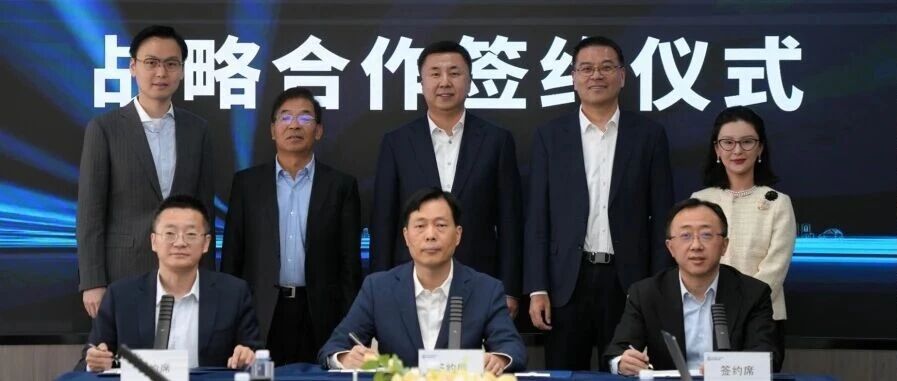
构建“银行+租赁+产业”铁三角 海博思创与民生银行、民生金租达成战略合作
海博思创· 2026-03-19 07:37
Core Viewpoint - The collaboration between Haibo Sichuang Technology Co., Ltd., China Minsheng Bank, and Minsheng Financial Leasing marks a significant step towards the deep integration of finance and industry in the energy storage sector, aiming to drive high-quality development in the industry [1][3][6] Group 1: Collaboration Details - The partnership aims to establish a "bank + leasing + industry" triad model to explore innovative financial services across the entire energy storage industry chain [1] - Haibo Sichuang's CEO emphasized the importance of energy storage as a stabilizer for renewable energy, crucial for ensuring the safe and stable operation of the power system [3] - The collaboration is expected to support Haibo Sichuang's comprehensive layout across the industry chain, enhancing cooperation from single project collaboration to multi-scenario synergy [3][6] Group 2: Financial Support and Services - China Minsheng Bank's Beijing branch aims to provide precise, efficient, and diversified financial services to competitive and growth-potential enterprises like Haibo Sichuang [3] - Minsheng Financial Leasing will leverage its expertise in equipment financing and asset management to support Haibo Sichuang in project investment, equipment upgrades, and capacity construction [4] - The collaboration signifies a comprehensive upgrade of the partnership between Haibo Sichuang and Minsheng financial institutions, promoting deep integration of industry and finance [6] Group 3: Future Prospects - The three parties plan to deepen collaborative innovation in the new energy storage field and explore diverse cooperation models to contribute to China's energy structure transformation and green low-carbon development goals [6]

储能黑马要IPO了
投中网· 2026-03-19 06:47
Core Viewpoint - The article highlights the rapid growth and upcoming IPO of Sige New Energy, a Shanghai-based company led by former Huawei executive Xu Yingtong, which has achieved significant revenue and profit milestones in a short period of time [5][16][18]. Company Overview - Sige New Energy is preparing for its IPO on the Hong Kong Stock Exchange after completing overseas listing filings [18]. - The company was founded in May 2022 and has quickly grown to a valuation of over 41 billion yuan in less than four years [6][15]. Financial Performance - In just nine months, Sige New Energy generated revenue exceeding 56 billion yuan, with a net profit nearing 19 billion yuan [5][16]. - The company reported a revenue of 0.58 billion yuan in 2022, which increased to 13.3 billion yuan in 2024, demonstrating rapid growth [16]. - The gross margin improved from 31.3% in 2023 to 51.6% in the first nine months of 2025 [16]. Product and Market Position - Sige New Energy's flagship product, SigenStor, is an AI-enabled all-in-one solar storage and charging solution, which has received positive feedback and significant orders [10][11]. - The company is projected to become the world's leading provider of stackable distributed solar storage solutions by 2024, with a market share of 28.6% [11]. Investment and Valuation - The company has attracted significant investment, raising 5.4 billion yuan in multiple funding rounds, leading to a valuation increase of over 20 billion yuan within six months [14][15]. - Major investors include Hillhouse Capital, Huaden International, and Zhongding Capital, indicating strong confidence in the company's growth potential [14][17]. Leadership and Strategy - Xu Yingtong, with over 20 years of experience at Huawei, leads the company, focusing on integrating AI technology into energy solutions and targeting international markets [9][10]. - The company aims to reshape the distributed energy storage industry and enhance digital transformation in the energy sector [10].

申万宏源助力立新能源6亿元碳中和绿色科技创新公司债成功发行
申万宏源证券上海北京西路营业部· 2026-03-19 02:32
Core Viewpoint - The successful issuance of the "Xinjiang Liren New Energy Co., Ltd. 2026 Carbon Neutral Green Technology Innovation Corporate Bonds (Phase I)" demonstrates strong market demand and low interest rates for green bonds in the region, reflecting the company's commitment to carbon neutrality and technological innovation [3] Group 1 - The bond issuance scale is 600 million yuan, with a subscription multiple of 3.57 times and a coupon rate of 1.90%, marking the lowest historical rate for AA+ rated corporate bonds in the Northwest region [3] - The issuer specializes in wind and solar power generation and is the only state-controlled listed company in Xinjiang focusing on renewable energy, serving as a key platform for integrating state-owned resources and industries [3] - This bond features dual labels of "carbon neutral green bond" and "technology innovation bond," aligning with national strategies for carbon neutrality and innovation-driven development [3] Group 2 - The bond issuance achieved a dual excellence in issuance cost and subscription enthusiasm, further enhancing the regional market influence of Shenwan Hongyuan and showcasing its commitment to deepening its presence in Xinjiang [3]

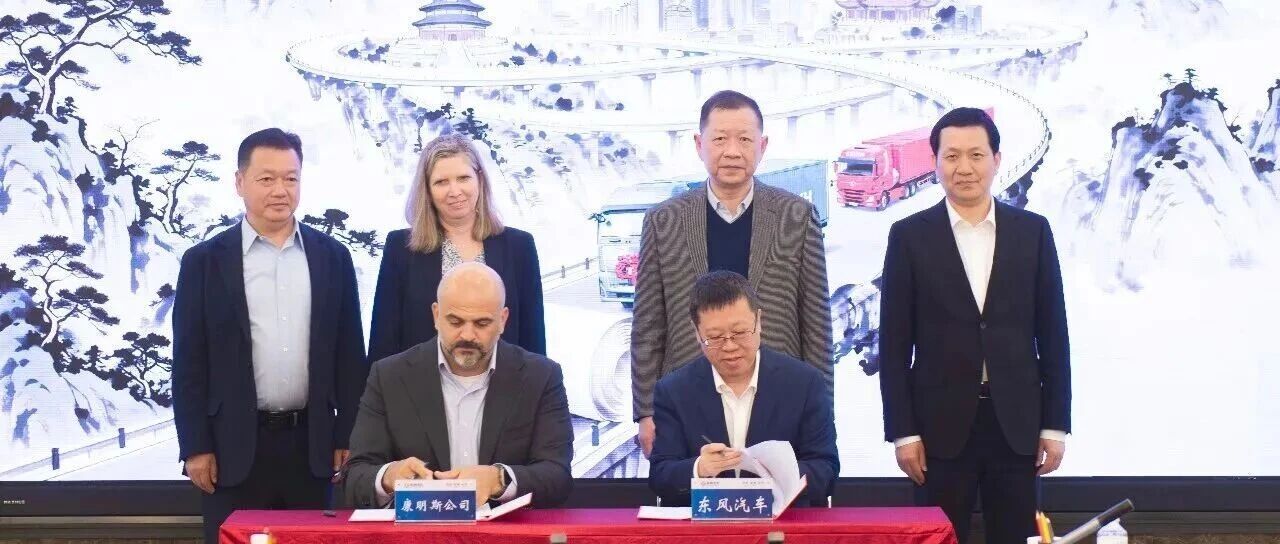
东风与康明斯全球战略合作迈入新阶段!双方董事长出席 | 头条
第一商用车网· 2026-03-19 01:42
Core Viewpoint - Dongfeng Motor and Cummins celebrate their 40-year partnership, marking a new phase in global strategic cooperation aimed at providing competitive commercial vehicle power solutions and promoting high-quality industry development and sustainable transformation [1][3]. Group 1: Partnership Highlights - The collaboration between Dongfeng and Cummins has been a mutually beneficial journey, combining Cummins' advanced power technology with Dongfeng's excellent products, gaining widespread customer approval [3]. - Both companies aim to deepen cooperation in key areas such as fuel-saving technology, multi-energy pathways, and emissions, enhancing product competitiveness and operational efficiency across the entire industry chain [3][4]. Group 2: Future Cooperation Focus - The newly signed memorandum outlines three core areas for future collaboration: the "Genesis" Truck 3.0 project, development of National VI products and vehicle matching, and expansion into overseas markets [4][5]. - The "Genesis" Truck 3.0 project will focus on advanced power technologies, including hybrid power and hydrogen internal combustion engines, to explore efficient, low-carbon, and zero-carbon power paths [5]. - The development of National VI products will involve close collaboration to meet stricter emission regulations, leveraging both companies' resources to enhance the vehicle power chain capabilities [5]. Group 3: Historical Context - The partnership began in 1986 with the production of B series engines, evolving from technology introduction to joint ventures and collaborative development [4]. - Significant milestones include the establishment of the East Asia R&D Center and the launch of multiple joint projects, leading to continuous improvements in powertrain solutions and the production of the 4 millionth engine [4].


齐峰新材(002521) - 002521齐峰新材投资者关系管理信息20260318
2026-03-18 11:06
Company Overview - Qifeng New Materials Co., Ltd. is a leading enterprise in specialty paper production, focusing on decorative new materials with a production capacity exceeding 500,000 tons [2][3] - The company has established various research and development centers, including an academician workstation and a postdoctoral research station [2] Industry Trends - The demand for decorative paper is increasing due to urban renovation, consumption upgrades, and the expansion of application fields [3] - Decorative paper is favored for its personalized, lightweight, aesthetically pleasing, and environmentally friendly characteristics, aligning with the national "dual carbon" strategy [3] Product Series and Applications - The company’s main products are categorized into four series: decorative paper, latex paper, personal hygiene materials, and others [4] - Decorative paper, which accounts for the highest revenue share, is used in furniture, flooring, and fireproof boards, and is recognized for its excellent properties such as heat insulation and fire resistance [4] Financial Performance - In Q3 2025, the company reported a revenue of CNY 850 million, a year-on-year increase of 8.06%, with a net profit of CNY 39.29 million, up 1608.27% [5] - Cumulative dividends since listing amount to CNY 1.207 billion, reflecting a commitment to shareholder returns [6] New Product Development - Recent innovations include digital printing decorative paper and latex paper, with over 20% of new product sales coming from outside the decorative paper category [7] - The company is the only domestic supplier of high and medium-grade latex paper, filling significant market gaps [7] Production Capacity and Strategy - The company has established a dual-base production strategy with a facility in Guangxi and another in Shandong, enhancing production efficiency and customization capabilities [8] - With 24 advanced paper machine production lines, the company aims to further optimize its production structure and increase the proportion of high-margin products [8] Market Position in Latex Paper - The global latex paper market is approximately 90,000 tons, with high-end latex paper accounting for about 40,000 tons [10] - The company has over 40 mature latex paper varieties, significantly increasing its market share and reducing dependency on foreign suppliers [11]

8大院士确认出席!2026第11届生物基大会暨展览,一起澎湃新生机
合成生物学与绿色生物制造· 2026-03-17 02:27
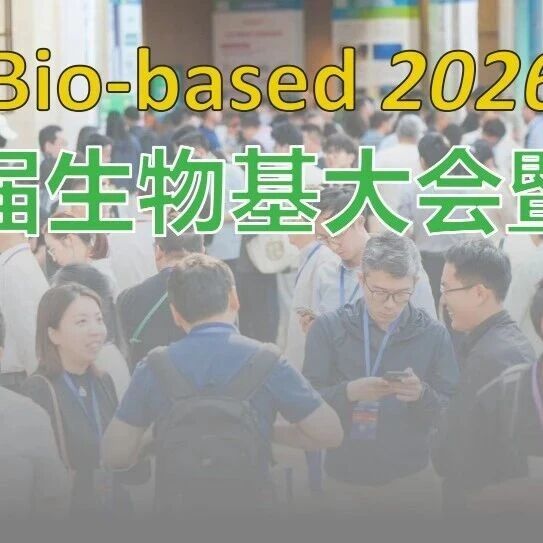
Core Viewpoint - The 11th Bio-based Conference and Exhibition (Bio-based 2026) will be held from May 20-22, 2026, in Shanghai, focusing on the promotion of the "dual carbon" strategy and green low-carbon development in response to national policies [2]. Group 1: Event Overview - The event will feature 11 major thematic forums, 7 concurrent activities, and showcase over 1000 new products, including the DT New Leaf Award selection [2]. - More than 100 industry experts and leaders will share insights on global strategic trends, cutting-edge technologies, and supply chain collaboration [2]. - The expected attendance is over 1500 participants, indicating significant interest in the bio-based industry [2]. Group 2: Organizational Structure - The conference is organized by the Zhejiang Provincial Key Laboratory of Bio-based High Polymer Materials and Ningbo Detaizhong Research Information Technology Co., Ltd. (DT New Materials) [3]. - Supporting units include various national key laboratories and associations related to bio-based materials and green manufacturing [4]. Group 3: Award and Recognition - The DT New Leaf Award 2026 has already received 67 new product entries from 52 units, aiming to recognize outstanding innovations in the bio-based sector [15]. - The award will be announced during the conference, highlighting leading products, technologies, and companies in the bio-based industry [15]. Group 4: Forum Structure - The conference will host 7 major material and application forums, focusing on vertical innovations from bio-based technology development to market applications [18]. - Key topics include critical chemicals and materials, sustainable transformation in CASE (Coatings, Adhesives, Sealants, and Elastomers), and bio-based packaging solutions [19][22]. Group 5: Exhibition Highlights - The exhibition will showcase over 1000 new products, emphasizing innovations in bio-based materials, packaging, and engineering solutions [33]. - Special activities will include demand matching sessions for end-user brands and expert consultations on technology [34].
8大院士确认出席!2026第11届生物基大会暨展览,一起澎湃新生机
DT新材料· 2026-03-16 23:39
Core Viewpoint - The 11th Bio-based Conference and Exhibition (Bio-based 2026) will be held from May 20-22, 2026, in Shanghai, focusing on the promotion of the "dual carbon" strategy and green low-carbon development in response to national policies [2][59]. Group 1: Event Overview - The event will feature 11 major thematic forums, 7 concurrent activities, and showcase over 1,000 new products [2][29]. - More than 100 industry experts and leaders will share insights on global strategic trends, cutting-edge technologies, and supply chain collaboration [2][29]. - The expected attendance is over 1,500 participants, highlighting the significance of the event in the bio-based industry [2]. Group 2: Awards and Recognition - The DT New Leaf Award 2026 has commenced, with 52 units submitting 67 new products for evaluation, aiming to recognize excellence in the bio-based sector [14][16]. - The award ceremony will take place during the conference, showcasing outstanding products, technologies, and companies leading the industry [14]. Group 3: Forum Structure - The conference will include 7 specialized forums focusing on various aspects of bio-based materials and applications, such as key chemicals, sustainable packaging, and automotive materials [17][22][23]. - Each forum will invite leading companies and experts to discuss challenges, innovations, and market demands in their respective fields [17][22][23]. Group 4: Exhibition Highlights - The exhibition will present over 1,000 new products, emphasizing innovations in bio-based materials, packaging, and engineering solutions [29][30]. - Key areas of focus will include bio-based chemicals, biodegradable materials, and advanced manufacturing technologies [29][30].
中信股份(00267) - 海外监管公告 – 中信泰富特钢集团股份有限公司关於2025年年度报告
2026-03-16 14:06
香港交易及結算所有限公司及香港聯合交易所有限公司對本公告的內容概不負 責,對其準確性或完整性亦不發表任何聲明,並明確表示,概不對因本公告全部 或任何部分內容而產生或因倚賴該等內容而引致的任何損失承擔任何責任。 海外監管公告 此乃中信泰富特鋼集團股份有限公司在二零二六年三月十六日登載 於中華人民共和國深圳證券交易所網站(www.szse.cn) 關於2025年 年度報告。中信泰富特鋼集團股份有限公司為中國中信股份有限公 司的附屬公司。 中信泰富特钢集团股份有限公司 2025 年年度报告全文 中信泰富特钢集团股份有限公司 2025 年年度报告 2026 年 3 月 中信泰富特钢集团股份有限公司 2025 年年度报告全文 第一节 重要提示、目录和释义 公司董事会及董事、高级管理人员保证年度报告内容的真实、准确、完 整,不存在虚假记载、误导性陈述或重大遗漏,并承担个别和连带的法律责 任。 公司负责人钱刚、主管会计工作负责人倪幼美及会计机构负责人(会计 主管人员)吴斌声明:保证本年度报告中财务报告的真实、准确、完整。 所有董事均已出席了审议本报告的董事会会议。 本年度报告涉及未来计划等前瞻性陈述,不构成公司对投资者的实 ...


迦南智能(300880) - 300880迦南智能投资者关系管理信息20260315
2026-03-15 15:09
Group 1: Company Overview - Canaan Intelligent Electric Co., Ltd. is focused on smart metering and system integration, with key products including smart meters and charging piles [2][3] - The company is transitioning from a smart meter supplier to a comprehensive solution provider for smart power distribution [3][4] Group 2: Financial Performance - In 2025, the company experienced a decline in revenue and gross margin due to adjustments in customer order delivery and a decrease in product sales prices [2][3] - The company aims to enhance sustainable development capabilities and improve operational efficiency through cost structure optimization and lean production [3] Group 3: Strategic Initiatives - Canaan Intelligent plans to extend its distribution business by establishing a wholly-owned subsidiary focused on integrated energy solutions by December 2024 [3] - The company is actively pursuing overseas market expansion, with a focus on Asia, America, and future plans for Europe and Africa [3][4] Group 4: Market Opportunities - The global energy transition is driving demand for smart power distribution solutions, with projected global grid investments reaching $398 billion in 2024, expected to grow by 50% by 2030 [4] - Canaan Intelligent aims to leverage this opportunity by advancing its presence in overseas markets and entering new energy sectors [4]