商业航天IPO

Search documents
刚刚,千亿巨头,公布利好
Zhong Guo Zheng Quan Bao· 2025-12-12 04:32
Group 1: Commercial Aerospace Sector - The commercial aerospace sector continues to rise, with market enthusiasm spreading to the defense and military industry [1][2] - The sector's growth is driven by high expectations for SpaceX's upcoming IPO, aiming to raise over $30 billion with a target valuation of approximately $1.5 trillion [6] - A successful satellite launch by China on December 12, using the Long March 12 rocket, further boosts confidence in the commercial aerospace market [6] Group 2: Agricultural Bank of China - Agricultural Bank of China saw significant stock movement, with a closing increase of 1.41% followed by a morning drop of 3.28%, bringing its market value to 2.68 trillion yuan [1] - The stock experienced fluctuations, with a previous increase of 2.55% on December 9 and a decrease of 2.74% on December 10 [1] Group 3: ZTE Corporation - ZTE Corporation's stock hit the limit down yesterday and fell an additional 0.32% today, with a current market value of 180.3 billion yuan [1] - The company announced a share buyback plan using its own funds, with a total amount between 1 billion and 1.2 billion yuan [1] Group 4: Engineering Machinery Sector - The engineering machinery sector is experiencing a positive trend, with notable increases in stocks such as Shaoyang Hydraulic and Construction Machinery [8] - According to statistics, excavator sales in November 2025 reached 20,027 units, a year-on-year increase of 13.9%, with domestic sales up 9.11% and exports up 18.8% [12] - The industry is expected to see synchronized growth in both domestic and overseas demand, supported by ongoing national projects and competitive advantages in overseas markets [12]


商业航天企业积极推进IPO
Zheng Quan Ri Bao· 2025-11-27 15:49
Core Viewpoint - The National Space Administration of China has issued an action plan for the high-quality and safe development of the commercial space industry from 2025 to 2027, aiming for significant growth in industry scale and innovation capabilities by 2027 [1] Group 1: Policy Support and Market Dynamics - The commercial space industry has been included in government work reports for two consecutive years, highlighting its strategic importance [2] - The China Securities Regulatory Commission has expanded the application scope of the fifth set of standards to include commercial space, facilitating more companies in this sector to go public [2][3] - Local governments have introduced measures to support the high-quality development of the commercial space industry, indicating a strong policy backing [2] Group 2: IPO Activity and Industry Transition - Since the introduction of the new policies, six commercial space companies have initiated IPO counseling, marking a shift from the "technology exploration phase" to the "industrial acceleration phase" [1][3] - The fifth set of listing standards addresses the financing challenges of high investment and long cycles in the commercial space sector, encouraging innovation and resource allocation towards long-term R&D [3][5] - Five leading commercial rocket companies have started the IPO process, with some planning to list on the Sci-Tech Innovation Board [4][5] Group 3: Industry Growth and Performance Metrics - China's commercial space industry is experiencing significant growth, with the industry output value projected to increase from 1 trillion yuan in 2020 to approximately 2.3 trillion yuan by 2024, reflecting a compound annual growth rate of 22.9% [6] - In the first half of 2024, China successfully completed 35 space launches, with commercial launches accounting for 40% of the total, indicating a robust operational capacity [6] Group 4: Focus on Technological Viability - Investors are increasingly focusing on the technological capabilities and commercial viability of companies in the commercial space sector, rather than traditional financial metrics [6][7] - The ability to convert technology into production capacity and the efficiency of capital utilization are critical factors for the success of IPOs in this industry [7]
民营火箭运力突围
Jing Ji Guan Cha Wang· 2025-10-25 04:20
Core Insights - The successful launch of the sixth batch of the "Qianfan Constellation" satellites marks a significant milestone, bringing the total number of satellites in orbit to 108 [2] - The domestic satellite internet market is evolving, with major telecom operators receiving licenses for satellite mobile communication services, indicating a growing demand for satellite connectivity [2] - The commercial space sector is facing a "star-heavy, rocket-light" dilemma, but advancements in private rocket capabilities are expected to alleviate this issue [4] Group 1: Satellite Launch Developments - The "Qianfan Constellation" requires at least 200 to 300 satellite launches annually, necessitating multiple rockets with capacities exceeding 10 tons [5] - Currently, no private commercial rockets in China have successfully launched with a capacity above 10 tons, highlighting a critical gap in the market [5] - Recent developments include successful tests of several private rockets, such as Tianbing Technology's "Tianlong-3" and Blue Arrow Aerospace's "Zhuque-3," which are nearing their first flights [6][7] Group 2: Funding and IPO Trends - Several private rocket companies are actively pursuing funding to support production and development, with significant investments reported, such as 2.4 billion yuan for Star River Dynamics and 2.5 billion yuan for Tianbing Technology [12][13] - The recent regulatory changes have opened up opportunities for these companies to pursue IPOs, with multiple firms already initiating the process [13][14] - The demand for rockets is driven by the rapid growth of satellite companies, which are also seeking substantial funding to support their operations [14] Group 3: Cost Reduction Strategies - The cost of launching rockets is a critical factor, with estimates suggesting that private rockets could achieve costs around 30,000 to 40,000 yuan per kilogram, compared to over 70,000 yuan for state-owned rockets [17] - Companies are exploring various strategies to reduce costs, including the use of 3D printing and innovative materials like stainless steel to enhance manufacturing efficiency [20][21] - The focus on reusability is seen as a key pathway to achieving lower costs, although no private rocket has yet completed a successful reusable launch [18][19]
天兵科技启动上市辅导,中国商业航天IPO版图进一步扩容
Guan Cha Zhe Wang· 2025-10-20 10:08
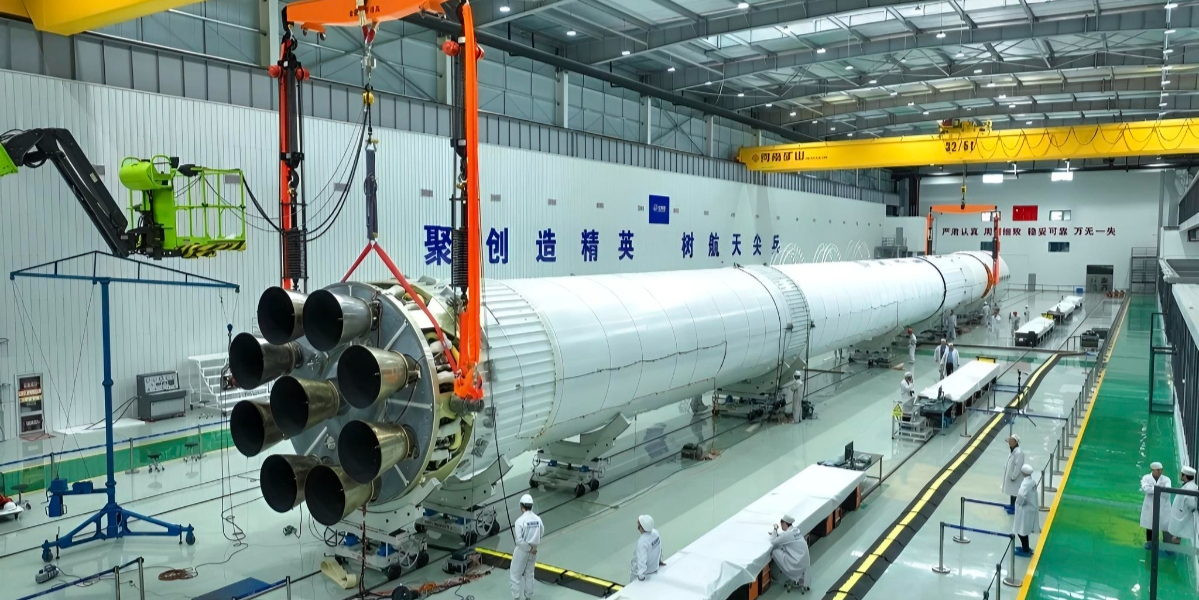
Core Viewpoint - Jiangsu Tianbing Aerospace Technology Co., Ltd. (Tianbing Technology) has initiated its IPO process, marking a significant step in the expansion of China's commercial aerospace sector [1][4]. Group 1: IPO and Financing - Tianbing Technology has completed IPO counseling registration with the Jiangsu Securities Regulatory Bureau, with CITIC Securities as the counseling agency [1]. - The company recently raised nearly 2.5 billion yuan (approximately 0.35 billion USD) in Pre-D and D rounds of financing, with notable investors including Guoyu Gaohua, Jishan Group, and others [1]. Group 2: Technological Advancements and Safety Measures - In September, Tianbing Technology successfully conducted a full-system sea trial of the Tianlong-3 large liquid launch vehicle's first-stage propulsion system, setting a new domestic record for thrust in commercial aerospace [1][3]. - Following a serious accident in June 2022, the company implemented 127 technical improvements and upgraded its safety management system, enhancing the reliability of its rocket systems [3][4]. - The company has adopted a "zero-day" safety control plan and conducted multiple emergency drills in collaboration with local authorities to ensure safety during trials [4]. Group 3: Strategic Developments - Tianbing Technology has transitioned from land-based testing to sea-based hot testing, successfully overcoming key technical challenges related to wind and salt spray [4]. - The introduction of redundancy and margin principles in rocket design aims to prevent single-point failures from leading to mission failures or safety incidents, thereby establishing a more robust safety assurance system [4].

头部火箭公司,再揽7亿融资!
Sou Hu Cai Jing· 2025-09-19 12:16
Group 1 - The commercial aerospace sector continues to attract significant capital investment, with over 120 financing events and more than 5.2 billion yuan raised in 2025 alone [1] - The D+ round financing of 700 million yuan for Xingji Glory will accelerate the development of its main product, the reusable H3 rocket, which is set for its first flight by the end of 2025 [2][3] - Xingji Glory is the first private company in China to achieve orbital launch, with a product line that includes the H1 solid rocket and H3 series [2][3] Group 2 - The company has completed nine rounds of financing since its establishment in 2016, with significant investments from state-owned funds in Sichuan [3] - The IPO preparation for Xingji Glory is underway, with plans to list on the Sci-Tech Innovation Board, supported by major securities firms [4] - Other leading companies in the commercial aerospace sector, such as Blue Arrow Aerospace and Zhongke Aerospace, are also preparing for IPOs, indicating a trend in the industry [5][7] Group 3 - The market for China's rocket industry is expected to reach hundreds of billions by 2027, driven by the increasing demand for launch services and the development of reusable rocket technology [7][8] - Analysts predict that the market for rocket launches in China could exceed 110 billion yuan by 2030, highlighting the growth potential of the commercial aerospace sector [8]
商业航天IPO热潮起,多家企业启动上市辅导
Sou Hu Cai Jing· 2025-08-07 03:05
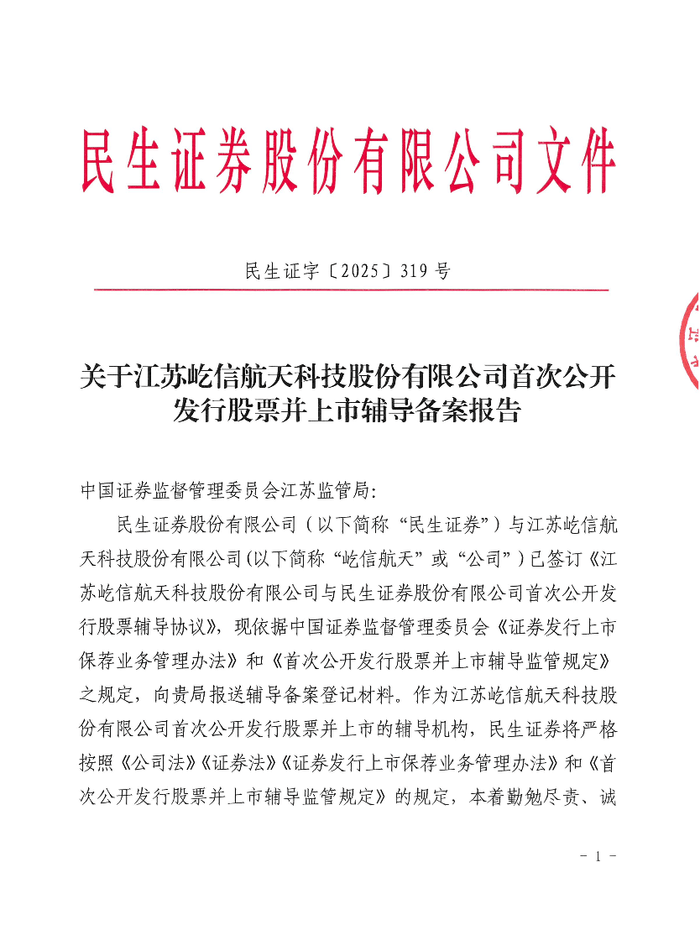
Core Viewpoint - The recent surge in IPO activity among commercial space companies in China indicates a growing maturity in the industry, supported by favorable policies and market conditions [7][4]. Group 1: IPO Activity - Blue Arrow Aerospace has initiated listing guidance for an IPO on the Sci-Tech Innovation Board, with China International Capital Corporation as the advisory institution [1]. - Jiangsu Yixin Aerospace Technology Co., Ltd. has also filed for listing guidance with the Jiangsu Securities Regulatory Bureau, with Minsheng Securities as the advisory institution [1]. - The reintroduction of the fifth set of listing standards for unprofitable companies on the Sci-Tech Innovation Board has encouraged more commercial space companies to pursue IPOs [7]. Group 2: Industry Characteristics - The commercial space industry is characterized by high capital and technology intensity, with long R&D cycles, particularly in the rocket sector [4]. - The industry has historically seen few companies successfully reach the IPO stage due to stringent revenue and profit requirements [4]. Group 3: Company Profiles - Blue Arrow Aerospace, founded in June 2015, is a leading private rocket company in China, with a registered capital of 360 million yuan [10][11]. - The company has an estimated valuation of 20 billion yuan and has achieved significant milestones, including the successful launch of the Zhuque-2 rocket, the world's first liquid oxygen-methane rocket to reach orbit [12]. - Yixin Aerospace, established in 2018, focuses on micro-satellite communication products and has a direct shareholding ratio of 48.32% held by its controlling shareholder [18]. Group 4: Financial Performance - Blue Arrow Aerospace reported net losses of 1.177 billion yuan and 1.015 billion yuan for 2023 and 2024, respectively, with net asset values of 2.495 billion yuan and 3.916 billion yuan [16][17]. - Yixin Aerospace has been actively involved in satellite IoT payloads, contributing to multiple satellite constellations and processing over 10 billion messages annually [18].