
帝国主义

Search documents
年终报道丨美国在混乱与撕裂中走向治理失序
Xin Hua She· 2025-12-30 03:19
Group 1: Economic Overview - The U.S. economy experienced moderate growth in 2025, with the S&P 500 index increasing over 17% and the Nasdaq rising more than 21% by late December, primarily driven by investments in artificial intelligence and technology giants like Nvidia, Alphabet, Broadcom, Microsoft, and Apple, which contributed nearly 45% of the index's gains [8] - However, wealth distribution remains highly unequal, with the top 1% owning nearly 50% of stock market value and the top 10% holding over 87%, while the bottom 50% possess just over 1% [8][9] - The lowest third of earners saw their annual wage growth drop to 0.9%, the lowest in a decade, while the top third experienced a wage growth of 3.6%, the highest since November 2021 [9][10] Group 2: Political and Social Climate - The year 2025 was marked by significant political polarization, with intense conflicts between the Democratic and Republican parties affecting governance and policy-making, leading to a record 43-day federal government shutdown that caused substantial economic losses [6][7] - The release of documents related to the Jeffrey Epstein case highlighted the ongoing political strife, with accusations of selective disclosure and attempts to blame political opponents [5] - The Trump administration's actions, including the recall of nearly 30 ambassadors and senior diplomats, reflect a deepening political divide and a potential decline in U.S. international credibility [6] Group 3: Social Issues - Reports indicate that many Americans are struggling to meet basic needs, with 40% of families in New York City unable to afford food expenses, while nearly half of survey respondents described the current cost of living as the worst in memory [10] - The wealth of the top billionaires surged by $698 billion in the past year, exacerbating the wealth gap and indicating a shift towards a new oligarchic structure in the U.S. [8][10]
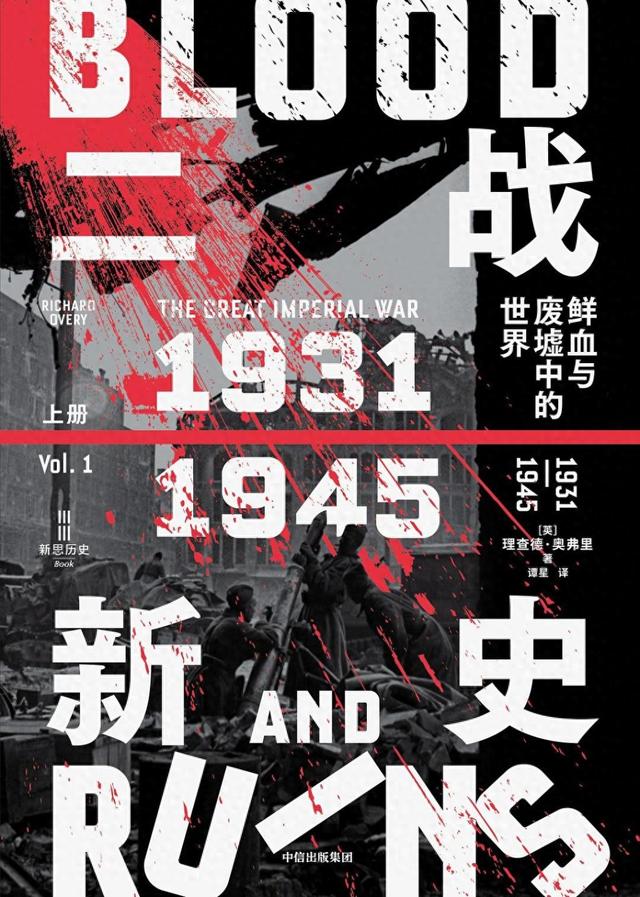
李公明|一周书记:在鲜血与废墟中阴魂不散的……帝国野心
Xin Lang Cai Jing· 2025-12-18 03:06
Core Viewpoint - The article discusses the historical parallels between World War II and current global tensions, emphasizing the relevance of studying WWII in light of contemporary conflicts such as the Russia-Ukraine war and the Israel-Palestine situation [2][3][4]. Group 1: Historical Context and Relevance - The commemoration of the 80th anniversary of WWII has been marked by a mix of unease and pessimism, with discussions around the potential for a third world war becoming prominent among political leaders and commentators [2][3]. - The historical narrative of WWII is being invoked in discussions about current geopolitical conflicts, suggesting that the lessons of the past remain pertinent today [2][4]. Group 2: Richard Overy's New History of WWII - Richard Overy's book "Blood and Ruins: The Great Imperial War, 1931-1945" is described as a significant contribution to WWII historiography, praised for its comprehensive and profound analysis [5][6]. - The book is noted for its global perspective and its reinterpretation of WWII as an extension of imperial ambitions, challenging traditional narratives that focus solely on the conflict between peace-loving nations and aggressive imperial powers [6][7]. Group 3: Key Themes in Overy's Work - Overy identifies four main premises that underpin his narrative of WWII: the time frame of the war, its global scope, the various forms of warfare, and the nature of the conflict as an imperial war [7][8]. - The starting point of WWII is proposed to be the 1931 Japanese invasion of Northeast China, which Overy argues marks the beginning of a new imperial era, rather than the commonly accepted 1939 date [8][9]. Group 4: Global Perspective on WWII - Overy emphasizes that WWII should be understood as a global event, with regional instabilities contributing to a broader crisis, rather than merely a European conflict [10][11]. - The book critiques the Eurocentric view of history, advocating for a narrative that encompasses the significance of events in Asia and other regions during the war [10][11]. Group 5: Nature of Warfare - Overy discusses the various forms of warfare present in WWII, including civil wars and total wars, highlighting the complexity of the conflict beyond state-to-state interactions [11][12]. - The concept of "imperial war" is central to Overy's thesis, suggesting that the war was fundamentally about imperial expansion and territorial ambitions [12][13]. Group 6: Implications for Contemporary Conflicts - The themes of territorial ambition and imperialism in Overy's analysis resonate with current geopolitical tensions, such as the Russia-Ukraine conflict and the Israel-Palestine situation, suggesting that historical patterns of aggression and expansionism persist [14][15]. - Overy's insights into the motivations behind imperial expansion provide a framework for understanding modern conflicts and the ongoing struggles for territory and influence [14][15].

特朗普称“可能与马杜罗谈谈”,马杜罗:国家主权不可转让
Xin Jing Bao· 2025-11-18 00:47
特朗普11月16日称想与马杜罗谈谈后,马杜罗17日发文称国家主权"不可转让",同时谴责帝国主义试图 通过制造恐惧与动荡来破坏国家稳定。近期美国总统特朗普多次威胁对委内瑞拉发动地面打击。报道称 美国在加勒比海地区的军事部署已达到30多年来最大规模。特朗普16日表示可能与马杜罗对话看看情况 如何发展,但不排除任何可能性,并称马杜罗"也想谈谈"。 ...
乔治斯·瓦鲁萨基斯谈“西方”观念的形成
Xin Lang Cai Jing· 2025-10-12 01:58
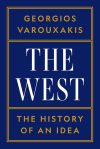
Core Argument - Georgios Varouxakis' new book "The West: The History of an Idea" offers a groundbreaking interpretation of the origins of the concept of "the West," challenging the prevailing academic consensus that it emerged in the late 19th century as a tool for promoting imperialism and racism [2][5][7]. Group 1: Historical Context and Evolution of the Concept - The term "the West" is often mistakenly viewed as a timeless concept dating back to ancient Greece, but Varouxakis argues that its self-identification began in the late 19th century, specifically in the 1880s and 1890s, to promote imperialism and white supremacy [5][7]. - Varouxakis highlights that earlier uses of "the West" can be traced back to the early 19th century, particularly through the works of Auguste Comte, who envisioned a "Western Republic" as a cultural and civilizational entity [7][8]. - The need for a distinct term arose from the desire to differentiate Western Europe from Russia, which was perceived as a significant threat after the Napoleonic Wars [8][9]. Group 2: Comte's Influence and Ideological Implications - Comte's writings initially focused on "Europe," but he later shifted to using "the West" to better represent a specific cultural community, distancing it from the broader geographical implications of "Europe" [11][12]. - Varouxakis emphasizes Comte's strong anti-imperialist stance, arguing that his vision for "the West" was not aligned with imperialism but rather aimed at promoting a peaceful, altruistic community [13][14]. - The concept of "the West" was intended to foster a sense of unity among Western nations while advocating for the independence of colonies and the abolition of empires [13][14]. Group 3: The Role of Other Thinkers and Global Perspectives - Varouxakis discusses various thinkers, including Francis Lieber, who contributed to the evolution of the concept of "the West" in the 19th century, particularly in the context of American political thought [16][17]. - The book also examines the contributions of non-Western thinkers, such as Rabindranath Tagore, who engaged in discussions about nationalism and the West during the early 20th century [18][19]. - Varouxakis argues that the historical understanding of "the West" is complex and multifaceted, shaped by various cultural, political, and ideological influences over time [24][27]. Group 4: Methodological Approach - The author employs a genealogical approach to trace the historical evolution of the concept of "the West," emphasizing the importance of understanding its various interpretations and uses throughout history [25][26]. - Varouxakis critiques the notion of a singular "Western value system," arguing that many values attributed to the West have origins in other cultures and should not be viewed as exclusive to the West [30][31]. - The book aims to clarify the historical context and potential future meanings of "the West," highlighting its adaptability and relevance in contemporary discussions [28][29].
独家专访亚开行前行长中尾武彦:特朗普关税政策是彻头彻尾的误导,RCEP应加强合作
Di Yi Cai Jing· 2025-05-06 08:22
Group 1 - The core viewpoint emphasizes the need for stronger cooperation under the Regional Comprehensive Economic Partnership (RCEP) to promote mutual free trade in response to global trade challenges posed by U.S. tariff policies [1][11] - The U.S. tariff policies under the Trump administration are criticized as misleading, particularly in their neglect of the U.S. surplus in the services sector, which is a significant aspect of the U.S. economy [3][5] - The global division of labor is based on economic rationality, making it difficult to shift manufacturing back to the U.S. despite political desires [6][7] Group 2 - The U.S. trade deficit is viewed as a misrepresentation of the overall economic benefits derived from both goods and services trade, with the latter providing substantial income to a limited segment of the population [5][4] - The uncertainty created by U.S. tariff policies has led to volatility in financial markets, affecting not only companies but also high-net-worth individuals who initially supported these policies [6][8] - The potential for collaboration among Japan, China, and South Korea is highlighted, with a call for these nations to defend free trade and open larger markets to each other [11][12] Group 3 - Japan's monetary policy normalization may be impacted by the uncertainties stemming from U.S. tariff policies, potentially slowing down the pace of interest rate hikes [12] - The discussion around the undervaluation of the yen suggests that Japan may seek a gradual appreciation of its currency, aligning with traditional market-driven exchange rate principles [10] - The need for Japan to address domestic economic issues, such as income inequality and inflation, is underscored, particularly in light of the pressures from U.S. trade policies [5][12]

特朗普“颠覆”美国外交传统?没有。——起底美国外交一以贯之的霸权本色
Xin Hua Wang· 2025-03-24 07:19
Core Viewpoint - The article argues that Trump's foreign policy does not fundamentally overturn the traditional U.S. diplomatic approach but rather reflects a more overt expression of the long-standing U.S. hegemonic nature in international relations [1][4][6]. Group 1: U.S. Foreign Policy Under Trump - Trump's administration has been characterized by a series of "America First" policies, which include imposing tariffs, withdrawing from international agreements, and exerting pressure on allies, suggesting a return to a more isolationist stance reminiscent of 19th-century imperialism [2][3][8]. - The administration's actions, such as the imposition of 25% tariffs on imported steel and aluminum, reflect a protectionist ideology that has historical precedents in U.S. foreign policy [2][6]. - Trump's rhetoric about making Canada the "51st state" and threats to annex Greenland illustrate a revival of imperialistic tendencies in U.S. diplomacy [3][5]. Group 2: Historical Context and Continuity - The article highlights that many of Trump's foreign policy actions have historical parallels, such as previous administrations' withdrawal from international organizations and the use of economic leverage to achieve political goals [4][6]. - Notable examples include Reagan's and Obama's administrations, which also exhibited similar tendencies to withdraw support from international bodies when U.S. interests were perceived to be compromised [4][6]. - The historical context of U.S. interventions, such as the CIA's involvement in the overthrow of Congolese Prime Minister Lumumba, underscores a long-standing pattern of prioritizing resource control and geopolitical interests over international norms [6][8]. Group 3: The Nature of "America First" - The concept of "America First" is portrayed as a consistent theme in U.S. foreign policy, driven by a desire to maintain hegemony and respond to perceived threats to national interests [7][8]. - Analysts suggest that the current administration's more blatant embrace of "America First" reflects a response to declining U.S. power and rising anxieties among the elite and the general populace [8]. - The article posits that the roots of Trump's policies can be traced back to historical U.S. expansionism and a self-serving interpretation of democracy that justifies unilateral actions on the global stage [8].