数字游民

Search documents
清迈飘来中国“云”(旅人心语)
Ren Min Ri Bao· 2025-09-11 22:02
Group 1 - The article highlights the rise of digital nomads, who work remotely using digital technology, allowing them to travel and live in various locations while maintaining a connection to the global community [2][3] - Chiang Mai is identified as a hub for digital nomads, offering a conducive environment with high-speed internet, affordable living costs, and a vibrant atmosphere, leading the Thai government to target this group as a key tourist demographic [2] - The Thai government plans to extend the visa for digital nomads from 60 days to 5 years, allowing stays of up to 180 days at a time, to tap into their consumer potential [2] Group 2 - The integration of Chinese digital payment systems like WeChat and Alipay in Chiang Mai facilitates the lifestyle of digital nomads, allowing them to use familiar payment methods while abroad [3] - The article discusses the efficient cross-border logistics system from China to Thailand, enabling digital nomads to access familiar products and maintain a connection to their home country [3] - The popularity of Chinese trendy products in Thailand is noted, with local digital nomads actively engaging in sharing their knowledge of Chinese e-commerce platforms with international friends [3] Group 3 - The narrative emphasizes the cultural blending and diminishing geographical boundaries in the digital age, showcasing how technology allows individuals to stay connected with their homeland regardless of their physical location [4][5] - The confidence and ease with which the new generation of Chinese youth navigate the world through technology is portrayed as a unique characteristic of this era [5]

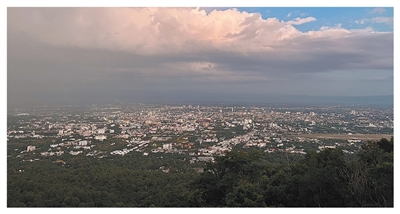
哈萨克斯坦签发首个外国人“数字游民”长期居留许可
Zhong Guo Xin Wen Wang· 2025-09-10 13:44
Group 1 - Kazakhstan has issued its first long-term residency permit for foreign "digital nomads," valid for 10 years, marking a significant step in attracting global high-tech talent [1][2] - The first permit holder is a senior data analyst with international experience, indicating the type of professionals targeted by this initiative [1] - The "Digital Nomad Residency" program will officially launch in January 2025, focusing on international high-tech talent in fields such as artificial intelligence, big data, and information security [1][2] Group 2 - Over 270 applications have been received for the "Digital Nomad Residency" program, primarily from individuals in programming, cybersecurity, and software development, with applicants from the US, Canada, France, Turkey, and CIS countries [2] - The issuance of the first long-term residency permit signifies the program's transition into a substantive phase, enhancing Kazakhstan's appeal as a regional digital hub [2] - This initiative is expected to help Kazakhstan attract international talent and promote the development of its digital economy [2]
X @𝘁𝗮𝗿𝗲𝘀𝗸𝘆
𝘁𝗮𝗿𝗲𝘀𝗸𝘆· 2025-08-18 03:36
Demographics & Lifestyle - The report highlights the emergence of digital nomads in 2025, characterized by individuals holding Chinese passports, residing in Japan, utilizing US credit cards, and earning income in cryptocurrency [1] Financial Aspects - The digital nomad lifestyle involves earning income through cryptocurrency [1] Travel & Location - Digital nomads are depicted as residing in Japan [1] - The report specifies that these individuals hold Chinese passports [1]
“在这里,工作和生活完美结合”(我在中国·行耕记)
Ren Min Ri Bao Hai Wai Ban· 2025-08-09 00:16
Core Viewpoint - The article highlights the growing trend of digital nomads in China, particularly in regions like Yunnan and Hainan, where they leverage advanced digital infrastructure and a vibrant entrepreneurial environment to work remotely while immersing themselves in local culture [3][9]. Group 1: Digital Nomads in Yunnan - Steve Halls, a British digital nomad, has lived in Yunnan for ten years, transforming from a traveler to a local guide, showcasing the region's culture and lifestyle through social media [4][5]. - Halls has created over 230 short videos in the past two years, gaining more than 100,000 likes, reflecting his deep engagement with local traditions and experiences [5][6]. - By 2025, it is projected that 2.8 million people will reside in Yunnan, with many being foreign digital nomads attracted to cities like Kunming and Dali [6]. Group 2: Digital Nomads in Hainan - Jay Kerkes, a Slovak engineer, and Anwar Yasir, a Pakistani entrepreneur, exemplify the digital nomad lifestyle in Hainan, where they enjoy a blend of work and leisure in a supportive environment [7][8]. - Hainan's favorable business environment allows Kerkes to establish a trading company quickly, while Yasir benefits from the region's digital infrastructure for international trade [8][9]. - Hainan is emerging as a global hub for digital nomads, with various communities and initiatives aimed at attracting international talent and fostering a creative ecosystem [9].

数字游民如何重塑未来工作方式?
3 6 Ke· 2025-07-31 03:18
Core Insights - The article discusses the rapid growth of digital nomads, with over 17 million in the U.S. and a projected global count of 60 million by 2030, highlighting a shift in the definition of "work" [1][10] - It introduces the "mobile worker paradox," where the desire for freedom conflicts with the need for a stable work environment [1][3] Group 1: Digital Nomad Characteristics - Digital nomads come from diverse backgrounds, including freelancers and entrepreneurs, and work in various fields such as engineering and digital marketing [2] - Their living arrangements vary, with some residing in traditional accommodations, while others live in RVs or boats [2] Group 2: Balancing Work and Mobility - Digital nomads employ two main strategies to balance their needs: the "cyclical mode," where they oscillate between stability and movement, and the "fusion mode," where they create a sense of home while on the move [4][5][7] - The cyclical mode involves staying in one place long enough to establish a routine before seeking new experiences, while the fusion mode focuses on integrating familiar items to create a mobile home environment [5][7] Group 3: Implications for Work Culture - The experiences of digital nomads challenge traditional notions of work efficiency, suggesting that a familiar environment can enhance productivity regardless of location [8] - Companies may need to adapt their talent management strategies to prioritize self-management skills and results-oriented performance evaluations [9] - The rise of digital nomads indicates a shift towards more flexible work arrangements, with an emphasis on autonomy and work-life integration [10][12] Group 4: Future Work Trends - The digital nomad lifestyle is becoming mainstream, with a 133% increase in their numbers in the U.S. over the past four years, driven by advancements in remote work technology and changing perceptions of work [10] - Cities are evolving to support digital nomads, with improved infrastructure and policies, including digital nomad visas [11] - Future work environments are expected to be more diverse and flexible, with a focus on creating suitable work atmospheres rather than fixed office spaces [11][12]
中国“数字游民”兴起 数智化赋能“零工经济”
Zhong Guo Xin Wen Wang· 2025-07-25 12:00
Core Viewpoint - The rise of "digital nomads" in China is reshaping the gig economy, driven by digitalization and flexible employment opportunities [1][3]. Group 1: Digital Nomads and Gig Economy - Many young people in China are becoming "digital nomads," utilizing their computers as mobile offices and choosing their work locations freely [1][3]. - The concept of "digital nomads" originated in Western countries and is now gaining traction in China, supported by the rapid growth of the digital economy [3][4]. Group 2: Employment Opportunities and Training - New job roles such as platform hosts, e-commerce customer service, and remote design are emerging, providing more options for flexible employment [3][4]. - In the Liubei District's gig market, digital skills training courses, particularly in short videos and live streaming, are highly popular and often fully booked [3][4]. Group 3: Technological Empowerment and Job Matching - The gig market in Liuzhou is characterized by precise job matching enabled by technology, with digital information interaction screens aiding job seekers [4][5]. - The local employment service center has implemented strict enterprise qualification reviews and utilizes big data for accurate job-talent matching [4][5]. Group 4: National Policies and Market Development - Various regions in China are actively exploring digital empowerment in the gig market, transitioning from traditional job searching methods to cloud-based matching [5]. - National policies have been introduced to encourage flexible employment development and enhance human resource services, focusing on strengthening gig market construction and employment services [5].

一周要闻·阿联酋&卡塔尔|小马智行将在迪拜启动试点测试/卡塔尔控股成为华夏基金第三大股东
3 6 Ke· 2025-07-14 13:56
Group 1: Autonomous Driving and Transportation Initiatives - Dubai's Roads and Transport Authority (RTA) signed a memorandum of understanding with Pony.ai to initiate pilot testing of autonomous vehicles, with plans for a Robotaxi fleet starting in 2025 and full commercial operation by 2026 [2] - The collaboration aims for seamless integration with Dubai's public transport systems, including metro, trams, and maritime routes [2] Group 2: Economic and Trade Cooperation - The Dubai-Beijing Business Forum was held to enhance trade relations between Dubai and China, with a memorandum of understanding signed to support trade expansion and strengthen business ties [2] - The forum was attended by key officials, including Beijing's Deputy Mayor and representatives from over 130 business leaders from both regions [2] Group 3: Real Estate and Investment Developments - China Railway Fourth Engineering Group won a bid for a luxury residential project in Dubai, the Armani Beachfront Apartments, with a total construction area of approximately 64,624 square meters [2] - The project is part of a broader strategy as the company has over 10 billion yuan in ongoing projects in the Middle East [2] Group 4: Sovereign Wealth and Digital Nomad Trends - The UAE ranks third globally in sovereign wealth and public pension assets, totaling $2.49 trillion, following the US and China [3] - The UAE has become the second most popular destination for digital nomads, scoring 4.14 points in a recent index, excelling in internet quality, tax policies, and living costs [3] Group 5: Cryptocurrency and Digital Transactions - Dubai Land Department partnered with Crypto.com to digitize real estate transactions, aiming to facilitate property sales using digital currencies as part of the Real Estate Strategy 2033 [4] - Emirates Airlines announced a preliminary agreement with Crypto.com to introduce cryptocurrency payment options, targeting a younger demographic [4] Group 6: Restaurant Innovation - A restaurant named "WOOHOO" is set to open in Dubai, featuring an AI chef that will manage menu design and service processes, marking a new trend in dining experiences [5]

上海金山区成立全国首个数字游民团支部
Zhong Guo Qing Nian Bao· 2025-07-04 13:04
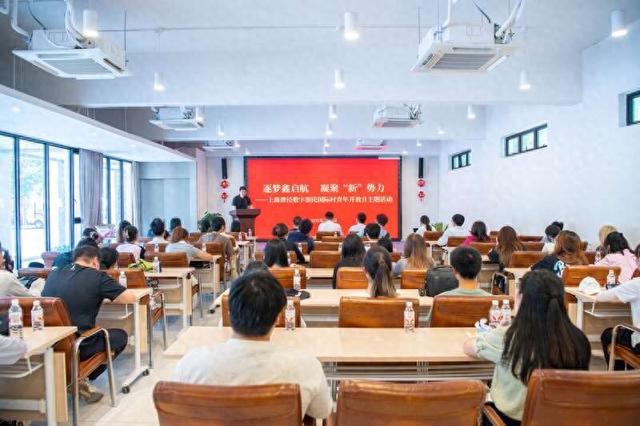
Group 1 - The first digital nomad youth league branch in China was established in Shanghai's Caojing Town, marking a significant step in supporting rural revitalization through youth entrepreneurship [1][3] - Digital nomads are individuals who leverage modern information technology and the internet to work remotely from various locations, a concept first introduced in 1997 [3] - The Caojing Digital Nomad International Village was launched in August last year, providing shared office spaces and youth stations to facilitate a flexible lifestyle for digital nomads, allowing them to work, vacation, learn, live, start businesses, and socialize simultaneously [3] Group 2 - A "Digital Nomad Service Package" was presented to the first group of digital nomad representatives, offering practical policy resources related to entrepreneurship, housing, and compliance guidance from local government departments [5] - The establishment of a legal service team from East China University of Political Science and Law aims to provide ongoing legal consultation, contract risk prevention, and intellectual property protection for digital nomads and local youth entrepreneurs [5]
江浙沪村漂,火了
投资界· 2025-06-22 07:23
Core Viewpoint - The article discusses the trend of young people moving to rural areas in Jiangsu, Zhejiang, and Shanghai as a response to high urban living costs and the desire for a more relaxed lifestyle, blending urban and rural living experiences [3][6][35]. Group 1: Urban to Rural Migration - An increasing number of young people are choosing to escape high consumption urban lifestyles by relocating to rural areas, viewing this as a form of "micro-escape" [3][6]. - The concept of "village drifting" has emerged, where individuals seek to retire or find solace in their hometowns, but many are now opting for rural living in developed areas near cities [6][8]. - Jiangsu, Zhejiang, and Shanghai's rural areas are described as hybrid spaces that offer a mix of urban amenities and rural charm, attracting young digital nomads and entrepreneurs [11][21]. Group 2: Lifestyle and Economic Opportunities - The rural lifestyle is characterized by a blend of leisure and entrepreneurial activities, with many young people using the internet to generate income while enjoying a relaxed environment [18][21]. - The article highlights that these rural areas are not merely places of retreat but are becoming hubs for creativity and business, with many young residents engaging in content creation and other ventures [15][16]. - The influx of urban dwellers has transformed some rural areas into vibrant communities with cafes, coworking spaces, and digital nomad networks, resembling a new form of entrepreneurial ecosystem [15][33]. Group 3: Challenges and Realities - Despite the appealing aspects of rural life, challenges such as inadequate infrastructure and the reality of rural living conditions remain significant concerns for new residents [8][34]. - The disparity between different rural areas is notable, with some villages offering modern amenities while others struggle with basic facilities, impacting the attractiveness of these locations [34]. - The article suggests that while many young people are drawn to the idea of rural living, the practicalities of sustaining such a lifestyle can be challenging, leading to a potential return to urban centers [34][35].