
文化数字化

Search documents
数字技术赋能齐鲁文脉,山东数字文化集团亮出文化科技融合新成果
Qi Lu Wan Bao· 2025-11-26 22:51
Core Insights - The Shandong Digital Culture Group is actively responding to national strategies by promoting cultural digitalization and has established itself as a key player in this mission [2][3] Group 1: Company Initiatives - The Shandong Digital Culture Group has been approved to build three provincial-level research platforms: Shandong New Media Key Laboratory, Shandong Digital Culture Innovation Laboratory, and Shandong Data Open Innovation Application Laboratory, which serve as strong foundations for technological research [2] - The group has applied for 60 invention patents and obtained over 140 software copyrights, leading the formulation of 8 industry technical standards and successfully creating benchmark products like the Qilu Cultural Model [2][3] Group 2: Cultural Integration and AI Development - The group has embraced artificial intelligence technology, developing significant projects that integrate culture and technology, including the Qilu Cultural Model, which utilizes over 20 million media data points [3][4] - The Qilu Cultural Model has received multiple recognitions, including being included in the 2025 Shandong Provincial Government Work Report and passing the China Academy of Information and Communications Technology's five-star evaluation for trustworthy AI [4] Group 3: Product Applications and Collaborations - The Shandong Digital Culture Group is expanding applications of the Qilu Cultural Model across various cultural domains, including the creation of models for Red Culture and Confucian Culture, and is working on additional local cultural models [5][6] - The group has developed several innovative platforms for cultural digitization, such as the "Star" intelligent entity development platform and the "Lingxi" platform for gamifying traditional culture [5][6] - Collaborations with 16 cities in Shandong, universities, and companies like Tencent and Inspur are being established to enhance cultural databases and promote AI and cultural data integration [6]
第十七届信博会开幕,山东数字文化集团精彩亮相
Qi Lu Wan Bao· 2025-11-26 07:17
Core Points - The 17th China (Jinan) International Information Technology Expo and "Artificial Intelligence +" Innovation Application High-end Summit was held in Jinan, marking a significant event in the information technology sector [1] - The expo is recognized as the only international regional information technology exhibition co-hosted by the United Nations Economic and Social Commission for Asia and the Pacific and China, having been successfully held for 16 years since 2002 [1] - Several industry models were launched, including five "Shandong Province Excellent Leading Industry Models" and ten "Shandong Province Excellent Innovative Industry Models," highlighting the advancements in digital culture and technology in Shandong [1] Company Highlights - Shandong Digital Culture Group showcased its independently developed Qilu Cultural Model, which received the title of "Shandong Province Excellent Innovative Industry Model" [1] - The group is a major state-owned cultural enterprise in Shandong, responsible for implementing national cultural digitization strategies and promoting the province's cultural and digital strengths [2] - The company has developed various digital platforms and products, including the "Memory Yiyuan" intelligent entity and the "Wenqu" digital creative interactive platform, which received positive feedback at the expo [1][2] Industry Engagement - Since its establishment, Shandong Digital Culture Group has participated in numerous significant cultural and technology exhibitions, gaining recognition from various sectors [3] - The group emphasizes the role of technology in driving cultural innovation and has launched several key products and platforms to enhance digital cultural services [2]
全球首个文物艺术品溯源元数据国际标准发布
Ren Min Ri Bao· 2025-11-21 19:32
Core Points - The "Metadata Standard for Tracking Cultural Relics and Artworks Based on Distributed Ledger Technology" was officially released at the 2025 Beijing International Cultural Relics Expo [1] - This standard is the world's first international standard for the traceability of cultural relics and artworks, led by China [1] - The establishment of this standard provides a unified common language for digital cultural exchanges among countries, promoting the digital transformation of the global cultural heritage industry [1] - It will also serve as a dialogue bridge for various applications of cultural relics and artworks in digital scenarios, including the internet and virtual reality [1]
Artec 3D 与雅昌携手,加速 AI 驱动的数字孪生技术在数字文博领域落地
Zhong Guo Jing Ji Wang· 2025-11-19 12:04
Core Insights - Artec 3D and Artron Culture Group have signed a strategic cooperation agreement focusing on cultural heritage digitization, advanced technology R&D, and global cultural innovation dissemination [1][2] - The partnership aims to integrate 3D and AI technologies with Artron's deep understanding of cultural heritage to enhance the digital preservation and sharing of art [1] Group 1: Partnership Details - The collaboration will involve joint R&D to create integrated 3D+AI solutions for museums and cultural institutions, focusing on digital twin construction, digital archiving, and online exhibitions [1] - Artec 3D is a leading company in handheld 3D scanning and AI-driven 3D reconstruction software, headquartered in Luxembourg [1] Group 2: Localization and Market Expansion - The partnership emphasizes "local adaptation" and "international market synergy," ensuring compliance with China's cultural relics digitization standards while leveraging Artec 3D's global technology network to expand into the European market [2] - Artron Culture Group plans to apply these technologies in various fields, including cultural relics and fashion design, to accelerate the digitization of Chinese art and promote cultural understanding [2] Group 3: Joint Laboratory and Innovation - A joint demonstration laboratory will be established in both China and Luxembourg to test and showcase 3D and AI integration technologies in cultural digitization [2] - The laboratory will focus on concept validation, industry workshops, professional training, and building a shared knowledge base to promote the widespread application of digital solutions in global cultural institutions [2]
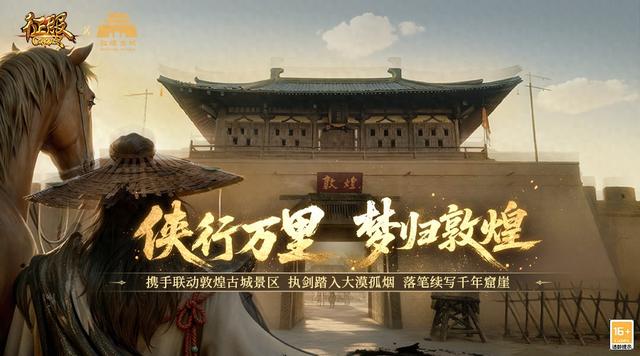
为敦煌搭建数字桥梁,网龙旗下《征服》江湖再现丝路文明盛景
Huan Qiu Wang· 2025-11-18 12:14
Core Insights - The article highlights the integration of digital technology and cultural industries, particularly focusing on the gaming sector as a platform for innovative transmission and dissemination of traditional culture [1][5][6] Group 1: Cultural Integration through Gaming - The game "Conquer" by Wanglong has launched a new profession "Hero" and an annual expansion pack "Heroic Spirit," incorporating elements of Dunhuang art into its gameplay, thus creating a digital representation of the Silk Road [1][3] - The game allows players to engage in immersive tasks that transform them from mere observers of history to active participants in Silk Road civilization [3][5] Group 2: Innovative Cultural Transmission - This design breaks the traditional one-way model of cultural dissemination, enabling a dynamic transformation of Dunhuang culture through playable digital scenes, thus broadening its reach [5][6] - The integration of "gaming + cultural tourism" is emerging, with initiatives like "reservation for expansion pack unlocking physical tickets," effectively converting players' virtual cultural interests into real-world experiences [6] Group 3: Global Cultural Influence - As a significant player in enhancing national cultural soft power, the game "Conquer" has been instrumental in showcasing Chinese cultural elements globally since its launch in 2004 [6][8] - Successful cultural products like "Black Myth: Wukong" indicate a shift in cultural storytelling consumption and demonstrate China's capability to create globally resonant cultural products [8]


从“2 人草根创业”到服务百强企业,这家AI公司靠“开箱即用”破局大厂竞争
Yang Zi Wan Bao Wang· 2025-11-11 00:33
Core Insights - The company, Yunwen Technology, has evolved from a small startup to a national-level specialized "little giant" enterprise in the field of artificial intelligence, focusing on natural language processing and expanding its services across various industries including home appliances, automotive, energy, and education [1][2] Group 1: Business Model and Strategy - The company has chosen not to develop general large models due to high investment costs, instead focusing on specific application scenarios that address industry pain points [2] - The AI TeachBot system, developed by the company, acts as an "online teacher" to facilitate training in various sectors, particularly for roles with high employee turnover [2][3] Group 2: Client Engagement and Success Stories - The AI TeachBot has been successfully implemented in the logistics sector, significantly reducing training costs and allowing for flexible, on-the-go training for employees [3] - The company has recently secured contracts with leading clients in both the logistics and tea beverage industries, demonstrating the effectiveness of its AI training solutions [3][4] Group 3: Expansion and Future Plans - The company is extending its AI applications beyond corporate services into cultural digitization, providing high-quality data sets for local historical archives [4] - The company aims to bridge the gap between large enterprises and clients by offering "ready-to-use" solutions, planning to expand its AI training model across various sectors including catering and human resources [5]

深圳文交所年交易额突破千亿元
Xin Hua Wang· 2025-11-05 09:28
Core Insights - The Shenzhen Cultural Property Exchange has achieved over 100 billion yuan in online transaction volume through its national cultural big data trading center this year, highlighting the growth of digital agriculture and cultural asset trading platforms [1] Group 1: Digital Transformation in Cultural Industry - The Shenzhen Cultural Property Exchange has expanded its projects to include digital new consumption and cultural technology assets, enhancing transaction scenarios and digital empowerment of the cultural industry [1] - The exchange has developed over 10 incubation cooperation projects, including cultural artworks and gold jewelry, to facilitate a diverse range of trading opportunities [1] Group 2: Addressing Core Challenges - Since its establishment in 2022, the national cultural big data trading center has focused on resolving key issues such as the difficulty in rights confirmation, pricing, and circulation of cultural data [1] - The exchange has created a dual-engine service system driven by "cultural property elements" and "cultural big data" to support efficient trading [1] Group 3: Innovative Trading Models - The Shenzhen Cultural Property Exchange has established a unique trading model that combines digital and physical elements, promoting the digitalization of artworks and the value transformation of cultural IP [1] - The exchange has implemented differentiated innovative trading scenarios, contributing to the efficient circulation of cultural data elements and the development of local cultural resources [1]
搭建全国文化大数据交易体系,深圳文交所今年交易额突破千亿
Nan Fang Du Shi Bao· 2025-11-04 13:37
Core Insights - The Shenzhen Cultural Property Exchange has achieved a significant milestone with a trading volume of 100 billion yuan on its national cultural big data trading platform, marking a transition from "scale breakthrough" to "value cultivation" in China's cultural digital strategy [1][4][8] Group 1: Cultural Data Trading Ecosystem - Since its establishment of the National Cultural Big Data Trading Center in 2022, the Shenzhen Cultural Property Exchange has focused on addressing core issues such as "difficulties in rights confirmation, pricing, and circulation" of cultural data [2][4] - The exchange has developed a dual-engine trading ecosystem that integrates "cultural property element" trading and "cultural big data" trading, facilitating a nationwide digital empowerment and the creation of specialized trading sub-platforms [2][4] - The recognition from the national level, as outlined in the 2024 policy document, emphasizes the exchange's mission to deepen pilot projects and continuously innovate cultural data trading scenarios [2][4] Group 2: Integration of Cultural Data and Industries - The exchange has successfully established a "digital infrastructure" for the efficient circulation of cultural data elements, enabling the realization of the 100 billion yuan trading volume [4][8] - The strategic focus is not only on expanding trading scale but also on enhancing the cultural big data service ecosystem, including services like "four-link closed-loop" services and digital asset recognition [4][8] - The exchange aims to promote the integration of culture, technology, tourism, and finance, positioning cultural data as a catalyst for innovation in the real economy [4][8] Group 3: Pathways and Standards for Empowering Industries - The exchange collaborates with various sectors to explore pathways and standard systems for empowering the real economy with cultural data, emphasizing "path innovation" and "standard co-construction" [6][8] - A closed-loop model is proposed, which includes "demand-driven—data supply—scenario implementation—value feedback," particularly in sectors like tourism and manufacturing [6][8] - Establishing a unified standard system is crucial for reducing participation costs and stimulating industry vitality, covering aspects from data classification to transaction security [6][8] Group 4: Future Directions and Strategic Goals - The trading volume of 100 billion yuan is seen as just the beginning, with higher demands for the release of cultural data value during the "14th Five-Year Plan" and "15th Five-Year Plan" periods [8] - Goals include enhancing national-level cultural digital infrastructure, ensuring data can be confirmed, priced, traded, and traced, and fostering collaboration between academia, research institutions, and enterprises [8] - The exchange's practices illustrate that cultural data is not only a trading asset but also a core element driving industrial upgrades, emphasizing the need for innovation, standards, and collaboration to nourish the real economy [8]

国资改革风口推升股价,前三季度亏损3.88亿元:湖北广电押注算力等翻身
Sou Hu Cai Jing· 2025-10-23 01:37
Core Viewpoint - Hubei Broadcasting's stock price surged due to favorable news regarding the provincial government's push for state-owned enterprise reform, despite the company reporting significant losses in its latest financial results [2][3][4]. Financial Performance - For the first three quarters of 2025, Hubei Broadcasting reported revenue of 1.136 billion yuan, a year-on-year decline of 13.27%, and a net loss of 388 million yuan [2][7]. - The company has experienced continuous losses since 2020, with a cumulative loss of 3.178 billion yuan from 2020 to 2024 [6][7]. - In the third quarter of 2025, revenue was 314 million yuan, down 18.42% year-on-year, with a net loss of 142 million yuan [7]. Business Transformation - Hubei Broadcasting is attempting to transition from traditional media to a technology-driven service provider by investing in the Guanggu Intelligent Computing Center, aiming to create a leading digital economy ecosystem in Central China [2][4][6]. - The company is focusing on optimizing resource allocation, shedding inefficient assets, and concentrating on core businesses such as broadcasting 5G and cultural digitization [4][5]. Market Context - The stock price volatility of Hubei Broadcasting is influenced by market sentiment and funding, with the recent surge linked to the provincial government's reform initiatives [3][4]. - The broader trend of state-owned enterprise reform in Hubei is expected to enhance operational efficiency and support Hubei Broadcasting's strategic adjustments [3][4]. Future Prospects - Analysts predict that Hubei Broadcasting will adopt a dual strategy, advancing in both streaming media and hardware computing sectors [4][5]. - The company is expected to leverage its existing infrastructure to support new business lines, including AI and big data services, which are increasingly reliant on computing power [7][8]. - Hubei Broadcasting's initiatives in cultural big data and digital economy projects are anticipated to create new revenue streams and enhance market confidence [5][8].


《遇见唐诗》长安篇横屏微短剧开机 国脉文化用AI解锁文化传承新表达
Zhong Zheng Wang· 2025-10-22 02:55
Core Insights - The project "Encounter Tang Poetry" is a significant cultural initiative that integrates AIGC technology with film production, setting a new benchmark for digital cultural development [1][2] - The series aims to innovate traditional Tang poetry representation by combining cultural heritage with modern technology, enhancing both artistic expression and audience engagement [1][2] Group 1: Project Overview - "Encounter Tang Poetry" consists of three parts, with the Chang'an chapter recently starting production in Hengdian [1] - The series will feature 60 episodes, with a total runtime of 100-120 minutes, expected to be completed and released by December 2025 [2] Group 2: Technological Integration - The project utilizes a self-developed AIGC content engine for scriptwriting, visual generation, and virtual scene construction, achieving full-process intelligent upgrades [1] - The integration of AI and XR technologies enhances the immersive experience and creates a unique perspective that juxtaposes modern thinking with Tang culture [1] Group 3: Cultural and Economic Impact - The series will create a "Tang Poetry Cultural Map" by linking landmarks and scenes from the Tang dynasty, contributing to the development of Xi'an as a "Tang Poetry Tourism Destination" [2] - Multi-channel distribution strategies, including television, video platforms, and short video matrices, aim to reach audiences of all ages and promote widespread dissemination of Tang poetry culture [2] Group 4: Future Developments - Following the Chang'an chapter, additional chapters focusing on the frontier and cuisine will be produced, forming a comprehensive "Tang Poetry Trilogy" IP matrix [2] - The project seeks to explore the integration of traditional culture with the film and tourism industries, injecting new momentum into cultural inheritance and innovative development [2]
