
智慧机场

Search documents
砥砺四十载 同心创未来 民航机场建设集团西北设计研究院成立40周年
Zhong Guo Min Hang Wang· 2025-12-12 02:27
Core Viewpoint - The Civil Aviation Northwest Design Institute celebrated its 40th anniversary, highlighting its significant contributions to airport infrastructure development in Northwest China and its evolution into a leading force in the industry [1][2]. Group 1: Company Development - Established in 1985, the Civil Aviation Northwest Design Institute has grown from a small team to a key player in civil aviation infrastructure, now capable of full-process design, consulting, supervision, and EPC contracting for 4F level airports [1]. - The institute has participated in over 90% of civil airport planning and design projects in Northwest China, including major projects like the expansion of Xi'an Xianyang International Airport and upgrades to regional airports [1]. Group 2: Technological Advancements - The institute has formed specialized technical teams to tackle challenges posed by the region's complex geological and climatic conditions, achieving significant technological breakthroughs and earning numerous national awards [2]. - It has integrated low-carbon concepts into its designs, exemplified by the innovative use of photovoltaic technology and rainwater recycling systems in the Xi'an Xianyang International Airport project, resulting in a 15% reduction in energy consumption compared to traditional designs [2]. Group 3: Industry Impact - The Northwest Civil Aviation Administration emphasized the institute's crucial role in transforming the regional aviation network from a scattered distribution to a comprehensive hub-and-spoke model, enhancing connectivity for local communities [2]. - The institute's services have expanded to over 60 cities nationwide and include airport planning, surveying, design, engineering supervision, and project management, contributing to major domestic and international airport projects [3]. Group 4: Future Directions - The institute aims to continue its focus on "smart airports, green airports, and safe airports," aligning with national strategies for civil aviation development and reinforcing its leadership in the industry [3].
“智慧”破局!深圳机场成模范试点
Shen Zhen Shang Bao· 2025-12-09 23:34
Core Viewpoint - The Shenzhen International Airport's pilot project for building a high-quality innovative international aviation hub has passed the acceptance review, indicating that the project has met its expected goals and has significant innovative and demonstrative value for the development of international aviation hubs and the Guangdong-Hong Kong-Macao Greater Bay Area [1][3]. Group 1: Pilot Project Achievements - The pilot project has improved the domestic and international route network layout of Shenzhen Airport, enhanced digital transformation, and advanced the development of the aviation logistics industry [1]. - The project has led to significant improvements in airport operational efficiency and management levels, as well as enhanced service quality [1]. - The pilot's outcomes are recognized for their innovation and leadership, providing a model for optimizing passenger travel experiences and smart logistics construction [1][3]. Group 2: Smart Operations and Services - Shenzhen has established a smart airport application architecture consisting of "one screen, three maps, eight platforms, and N systems," supporting over 70 smart applications [2]. - The intelligent allocation system for parking positions has been upgraded, allowing for the allocation of over 1,200 flights within 2 minutes, with a bridge arrival rate exceeding 85% [2]. - New facilities such as shower rooms and sleep pods have been introduced, along with a one-stop service center for foreign personnel, enhancing the overall passenger experience [2]. Group 3: Smart Logistics Development - Shenzhen has successfully built a smart cargo security inspection system, utilizing the world's first radiation-type X-ray computed tomography inspection system for air cargo [2]. - The system allows for efficient tracking of cargo with unique barcodes, enabling domestic tracking at the item level and international tracking at the waybill level [2]. - This development supports emerging industries such as cross-border e-commerce and fresh cold chain logistics, enhancing the economic role of the aviation hub [3]. Group 4: Broader Implications - The acceptance of the pilot project signifies national recognition of Shenzhen's innovative path in aviation hub construction [3]. - The project is not limited to airport construction but integrates the aviation hub with urban industrial development, aligning international route expansion with the global needs of high-end manufacturing in the Greater Bay Area [3]. - As Shenzhen Airport's capacity continues to grow, it is expected to further drive the development of the airport-related industrial cluster and support Shenzhen's high-level opening-up [3].

“高品质创新型国际航空枢纽”啥模样?深圳给出答案
Di Yi Cai Jing· 2025-12-09 01:41
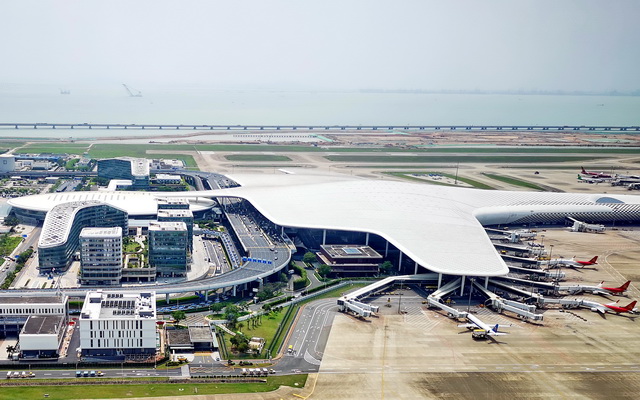
深圳市打造"高品质创新型国际航空枢纽",突出体现在"智慧"二字 国际及地区客运航点达到55个,每周计划航班量超900架次;国际及地区货运航点超40个,每周全货机 航班量近820架次;加密国内前十大机场航线,增强与京津冀、长三角、成渝三大城市群的通达性…… 深圳市"打造高品质创新型国际航空枢纽"的试点任务已取得成效。 第一财经记者从交通运输部了解到,该部日前会同中国民航局组织开展了深圳市"打造高品质创新型国 际航空枢纽"试点任务验收。验收意见称,深圳市"打造高品质创新型国际航空枢纽"试点任务内容基本 完成,达到试点预期目标。 航拍深圳机场。摄影/章轲 据深圳市试点单位介绍,深圳市"打造高品质创新型国际航空枢纽"试点,突出体现在"智慧"二字:聚焦 智慧运行,全面提升机场保障效率;聚焦智慧服务,打造优质旅客出行体验;聚焦智慧物流,持续提高 航空货运品质。 深圳机场形成统一的信息交换、服务调用、数据共享能力,为机场70余项智慧化应用提供支撑。全天超 1200架次航班可在2分钟内完成分配,航班靠桥率提升至85%以上。 在深圳机场,航站楼内新建了淋浴间、睡眠舱,打造外籍人员一站式综合服务中心,构建集支付、文 旅、通信、交 ...

新疆机场集团克拉玛依古海机场2025年货邮吞吐量突破千吨
Zhong Guo Min Hang Wang· 2025-12-04 11:34
Core Insights - The Karamay Guhai Airport in Xinjiang has successfully achieved a cargo throughput of 1,001.994 tons by December 4, 2025, marking a significant milestone in its logistics development [1][2] - The airport is a crucial node in Xinjiang's air cargo network, with ongoing expansion projects aimed at enhancing flight operations and cargo services [1][2] Group 1: Cargo Development - The airport has established a robust air logistics network, maintaining existing routes while introducing new postal logistics channels to cities like Hangzhou and Xi'an, with plans for routes to Beijing and Chengdu [1][2] - The airport has optimized its cargo handling processes through innovative "one-stop" transfer models, improving the efficiency of local goods transportation by over 30% [2] Group 2: Future Plans - Ongoing expansion projects at the airport are set to strengthen its air cargo capabilities, with plans to extend routes to major domestic hubs such as Xi'an, Zhengzhou, and Chengdu [2] - The airport aims to enhance its logistics services and continue developing as a key air cargo hub to support the Silk Road Economic Belt [2]
中小机场探索“起飞”新路径
Jing Ji Ri Bao· 2025-11-13 22:20
Core Viewpoint - The development of small and medium-sized airports is crucial for China's civil aviation network and regional economic growth, with 189 out of 267 certified transport airports being small and medium-sized, representing 71% of the total [1] Group 1: Current Challenges and Opportunities - Small and medium-sized airports face challenges such as the need to improve operational safety, enhance planning and design, and strengthen construction management capabilities [1] - In 2024, small and medium-sized airports are projected to account for only 16.6% of the total passenger throughput of all transport airports in China, indicating both challenges and significant growth potential [1] Group 2: Regulatory and Technological Enhancements - There is a need to comprehensively improve the regulatory framework for small and medium-sized airports, ensuring that policies are updated and aligned with national strategies like rural revitalization and regional coordinated development [2] - China Aviation Information Group has developed cloud-based, lightweight, and modular smart airport solutions to address the unique needs of small and medium-sized airports, aiming to make them efficient and modern [2] Group 3: Innovative Development in Specific Regions - Chengdu's Shuangliu District is focusing on developing a comprehensive aviation industry chain, including research, manufacturing, and maintenance, leveraging resources from major companies like COMAC and Airbus [3] - Yunnan Airport Group has established a collaborative operational platform that integrates various data-sharing capabilities to enhance safety and efficiency in airport management [3] Group 4: Smart Solutions in Airport Operations - Ezhou Huahu Airport has implemented a digital twin airport model and developed a real-time flight data tracking system, achieving 100% accuracy in predicting the arrival times of international cargo flights [4] - The airport has also built an intelligent weather forecasting platform that utilizes AI technology, improving the accuracy of severe weather predictions from 90% to 95% [4]
兰州中川机场启用RFID行李轨迹全程可追 查找3分钟搞定
Zhong Guo Min Hang Wang· 2025-11-13 08:36
Core Insights - Lanzhou Zhongchuan International Airport has officially launched an RFID baggage tracking system, enhancing the visibility and traceability of checked baggage management, showcasing the airport's leading position in the industry and reflecting its accelerated technological upgrades [1][2]. Group 1: RFID System Features - The RFID system utilizes UHF RFID electronic tags and 360° recognition technology, achieving a recognition rate of 99.99%, significantly improving from the traditional barcode's 78%, even under adverse conditions such as heavy rain and humidity [1][2]. - The system automatically collects real-time data at key points such as check-in, security checks, sorting, and loading, allowing passengers to receive real-time baggage updates through the airport's WeChat account [2]. Group 2: Operational Efficiency - The implementation of the RFID system has reduced the abnormal baggage rate to 1.12 per 10,000, improved baggage search efficiency by 80%, and eliminated large-scale misloading and missing baggage issues, thereby reducing manual intervention costs and alleviating passenger anxiety regarding lost luggage [2]. - The system includes features such as error alerting for misloaded baggage, automatic baggage count verification, and a "search by image" function that allows for precise baggage location within three minutes [2]. Group 3: Technological Advancements - The RFID baggage system represents a broader trend of technological advancement at Lanzhou Zhongchuan Airport, which has seen comprehensive upgrades in infrastructure and smart services over the past five years, including the construction of the T3 terminal and the integration of various advanced technologies [3]. - The airport's transportation hub capabilities have also been enhanced, with the opening of the East Station high-speed rail, allowing seamless transfers between air, rail, and long-distance bus services, contributing to a more efficient travel ecosystem [3].
中机认检(301508) - 301508中机认检投资者关系管理信息20251105
2025-11-05 11:08
Group 1: Financial Performance - In Q3 2025, the company achieved revenue of 221.35 million CNY, a year-on-year increase of 20.61% [3] - For the first three quarters of 2025, total revenue reached 609.40 million CNY, reflecting a year-on-year growth of 7.67% [3] - The gross profit margin for Q3 2025 was 47.12%, showing an increase compared to the same period last year [3] Group 2: Business Strategy and Growth - The revenue growth is primarily driven by the continuous market expansion in the testing business, particularly in passenger vehicle testing [3] - The company plans to maintain gross profit levels by enhancing market development and high-value-added services, as well as improving operational efficiency and cost control [3] - The core growth areas for future business expansion are focused on three main directions: deepening core business advantages, releasing capacity from key bases, and addressing emerging testing demands in strategic industries [3] Group 3: Strategic Initiatives - The company has established a "3+1+3" strategic layout to align with the development needs of strategic emerging industries [3] - Key production bases, such as the Shandong New Energy Testing Base, will support the scale expansion of the testing business [3] - New testing fields, including new energy vehicle testing and smart connectivity, are expected to drive future business growth [3]
白云机场前三季度净利润同比增长64.06% 稳健运营驱动高质量发展
Zheng Quan Ri Bao Wang· 2025-10-30 13:13
Core Insights - Guangzhou Baiyun International Airport Co., Ltd. reported a revenue of 5.697 billion yuan for the first three quarters of 2025, representing a year-on-year increase of 7.48% [1] - The net profit attributable to shareholders reached 1.096 billion yuan, showing a significant year-on-year growth of 64.06% [1] Company Overview - Baiyun Airport is one of the three comprehensive international aviation hub airports in China and is a key airport in the Guangdong-Hong Kong-Macao Greater Bay Area [1] - As of June 2025, the airport has established business relationships with 78 domestic and foreign airlines, with a route network covering all five continents [1] Operational Excellence - The company has extensive experience in large airport operations and management, having developed the first set of airport service standards in China [1] - Baiyun Airport is recognized as the first airport in Asia to receive SGS service certification and the first in China to obtain ISO9000 certification [1] - The airport has achieved industry-leading operational management levels and was the first in China to fully transfer ground control operations for airports with over 30 million passengers [1] Safety and Innovation - Baiyun Airport has celebrated its 32nd year of safety as of 2024 [1] - The company is actively promoting the construction of a smart airport and has established a technology innovation research center to explore new technologies such as digital employees and unmanned driving [2] - The focus is on creating a convenient, comfortable, and personalized travel experience for passengers through information technology [2]

“3座航站楼+5条跑道”“智慧+文化”,亮点拉满!多视角解锁这座大型航空枢纽
Yang Shi Wang· 2025-10-30 05:02
Core Points - The Guangzhou Baiyun International Airport Phase III expansion project officially commenced operations on October 30, 2023, featuring the new T3 terminal and the fifth runway, enhancing the airport's capacity and supporting the development of a world-class airport cluster in the Guangdong-Hong Kong-Macao Greater Bay Area [1][3]. Investment and Economic Impact - The total investment for the Guangzhou Baiyun International Airport Phase III expansion is approximately 53.77 billion yuan, with the T3 terminal covering an area of 422,000 square meters, consisting of five above-ground floors and two underground levels [3]. - The new facilities will boost Guangzhou's air passenger and cargo transport capabilities, attracting more businesses in the aviation industry, including aircraft maintenance, aviation materials trade, and cross-border e-commerce, thereby accelerating the integration of the aviation industry with regional economic development [5]. Transportation and Connectivity - The expansion includes a comprehensive transportation center that integrates metro, intercity, and high-speed rail lines, creating a seamless multi-modal transport hub. This allows for a 30-minute access to downtown Guangzhou and a 60-minute reach to various cities in the Greater Bay Area, establishing a "one-hour traffic circle" [5]. Technological Advancements - The T3 terminal features advanced technology, including facial recognition for check-in and security processes, significantly enhancing efficiency and passenger experience. The system can complete identity verification every six seconds with an error rate of less than 0.1% [9]. - Luggage tracking is improved through an underground system with visual scanning capabilities, allowing passengers to monitor their luggage in real-time via a mobile app [10]. Architectural Design and Features - The T3 terminal's design is inspired by the theme of "flowers," reflecting Guangzhou's cultural identity. It includes a unique skylight design and a large-scale stainless steel roof that is both aesthetically pleasing and functional for the region's climate [19][18]. - The terminal also features the only outdoor observation deck in a Chinese airport, providing a panoramic view of the airport's operations [22][24]. Cultural Integration - A distinctive commercial street within the terminal incorporates traditional Lingnan architectural styles, offering dining and shopping options that enhance the travel experience [20].

敦煌国际机场获国际智慧奖项 甘肃民航以增长势能打造丝路空港标杆
Zhong Guo Min Hang Wang· 2025-10-23 01:56
Core Insights - The 13th International Smart Airport Development Conference recently took place in Shanghai, where Dunhuang Mogao International Airport won the "Smart Airport Innovation Service Award" for its solid smart service practices and innovative breakthroughs [1] - This recognition highlights the quality of service at a single airport and reflects the overall development trend of Gansu's civil aviation towards quality and quantity improvement by 2025 [1] Group 1: Smart Airport Development - Dunhuang Airport is integrating technology innovation into all aspects of passenger travel, focusing on "smart empowerment and service quality enhancement" [2] - The airport has upgraded smart check-in equipment and promoted self-service security channels to create a "contactless, high-efficiency" travel experience, significantly reducing passenger wait times [2] - On October 5, Dunhuang Airport achieved a record daily passenger throughput of 8,425, marking a historical high in its 43-year history [2] Group 2: Network Expansion and Cultural Integration - Dunhuang Airport has adopted a differentiated development approach within Gansu's civil aviation network, connecting key regions and enhancing tourism orders through route expansion [3] - The airport incorporates Dunhuang cultural elements into its smart service interfaces, merging technology with cultural experiences to enhance competitiveness [3] - By 2025, the airport plans to open 35 passenger routes, including 7 international routes, aligning with the "international connectivity" strategy of Gansu's civil aviation [3] Group 3: Future Plans and Innovations - The award for Dunhuang Airport is a testament to Gansu's ongoing innovation in civil aviation, with plans to deepen the integration of "smart + cultural tourism" and optimize service processes [4] - The airport aims to further increase international routes and enhance smart service capabilities, contributing to the overall development of smart civil aviation in Northwest China [4]