
智能微电网

Search documents
东方日升(300118):光伏组件量利承压 HJT降本提效成果显著
Xin Lang Cai Jing· 2025-09-10 06:40
Core Viewpoint - The company reported a significant decline in revenue and net profit for the first half of 2025, indicating challenges in the solar energy market and increased competition [1][4]. Group 1: Financial Performance - In H1 2025, the company achieved operating revenue of 7.44 billion yuan, a year-on-year decrease of 28.8%, and a net profit attributable to shareholders of -680 million yuan, an improvement from -960 million yuan in the same period last year [1]. - For Q2 2025, the company reported operating revenue of 4.45 billion yuan, a year-on-year decrease of 19.4%, but a quarter-on-quarter increase of 48.9%, with a net profit of -410 million yuan [1]. - The gross profit margin for H1 2025 was 3.1%, down 5.9 percentage points year-on-year, while Q2's gross profit margin was 1.5%, down 8.3 percentage points year-on-year and 3.9 percentage points quarter-on-quarter [1]. Group 2: Business Segments - The solar cell and module business generated revenue of 3.81 billion yuan in H1 2025, a year-on-year decrease of 54.0%, with a gross margin of -4.5%, down 11.5 percentage points [2]. - The module business alone accounted for 3.75 billion yuan in revenue, also down 54.1% year-on-year, with sales volume of 5.7 GW, a decrease of 28% [2]. - The company is a leader in the HJT sector, optimizing product structure and accelerating the iteration of N-type high-efficiency capacity, achieving a cell conversion efficiency of over 26.60% and module efficiency of over 24.70% by August 27, 2025 [2]. Group 3: Energy Storage and Photovoltaic Integration - The energy storage system, lighting, and auxiliary photovoltaic products generated revenue of 480 million yuan in H1 2025, a year-on-year increase of 0.3%, with a gross margin of 18.2%, down 8.0 percentage points [3]. - The energy storage integration business focuses on large-scale systems primarily targeting the European and American markets, maintaining a record of zero safety incidents globally [3]. - The company is actively developing commercial distributed photovoltaic power station businesses, with integrated "solar-storage" and "solar-storage-charging" solutions already commercialized [3]. Group 4: Profit Forecast and Investment Suggestions - The company faces intensified industry competition, impacting shipment scale and profitability, with projected revenues of 16.19 billion yuan, 21.53 billion yuan, and 28.20 billion yuan for 2025-2027, reflecting year-on-year growth rates of -20.0%, 33.0%, and 31.0% respectively [4]. - Expected net profits for the same period are -830 million yuan, 430 million yuan, and 1.20 billion yuan, indicating a narrowing loss, a return to profitability, and a growth rate of 176.2% [4]. - The company is positioned as a leading HJT enterprise with advanced R&D and capacity reserves, likely to benefit from improvements in the photovoltaic industry fundamentals [4].

新型电力系统商业化加速,央企现代能源ETF(561790)近一周涨幅居同类首位,太阳能领涨
Xin Lang Cai Jing· 2025-09-03 06:33
Group 1 - The China Securities Index for modern energy enterprises has seen a decline of 1.08% as of September 3, 2025, with solar energy stocks leading the gains at 4.71% [3] - The ETF tracking this index, the Central State-owned Modern Energy ETF, has decreased by 1.30%, with a latest price of 1.14 yuan [3] - Over the past week, the ETF has shown a cumulative increase of 0.43%, ranking in the top third among comparable funds [3] Group 2 - The National Energy Administration has issued measures to support the development of private enterprises in the energy sector, including promoting virtual power plants and smart microgrids [4] - China Power Construction Corporation reported a new contract amount of 431.39 billion yuan in the first half of 2025, representing a year-on-year growth of 12.27% [4] - The company is focusing on renewable energy to create a second growth curve, optimizing its business structure for future performance [4] Group 3 - As of August 29, 2025, the top ten weighted stocks in the modern energy index account for 48.28% of the total index, including major companies like China Yangtze Power and China Nuclear Power [5] - The Central State-owned Modern Energy ETF closely tracks the modern energy index, which includes 50 listed companies involved in green energy and fossil energy [4][5]


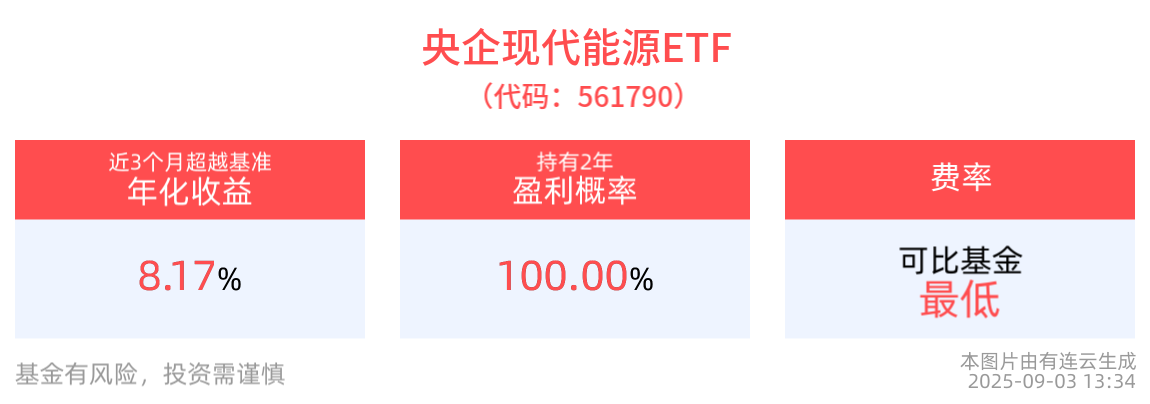
宁德时代携手常州构建千亿级生态圈
起点锂电· 2025-08-30 10:10
Core Viewpoint - CATL has signed a strategic cooperation framework agreement with the Changzhou Municipal Government to jointly explore new paths for building a zero-carbon ecological city and promote the application of renewable energy in urban scenarios [2] Group 1: Microgrid Development - The partnership aims to expand the "generation-storage-distribution-usage" ecosystem and cultivate microgrid projects, targeting the formation of a microgrid industry cluster worth hundreds of billions [2] - Microgrids consist of distributed power sources, energy storage, energy conversion devices, and monitoring systems, enhancing power system reliability and reducing energy costs [2] - The smart microgrid has transitioned from technology validation to large-scale application, becoming a key support for urban energy transformation [2] Group 2: New Ecological Initiatives - Beyond microgrid development, the collaboration will focus on six new ecosystems, including battery swapping, vehicle-grid interaction, low-altitude economy, full electrification, advanced batteries, and renewable energy industries [2] - The partnership will promote intellectual property protection and explore deep integration paths for new energy and new energy industries [2] - The goal is to create replicable and scalable experiences for zero-carbon city construction based on Changzhou's model [2]


2GWh!中电装储能中标两大储能项目
中关村储能产业技术联盟· 2025-08-27 06:23
Core Viewpoint - The article highlights the significant achievements of China Electric Power Equipment and Technology Co., Ltd. (CEPETC) in the energy storage sector, showcasing its recent project wins and overall growth in system shipments [2][3]. Group 1: Project Wins - CEPETC has recently won two energy storage projects, marking a strong presence in the market [2]. - On August 25, the company secured a bid for a 100MW/400MWh independent energy storage project at the Xinjiang Huadian Urumqi Photovoltaic Base [4]. - On August 26, it won a bid for a 400MW/1600MWh independent energy storage project in Chifeng City, Inner Mongolia [4]. Group 2: Market Position and Performance - According to data from the China Energy Storage Industry Technology Alliance (CNESA), in the first half of 2025, CEPETC's domestic and global energy storage system shipments ranked among the top five in the industry [3]. - The company has successfully entered high-profile centralized procurement projects with major state-owned enterprises, with a total framework scale exceeding 36GWh [3]. Group 3: Cumulative Achievements - To date, CEPETC has shipped over 40GWh of energy storage systems, contributing to the establishment of over 500 energy storage projects globally [5]. - The company has played a role in building the world's largest virtual synchronous technology demonstration project and the first 100MWh intelligent string-type grid-connected energy storage project [5].
EzFill (EZFL) - 2025 Q2 - Earnings Call Transcript
2025-08-15 14:00
Financial Data and Key Metrics Changes - Q2 revenue reached $19.7 million, an increase of $166 million year over year, with first half revenue totaling $36 million compared to $27.7 million for all of 2024 [15] - Gross profit was $1.6 million, up from $600,000 in Q1, with gross margin expanding from 3% in Q1 to 8% in Q2 [16] - Loss from operations was $30.8 million, including a non-cash stock-based compensation charge of $25.5 million, resulting in an adjusted operating loss of $5.2 million compared to $5.8 million in Q1 [17] Business Line Data and Key Metrics Changes - EZ Fill expansion generated $19.7 million in revenues for Q2, bringing total revenues to $36 million for 2025, exceeding the full year 2024 volume of $27.7 million [6] - The smart microgrid platform is gaining traction, with proposals for full smart microgrid solutions being requested by clients, indicating a shift towards AI-enabled energy solutions [7][8] Market Data and Key Metrics Changes - The company is expanding its EZ Fill footprint in 15 metro markets, up from 10, focusing on operational density and efficiency [6] - The sales pipeline is diversifying, targeting both behind-the-meter and in-front-of-the-meter solutions, indicating a broadening market approach [9] Company Strategy and Development Direction - The strategic focus includes expanding the EZ Fill footprint, scaling smart microgrid deployments, and advancing wireless charging commercialization [13] - The company aims to build a fully integrated energy platform powered by AI, emphasizing resilience and efficiency in energy infrastructure [5][14] Management's Comments on Operating Environment and Future Outlook - Management expressed confidence in achieving breakeven in the coming quarters, driven by accelerating revenue, improving margins, and better cash efficiency [19] - The company acknowledges the need for digitizing the energy grid globally, with potential annual savings of over $5 trillion if their technologies are widely implemented [39] Other Important Information - The company is focused on maintaining a flexible balance sheet and plans to raise capital to support disciplined growth strategies [18] - Management clarified that their technology is agnostic to fuel sources, allowing for efficient energy production regardless of the method used [36] Q&A Session Summary Question: Can you elaborate on the flywheel concept and its impact on the business? - The flywheel refers to the integration of various technologies that create a comprehensive energy solution for different sectors, allowing for local energy generation and storage [24][25] Question: Can you discuss the California projects and their timing? - The California projects are healthcare-oriented, focusing on providing backup energy solutions mandated by law, utilizing both natural gas and solar technologies [28][30] Question: Can you explain the technology's agnostic nature to fuel sources? - The technology allows for efficient energy production from various fuel sources, ensuring redundancy and operational efficiency across different energy generation methods [34][36]
中国微电网行业竞争策略及投资风险展望报告2025~2031年
Sou Hu Cai Jing· 2025-07-05 16:02
Overview of Microgrid Development - The report provides a comprehensive overview of the microgrid industry, including definitions, classifications, and key characteristics of microgrids [4][5] - It highlights the necessity of developing microgrids in China, addressing issues such as the reliability of the existing power grid and the integration of renewable energy sources [4][5] Regulatory Framework - The report outlines the regulatory framework governing the microgrid industry in China, detailing the supervisory bodies and self-regulatory organizations involved [5][6] - It also discusses the current standards applicable to the microgrid sector, including national, industry, and local standards [5][6] Market Analysis - The current state of the microgrid market in China is analyzed, including market size, application trends, and the competitive landscape [6][7] - The report identifies key players in the microgrid industry and assesses the concentration of competition within the market [7] Technological Advancements - Significant advancements in renewable energy generation technologies relevant to microgrids are discussed, including wind, solar, and biomass energy [8][9] - The report also covers developments in energy storage technologies, emphasizing the role of batteries and other storage solutions in enhancing microgrid efficiency [8][9] Investment Opportunities - The report identifies potential investment opportunities within the microgrid sector, particularly in storage projects and renewable energy platforms [19][20] - It emphasizes the importance of innovative marketing strategies and market entry points for companies looking to capitalize on the growing microgrid market [19][20] Future Trends - The report forecasts future trends in the microgrid industry, predicting a shift towards smarter, more integrated systems that leverage renewable energy sources [19][20] - It also discusses the anticipated growth of the microgrid market, driven by increasing demand for reliable and efficient energy solutions [19][20]

关于组织开展新型电力系统建设第一批试点工作的通知
国家能源局· 2025-06-04 11:24
Core Viewpoint - The article outlines the initiation of pilot projects for the construction of a new power system, focusing on innovative technologies and models to enhance the integration and efficiency of renewable energy sources [1]. Group 1: Overall Requirements - The pilot projects will focus on seven key directions: grid-structured technology, system-friendly renewable power plants, smart microgrids, synergy between computing power and electricity, virtual power plants, large-scale high-proportion renewable energy delivery, and new-generation coal power [2]. - The approach will be tailored to local conditions, encouraging the adoption of new technologies and models while ensuring comprehensive management throughout the project lifecycle [2]. Group 2: Pilot Directions - **Grid-Structured Technology**: Aimed at areas with high renewable energy integration, this technology will address issues like reduced short-circuit capacity and enhance the stability of power supply [3]. - **System-Friendly Renewable Power Plants**: New or upgraded plants will improve system compatibility, with a target of increasing output reliability by over 10% during peak hours [4]. - **Smart Microgrids**: These will enhance self-regulation and balance capabilities, increasing the proportion of self-consumed renewable energy [5]. - **Synergy Between Computing Power and Electricity**: This involves planning for data centers' green electricity needs and optimizing the use of renewable resources [6]. - **Virtual Power Plants**: These will aggregate distributed energy resources to enhance flexibility and support renewable energy consumption [7]. - **Large-Scale High-Proportion Renewable Energy Delivery**: Focused on specific regions, this aims to improve the delivery of green electricity through advanced technologies [8]. - **New-Generation Coal Power**: This will promote cleaner and more efficient coal power generation, aligning with carbon reduction goals [9]. Group 3: Organization and Implementation - **Pilot Application**: Applications for pilot projects will be organized by provincial energy authorities or central enterprises, with a focus on feasibility and technical economics [10]. - **Pilot Review**: A third-party professional organization will evaluate applications based on established criteria, selecting projects for the first batch of pilots [11]. - **Project Implementation**: Local energy authorities and project units must adhere to the approved plans, with any significant changes requiring further approval [12]. Group 4: Support Policies - Supportive policies will be developed to facilitate pilot projects, including funding channels and prioritization of coal power projects that align with renewable energy initiatives [13]. - The results of the pilot projects will be integrated into the evaluation system for the new power system, influencing future assessments [14].

众智科技(301361) - 2025年5月21日投资者关系活动记录表
2025-05-23 07:26
Group 1: Product Overview - The company's engineering machinery controllers are applicable in various scenarios, including fuel-driven and electric-driven equipment such as pumps and drilling machines, serving industries like irrigation and mining [2][3]. - The new energy and hybrid energy business segment includes products related to smart microgrids and energy management systems, with ongoing development of energy storage inverters [4]. - The company has achieved domestic substitution for core products, reducing reliance on foreign technology and components, and is actively developing a series of domestically produced products [5]. Group 2: Market Applications - Marine generator controllers and engine controllers are used in various types of vessels, with certifications from multiple international marine classification societies [7]. - The company's products are designed for data centers, providing backup and emergency power solutions, with market opportunities driven by downstream equipment sales [8]. Group 3: International Expansion - The company exports products to over 70 countries and regions, utilizing a distributor model for overseas market development and actively participating in international trade shows [8].

【联合发布】新能源商用车周报(2025年4月第5周)
乘联分会· 2025-05-06 08:43
Market Overview - The sales of new energy commercial vehicles reached 78,047 units in March 2025, a 50.39% increase compared to the same month last year, with a penetration rate of 22.29% [6] - For the first quarter of 2025, total sales were 159,998 units, representing a 66.06% increase year-on-year, with a penetration rate of 20.18% [6] Policy Developments - The Ministry of Transport and ten other departments released guidelines to promote the integration of transportation and energy, aiming for non-fossil energy installations along transport routes to exceed 5 million kilowatts by 2027 and for pure electric vehicles to become mainstream by 2035 [5][10] - The National Energy Administration announced measures to support the development of the private sector in the energy field, including the promotion of virtual power plants and smart microgrids [5][9] Industry Data - The sales of electric trucks surged by 78.04% year-on-year in March 2025, with a penetration rate of 15.69% [6] - Heavy-duty trucks saw a remarkable increase of 180.91% year-on-year, with a penetration rate of 19.82% [6] Company Developments - Jianghuai Automobile launched the ES9 new energy light truck in Shenzhen, targeting the logistics market with its performance and efficiency [15] - Huawei Digital Energy aims to achieve a "ten kilometers per kilowatt-hour" standard, enhancing the electric vehicle experience [19] - Weir Electric achieved a significant breakthrough in the industrialization of its X-PIN stator line, with daily output surpassing 800 units and a yield rate exceeding 92% [19] Infrastructure Initiatives - The Chengdu government issued policies to enhance electricity supply capabilities, promoting smart charging facilities [8] - The guidelines emphasize the construction of charging and hydrogen stations to support the transition to clean energy vehicles [13] Export Performance - BYD led the export of new energy buses in Q1 2025, with 945 units sold, marking a 55.43% year-on-year increase and capturing a market share of 31.53% [19]

一季度可再生能源占新增装机约九成 支持民企投资能源基础设施举措出台
Ren Min Ri Bao· 2025-05-05 21:45
Group 1: Energy Supply and Consumption - The National Energy Administration reported that energy supply is sufficient, consumption is growing, and the overall supply-demand situation is relaxed with stable prices showing a downward trend [1] - In the first quarter, renewable energy accounted for 90% of new installed capacity, with an increase of 76.75 million kilowatts, representing a year-on-year growth of 21% [1] - Renewable energy generation reached 816 billion kilowatt-hours in the first quarter, a year-on-year increase of 18.7%, making up 35.9% of total electricity generation [1] Group 2: Nuclear Energy Development - The operational and approved nuclear power installed capacity in China exceeds 120 million kilowatts, with a projected nuclear power generation of 450.9 billion kilowatt-hours in 2024, accounting for 4.5% of total generation [1] - The government plans to support the development of advanced nuclear technologies, including fourth-generation reactors and small modular reactors [1] Group 3: Hydrogen Energy Sector - Hydrogen energy is a key focus, with a projected production and consumption scale exceeding 36.5 million tons in 2024, making China the world's largest producer [2] - Over 600 renewable energy electrolysis hydrogen production projects are planned, and more than 540 hydrogen refueling stations have been established [2] - Approximately 24,000 fuel cell vehicles have been promoted as part of the ongoing demonstration applications [2] Group 4: Investment in Energy Sector - Energy investments have shown rapid growth, with a 12.9% year-on-year increase in investment in key energy projects in the first two months [2] - Investments in offshore wind, new energy storage, power grids, and nuclear power are growing quickly [2] Group 5: Support for Private Enterprises - The National Energy Administration has issued a notice to support private enterprises in enhancing development momentum and fair market participation [3] - Private enterprises account for over 80% of operators with more than 10,000 charging facilities, indicating their significant role in the energy sector [3] - New nuclear power projects approved recently have at least 10% shareholding from private enterprises, highlighting their increasing involvement in energy infrastructure [3]