用户运营

Search documents
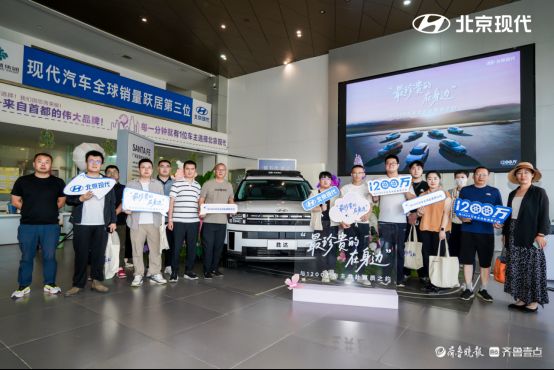
“最珍贵的在身边”车主系列活动济南站启幕 北京现代邀您共赴“真质之约”
Qi Lu Wan Bao· 2025-05-26 06:05
Core Viewpoint - Beijing Hyundai is redefining its user engagement strategy through the "Most Precious is Around" campaign, focusing on creating genuine value for users in a highly competitive automotive market [1][3][7] Group 1: Campaign Overview - The "Most Precious is Around" campaign invites car owners to share their vehicle experiences, offering cash prizes and hosting offline events in cities like Jinan and Zhengzhou [1][3] - The first offline event in Jinan featured exclusive experiences and activities aimed at enhancing the quality of life for participating families [1][5] Group 2: Service Philosophy - The campaign reflects a shift in Beijing Hyundai's approach to automotive services, emphasizing the creation of real value for users rather than traditional marketing tactics [3][7] - The "True Quality" concept represents both a commitment to product quality and a sincere relationship with users [3][5] Group 3: User Experience Innovations - Interactive experiences at the event included a professional photo studio, DIY workshops, and unique activities that elevate the service experience beyond traditional automotive offerings [5][7] - The event's gold prize draw symbolizes Beijing Hyundai's understanding of user relationships, focusing on creating memorable experiences rather than merely distributing prizes [5][7] Group 4: Industry Context - The automotive industry is shifting from a focus on product performance to a comprehensive service experience, with user engagement becoming a key competitive dimension [7] - Beijing Hyundai's approach aims to transform 4S dealerships into social and experiential spaces for users, extending services beyond vehicles to encompass all aspects of user life [7] Group 5: Long-term Strategy - With over 12 million loyal customers, Beijing Hyundai is committed to extending user engagement from traditional services to emotional resonance and value co-creation [7] - The "Most Precious is Around" campaign exemplifies Beijing Hyundai's strategy of building deep trust with consumers, aligning with its mission of "In China, For China, Towards the World" [7]

星巴克降价,但晚了整整五年,如何翻身
3 6 Ke· 2025-05-06 10:58
Group 1 - Starbucks' competitive strategy has become ineffective due to market changes and the rise of local competitors like Luckin Coffee [2][3] - The differentiation advantage that Starbucks once had has diminished as consumers now have many alternatives for socializing and coffee consumption [3][4] - The focus on professional coffee consumption has led to a misjudgment of local market demands, as many consumers prefer milk-based beverages over pure coffee [3][4] Group 2 - Luckin Coffee has successfully identified and catered to the needs of non-professional consumers by offering popular products that align with local tastes [4][5] - The economic downturn and consumer behavior shifts have created opportunities for brands that can offer better value, which Luckin has capitalized on through a cost-leadership strategy [5][6] Group 3 - Starbucks needs to address its pricing strategy by genuinely lowering prices rather than relying on temporary discounts or coupons [12][13] - Product innovation is crucial for Starbucks to maintain relevance, requiring a balance of quality and quantity in new offerings [14][15] - Enhancing service experience and community engagement is essential for Starbucks to reclaim its position as a community coffee shop [17][18] Group 4 - Brand storytelling is vital for Starbucks to connect with consumers on a deeper level, moving away from a distant brand image to a more relatable one [19][20] - Establishing a comprehensive consumer operation system that integrates brand storytelling and consumer engagement is necessary for building trust and loyalty [20][21] - The shift from coffee as a status symbol to a daily beverage necessitates a fundamental restructuring of Starbucks' cost structure and user-centric approach [21][22]

从“价格战”到用户运营 乳企打响“存量保卫战”
Xi Niu Cai Jing· 2025-04-29 07:47
Core Viewpoint - The Chinese dairy industry is undergoing a significant transformation driven by changes in population structure, particularly a decline in newborn numbers, prompting companies to shift from passive responses to proactive strategies, including substantial fertility subsidy programs aimed at stimulating birth rates and consumer potential [3][4][5]. Group 1: Market Dynamics - The infant formula market has shrunk from 188.5 billion yuan in 2020 to 157.2 billion yuan in 2023, with newborn numbers dropping to 9.02 million in 2023, nearly halving since 2016 [3][4]. - Major dairy companies like Feihe and Yili have launched substantial fertility subsidy plans, with Feihe committing 1.2 billion yuan and Yili 1.6 billion yuan to support eligible families [4][5]. - The introduction of these subsidies is a strategic response to a shrinking market, with companies aiming to capture consumer demand from pregnancy through early childhood [4][6]. Group 2: Competitive Strategies - The competition among dairy companies has shifted from price wars to subsidy wars, with a focus on user engagement and long-term customer relationships [5][6]. - Companies are leveraging these subsidies to bypass traditional retail channels, directly reaching consumers and reducing the influence of intermediaries [6][7]. - The trend of declining mother-baby retail stores, which have seen a 40% reduction in numbers over the past five years, has prompted companies to innovate their business models [6][8]. Group 3: Industry Implications - The high subsidies represent a "capital game" among leading firms, with market concentration increasing as the top five companies' market share rose by 7 percentage points to 68% in 2023 [8]. - Smaller regional brands face challenges in competing with the financial power of larger companies, leading to a potential reduction in their market presence [8]. - The long-term success of these subsidy initiatives will depend on the companies' ability to convert short-term incentives into lasting consumer loyalty through product quality and service [8].