
网络空间命运共同体

Search documents
江苏文化遗产数字创新“出圈”
Jiang Nan Shi Bao· 2025-11-13 23:32
Core Insights - The 2025 World Internet Conference in Wuzhen, Zhejiang, focused on building an open, cooperative, and secure digital future, emphasizing the concept of a community with a shared future in cyberspace [1][2] - The "Eternal Heritage" project initiated by the Nanjing Da Bao En Temple Ruins Museum was selected as one of the 12 exemplary cases from 315 global submissions, marking Jiangsu's first inclusion in this annual recognition [1][2] Group 1 - The World Internet Conference is recognized as a significant platform for global digital civilization collaboration, having received 315 project submissions from 78 countries and regions this year [2] - The selection criteria for the exemplary cases included the breadth and depth of international cooperation, alignment with the community concept in cyberspace, and global inclusivity [2] - Other awarded projects included Siemens' cybersecurity framework for the global automotive industry and China Mobile's 5G messaging services, showcasing a diverse range of industry representatives [2] Group 2 - The "Eternal Heritage" project has gained support from UNESCO and involved collaboration with 17 global universities and institutions, attracting thousands of young creators from 19 countries [3] - The project utilizes advanced technologies such as VR, AR, AI, and digital twins to revive the "disappeared glazed tower," demonstrating a commitment to the community concept in cyberspace [3] - The Nanjing Da Bao En Temple Ruins Museum has partnered with prestigious institutions to achieve high-precision digital restoration of cultural heritage, enhancing the global visibility of traditional Chinese culture [3]
轻松健康集团亮相世界互联网大会乌镇峰会,AI+健康创新成果引关注
Zhong Jin Zai Xian· 2025-11-12 10:06
Group 1 - The 2025 World Internet Conference in Wuzhen highlights the importance of AI in healthcare, showcasing the integration of digital technologies in medical services [4][6] - The theme of the conference is "Building an Open, Cooperative, and Secure Digital Future," celebrating the 10th anniversary of the concept of a community with a shared future in cyberspace [3] - The conference features the "Internet Light" Expo, focusing on AI's contributions to various sectors, including healthcare [7] Group 2 - Qingsong Health Group, established in 2014, focuses on providing comprehensive digital health services and health insurance solutions through an "AI + Health" model [4][6] - The company has developed the "Dr. GPT" model, which enhances medical professionals' diagnostic capabilities and offers personalized health management solutions [6][9] - The "Qingsong AI Assisted Diagnosis Solution" utilizes deep learning for medical imaging analysis, improving diagnostic accuracy and treatment decision-making [7][11] Group 3 - The "Intelligent Inquiry System" within the AI solution provides preliminary diagnostic suggestions based on user symptoms and medical history [9] - The "Chronic Disease Management Plan" offers comprehensive health management for chronic patients, including monitoring and lifestyle adjustment recommendations [9][11] - Qingsong Health Group aims to contribute to global digital health development and support the "Healthy China" strategy through its integrated health ecosystem [11]

经济学家梁国勇:弥合数字鸿沟,积极推动全球化 中国理念成“稳定器”
Zhong Guo Xin Wen Wang· 2025-11-12 07:03
Core Insights - The article discusses the importance of bridging the digital divide and promoting globalization, highlighting China's role as a stabilizer in the global economy [1][3]. Group 1: Digital Economy and Global Governance - China's digital economy is now among the largest globally, serving as a model for other developing countries in terms of digitalization and sustainable development [4]. - There is a significant digital divide between developed and developing countries, particularly in digital infrastructure and skills, necessitating capacity building in the digital economy and artificial intelligence [4]. - The concept of building a community of shared future in cyberspace is emphasized as crucial in addressing the imbalances in global network development [4]. Group 2: Foreign Investment in China - Despite challenges in attracting foreign investment, China's foreign investment market shows resilience and unique advantages [5]. - The current economic transformation in China has led to a decrease in foreign investment in low-end manufacturing, but there is growth in high-tech manufacturing sectors [5]. - China's strong international competitiveness in manufacturing, supported by infrastructure, a large market, and recovering consumer potential, continues to attract market-oriented foreign investment [5]. Group 3: Globalization and De-Globalization Trends - Some countries are exhibiting tendencies towards de-globalization, which can be attributed to institutional adjustments [6]. - The shift of capital and production from developed to emerging markets has led to a call for re-industrialization in developed countries, as they face trade deficits and industrial hollowing [6]. - Despite the challenges posed by protectionism and unilateralism, technological advancements and institutional resilience are expected to continue driving globalization forward [7].
让互联网更好造福人民、造福世界
Ren Min Ri Bao· 2025-11-11 22:40
Core Viewpoint - The 2025 World Internet Conference in Wuzhen emphasizes the importance of open cooperation and the construction of a digital future, focusing on artificial intelligence and digital technology development trends [1][2]. Group 1: Open Cooperation and Digital Future - The conference aims to promote open cooperation and establish a shared platform for digital technology, emphasizing security and inclusivity in cyberspace [2]. - The event featured the release of 12 exemplary cases showcasing responses to the concept of building a community in cyberspace [2]. Group 2: Cultural Exchange and Heritage - The "2025 Chinese Cultural Symbol International Communication Index Report" highlights the characteristics of Chinese cultural dissemination, emphasizing the need for innovative storytelling [3]. - The digital preservation and transmission of cultural heritage is evolving from mere replication to value regeneration, positioning museums as creators and connectors [3]. Group 3: Digital Technology and AI Development - The conference focuses on enhancing international cooperation in digital fields, particularly in artificial intelligence, to benefit society [4]. - The "Internet Light" Expo attracted over 670 international enterprises, showcasing advancements in AI and other digital technologies [4]. Group 4: AI Empowerment Across Industries - The application of AI technology is transitioning from breakthroughs to large-scale innovations, driving deep integration with industries [5]. - AI's role in agriculture was highlighted, with Chinese teams demonstrating predictive technologies for livestock management [6]. Group 5: Legal Framework and Governance - The summit addresses the need for improved legal frameworks and governance in cyberspace, emphasizing the role of law in ensuring healthy internet development [7]. - China is actively participating in global digital governance, promoting initiatives for data security and AI governance [7]. Group 6: Future Directions - The conference aims to accelerate innovation, security, and inclusive development in cyberspace, ensuring that the internet benefits people globally [8].
沈逸:中国在全球人工智能治理方面扮演引领者角色
Zhong Guo Xin Wen Wang· 2025-11-11 05:16
Core Viewpoint - China is playing a leading role in global artificial intelligence governance, establishing a governance framework that reflects the characteristics of developing countries and balances development, security, and privacy [1][2]. Group 1: AI Governance Framework - Three main AI governance systems have emerged globally: the US's center-periphery structure, the EU's emphasis on personal data privacy, and China's distinctive governance model [1]. - China's AI governance framework is characterized by a comprehensive approach that integrates development and security, involving government, enterprises, industry associations, and individual tech communities in a collaborative governance model [2][3]. Group 2: Network Sovereignty - The concept of a community of shared future in cyberspace is based on the principle of respecting network sovereignty, which includes four principles and five propositions that provide a Chinese perspective on global governance [3]. - Respecting network sovereignty is crucial as it allows sovereign states to maintain jurisdiction over data and infrastructure within their territories, promoting equality in international discussions on governance [3][4]. Group 3: International Consensus - The recent World Internet Conference highlighted the growing international consensus on promoting network sovereignty as a foundation for building a community of shared future in cyberspace [4].
【晶采观察·乌镇“网事”】三个关键字,解码“数智未来”核心共识
Yang Guang Wang· 2025-11-10 13:30
Group 1 - The World Internet Conference in Wuzhen, held from November 6 to 9, 2025, focuses on the themes of openness, cooperation, security, and inclusive intelligence [2][3] - The conference has evolved into a significant international organization with over 210 member units from more than 40 countries and regions, reflecting its growing influence and expanding network [2] - The "Six Little Dragons Wuzhen Dialogue" featured representatives from six innovative companies, highlighting confidence in future developments driven by AI and technology [2] Group 2 - Security is emphasized as a fundamental prerequisite for digital development, with discussions on maintaining safety in emerging technologies like quantum technology and embodied intelligence [2] - The conference's sub-forums focus on critical areas such as AI technology innovation and governance, aiming to establish a collaborative governance framework among governments, enterprises, and research institutions [2] - The ultimate value of technology is framed as serving humanity and enhancing well-being, with calls for cooperation to harness AI's potential for the benefit of all [3]
三个关键字,解码“数智未来”核心共识
Yang Guang Wang· 2025-11-10 12:53
Group 1 - The World Internet Conference in Wuzhen emphasizes three core themes: openness, security, and benevolence, reflecting the spirit of collaboration and innovation in the digital age [1][2] - The conference has expanded its influence, with over 210 member organizations from more than 40 countries and regions, showcasing the importance of connectivity and shared opportunities in technology [1] - The "Six Little Dragons Wuzhen Dialogue" highlighted the optimism of industry leaders regarding innovation-driven futures, particularly in AI and robotics, indicating a strong belief in technological advancements [1] Group 2 - Security is identified as a fundamental prerequisite for digital development, with discussions focusing on the need for a robust governance framework for emerging technologies like AI and quantum technology [1] - The conference's sub-forums addressed critical areas such as AI innovation and governance, emphasizing the importance of data privacy and algorithm transparency in building a trustworthy AI ecosystem [1] - The ultimate value of technology is framed as serving humanity and enhancing well-being, with calls for collaboration to harness AI's potential for the greater good [2]
企业家话乌镇峰会“新十年”:携手共筑“数智未来”
Sou Hu Cai Jing· 2025-11-10 09:37
Core Insights - The 2025 World Internet Conference in Wuzhen focused on "open cooperation and secure inclusivity," reflecting the global trend towards a "digital future" [1] - The conference marked the tenth anniversary of the concept of building a community with a shared future in cyberspace, emphasizing its growing acceptance [1] Group 1: AI Development and Opportunities - Alibaba's CEO highlighted the acceleration towards "Artificial General Intelligence (AGI)" and the eventual goal of "Super Artificial Intelligence (ASI)," with significant investments in AI infrastructure [2] - The new generation of AI products aims to be inclusive, allowing vulnerable groups such as the elderly and disabled to benefit from technological advancements [2] - The shift from PC to mobile internet and the evolution of content consumption methods were discussed, showcasing AI's role in transforming information acquisition [2] Group 2: Challenges and Governance - AI faces challenges such as data security, algorithmic bias, and malicious misuse, necessitating a collaborative governance framework [4] - The World Internet Conference has evolved from a platform for ideas to a showcase for innovative achievements and best practices in the global internet sector [4] - The establishment of the Wuzhen Anheng Academy in 2023 aims to enhance digital security talent development and international exchange [4] Group 3: Global Collaboration - Business leaders emphasized the need for continued collaboration at the Wuzhen Conference to explore the concept of a community with a shared future in cyberspace [5] - The focus will be on technological innovation, talent cultivation, standard setting, and international cooperation to illuminate the future of digital civilization [5]
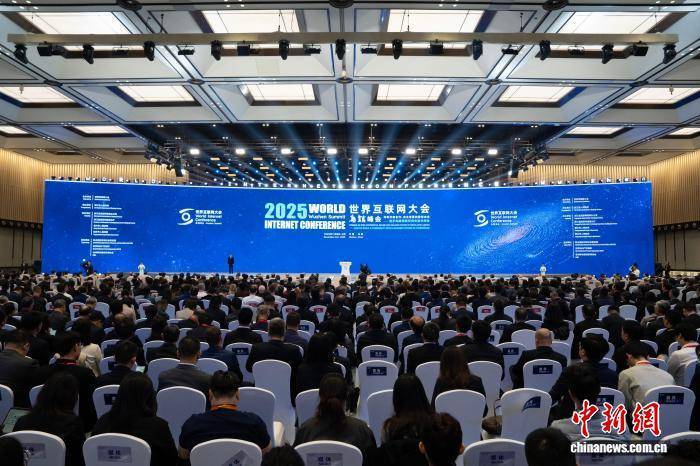
中方:愿同国际社会一道,促进互联网普惠包容发展
Zhong Guo Xin Wen Wang· 2025-11-10 08:15
Group 1 - The core message emphasizes China's commitment to promoting inclusive and equitable development of the internet in collaboration with the international community [1][2] - The 2025 World Internet Conference in Wuzhen successfully concluded, with over 1,600 participants from more than 130 countries discussing global internet governance [1] - The conference highlighted the importance of equal development rights in cyberspace for every country and individual, adhering to the principles of consultation, construction, and sharing [1][2] Group 2 - This year marks the tenth anniversary of President Xi Jinping's proposal to build a community of shared future in cyberspace, underscoring the urgency of governance in areas like artificial intelligence and internet space [2] - China has introduced initiatives such as the Global Governance Initiative and the Global Artificial Intelligence Governance Initiative to enhance international cooperation in internet governance [2] - The aim is to transform the "digital divide" into a "digital thoroughfare" and promote a more just and reasonable global internet governance system [2]
共同把握信息革命发展的历史主动(和音)
Ren Min Ri Bao· 2025-11-09 22:20
Core Viewpoint - China is a beneficiary of global internet development and a contributor to international cyberspace peace, emphasizing the importance of building a community with a shared future in cyberspace, a concept proposed by President Xi Jinping ten years ago [1][3]. Group 1: Achievements and Initiatives - The World Internet Conference has become a platform for gathering global wisdom and consensus, showcasing innovative technologies such as autonomous vehicles and AI solutions, with 17 projects awarded for leading technology [2]. - Over 210 institutions, organizations, and individuals from more than 40 countries and regions have become members of the World Internet Conference, expanding its influence and promoting global dialogue [2]. Group 2: China's Role in Global Internet Governance - China actively participates in the UN cybersecurity process and supports the UN's core role in global internet governance, leveraging its experience in mobile internet applications and digital payments to assist other countries [3]. - The concept of a community with a shared future in cyberspace emphasizes multilateral participation and respect for internet sovereignty, addressing the uneven distribution of resources and complex security threats in global cyberspace [4]. Group 3: Future Directions - Looking ahead, China aims to deepen the construction of a digital China and accelerate the development of a strong internet nation, providing more cooperation opportunities for global internet and digital economy development [3]. - China advocates for international cooperation to bridge the digital divide and enhance mutual development, exemplified by initiatives such as the "China-Africa Internet Enterprise Cooperation Network" and various forums [4].