
耕地保护

Search documents
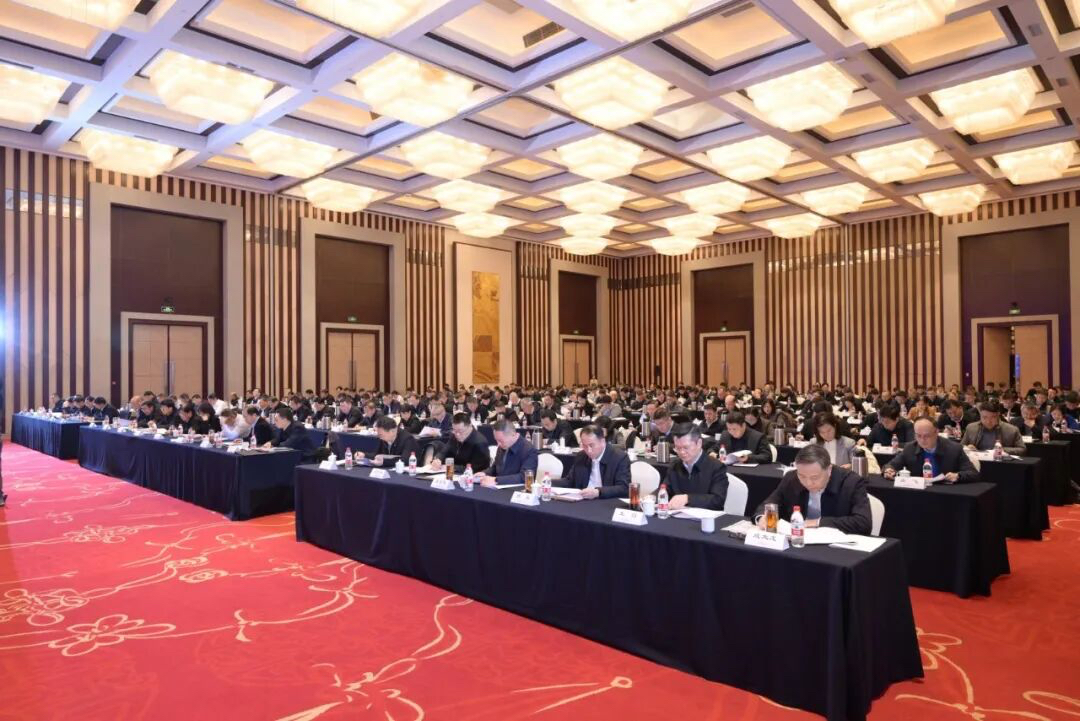
江苏省自然资源工作会议在南京召开
Zhong Guo Fa Zhan Wang· 2026-01-22 12:08
Core Points - The Jiangsu Provincial Natural Resources Department held a work conference to implement the spirit of the 20th National Congress of the Communist Party of China and to summarize the work of 2025 while deploying key tasks for 2026 [2] - The conference emphasized the importance of achieving high-quality development and contributing to the province's economic responsibilities through effective natural resource management [2] Group 1: Key Focus Areas for 2026 - Focus on ensuring rapid and effective resource allocation to support economic development, including the implementation of a smart land selection service system and accelerating approval processes [4] - Emphasize the protection of arable land by establishing a new mechanism for dynamic balance and optimizing land use [4] - Innovate in planning management to enhance land protection and development coordination, including comprehensive evaluations of land use plans [4] Group 2: Resource Utilization and Economic Development - Enhance the efficient use of natural resources by reforming land policies and promoting the revitalization of existing land [4] - Support the development of the marine economy through strategic planning and comprehensive marine spatial management [4] - Improve mineral resource exploration and development through targeted actions and better management practices [4] Group 3: Environmental Protection and Public Service - Promote collaborative protection and restoration efforts to enhance ecological integrity and implement green initiatives [4] - Focus on improving public services in the natural resources sector, including property registration and disaster prevention measures [4] - Strengthen governance capabilities in natural resource management through technological advancements and legal frameworks [4] Group 4: Conference Outcomes - The conference highlighted the need for collective efforts across the provincial system to foster innovation and support local development [5] - Participants engaged in discussions regarding the key tasks for 2026, sharing insights and experiences from various city bureaus [5]

农业农村部:对部分地方高标准农田建设中存在的问题,开展专项整治
Xin Lang Cai Jing· 2026-01-22 04:45
Group 1 - The core objective of the Ministry of Agriculture and Rural Affairs is to enhance the production capacity of important agricultural products, with a focus on the protection of arable land quantity, quality, and ecology by 2025 [1][2] - The Ministry aims to strictly adhere to the red line of 1.865 billion acres of arable land and 1.546 billion acres of permanent basic farmland, while addressing issues related to illegal occupation of arable land for housing [1][2] - The implementation of the "High-Standard Farmland Construction" plan is underway, which includes quality management and facility maintenance to improve disaster prevention and reduction capabilities in agricultural fields [2] Group 2 - The Ministry is committed to combining land use and land nurturing to strengthen arable land protection, including the implementation of black soil protection projects in Northeast China, aiming to protect 10 million acres of black soil [2] - Ongoing efforts include addressing issues in high-standard farmland construction through comprehensive inspections and rectifications to resolve practical problems with engineering facilities [2] - The Ministry is accelerating the application of results from the third national soil survey to support the enhancement of arable land quality [2]
广东佛山局开展违法用地问题警示约谈
Zhong Guo Zi Ran Zi Yuan Bao· 2026-01-16 02:13
Core Viewpoint - The Guangdong Province's Foshan City Natural Resources Bureau is taking strict measures to combat illegal land occupation and agricultural land destruction, emphasizing the need for improved management and enforcement of natural resource regulations [1][2]. Group 1: Meeting Outcomes - A warning meeting was held to address illegal land use issues in the Gaoming District, with officials from the Gaoming Branch, Mingcheng Town, and Gehe Town being summoned for discussions [1]. - The Natural Resources Bureau reported significant illegal land use problems in Gaoming District, highlighting insufficient protection of agricultural land, lack of daily supervision, and slow rectification progress [1]. Group 2: Action Plans - The Gaoming Branch is tasked with leading a comprehensive inspection of illegal land use in its jurisdiction, identifying risks, and developing rectification plans to be reported regularly to the Natural Resources Bureau [1]. - The involved departments are required to enhance their awareness of responsibilities, establish a full-process law enforcement supervision mechanism, and shift from reactive to proactive management of illegal land use [2].
2025年底安徽省耕地面积达8434.97万亩 连续26年实现占补平衡
Xin Lang Cai Jing· 2026-01-15 16:20
Group 1 - The Anhui Province's natural resources system has made significant progress in land protection, farmland preservation, and efficient utilization, contributing to high-quality economic and social development [1] - In 2025, the province approved 326,500 acres of various construction land, a year-on-year increase of 31.0%, supporting major projects with a total investment of 220 billion yuan [1] - The total supply of state-owned construction land reached 332,600 acres, with contract prices amounting to 121.949 billion yuan, ranking 8th nationally, 3rd in the Yangtze River Delta, and 2nd in Central China [1] Group 2 - By the end of 2025, Anhui Province's arable land area reached 84,349,700 acres, exceeding planning targets and achieving a balance of arable land for 26 consecutive years [2] - The province has implemented 15 provincial mountain-water projects with a total investment of 1.167 billion yuan, restoring 3,750 abandoned mines over an area of 105,200 acres [2] - In 2025, Anhui Province resolved historical "registration difficulties" for 157,000 housing units, with cross-provincial natural resource registration recognized as a landmark achievement in the Yangtze River Delta integration [2]
北京耕地保护规划获批实施
Xin Lang Cai Jing· 2026-01-06 11:12
Core Viewpoint - The "Beijing Farmland Protection Plan (2023-2035)" has been officially approved, marking a shift from quantity preservation to quality enhancement in farmland protection, ensuring food security for the capital [1][2]. Group 1: Key Objectives and Metrics - The plan sets hard targets for farmland preservation: by 2035, the total farmland area must not be less than 1.66 million acres, and the area of permanently protected basic farmland must not be less than 1.5 million acres, which are mandatory political tasks for local governments [2]. - As of 2024, Beijing's current farmland area is approximately 1.97 million acres, exceeding national targets and providing a solid foundation for future quality improvements [2]. Group 2: Innovative Protection Strategies - The plan introduces a "five-in-one" protection model, integrating quantity, space, quality, ecology, and utilization, moving away from the traditional three-dimensional approach [1][3]. - It addresses farmland fragmentation by designating 3,729 concentrated basic farmland areas, enhancing the spatial layout to facilitate large-scale planting and high-standard construction [2]. Group 3: Ecological and Technological Integration - The plan emphasizes the construction of high-standard farmland in all designated areas by 2035, ensuring irrigation through water allocation and exploring ecological restoration systems [2]. - It promotes the integration of agriculture with tourism and ecological services, transforming farmland into a source of rural revitalization rather than leaving it idle [3]. Group 4: Accountability and Enforcement - The plan establishes a "field manager system" to enforce responsibilities, incorporates technology to support agricultural innovation, and adopts a zero-tolerance policy towards illegal occupation of farmland [3].
安徽省耕地面积达到8393.79万亩
Xin Lang Cai Jing· 2026-01-04 17:59
Group 1 - The core point of the article highlights that Anhui Province's arable land area has reached 83.94 million acres by the end of 2024, marking a continuous net increase for four years and elevating its national ranking from 9th to 8th [1][2] - The implementation of the strictest arable land protection system has contributed to the continuous net increase in arable land, maintaining a balance of arable land for 25 consecutive years, which supports Anhui's grain production stability at over 80 billion jin for nine consecutive years [2] - A total of 2.226 billion yuan has been invested in geological mineral surveys and explorations, exceeding national strategic mineral target tasks, with significant breakthroughs in mineral types such as crystalline graphite and coalbed methane [2] Group 2 - The province has repaired 3,895 abandoned mines, covering an area of 487,700 acres, and has developed a nationwide model for ecological restoration of mines [3] - Since the "14th Five-Year Plan," six cities in northern Anhui have treated 185,500 acres of land, restoring 70,500 acres of arable land, with several ecological restoration cases recognized nationally [4] - A total of 149 green mines have been established, ranking third nationally, contributing to the improvement of ecosystem quality and stability in Anhui [4]
守好“塞上江南”的丰饶密码
Xin Lang Cai Jing· 2026-01-02 17:26
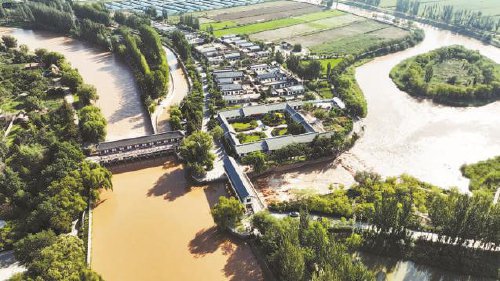
Core Viewpoint - The article highlights the importance of ancient irrigation channels in Ningxia's agricultural development, emphasizing the role of local judicial authorities in protecting water resources and ensuring the sustainability of agriculture and livestock industries [3][4][5]. Group 1: Agricultural Development - The ancient irrigation system in Ningxia, including the Huinong Canal, has been crucial for irrigating approximately 9.82 million acres of farmland, supporting local agriculture and livestock industries [4]. - The local government and judicial authorities are actively involved in promoting modern agriculture and protecting farmers' interests, as emphasized by President Xi Jinping during his visit in June 2020 [3][4]. - The "Nine Canals Green" public interest litigation initiative was launched to enhance water resource protection and ensure the sustainability of irrigation projects [5]. Group 2: Legal and Regulatory Actions - Since 2021, local authorities have faced challenges with illegal land occupation and water resource management, prompting judicial intervention to rectify these issues [4][5]. - The Wu Zhong City Procuratorate has supervised the rectification of over 40 safety hazards in irrigation channels and removed more than 3,660 square meters of illegal constructions [7]. - The collaboration between the procuratorate and water administration departments has led to significant improvements in channel management and water resource protection [6][7]. Group 3: Environmental and Resource Management - The article discusses the importance of protecting farmland from illegal occupation, with nearly 50% of arable land in Wu Zhong being rain-fed and vulnerable to encroachment [8][9]. - The local procuratorate has taken measures to restore illegally occupied farmland, ensuring that agricultural land remains productive [9][10]. - Efforts to combat illegal activities in the agricultural sector, such as the sale of counterfeit agricultural products, are ongoing to maintain the integrity of local farming [13]. Group 4: Economic Impact - The salt pool sheep industry is highlighted as a key economic driver in the region, with 80% of local farmers' income derived from this sector [11][12]. - The procuratorate's involvement in legal matters related to the sheep industry has helped stabilize businesses and ensure fair practices [12][13]. - The overall goal is to create a favorable legal environment for agricultural and livestock industries, contributing to the economic well-being of local communities [13].
加力实施新一轮千亿斤粮食产能提升行动 培育壮大县域富民产业中央农村工作会议划定2026年“三农”重点任务
Xin Lang Cai Jing· 2025-12-30 20:11
Group 1 - The central rural work conference held in Beijing from December 29 to 30 analyzed the current situation and challenges facing the "three rural issues" and outlined tasks for 2026, emphasizing the need to accelerate the construction of a strong agricultural nation [1][2] - Key tasks for 2026 include implementing a new round of actions to increase grain production capacity by 100 billion jin, establishing a mechanism to prevent poverty, ensuring farmers' income from grain production, and fostering county-level industries to increase wealth [1][2] - The conference highlighted the importance of stabilizing grain and oil production, with national grain output reaching 1.43 trillion jin in 2025, a 1.2% increase from the previous year, marking a new high following the first achievement of over 1.4 trillion jin [1][2] Group 2 - The meeting called for a series of measures to enhance grain production capacity, protect arable land, and improve agricultural technology, including the promotion of high-yielding crop varieties and quality enhancement [2] - Recent efforts have focused on increasing yield per unit area, with the national grain yield per mu reaching 394.7 kg, an increase of 12.5 kg compared to the end of the 13th Five-Year Plan, contributing over 60% to the growth in grain production [2] - The shift in the national grain security strategy emphasizes moving from ensuring quantity safety to enhancing capacity and optimizing quality, indicating a need for continuous and urgent efforts in grain security [2][3] Group 3 - Future efforts in arable land protection and quality improvement will focus on maintaining the quantity of arable land, adhering to the protection red line of 1.8 billion mu, and enhancing quality through high-standard farmland construction [3] - The strategy includes addressing issues related to the non-agricultural and non-grain use of arable land, as well as rehabilitating abandoned land [3]
中经评论:数量增长不是耕地保护终点
Jing Ji Ri Bao· 2025-12-30 00:32
Core Insights - The article emphasizes the importance of protecting arable land in China to ensure food security, highlighting the need to adhere to the 1.8 billion mu (approximately 1.2 billion acres) arable land red line established by the government [1][2] Group 1: Current Status of Arable Land - The trend of decreasing arable land has been reversed, with total arable land increasing to 1.94 billion mu by the end of 2024, an increase of 28 million mu since 2020 [1] - Historical data shows that from 1957 to 1996, arable land decreased by over 6 million mu annually, and from 2009 to 2019, the annual decrease exceeded 11 million mu [1] Group 2: Challenges in Arable Land Protection - Despite the recent increase, challenges remain, including the scarcity of quality arable land, illegal land use, and the phenomenon of "non-agricultural" and "non-grain" land use [2] - The government has established a policy toolbox consisting of regulatory, incentive-based, and construction-oriented measures to protect arable land [2] Group 3: Policy Perspectives - From a legal perspective, the implementation of joint responsibility for land protection has led to stricter enforcement and accountability among local governments [2] - An economic incentive mechanism is proposed to balance the interests of provinces in land protection, rewarding those that exceed their targets and penalizing those that fall short [3] Group 4: Agricultural Development Strategies - The construction of high-standard farmland is crucial for improving land quality, with increased financial support from the central government for such initiatives [4] - The focus should be on prioritizing high-quality arable land for grain production while also considering other crops like oilseeds and vegetables [4] - The article advocates for modern agricultural practices and the integration of land use and land conservation to enhance agricultural productivity [4]
数量增长不是耕地保护终点
Jing Ji Ri Bao· 2025-12-29 22:21
Core Viewpoint - The shift from a decrease to an increase in arable land is not the end of land protection but a new starting point, emphasizing the importance of utilizing arable land effectively to ensure food security in China [1][5]. Group 1: Current Status and Challenges - The trend of decreasing arable land has been reversed, with total arable land increasing to 1.94 billion acres by the end of 2024, an increase of 28 million acres since 2020 [1]. - Despite the positive trend, challenges remain, including a shortage of quality arable land, illegal land use, and the ongoing issue of "non-agricultural" and "non-grain" land use [2]. Group 2: Policy Framework - The Chinese government has established a policy toolbox consisting of regulatory, incentive-based, and construction-oriented measures to protect arable land, with a target of maintaining at least 1.865 billion acres of arable land and 1.546 billion acres of permanent basic farmland [2]. - The implementation of laws, such as the black soil protection law, has strengthened accountability and reduced illegal land use [2]. Group 3: Economic and Conceptual Perspectives - An economic reward and penalty mechanism is proposed to balance the interests of provinces regarding arable land protection, with compensation for provinces falling short of targets and rewards for those exceeding them [3]. - Innovative approaches are encouraged, such as developing salt-tolerant crop varieties and ensuring a balance between land occupation and compensation to prevent adverse practices [3]. Group 4: Agricultural Infrastructure and Practices - The construction of high-standard farmland is crucial for improving land quality, with increased financial support from the central government aimed at enhancing infrastructure and disaster resilience [4]. - Prioritization of high-quality arable land for grain production is emphasized, alongside the development of modern agricultural practices to alleviate pressure on arable land and diversify agricultural supply [4].