
联邦学习

Search documents
华为诺亚首席研究员,也具身智能创业了
量子位· 2025-08-13 01:01
Core Viewpoint - The article highlights the rising trend of embodied intelligence as a hot entrepreneurial sector, particularly focusing on the establishment of Shenzhen Noin Intelligent Technology, founded by a former Huawei researcher, Li Yinchuan, who has a strong academic and patent background in AI and robotics [2][7][24]. Group 1: Company Overview - Shenzhen Noin Intelligent Technology was founded on June 19, 2025, and is focused on developing humanoid robots designed for home use, capable of interacting with their environment through a perception-decision-execution loop [7]. - The company has already secured its first round of financing shortly after its establishment, with notable investors including Source Code Capital, which has previously invested in other successful AI ventures [4][15]. - Noin is reportedly in the process of its second round of financing, with its valuation doubling since the first round [14]. Group 2: Market Dynamics - The demand for home humanoid robots is driven by the need for comfort and convenience in family experiences, as well as trends such as global aging and increasing numbers of single-person households [11]. - The market for home humanoid robots is described as exceptionally vibrant, with several companies, including those founded by prominent figures in the tech industry, making headlines for their financing and product developments [11][13]. Group 3: Industry Background - The article notes a significant influx of talent from Huawei into the embodied intelligence sector, with many former employees establishing their own companies [36][38]. - Two notable companies in this space are Zhiyuan Robotics and Tashizhi Navigation, both of which have strong teams composed of former Huawei executives and technical experts [40][48]. - The emergence of the "Huawei system" in the entrepreneurial landscape is attributed to the company's previous talent development programs and its focus on autonomous driving technology, which has naturally transitioned into the robotics field [58][60].


ICCV 2025 | 新型后门攻击直指Scaffold联邦学习,NTU联手0G Labs揭示中心化训练安全漏洞
机器之心· 2025-08-09 03:59
Core Viewpoint - The article introduces BadSFL, a novel backdoor attack method specifically designed for the Scaffold Federated Learning (SFL) framework, highlighting its effectiveness, stealth, and persistence compared to existing methods [2][39]. Group 1: Background on Federated Learning and Scaffold - Federated Learning (FL) allows distributed model training while protecting client data privacy, but its effectiveness is heavily influenced by the distribution of training data across clients [6][10]. - In non-IID scenarios, where data distribution varies significantly among clients, traditional methods like FedAvg struggle, leading to poor model convergence [7][10]. - Scaffold was proposed to address these challenges by using control variates to correct client updates, improving model convergence in non-IID settings [7][12]. Group 2: Security Vulnerabilities in Scaffold - Despite its advantages, Scaffold introduces new security vulnerabilities, particularly against malicious clients that can exploit the model update mechanism to inject backdoor behaviors [8][9]. - The reliance on control variates in Scaffold creates a new attack surface, allowing attackers to manipulate these variates to guide benign clients' updates towards malicious objectives [9][16]. Group 3: BadSFL Attack Methodology - BadSFL operates by subtly altering control variates to steer benign clients' local gradient updates in a "poisoned" direction, enhancing the persistence of backdoor attacks [2][9]. - The attack utilizes a GAN-based data poisoning strategy to enrich the attacker's dataset, maintaining high accuracy for both normal and backdoor samples while remaining covert [2][11]. - BadSFL demonstrates superior persistence, maintaining attack effectiveness for over 60 rounds, which is three times longer than existing benchmark methods [2][32]. Group 4: Experimental Results - Experiments conducted on MNIST, CIFAR-10, and CIFAR-100 datasets show that BadSFL outperforms four other known backdoor attacks in terms of effectiveness and persistence [32][33]. - In the initial 10 rounds of training, BadSFL achieved over 80% accuracy on backdoor tasks while maintaining around 60% accuracy on primary tasks [34]. - Even after the attacker ceases to upload malicious updates, BadSFL retains backdoor functionality significantly longer than benchmark methods, demonstrating its robustness [37][38].

宝信软件(安徽)取得基于联邦学习差分隐私图像分类相关专利
Jin Rong Jie· 2025-08-09 02:49
Core Insights - Baoxin Software (Anhui) Co., Ltd. has obtained a patent for a "federated learning-based differential privacy image classification method and device," with the authorization announcement number CN115527061B and an application date of September 2022 [1] Company Overview - Baoxin Software (Anhui) Co., Ltd. was established in 2002 and is located in Ma'anshan City, primarily engaged in research and experimental development [1] - The company has a registered capital of 3,610.9372 million RMB [1] - Baoxin Software has invested in 5 companies and participated in 3,103 bidding projects [1] - The company holds 13 trademark registrations and 152 patent registrations, along with 20 administrative licenses [1]

微算法科技(NASDAQ:MLGO)应用区块链联邦学习(BlockFL)架构,实现数据的安全传输
Zhong Guo Chan Ye Jing Ji Xin Xi Wang· 2025-07-31 02:53
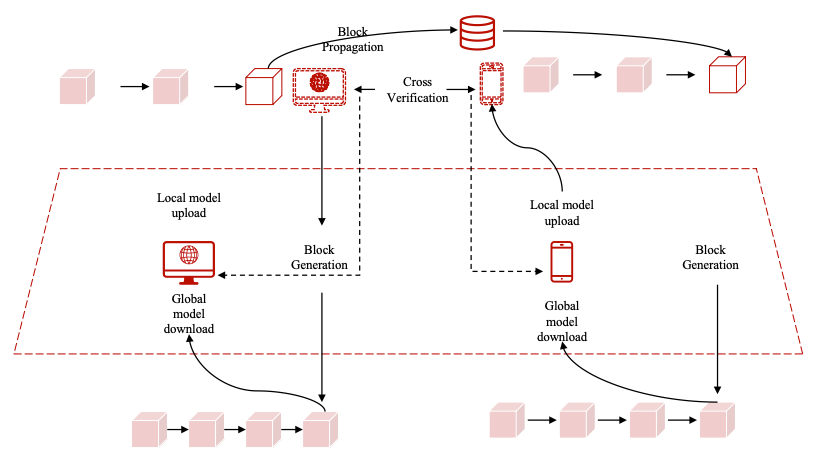
Core Viewpoint - The rapid development of big data and artificial intelligence has highlighted data security and privacy issues, with traditional data transmission methods posing significant risks. The introduction of blockchain technology offers new solutions, exemplified by MicroAlgorithm Technology's innovative BlockFL architecture, which ensures secure, efficient, and privacy-protecting data transmission [1][6]. Group 1: BlockFL Architecture - BlockFL architecture utilizes blockchain networks to achieve efficient data exchange and synchronization in federated learning, allowing devices to upload local model updates and download global model updates quickly and effectively [2]. - The decentralized nature and high concurrency of blockchain ensure that all devices receive the same global model updates, maintaining consistency and accuracy in model training [2]. Group 2: Process Overview - Initialization involves the system administrator creating an initial model and broadcasting it to all participating nodes while the blockchain records metadata of the federated learning activity [4]. - Each node trains the model on its local dataset without exposing original data, thus protecting data privacy [4]. - Nodes upload encrypted model parameters to the blockchain, where smart contracts validate their effectiveness and integrity, preventing malicious actions [4]. - Once verified, a central server or designated aggregation node extracts parameters from the blockchain, averages them, and generates a new version of the global model [4]. - The updated global model is then broadcasted to all nodes for the next training round, with the blockchain ensuring traceability of all operations [4]. - An incentive and penalty mechanism is integrated into BlockFL to encourage participation and quality data contribution, with smart contracts automatically executing rewards and penalties [4]. Group 3: Applications and Future Prospects - BlockFL architecture can be applied across various sectors, including healthcare, financial risk control, smart manufacturing, and smart cities, facilitating data collaboration while maintaining security and privacy [5]. - In healthcare, BlockFL enables hospitals to collaboratively train diagnostic models while protecting patient privacy; in finance, it allows institutions to identify fraud without sharing sensitive information; in smart manufacturing, it promotes collaboration between factories; and in smart cities, it supports inter-departmental cooperation without compromising sensitive data [5]. - The combination of blockchain and federated learning in BlockFL addresses traditional data transmission challenges, enhancing efficiency and accuracy in model training, positioning it as a significant technological support in data transmission and machine learning in the future [6].

大模型如何链接政务办公?联通元景重磅发布
Huan Qiu Wang· 2025-07-24 04:56
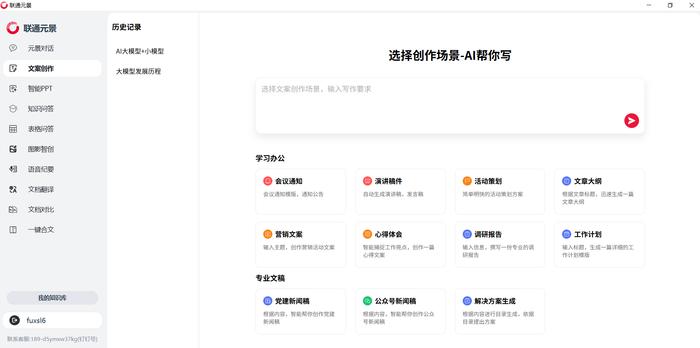
Core Viewpoint - The emergence of AI large models, particularly the Unicom Yuanjing model, is revolutionizing government services by enhancing efficiency and precision in public service delivery [1][9]. Group 1: Technology Foundation - The traditional general-purpose AI models often struggle with the complexities of government processes, leading to inadequate responses [2]. - The Unicom Yuanjing model is designed to become a "government expert" by distilling government data and injecting specialized knowledge, creating a knowledge network of government entities [3]. - The model incorporates various skills, including language, voice, and visual capabilities, through techniques like supervised fine-tuning and data distillation [4]. Group 2: Product Matrix - The Yuanjing AI has developed a flexible application ecosystem that covers multiple fields and scenarios, driven by a "technology + scenario" dual approach [5]. - The product matrix features a modular architecture, allowing for customizable applications tailored to different government needs, from provincial to community levels [6][7]. Group 3: Practical Application - The Yuanjing model is already operational in various provincial and municipal government departments, significantly improving service efficiency and decision-making capabilities [9]. - The AI's ability to automate tasks such as generating meeting agendas and extracting key policy details has reduced preparation time and streamlined processes for government staff [8][9]. - The model facilitates better citizen engagement by ensuring that necessary materials and processes are clearly outlined, thus minimizing unnecessary trips for the public [8].

ICML spotlight | 一种会「进化」的合成数据!无需上传隐私,也能生成高质量垂域数据
机器之心· 2025-07-11 09:22
Core Viewpoint - The article discusses the challenges of data scarcity in the context of large models and introduces the PCEvolve framework, which aims to generate synthetic datasets while preserving privacy and addressing the specific needs of vertical domains such as healthcare and industrial manufacturing [1][2][10]. Group 1: Data Scarcity and Challenges - The rapid development of large models has exacerbated the issue of data scarcity, with predictions indicating that public data generation will not keep pace with the consumption rate required for training these models by 2028 [1]. - In specialized fields like healthcare and industrial manufacturing, the availability of data is already limited, making the data scarcity problem even more severe [1]. Group 2: PCEvolve Framework - PCEvolve is a synthetic data evolution framework that requires only a small number of labeled samples to generate an entire dataset while protecting privacy [2]. - The evolution process of PCEvolve is likened to DeepMind's FunSearch and AlphaEvolve, focusing on generating high-quality training data from existing large model APIs [2]. Group 3: Limitations of Existing Large Models - Existing large model APIs cannot directly synthesize domain-specific data, as they fail to account for various characteristics unique to vertical domains, such as lighting conditions, sampling device models, and privacy information [4][7]. - The inability to upload local data due to privacy and intellectual property concerns complicates the prompt engineering process and reduces the quality of synthetic data [9][11]. Group 4: PCEvolve's Mechanism - PCEvolve employs a new privacy protection method based on the Exponential Mechanism, which is designed to adapt to the limited sample situation in vertical domains [11]. - The framework includes an iterative evolution process where a large number of candidate synthetic data are generated, followed by a selection process that eliminates lower-quality data based on privacy-protected scoring [11][19]. Group 5: Experimental Results - PCEvolve's effectiveness was evaluated through two main approaches: the impact of synthetic data on downstream model training and the quality of the synthetic data itself [21]. - In experiments involving datasets such as COVIDx and Came17, PCEvolve demonstrated significant improvements in model accuracy, with the final accuracy for COVIDx reaching 64.04% and for Came17 reaching 69.10% [22][23].

博世加码人工智能投入自动驾驶是关键应用领域
Xin Lang Cai Jing· 2025-06-30 12:26
Core Insights - Bosch announced an investment of over €2.5 billion in artificial intelligence by 2027, predicting that sales of software, sensor technology, high-performance computing units, and vehicle communication components will double by 2035, potentially exceeding €10 billion in sales [1][3] - The company aims to leverage AI in advanced driver assistance and autonomous driving, combining AI with deep industrial knowledge to enhance vehicle safety and reduce product development cycles [1][3] Investment and Sales Projections - Bosch's investment in AI is part of a broader strategy to capitalize on the growing market for autonomous driving technologies [1] - The company forecasts that by 2035, the sales of relevant components will surpass €10 billion, driven by advancements in AI and sensor technologies [1][3] Technological Advancements - Bosch has deployed AI in cameras and radar systems to enhance object recognition and environmental perception, allowing vehicles to make informed driving decisions [1] - The integration of generative AI models enables Bosch to simulate various driving conditions, enhancing the training of AI systems with over 200 petabytes of global traffic scene data [2] Collaborative Efforts and Global Strategy - Bosch is collaborating with innovative players in AI technology to apply new advancements directly to products, particularly in the context of autonomous driving [3] - The company has established a successful partnership with Chery in China, creating an AI computing cluster and utilizing local data for model training through federated learning [3] Market Trends and Consumer Influence - The trend towards advanced driver assistance systems is driven by consumer demand, with Bosch believing that these technologies will be crucial for attracting buyers in the Chinese market [3] - Bosch anticipates that the expansion of autonomous driving technology will lead to long-term commercial success, with significant growth expected in various global markets [3]
当无人机遇到AI智能体:多领域自主空中智能和无人机智能体综述
具身智能之心· 2025-06-30 12:17
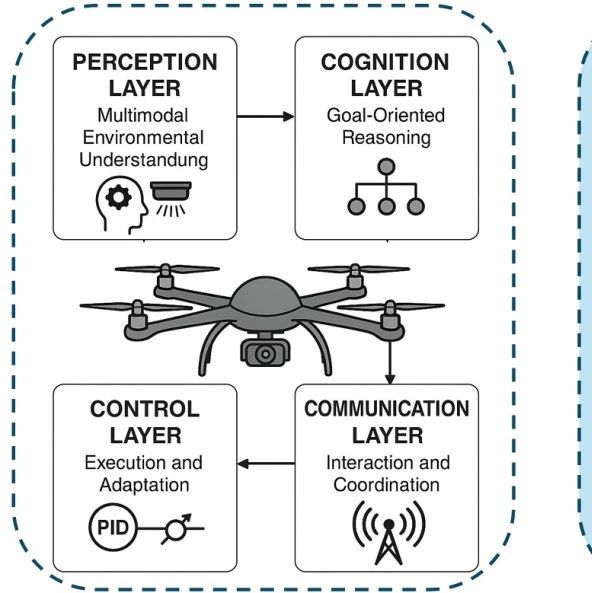
Core Insights - The article discusses the evolution of Unmanned Aerial Vehicles (UAVs) into Agentic UAVs, which are characterized by autonomous reasoning, multimodal perception, and reflective control, marking a significant shift from traditional automation platforms [5][6][11]. Research Background - The motivation for this research stems from the rapid development of UAVs from remote-controlled platforms to complex autonomous agents, driven by advancements in artificial intelligence (AI) [6][7]. - The increasing demand for autonomy, adaptability, and interpretability in UAV operations across various sectors such as agriculture, logistics, environmental monitoring, and public safety is highlighted [6][7]. Definition and Architecture of Agentic UAVs - Agentic UAVs are defined as a new class of autonomous aerial systems with cognitive capabilities, situational adaptability, and goal-directed behavior, contrasting with traditional UAVs that operate based on predefined instructions [11][12]. - The architecture of Agentic UAVs consists of four core layers: perception, cognition, control, and communication, enabling autonomous sensing, reasoning, action, and interaction [12][13]. Enabling Technologies - Key technologies enabling the development of Agentic UAVs include: - **Perception Layer**: Utilizes a suite of sensors (RGB cameras, LiDAR, thermal sensors) for real-time semantic understanding of the environment [13][14]. - **Cognition Layer**: Acts as the decision-making core, employing techniques like reinforcement learning and probabilistic modeling for adaptive control strategies [13][14]. - **Control Layer**: Converts planned actions into specific flight trajectories and commands [13][14]. - **Communication Layer**: Facilitates data exchange and task coordination among UAVs and other systems [13][14]. Applications of Agentic UAVs - **Precision Agriculture**: Agentic UAVs are transforming precision agriculture by autonomously identifying crop health issues and optimizing pesticide application through real-time data analysis [17][18]. - **Disaster Response and Search and Rescue**: These UAVs excel in dynamic environments, providing real-time adaptability and autonomous task reconfiguration during disaster scenarios [20][21]. - **Environmental Monitoring**: Agentic UAVs serve as intelligent, mobile environmental sentinels, capable of monitoring rapidly changing ecosystems with high spatial and temporal resolution [22][23]. - **Urban Infrastructure Inspection**: They offer a transformative approach to infrastructure inspections, enabling real-time damage detection and adaptive task planning [24]. - **Logistics and Smart Delivery**: Agentic UAVs are emerging as intelligent aerial couriers, capable of executing complex delivery tasks with minimal supervision [25][26]. Challenges and Limitations - Despite the transformative potential of Agentic UAVs, their widespread application faces challenges related to technical constraints, regulatory hurdles, and cognitive dimensions [43].
2025边缘AI报告:实时自主智能,从范式创新到AI硬件的技术基础
3 6 Ke· 2025-03-28 11:29
Core Insights - The Edge AI Foundation has rebranded from the TinyML Foundation and released the "2025 Edge AI Technology Report," highlighting the maturity and real-world applications of TinyML [1][3]. Group 1: Edge AI Technology Drivers - The report discusses advancements in hardware and software that support Edge AI deployment, focusing on innovations in dedicated processors and ultra-low power devices [3]. - Edge AI is transforming operational models across various industries by enabling real-time analysis and decision-making capabilities [3]. Group 2: Industry Applications of Edge AI - In the automotive sector, Edge AI enhances safety and response times, with examples like Waymo and NIO utilizing real-time data processing for improved performance [7][8]. - Manufacturing benefits from Edge AI through predictive maintenance, quality control, and process optimization, with reported reductions in maintenance costs by 30% and downtime by 45% [9][12]. - In healthcare, localized AI accelerates diagnostics and improves patient outcomes by analyzing medical data directly on devices [14]. - Retail operations are optimized through real-time behavior analysis and AI-driven systems, reducing checkout times by 30% [16]. - Logistics is enhanced by integrating Edge AI with IoT sensors, allowing for immediate analysis of data and optimization of supply chain operations [18]. - Smart agriculture utilizes Edge AI for precision farming, reducing water usage by 25% and pesticide use by 30% [21]. Group 3: Edge AI Ecosystem and Collaboration - The Edge AI ecosystem relies on collaboration among hardware vendors, software developers, cloud providers, and industry stakeholders to avoid fragmentation [24]. - A three-layer architecture is recognized for Edge AI, distributing workloads across edge devices, edge servers, and cloud platforms [24][25]. - Cross-industry partnerships are increasing, with companies like Intel and Qualcomm collaborating to enhance Edge AI deployment [26][27]. Group 4: Emerging Trends in Edge AI - Five emerging trends are reshaping Edge AI, including federated learning, quantum neural networks, and neuromorphic computing [30]. - Federated learning is expected to enhance model adaptability and collaboration across industries, with a projected market value of nearly $300 million by 2030 [31]. - Quantum computing is set to redefine Edge AI capabilities, enabling faster decision-making and real-time processing [34][36]. - AI-driven AR/VR applications are evolving with Edge AI, allowing for real-time responses and improved energy efficiency [39]. - Neuromorphic computing is gaining traction for its energy efficiency and ability to handle complex tasks without cloud connectivity [41].

新型电力系统中人工智能应用与扩展
上海交大· 2025-03-04 05:24
Investment Rating - The report does not explicitly provide an investment rating for the industry. Core Insights - The new generation of artificial intelligence (AI) is built on big data, high-performance computing, and machine learning, significantly advancing AI technology [13][160]. - AI applications in power systems include load forecasting, renewable energy output prediction, fault diagnosis, and scenario generation, indicating a strong trend towards digitalization and intelligent management in the energy sector [61][160]. - The integration of AI with blockchain and digital twin technologies is expected to enhance operational efficiency and decision-making in power systems [94][160]. Summary by Sections Artificial Intelligence Overview - AI is defined as a system that combines theories, technologies, and methods inspired by neuroscience, focusing on high-performance computing, big data, and machine learning [13][12]. AI Models - Various machine learning algorithms, including Support Vector Machines (SVM) and Decision Trees (DT), are widely used for predictive analytics in different applications [23][28]. AI Applications in Power Systems - AI is utilized for load forecasting, renewable energy output prediction, and fault diagnosis, employing models like LSTM and GAN for enhanced accuracy and efficiency [61][65][74]. - The report highlights the use of deep learning techniques for diagnosing faults in power distribution networks, particularly in complex scenarios like single-phase grounding faults [69][148]. AI Extensions - The report discusses the potential of federated learning in addressing data privacy issues in power systems, allowing for collaborative model training without compromising sensitive information [44][55]. - The application of blockchain technology in virtual power plants is explored, emphasizing the need for transparency and efficiency in energy trading [94][96]. Digital Twin Technology - Digital twin technology is presented as a means to create a virtual representation of physical systems, facilitating real-time monitoring and predictive maintenance in power systems [101][108]. Conclusion - The report concludes that the advancements in AI, combined with emerging technologies like blockchain and digital twins, will play a crucial role in the future development of intelligent power systems, enhancing their operational capabilities and resilience [160].