自由市场

Search documents
收购终止背后,三只松鼠、爱零食都在寻找“最优解”
Xin Lang Cai Jing· 2025-06-26 05:48
Group 1 - The acquisition plan of Three Squirrels to acquire Love Snacks has been terminated after 8 months, with a deal value of 200 million yuan [1] - The announcement indicated that the parties could not reach an agreement on core terms, leading to the decision to terminate the acquisition [1][2] - Following the termination, Three Squirrels signed a deep strategic cooperation agreement with Snack Selection [1] Group 2 - The termination of acquisitions is common in the A-share market, often due to disagreements on terms or conditions [2][3] - The decision to terminate the acquisition can be seen as a responsible choice for both parties, allowing them to seek better opportunities [4][20] Group 3 - For Love Snacks, being acquired could have been a favorable outcome given the competitive industry landscape, providing opportunities for shareholders [7] - For Three Squirrels, the termination is also a "optimal solution," potentially due to disagreements on valuation, market changes, or strategic shifts [8][19] - Love Snacks' valuation has been a point of contention, with significant disagreements reported during negotiations [9][12] Group 4 - The snack industry is entering a new phase of operational growth, moving beyond the initial rapid expansion and consolidation [21][22] - The focus is shifting towards operational efficiency and profitability, as seen in other industries like tea beverages [25][27] - The competitive landscape is evolving, with leading brands solidifying their positions while second-tier brands may face challenges [27][30] Group 5 - The future growth of the snack industry will depend on effectively managing supply chains and understanding consumer demographics [30][33] - Successful businesses in the snack sector will need to prioritize high-quality products and customer retention strategies to thrive in a saturated market [33][34]



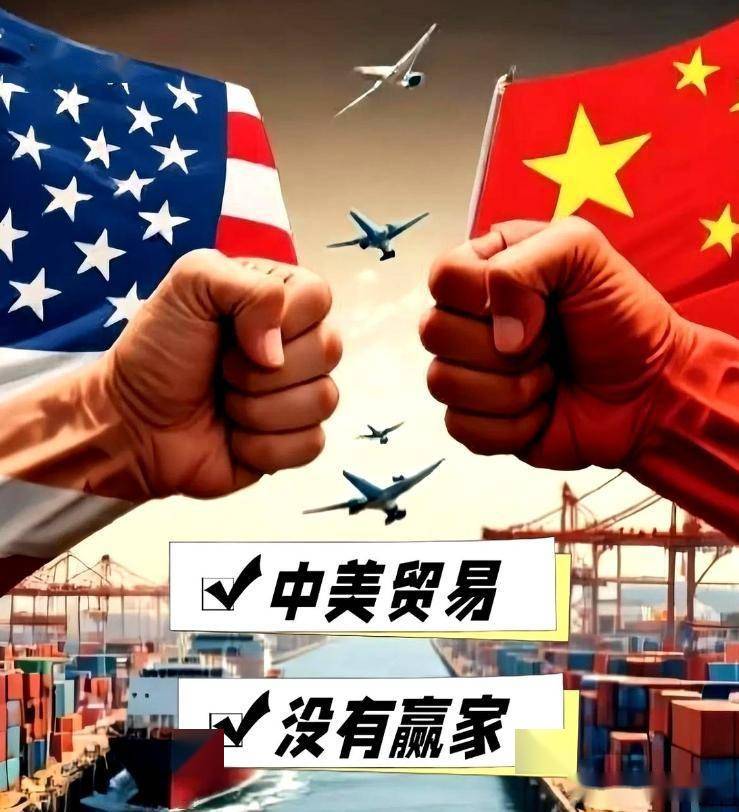
东方大国怒了,美国对等关税忽悠人
Sou Hu Cai Jing· 2025-06-16 14:01
Core Viewpoint - The article critiques the United States' approach to trade, particularly its emphasis on "reciprocal tariffs," which the author argues is a double standard that overlooks the significant service trade surplus the U.S. enjoys [3][5]. Trade Balance - The U.S. service trade surplus is projected to reach nearly $300 billion in 2024, highlighting a significant imbalance in how the U.S. discusses its trade position, focusing on goods trade deficits while ignoring service trade advantages [3]. - The U.S. often claims to be at a disadvantage in goods trade, yet fails to acknowledge its substantial gains in service trade, which is seen as a selective narrative [3][5]. Global Trade Dynamics - The global service industry now accounts for over two-thirds of GDP, with high-value services like finance and IT predominantly controlled by the U.S. and other developed nations, raising questions about the fairness of the U.S. trade narrative [5]. - The article suggests that the U.S. is not genuinely advocating for free trade but rather seeks to maintain a system that benefits itself while imposing restrictions on others [7]. International Reactions - The European Union, particularly Germany, is expressing concerns over unilateral trade actions and the need for stronger multilateral coordination to avoid a trade war, indicating a shift in sentiment among global partners [7]. - China's recent statements at the WTO are framed as a call for a more equitable global trade environment, challenging the notion that might makes right in international trade [9]. Future Implications - The article raises concerns about the sustainability of the U.S. trade strategy, questioning how long it can continue to operate under a logic that demands reciprocity while maintaining flexibility for itself [9].
经济学,对个人意味着什么?
Hu Xiu· 2025-05-14 02:44
Group 1 - The core idea of the article emphasizes the importance of understanding economic behavior from an individual perspective, particularly in the context of survival and living standards in society [2] - The article discusses the roots of poverty and famine, highlighting that hunger is not solely a matter of food supply but also of distribution and power dynamics [3][4] - It mentions that poverty is a relative concept and understanding its true causes is essential for effective solutions, as proposed by Amartya Sen [3] Group 2 - The article outlines individual demand, consumption, and division of labor, referencing Keynes' theory of effective demand as a key driver for employment and output [5] - It explains that consumption is the ultimate goal of economic activity, leading to cooperation and division of labor among individuals and families [6][7] - The text also discusses the role of social cohesion and moral standards in economic life, as highlighted by Durkheim [7] Group 3 - The article describes the necessity for individuals to engage in market operations to accumulate wealth, emphasizing the role of free markets and the importance of government regulation [8][9] - It discusses mercantilism and the importance of trade balance in national wealth, suggesting that individuals can benefit from exporting their products [10] - The article highlights the significance of savings and investment, explaining that savings are a result of consumption behavior and investment decisions [10] Group 4 - Decision analysis is presented as crucial for individuals to navigate market opportunities and challenges, with a focus on understanding decision-making rules and their implications [11] - The article concludes that economics reflects the dynamic interplay between individual survival and development, emphasizing the continuous evolution of economic interactions [12]
哈耶克理论争议:市场失灵与公平挑战的辩析
Sou Hu Cai Jing· 2025-04-05 17:08
Group 1 - Friedrich Hayek is recognized as a significant liberal economist and political philosopher, whose theories have been subject to critique and discussion [5][6]. - Critiques of Hayek's views highlight the existence of market failures, such as monopolies, information asymmetry, and externalities, suggesting that government intervention can help address these issues [5][6]. - Empirical studies indicate that a completely free market may lead to widening income disparities, with successful examples of welfare state models in Nordic countries demonstrating the importance of government in social redistribution [6][7]. Group 2 - The provision of public goods, such as education, healthcare, and infrastructure, cannot solely rely on market mechanisms, necessitating effective government intervention [6][7]. - Historical economic crises serve as evidence of market failures, reinforcing the argument for government regulation and oversight [5][6]. - To strengthen arguments regarding Hayek's theories, it is essential to reference factual data, case studies, and authoritative citations, enhancing the overall persuasiveness of the discussion [7].