
诊疗一体化

Search documents
圣湘生物谋篇“十五五”:以“AI+生态”双轮驱动,抢占生物制造新赛道
Jin Rong Jie· 2025-11-26 01:54
Core Insights - The biomanufacturing industry in China is entering a historic policy window, driven by the inclusion of biomanufacturing in the "14th Five-Year Plan" and the implementation of the "Regulations on the Management of Clinical Research and Clinical Translation Applications of Biomedical New Technologies" [1][10] - Leading in vitro diagnostic company, Sansure Biotech, is aligning its strategic development with national policies, focusing on high-quality innovation and technological self-reliance to transition from "following innovation" to "source innovation" [1][2] Policy Direction and Strategic Layout - The combination of the "14th Five-Year Plan" and the new regulations provides strong support for the biomanufacturing industry, emphasizing high-quality innovation and technological independence [2] - Sansure Biotech is integrating AI technology into its diagnostic platform, establishing a vertical integration capability from raw materials to large-scale production and intelligent terminals [2][3] Product Development and Market Positioning - The company is enhancing its diagnostic capabilities in respiratory and HPV fields, ensuring precision in diagnosis while promoting convenient and home-based testing solutions [3][4] - Sansure Biotech has achieved significant growth in its sequencing business, with a 150% year-on-year increase in the first three quarters, and has received over 130 new domestic and international certifications this year [4] Competitive Advantages and Global Strategy - Sansure Biotech aims to become a platform-based ecological enterprise, focusing on "products + services + digital empowerment" to enhance its competitive edge [5][7] - The company is expanding its global market presence by implementing a strategy of "deepening emerging markets and breaking into high-end markets," with a focus on localized production and regional R&D centers [7][9] Innovation Goals and Future Outlook - The company has set clear innovation goals for the "14th Five-Year Plan," aiming to transition into a platform-based ecological enterprise driven by product, service, and digital empowerment [8][10] - Sansure Biotech plans to leverage national strategies and market demands, utilizing AI technology and ecological construction to capture opportunities in the global biomanufacturing landscape [10]

千万级天使轮!国产妇科微创设备再获资本加码
思宇MedTech· 2025-11-18 04:10
近日, 广东安欣医疗科技有限公司(以下简称"安欣医疗") 宣布完成千万级人民币天使轮融资, 本轮由海愿资本领 投,东科创资本跟投,江畔资本担任独家长期财务顾问。 据悉,本轮资金将主要用于公司核心产品的注册报批、生产体系与经销商网络升级,以及专家推广体系建设,进一步巩 固公司在妇科微创诊疗领域的竞争优势。 # 市场背景 :女性健康的"结构性空 白" 在全球医疗器械产业转型的大背景下,女性大健康正成为一个被重新定义的赛道。 据估算, 我国妇产科年门诊量已高达5–6亿人次, 几乎覆盖全部适龄女性人群。随着女性健康意识提升、育龄结构变化 与慢性病管理需求增长,妇科诊疗正从"被动就医"走向"主动预防与精准治疗"。 然而,与庞大需求相比,国内妇科诊疗设备的供给结构长期存在失衡。高端宫腔镜、能量治疗设备等核心产品仍以进口 品牌为主导,价格昂贵、维护成本高、临床适配性不足。许多基层医院即便具备患者基础,也因设备成本与操作复杂度 而无法普及微创技术。 从政策层面看,国家已将女性健康上升为重要民生议题。2025年9月,国务院新闻办公室发布的《新时代中国推进妇女 全面发展的实践与成就》白皮书指出,要将妇幼健康作为妇女全面发展的核心 ...


从展品到商品,从共建到共赢——诺华公司携手合作伙伴探索拓展放射配体疗法全产业生态
Sou Hu Cai Jing· 2025-11-07 07:52
Core Viewpoint - Novartis is expanding its ecosystem in radioligand therapy (RLT) through strategic collaborations with Siemens Healthineers and Taikang, aiming to enhance the accessibility and integration of innovative cancer treatments in China [1][4][11]. Group 1: Strategic Collaborations - Novartis signed a strategic cooperation memorandum with Siemens Healthineers to explore integrated cancer diagnosis and treatment solutions, focusing on RLT and molecular imaging technologies [1][6]. - The collaboration aims to optimize the entire diagnostic and treatment pathway, from patient identification to treatment monitoring, and to establish pilot projects for integrated treatment centers [6][8]. - Novartis and Taikang are exploring a new "medical-pharmaceutical-insurance" model to enhance the accessibility of RLT and improve specialty care in oncology [8][10]. Group 2: Product Development and Approval - Novartis announced that its RLT drug, Lutetium-177-PSMA-617, received approval for two indications in advanced prostate cancer, marking a significant milestone in its product offerings [11][12]. - The company is developing a broad portfolio of RLT products, aiming to expand indications to include gastrointestinal neuroendocrine tumors and various other cancers [11][12]. Group 3: Infrastructure and Production - Novartis is establishing a production base for RLT in Haiyan County, Zhejiang Province, with an estimated investment of 600 million RMB, expected to be operational by the end of 2026 [13]. - This facility will significantly increase the global production capacity of innovative RLT drugs and enhance the ability to meet clinical demands in China [13].

国内首款核药获批上市
Di Yi Cai Jing· 2025-11-07 06:49
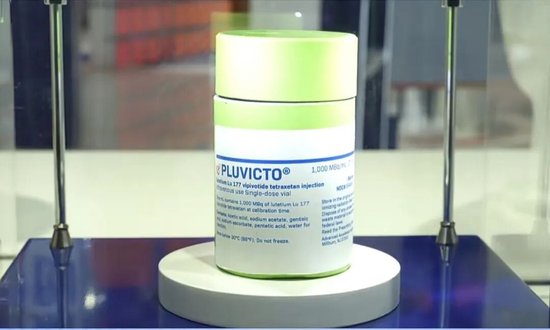
Core Insights - Novartis has received approval for its first radioligand therapy (RLT) drug, Lutetium [177Lu] oxodotreotide injection (brand name: Pluvicto), for dual indications in China, marking it as the first RLT drug approved domestically, providing new treatment options for advanced prostate cancer patients [3] - The RLT therapy is a precision-targeted cancer treatment but is among the most expensive cancer treatment categories due to its complex R&D and supply chain [3] - Novartis' two nuclear drugs surpassed $2 billion in revenue last year, indicating strong market potential [3] Industry Developments - To promote the application of RLT therapy in China, Novartis signed a strategic cooperation agreement with Siemens Healthineers during the China International Import Expo, focusing on innovative developments in integrated diagnosis and treatment for major diseases like prostate cancer [3] - The collaboration aims to establish a "gold standard" for integrated diagnosis and treatment, enhancing the entire process from patient selection to treatment monitoring [3] - Experts emphasize the critical role of molecular imaging devices in the RLT treatment process, highlighting the shift towards personalized treatment plans in modern medical technology [4] Market Outlook - The global market for radioligand therapy is projected to reach $25 billion annually, driven by advancements in treatment efficacy and a growing focus on this innovative treatment approach [5] - Novartis is also expanding its nuclear drug production strategy globally, with a $600 million investment in a radiopharmaceutical production project in Zhejiang, China, expected to be operational by the end of 2026 [5] - The rapid development of RLT therapy is attracting significant interest from major pharmaceutical companies, with local firms in China also accelerating their RLT drug development efforts [4][5]
国内首款核药获批上市
第一财经· 2025-11-07 06:46
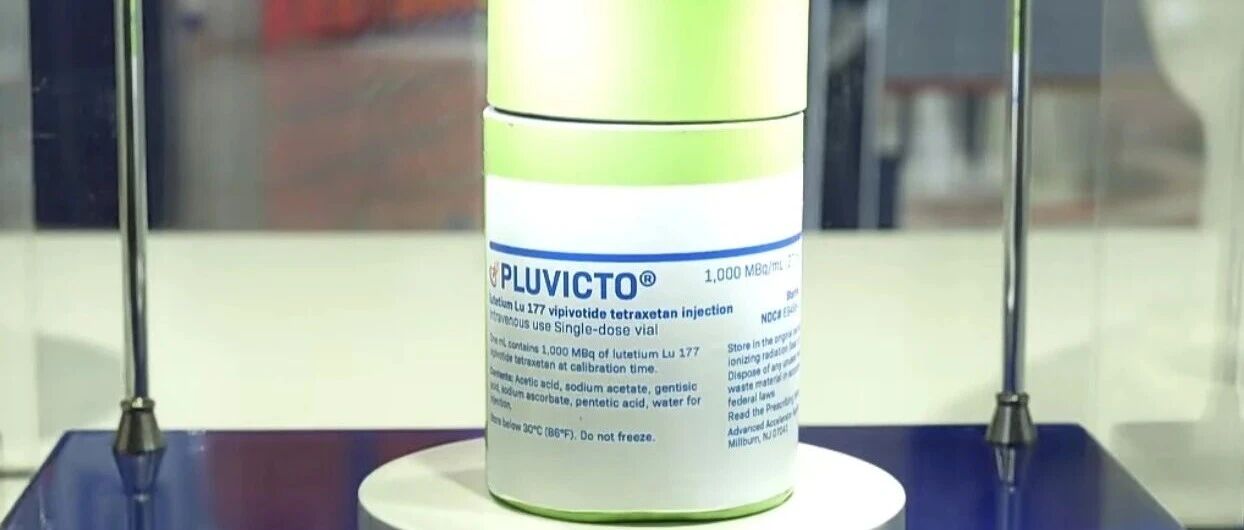
Core Insights - Novartis has received approval for its first radioligand therapy (RLT) drug, Lutetium [177Lu] oxodotreotide injection (brand name: Pluvicto), for dual indications in China, marking it as the first RLT drug approved in the country, providing new treatment options for advanced prostate cancer patients [3][4] - The RLT drugs are known for their high costs due to complex development and supply chain processes, with Novartis's two nuclear drugs surpassing $2 billion in revenue last year [3][5] - To promote the application of RLT therapy in China, Novartis has signed a strategic cooperation agreement with Siemens Healthineers to focus on integrated diagnostic and therapeutic solutions for major diseases like prostate cancer [3][4] Industry Trends - The integration of molecular imaging systems with RLT is crucial for the entire treatment cycle, enhancing the precision and targeting of cancer therapies [4] - The shift in medical paradigms from "one-size-fits-all" to "personalized treatment" is a significant trend in modern medical technology [4] - The demand for innovative treatment options for late-stage metastatic prostate cancer is increasing, highlighting the urgent need for effective therapies [4] Market Potential - The global market for radioligand therapy is projected to reach $25 billion, indicating a promising growth trajectory for this sector [5] - Novartis is investing 600 million RMB in a radiopharmaceutical production project in Zhejiang, China, expected to be operational by the end of 2026, which will enhance the company's ability to meet clinical demands in China [5] - Other companies, including Bayer and Bristol-Myers Squibb, are also focusing on the development of nuclear drugs, indicating a competitive landscape in the RLT market [4][5]
聚焦进博会|国内首款核药上市后,厂商探索新疗法收费路径
Di Yi Cai Jing· 2025-11-07 05:56
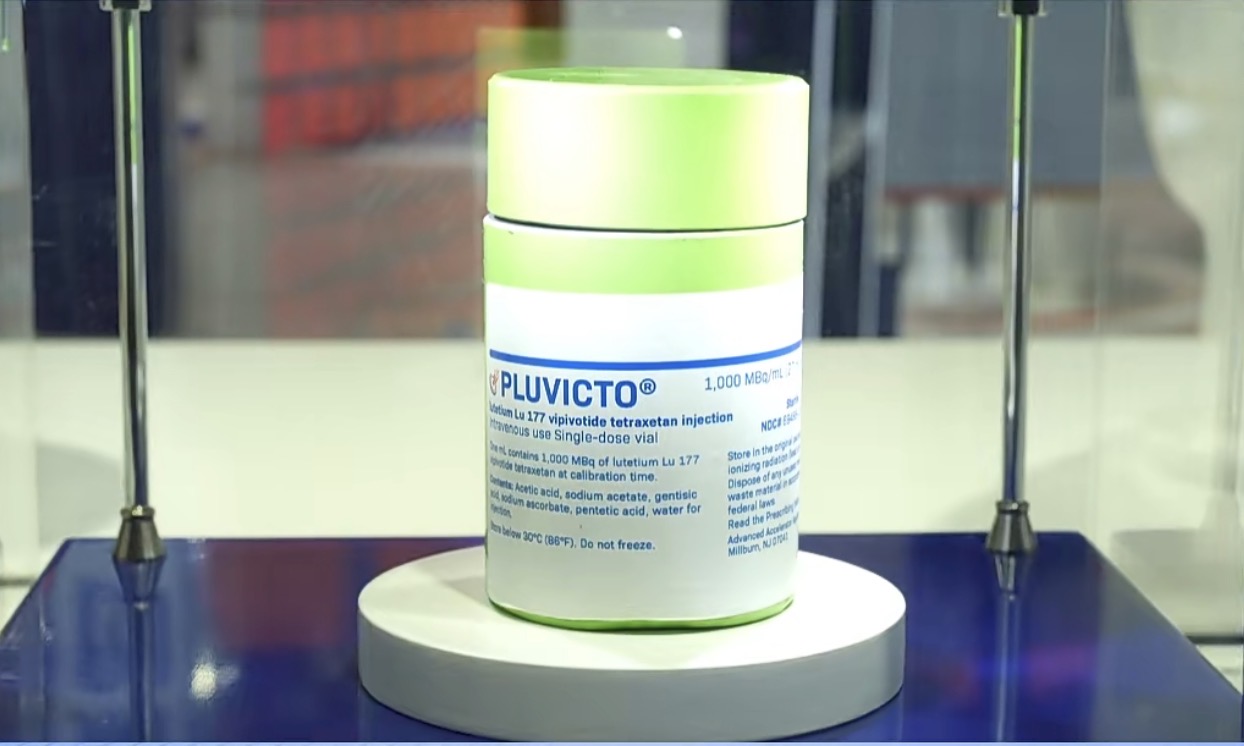
Core Insights - Novartis has received approval for its first radioligand therapy (RLT) drug, Lutetium [177Lu] oxodotreotide injection (brand name: Pluvicto), marking it as the first RLT drug approved in China, providing new treatment options for advanced prostate cancer patients [1][3] - The RLT drugs are known for their high costs due to complex research and production supply chains, with Novartis's two nuclear drugs surpassing $2 billion in revenue last year [1][4] - A strategic partnership between Novartis and Siemens Healthineers was established to promote the integration of molecular imaging systems in precision diagnosis and treatment for major diseases like prostate cancer [1][3] Company Developments - Novartis is expanding its nuclear medicine production strategy globally, with a $6 billion RMB investment in a radioactive drug production project in Haiyan, Zhejiang, expected to be operational by the end of 2026 [4] - The new facility will enhance the ability to scale production of innovative RLT drugs, improving response times to clinical demands in China [4] Industry Trends - The integration of diagnostic imaging with RLT is seen as a significant advancement in cancer treatment, shifting from a "one-size-fits-all" approach to more personalized treatment plans [3] - The market for radioligand therapy is gaining attention, with predictions estimating the annual market size could reach $25 billion [4] - Other companies, such as Bayer and Bristol-Myers Squibb, are also investing in the nuclear medicine sector, indicating a competitive landscape in the RLT field [3]
西门子医疗中国与诺华公司达成战略合作
Zheng Quan Shi Bao Wang· 2025-11-06 13:48
Core Insights - Siemens Healthineers and Novartis signed a strategic cooperation agreement to advance radioligand therapy (RLT) and molecular imaging systems for precise diagnosis and treatment of severe diseases like prostate cancer [1][2] Group 1: Strategic Cooperation - The partnership aims to explore the future development of integrated systems combining molecular imaging and RLT, including optimizing treatment pathways and establishing a "gold standard" for integrated diagnosis and treatment [1] - Both companies will work on pilot projects to implement integrated treatment centers that meet the established "gold standard" [1] Group 2: Industry Trends - The healthcare paradigm is shifting from a "one-size-fits-all" approach to personalized treatment plans, emphasizing high precision and individual adaptability [2] - RLT is showing significant potential in targeted cancer treatment, with clinical trial data confirming its ability to improve patient survival rates [2] Group 3: Technological Advancements - Molecular imaging devices play a crucial role throughout the entire treatment cycle, from drug development to patient selection, diagnosis, treatment implementation, and efficacy monitoring [3] - Siemens Healthineers is a leading company in cancer diagnosis and treatment using molecular imaging technology, providing advanced imaging systems like PET/CT and SPECT/CT [3] Group 4: Product Showcase - At the expo, Siemens Healthineers showcased the Biograph Vision Quadra2.0 whole-body PET/CT scanner, which has the highest measured system sensitivity in the industry [4] - This device enables detailed structural and functional imaging, generating dynamic images of the entire body in a single scan, thus supporting precision medicine [4]
浩欧博(688656):25Q3业绩亮眼,脱敏药业务持续推进:——浩欧博(688656.SH)2025年三季度报告点评
EBSCN· 2025-11-02 08:49
Investment Rating - The report maintains an "Accumulate" rating for the company [5] Core Insights - The company reported a revenue of 292 million yuan for the first three quarters of 2025, a year-on-year decline of 4.84%, while the net profit attributable to shareholders was 26 million yuan, down 1.41% year-on-year. However, in Q3 2025, the company achieved a revenue of 103 million yuan, a slight decline of 1.64% year-on-year, but the net profit increased significantly by 113.01% to 14.02 million yuan [1][2] - The company has made progress in its desensitization drug business, with successful completion of the first batch of subject administration in the Phase III clinical trial of the MM09 sublingual spray in collaboration with Inmunotek [3] - The company has received NCRC certification for its self-immune diagnostic capabilities, achieving full scores in all 46 projects it participated in, showcasing its expertise in the self-immune diagnostic field [2][3] Financial Performance Summary - For Q3 2025, the company's sales expense ratio was 22.94%, down 0.93 percentage points year-on-year; management expense ratio was 17.04%, down 4.64 percentage points year-on-year; and financial expense ratio was 0.44%, down 0.10 percentage points year-on-year [2] - The company’s R&D expenses for Q3 2025 were 12 million yuan, a year-on-year increase of 4.85%, accounting for 11.60% of revenue [2] - The company’s projected net profits for 2025-2027 have been adjusted to 36 million, 47 million, and 60 million yuan respectively, reflecting a downward revision of 3%, 6%, and 6% from previous estimates [3] Valuation Metrics - The current price corresponds to a PE ratio of 291 for 2025, 222 for 2026, and 173 for 2027 [3][4] - The company is positioned as a leading player in the domestic allergy testing and self-immune testing sectors, with expectations for growth driven by the integration of allergy diagnosis and treatment [3]

圣湘生物:前三季度增收超两成 3.7亿元参设产业基金
Zhong Zheng Wang· 2025-10-31 08:32
Core Viewpoint - Shengxiang Bio reported a revenue of 1.244 billion yuan for the first three quarters of 2025, marking a year-on-year growth of 20.49%, with a net profit attributable to shareholders of 191 million yuan and a net profit of 157 million yuan after deducting non-recurring gains and losses [1] Group 1: Financial Performance - For the first nine months of 2025, Shengxiang Bio achieved a revenue of 1.244 billion yuan, reflecting a year-on-year increase of 20.49% [1] - The company reported a net profit of 191 million yuan, with a non-recurring net profit of 157 million yuan [1] Group 2: Strategic Initiatives - Shengxiang Bio has initiated and is actively promoting a "diagnosis and treatment integration" strategy through both external acquisitions and internal innovation, enhancing the synergy of its product matrix and technology platform [1][2] - The acquisition of Zhongshan Haiji, which specializes in growth hormone business, complements Shengxiang Bio's pediatric infection diagnosis business, facilitating the construction of a "screening-diagnosis-treatment" integrated industrial closed loop [2] Group 3: Research and Development - The company invested 237 million yuan in R&D during the first three quarters, accounting for 19.07% of its revenue, and obtained over 130 new domestic and international registration certificates [2] - Shengxiang Bio led a 280 million yuan financing round for Zhenmai Bio to accelerate the domestic replacement and international breakthrough of high-throughput sequencing technology [2] Group 4: Fund Establishment - Shengxiang Bio plans to invest 370 million yuan to establish the Hunan Jinfurong Shengxiang Bio Fund Partnership, targeting investments in AI medical applications and innovative medical devices [3] - The fund aims to raise a total of 1 billion yuan, with Shengxiang Bio holding a 37% stake [3] - The establishment of this fund is expected to enhance the company's business expansion and industry chain extension, further solidifying its comprehensive strategic layout in the medical field [3][4]
持续深化诊疗一体化 圣湘生物前三季营收同比增长20.49%
Zheng Quan Ri Bao Wang· 2025-10-30 13:13
Core Viewpoint - The company, Sansure Biotech, reported a revenue of 1.244 billion yuan for the first three quarters of 2025, marking a year-on-year growth of 20.49%, with a net profit attributable to shareholders of 191 million yuan and a non-recurring net profit of 157 million yuan [1] Group 1: Financial Performance - Revenue for the first three quarters reached 1.244 billion yuan, reflecting a 20.49% increase year-on-year [1] - Net profit attributable to shareholders was 191 million yuan, while non-recurring net profit stood at 157 million yuan [1] Group 2: Strategic Initiatives - The company is advancing its "integrated diagnosis and treatment" strategy through both external acquisitions and internal innovations, enhancing the synergy of its product matrix and technology platform [1] - Sansure Biotech plans to invest 370 million yuan to establish the Hunan Jin Furong Sansure Biotech Fund Partnership, aimed at expanding its business and extending its industrial chain [1][4] Group 3: Research and Development - The company invested 237 million yuan in R&D during the first three quarters, accounting for 19.07% of its revenue [2] - Over 130 new domestic and international registration certificates were obtained, including 9 Class III medical device registration certificates, totaling over 1,800 certifications [2] Group 4: Product Development - In the respiratory field, multiple small joint detection products were approved, enhancing the "6/3+X respiratory infection nucleic acid rapid detection scheme" [2] - The company has installed over 200 integrated machines this year, with significant growth in HPV product shipments, leading the industry [3] Group 5: Investment Fund - The planned fund aims to raise 1 billion yuan, with Sansure Biotech contributing 370 million yuan, representing a 37% stake [4] - Other limited partners include government-backed funds, indicating strong recognition of the company's industry position and past achievements [6]