质量强国建设

Search documents
权威访谈 | 坚持有效市场和有为政府相结合 推动建设强大国内市场——访国家市场监督管理总局党组书记、局长罗文
Xin Hua She· 2025-11-13 07:16
Group 1: National Unified Market Construction - The construction of a national unified market is a significant strategic decision made by the central government, emphasizing the need to eliminate barriers to market access and enhance market vitality [2][3] - Market regulatory authorities will focus on reforming registration capital systems and improving exit mechanisms for businesses to promote a more dynamic market environment [2] - Efforts will be made to address local government interventions that distort market mechanisms and to enhance fair competition through rigorous policy reviews [3] Group 2: Activating Business Entities - The vitality of business entities is crucial for economic development, and regulatory bodies will ensure equal treatment of various ownership economies to foster complementary advantages [4] - Regular evaluations of business development quality will be conducted to guide entities towards high-quality growth, alongside improvements in corporate governance and risk management [4][5] - Measures will be taken to reduce the burden on businesses by eliminating illegal fees and enhancing communication channels for addressing operational challenges [5][6] Group 3: Quality Improvement Initiatives - The government aims to enhance quality standards as a core element of industrial competitiveness, with a focus on quality-driven enterprise growth [7][8] - Initiatives will include supporting leading enterprises in quality innovation and establishing a collaborative ecosystem for quality management across industries [8] - Local governments will be encouraged to develop quality strategies tailored to their resources, promoting sustainable urban development through quality improvements [8]
坚持有效市场和有为政府相结合 推动建设强大国内市场——访国家市场监督管理总局党组书记、局长罗文
Xin Hua She· 2025-11-13 04:53
Group 1: National Unified Market Construction - The construction of a national unified market is a major strategic decision made by the central government, emphasizing the need to eliminate barriers to market access and improve market quality [2][3] - Market regulatory authorities will focus on reforming the registration capital system and improving the exit mechanisms for businesses to enhance market vitality [2] - Efforts will be made to address local government interventions that distort market mechanisms and to promote fair competition through enhanced regulatory scrutiny [3] Group 2: Activating Business Entities - The market regulatory department aims to enhance the vitality of various business entities by treating all forms of ownership equally and promoting their complementary advantages [4] - Regular evaluations of business entity development quality will be conducted to guide them towards high-quality growth [4][5] - Measures will be taken to reduce the burden on businesses by eliminating illegal fees and improving communication channels for addressing operational challenges [5] Group 3: Quality Improvement Initiatives - The proposal to build a quality-oriented nation is a key initiative for promoting high-quality economic development, with a focus on enhancing quality standards and brand building [6] - The market regulatory department will support leading enterprises in quality innovation and management to improve product reliability and competitiveness [6][7] - Initiatives will be implemented to strengthen quality across supply chains and local governments, promoting sustainable urban development through quality enhancement [7]
贯彻落实党的二十届四中全会精神权威访谈丨坚持有效市场和有为政府相结合 推动建设强大国内市场——访国家市场监督管理总局党组书记、局长罗文
Xin Hua She· 2025-11-13 02:34
Group 1: National Unified Market Construction - The construction of a national unified market is a significant strategic decision made by the central government, emphasizing the need to eliminate barriers to market access and improve market quality [2][3] - Market regulatory authorities will focus on reforming the registration capital system and improving the exit mechanisms for businesses to enhance market vitality [2] - Efforts will be made to address local government interventions that distort market mechanisms and to promote fair competition through enhanced regulatory scrutiny [3] Group 2: Activating Business Entities - The market regulatory department aims to enhance the vitality of various business entities by treating all forms of ownership equally and promoting their complementary advantages [4] - Regular evaluations of business development quality will be conducted to guide entities towards high-quality growth [4][5] - Measures will be implemented to reduce the burden on businesses, including the elimination of illegal fees and the establishment of effective communication channels for addressing operational challenges [5] Group 3: Quality Improvement Initiatives - The proposal to build a quality-driven economy is a key initiative for high-quality economic development, with a focus on enhancing quality standards and brand building [6][7] - The market regulatory department will support leading enterprises in quality innovation and management, aiming to improve product quality and reliability [6] - Initiatives will be taken to strengthen the quality of industrial chains and local economies, promoting sustainable urban development through quality enhancement strategies [7]
坚持有效市场和有为政府相结合 推动建设强大国内市场
Xin Hua She· 2025-11-13 02:31
Core Viewpoint - The article emphasizes the importance of combining an effective market with a proactive government to build a strong domestic market, as outlined in the 15th Five-Year Plan proposal by the Central Committee of the Communist Party of China [1][2]. Group 1: National Unified Market Construction - The construction of a national unified market is a significant strategic decision made by the central leadership, aiming to eliminate barriers that hinder market integration [2]. - Market regulatory authorities will focus on improving market access quality and addressing issues related to business deregistration and migration [2][3]. - Measures will be taken to prevent local government interference in market mechanisms and to enhance fair competition review capabilities [3]. Group 2: Activating Business Entities - The vitality of various business entities is crucial for economic development, and the market regulatory department aims to treat all forms of ownership equally to promote their growth [4]. - Regular evaluations of business entity development quality will be conducted to guide them towards high-quality development [4][5]. - Efforts will be made to reduce the burden on businesses by eliminating illegal fees and enhancing communication channels for addressing operational challenges [5]. Group 3: Quality Improvement Initiatives - The proposal highlights the need to accelerate the construction of a quality-driven economy, which is essential for high-quality economic development [6]. - The market regulatory department will support leading enterprises in enhancing quality management systems and innovation [6][7]. - Initiatives will be implemented to strengthen quality across supply chains, counties, and establish high-level quality infrastructure to support modern industrial systems [7].
“十四五”答卷·科技支撑强国建设丨科技造就质量强国建设新标尺
Ke Ji Ri Bao· 2025-11-06 07:53
Group 1: Technological Advancements in Manufacturing - The AI quality inspection system developed by Fujian Fubusi and Huawei processes 60 frames of images per second, enabling 100% automated inspection in textile manufacturing, significantly improving efficiency and product quality [1] - China CRRC's high-speed train gearboxes are now assembled with micron-level precision, achieving "zero defects" through extensive optimization of assembly processes, surpassing international standards [2] - The C919 aircraft project has established a comprehensive quality control system covering design, manufacturing, and testing, resulting in over a thousand orders and showcasing China's high-end manufacturing capabilities [3] Group 2: Quality Transformation in Manufacturing - The integration of AI and industrial internet technologies in factories, such as SANY Heavy Industry, has led to significant improvements in manufacturing quality through real-time data analysis and process optimization [5][6] - The national quality infrastructure has been strengthened, with over 13,000 national standards approved during the 14th Five-Year Plan, enhancing China's role in global industrial standards [3] Group 3: Brand Development and Global Expansion - BYD has achieved significant growth in the global electric vehicle market, with a 240% year-on-year increase in overseas deliveries, driven by innovative battery technology [8] - The number of Chinese brands in the World Brand 500 has increased from 40 in 2019 to 73 in 2024, reflecting the growing international influence of "Chinese manufacturing" and "Chinese quality" [10] Group 4: Policy and Strategic Goals - The "Quality Power Construction Outline" aims to establish a number of high-quality Chinese brands by 2025, with a focus on innovation and brand excellence [9] - The National Market Supervision Administration emphasizes the importance of technological independence and innovation in building a robust national quality infrastructure [10]

青海省海西州2025年“质量月”活动成效显著
Zhong Guo Zhi Liang Xin Wen Wang· 2025-10-16 09:08
Core Insights - The 2025 "Quality Month" in Haixi Prefecture, Qinghai Province, focuses on enhancing comprehensive quality management to promote the construction of a quality-oriented nation through 34 carefully designed activities [1] Group 1: Quality Promotion - Quality promotion activities effectively raised awareness and encouraged public participation through a combination of online and offline methods, including over a hundred knowledge-sharing posts on WeChat and multiple media reports [1] - Offline efforts included the use of LED screens and taxi rooftop lights to display slogans, along with 17 concentrated promotional events and open laboratory days to build public confidence in quality safety [1] Group 2: Quality Improvement - Targeted quality improvement actions were organized, providing tailored support to 15 industrial product manufacturers with "one-on-one" technical assistance and expert guidance from the Qinghai Standardization Association [2] - The release of 10 new standards during the 2025 Haixi Prefecture Standard Release Conference aimed to optimize and upgrade the salt lake chemical industry [2] - A skills competition in the salt lake chemical sector was held to enhance standardization practices and technical capabilities among employees [2] Group 3: Quality Supervision - Comprehensive quality supervision was implemented through special inspections, including "double random" checks on 19 legal metrology institutions to ensure measurement accuracy [3] - Safety inspections were conducted on 42 elevators in 12 key locations, along with 12 emergency drills to address potential hazards [3] - A "Iron Fist" action was launched to address consumer rights violations, resulting in the publication of ten typical cases to safeguard consumer interests [3] Group 4: Focus on Livelihood - Quality activities closely related to public welfare were conducted, including a crackdown on counterfeit food products and training for over 200 individuals on food safety management [4] - A food safety awareness week was organized to disseminate knowledge on food and drug safety, alongside rapid testing of 38 batches of food items [4] - Supervision of school fee transparency was conducted for over 150 schools to ensure a safe and fair educational environment [4] - The Haixi Prefecture Market Supervision Bureau's initiatives fostered a culture where the government prioritizes quality, businesses pursue quality, and society values quality, laying a solid foundation for high-quality economic and social development [4]
质量筑基强产业 匠心护航新生活
Jing Ji Ri Bao· 2025-10-16 00:44
Core Viewpoint - Quality is the lifeline of manufacturing and the core of high-quality economic development, with China's regulatory authorities constructing a comprehensive quality safety governance system since the "14th Five-Year Plan" period [1] Group 1: Regulatory Measures - The regulatory authorities have optimized the industrial product production licensing and CCC certification system, increasing the number of licensed categories to 14 and 27 varieties, and expanding the mandatory certification catalog to 17 categories and 106 types [1] - A total of 133,000 enterprises and 2.85 million batches of products have undergone supervision and sampling inspections, establishing a comprehensive inspection network [3] - The market supervision department has recalled 36.47 million vehicles and 34.67 million consumer goods, creating a closed-loop mechanism for defective product withdrawal [3] Group 2: Enterprise Responsibility - Enterprises are the main body of quality responsibility, and the introduction of regulations aims to transform quality management from passive response to proactive prevention [2] - The focus is on guiding enterprises to establish comprehensive quality management systems, shifting from "I have to improve quality" to "I want to improve quality" [2] Group 3: Quality Improvement Initiatives - The market supervision department has assisted 376,000 enterprises in quality improvement, with initiatives leading to a significant increase in product pass rates [4] - Quality reliability practices have resulted in a continuous decline in failure rates, benefiting 21.05 million people through quality safety education [4] - The journey of quality improvement during the "14th Five-Year Plan" reflects a transformation from scale expansion to quality efficiency in manufacturing [4] Group 4: Future Directions - Continuous efforts are needed in product quality enhancement, emphasizing both strict regulation and quality service to ensure more high-quality products reach consumers [5] - The market supervision department will maintain a problem-oriented approach, reinforcing baseline thinking with higher standards and more effective measures [5]
【质量强国】中国消费者报——加强全面质量管理 促进质量强国建设
Sou Hu Cai Jing· 2025-10-14 05:38
Core Points - The articles emphasize the importance of quality management in enhancing the entire industrial chain and promoting economic development, with various regions implementing initiatives to strengthen quality awareness and management [2][3][6][8][15]. Group 1: Quality Awareness and Management Initiatives - Beijing is focusing on enhancing quality awareness through over a hundred activities, integrating online and offline methods to promote quality education and support traditional industries in digital transformation [3][4]. - Shanghai is conducting quality awareness campaigns and has published a quality status report, promoting quality craftsmanship and organizing various quality improvement activities [6][7]. - Guangxi is launching six major actions to support high-quality economic development, focusing on standardization and quality management across key industries [8][9]. Group 2: Quality Safety and Consumer Protection - Guangxi is enhancing quality safety measures by implementing strict regulations on industrial products and consumer goods, ensuring consumer rights protection through various initiatives [9][12]. - Jiangxi is focusing on quality regulatory governance, conducting special actions to ensure product safety and consumer protection, while promoting quality awareness through public engagement activities [11][12]. Group 3: Regional Quality Improvement Activities - Fujian is implementing targeted quality services to enhance industrial quality, including certification initiatives and industry-specific training programs [13][14]. - Hunan is organizing a series of quality improvement activities across various sectors, emphasizing government support and community involvement in quality enhancement [15][16][17].

河北定州2025质量月集中宣传活动送 “安心”
Zhong Guo Zhi Liang Xin Wen Wang· 2025-10-09 06:47
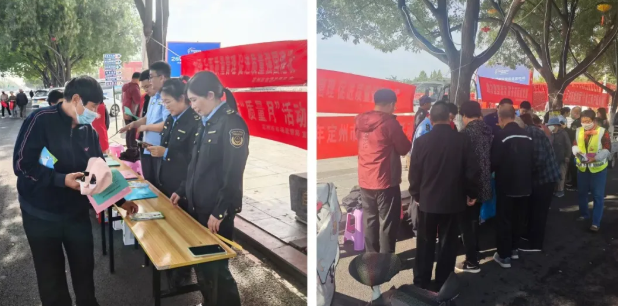
Core Points - The event aims to promote quality management and support the construction of a quality-oriented nation in China [1] - The initiative involves collaboration among 15 departments and local enterprises to create a one-stop quality service platform for citizens [1][3] Group 1: Event Overview - The event was held in Dingzhou, Hebei Province, focusing on public needs and integrating resources from various departments and local enterprises [1] - Activities included policy interpretation, knowledge dissemination, and skill guidance to enhance public awareness of quality issues [1][3] Group 2: Activities and Engagement - The Market Supervision Bureau highlighted the "Quality Strong Nation Construction Outline" and educated citizens on identifying counterfeit products [3] - Various departments provided consultations on topics such as building energy standards, fire extinguisher usage, and manufacturing quality policies [3] - Dingzhou Yili Company conducted a "Dairy Product Safety Class" and distributed customized milk, with over 3,000 promotional materials and 500 boxes of milk given out [3] Group 3: Future Plans - The Market Supervision Bureau plans to continue quality service initiatives, focusing on knowledge dissemination, quality issue identification, and dispute mediation [5] - The goal is to integrate quality assurance into daily life and support the implementation of quality-oriented nation initiatives in Dingzhou [5]

第三届中国质量万里行?青海质量行暨2025年“质量月”活动启动
Zhong Guo Jing Ji Wang· 2025-09-24 07:10
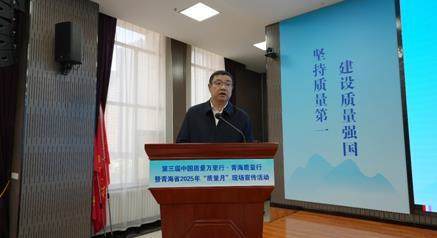
Group 1 - The event "Quality Month" in Qinghai Province aims to enhance quality management and promote the construction of a quality-oriented nation, with a focus on quality improvement, quality rectification, consumer rights protection, and quality promotion [1] - The theme for this year's "Quality Month" is "Strengthening Comprehensive Quality Management, Promoting Quality Power Construction," marking the 48th national "Quality Month" [1] - A collaborative model involving government, enterprises, and society will be adopted, with 75 key activities planned by 24 units across 8 cities in Qinghai Province [1][3] Group 2 - The event showcased achievements in quality management, including nominations for the fifth China Quality Award and excellent case studies from the National Quality (Nanjing) Conference [5] - A list of quality strong counties (districts, towns) and cities participating in the national quality enhancement activities was released, along with ten exemplary cases for quality brand cultivation in Qinghai Province [5] - The event featured a presentation on the chief quality officer system and comprehensive quality management practices by Qinghai Salt Lake Yuanpin Chemical Co., Ltd [5]