雪地靴

Search documents
别穿!别穿!最近极受漯河人欢迎
Xin Lang Cai Jing· 2026-01-21 01:01
Core Viewpoint - The article emphasizes the potential risks associated with wearing thick-soled shoes and snow boots, particularly for children and drivers, recommending that the sole thickness should not exceed 3.5 centimeters [1][3]. Group 1: Risks of Thick-Soled Shoes - Thick-soled shoes increase the resistance arm, placing higher demands on the ankle muscles and ligaments while reducing ground perception, which affects walking stability [3]. - Wearing thick-soled snow boots alters the mechanical structure of the lower limbs during walking, impacting the movement rhythm of the ankle, knee, and hip, thereby increasing the risk of injury [3][9]. - Children are particularly vulnerable as thick snow boots can lead to improper foot development and increase the likelihood of falls due to slipping [7][9]. Group 2: Recommendations for Footwear - It is advised to check the product labels of snow boots for essential information such as brand, material, and standards [10]. - Selecting snow boots made of genuine leather is recommended, as they provide better quality and support compared to synthetic materials [10]. - Attention should be paid to the sole material and design, as a well-constructed sole enhances grip and reduces the risk of slipping [10].


无忧出行 畅玩贴士
Xin Lang Cai Jing· 2026-01-19 19:14
Core Viewpoint - The article emphasizes the growing popularity of winter sports, particularly ice skating and skiing, as a means to transform cold winter resources into a vibrant economy, highlighting the importance of safety and proper equipment for an enjoyable experience [5]. Transportation Safety - For self-driving, it is crucial to prepare vehicles with snow tires, anti-skid chains, and emergency supplies, and to conduct pre-trip checks on tire pressure and brake systems [6][7]. - Driving techniques should include low-speed driving, gentle acceleration and braking, and maintaining a safe distance from other vehicles [6]. - Public transport should prioritize vehicles equipped with snow tires and driven by experienced drivers [7]. Cold Weather Protection - In extremely cold regions, a three-layer clothing system is recommended, including thermal underwear, fleece layers, and insulated outerwear, along with essential accessories like waterproof boots and face masks [9][10]. - For electronic devices, it is advised to carry spare batteries and power banks, and to protect them from extreme cold [10]. Ski Equipment Selection - Ski clothing should prioritize waterproof and breathable materials, with a recommended waterproof index of at least 10,000 [11]. - Snow boots must have deep tread for grip and insulation to keep feet warm [11]. - Protective gear should fit well and include helmets and goggles to ensure safety while skiing [11]. Safety in Winter Activities - It is essential to choose accredited ski resorts and ensure that all equipment is regularly inspected [12]. - Skiers should wear helmets and follow safety protocols, maintaining a safe distance from others [12]. - Tourists should adhere to designated paths in scenic areas and be cautious of icy conditions [14].
物流升级激活西部网购活力,天猫年货节“硬核年货”受热捧
Sou Hu Cai Jing· 2026-01-13 14:36
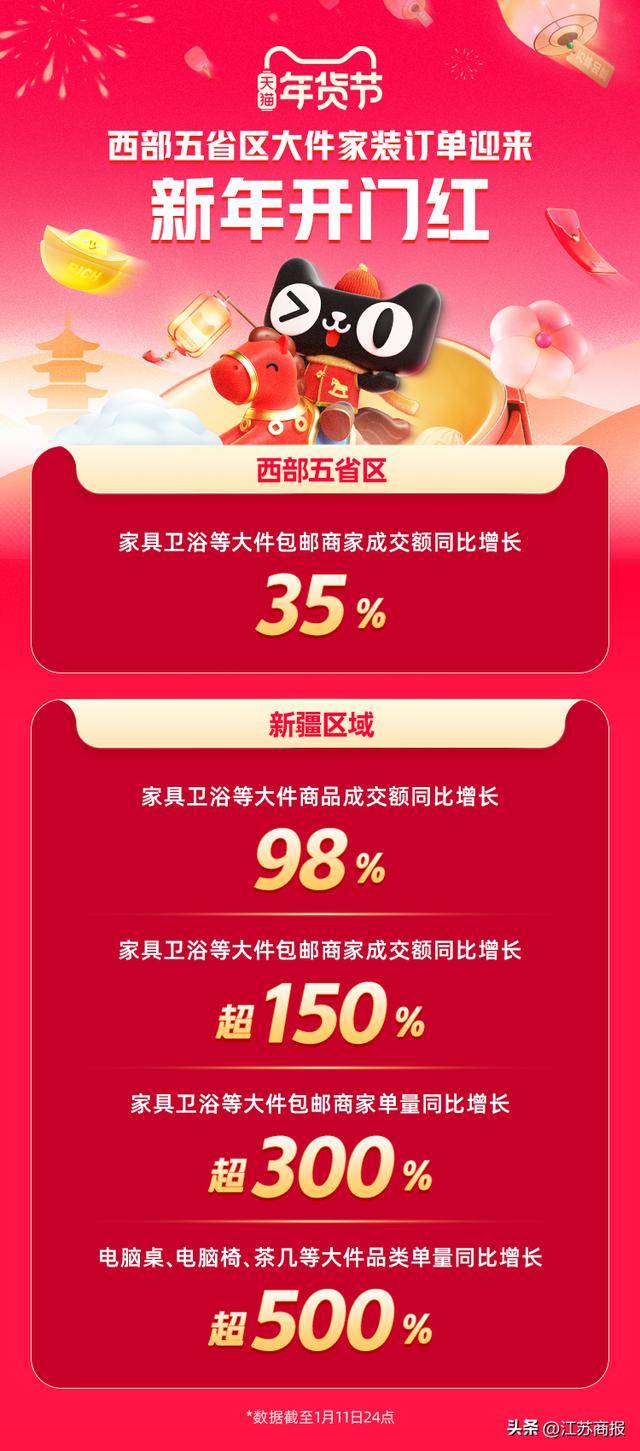
Core Insights - The Tmall New Year Shopping Festival has seen significant growth in consumption in the western regions of China, particularly in large home furnishings, which have been included in the free shipping policy for the first time this year [1][4]. Group 1: Consumption Trends - The western provinces of Gansu, Qinghai, Ningxia, Inner Mongolia, Xinjiang, and Tibet have experienced a surge in orders since the festival began on January 4, 2026, with traditional categories like clothing, fresh produce, and electronics remaining popular among consumers [1]. - Notable increases in sales include a 47% year-on-year growth in fur products and a 47% increase in sales of niche clothing categories like Lolita fashion [1]. - Products featuring horse elements, such as couplets, mascots, and clothing for the Year of the Horse, have also seen record sales [1]. Group 2: Large Home Furnishings - The introduction of large home furnishings into the free shipping policy has led to a 35% increase in transaction value for related merchants in the western regions [1]. - In Xinjiang, the transaction value of large home furnishings has increased by 98%, with order volume growing by over 100% and the number of users placing orders rising by nearly 80% [4]. - Categories such as furniture and bathroom fixtures have seen order volume growth exceeding 300%, with specific items like computer chairs and tables experiencing transaction volume increases of over 500% [4]. Group 3: Logistics and Supply Chain Improvements - The success of large items in the western regions is attributed to systematic improvements in logistics and supply chain management, including enhanced warehousing and transportation services by Tmall [4]. - The implementation of a consolidated shipping model has reduced logistics costs for merchants, encouraging more participation and growth [4]. - During the festival, the shipping time for consolidated services has been reduced by 8 hours compared to the previous year, ensuring faster delivery of goods [4].

别穿!8岁男孩一到冬天就腿疼,走路“拖拖拉拉”,一查竟是“它”惹的祸!
Xin Lang Cai Jing· 2026-01-07 11:00
Core Viewpoint - The article highlights the potential harm caused by children wearing thick-soled shoes and snow boots, emphasizing the importance of proper footwear for healthy foot development [1][3]. Group 1: Health Risks of Thick-Soled Shoes - Children wearing shoes with soles thicker than 3.5 centimeters may develop foot problems [2]. - Thick-soled shoes can disrupt the natural balance of the foot, leading to issues such as flat feet and abnormal walking patterns [3][5]. - Hard soles restrict natural toe movement, increasing the impact on the ankle and adding stress to the joints [4]. Group 2: Consequences of Improper Footwear - Soft soles fail to stabilize the heel, which can lead to abnormal walking and may affect the knees and hips, potentially causing conditions like bow legs and spinal misalignment [5]. - The case of an 8-year-old boy experiencing foot pain after wearing snow boots illustrates the real-life implications of improper footwear [1]. Group 3: Guidelines for Choosing Proper Footwear - When selecting shoes, ensure the sole can bend at the front third to mimic walking [6]. - The heel support should have a certain hardness to keep the heel stable [7]. - The shoe upper should not be too rigid to allow for ankle movement [8]. Group 4: At-Home Foot Health Checks - Parents can assess their child's footwear impact by checking for uneven sole wear, observing standing and walking posture, and listening to complaints of foot or leg pain [10][12]. - Noticing significant wear on the inner side of the sole may indicate flat feet or other issues [11]. - If abnormalities are detected, it is advised to consult a pediatric orthopedic specialist rather than purchasing corrective shoes blindly [13].
“中国雪地靴之乡”金字招牌更加厚重! “丹徒(高桥)雪地靴巧手”入选省级劳务品牌目录
Yang Zi Wan Bao Wang· 2026-01-03 12:30
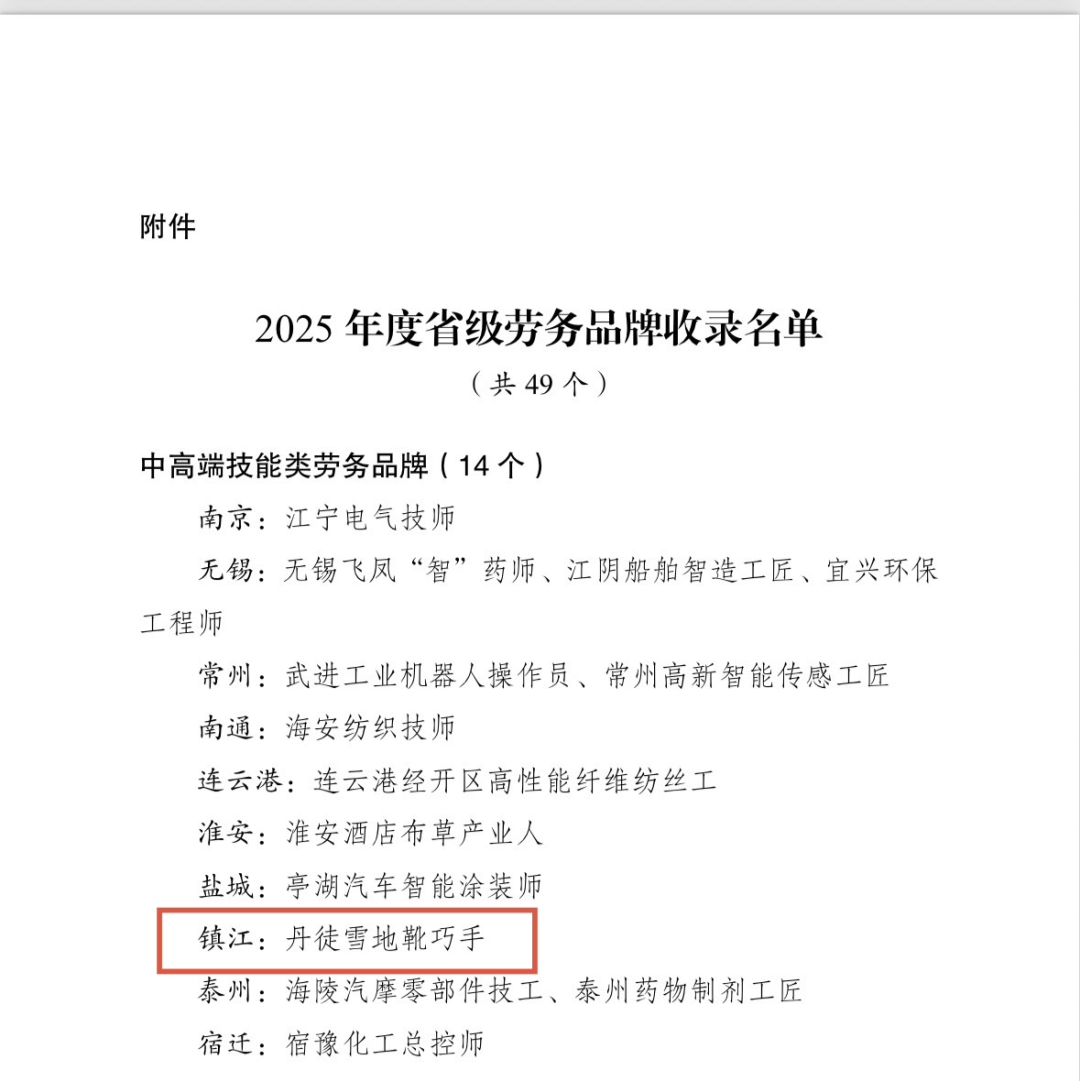
Core Insights - The fur industry in Gaoqiao Town, Danju District, began in the 1970s, initially focusing on fur coats, clothing, and footwear, and has evolved into a significant snow boot production hub by the 21st century [3] - The establishment of the "China Snow Boot Town" brand in August 2016 has led to the growth of the "Danju Snow Boot Craftsman" labor brand, which is now supported by the local government [4] Group 1: Government Support and Initiatives - The Gaoqiao Town government has implemented five core initiatives to enhance the labor brand, including creating an industrial cluster, promoting entrepreneurship and product innovation, and expanding market reach through e-commerce [4] - The establishment of a 300-acre snow boot industrial park has provided a platform for resource allocation and skill exchange, supporting over 500 fur-related enterprises and creating more than 9,000 jobs [4][5] Group 2: Industry Development and Economic Impact - The snow boot industry in Gaoqiao Town has developed a robust management system, with major enterprises focusing on export orders, leading to high standards in product quality and management practices [5] - By the end of 2024, the industry is expected to have a total fixed asset value of 220 million yuan and a sales revenue of 328 million yuan, with 26 key enterprises generating over 630 million yuan in total sales [6] - The industry employs over 9,000 individuals, with 7,000 from the town, contributing to an annual total wage exceeding 600 million yuan, thereby enhancing local economic development [6]
热雪经济 沸腾浙里
Xin Lang Cai Jing· 2025-12-30 23:17
Core Insights - The launch of the Changxing Badujia Ski Resort, with a total investment of 320 million yuan and covering over 50,000 square meters, adds a new dimension to Zhejiang's ice and snow economy, featuring four professional ski trails and a 3,500 square meter snow play area for local tourists [5][6] Group 1: Industry Development - Zhejiang has developed a unique "snow-making" path through technological breakthroughs and scene innovation, despite lacking natural snow resources [5] - The province has seen the emergence of over 10 ice and snow recreational facilities since the establishment of its first outdoor ski resort in 2006, significantly boosting public interest in ice and snow sports [5] - The expected number of ski visits in Zhejiang for the 2024-2025 season is projected to reach 1.29 million, ranking sixth nationally and first in southern China [5] Group 2: Economic Impact - The ice and snow industry in Zhejiang has formed a comprehensive industrial chain, with over 500 related enterprises covering research, production, and sales, contributing to a year-round thriving ice and snow economy [6] - Ningbo Ninghai is recognized as the "Hometown of Sports Poles," producing about 60% of global ski poles, with domestic orders expected to grow by over 50% this year [6] - Taizhou Luqiao is known as the "Hometown of Snow Boots," accounting for one-third of national production, with an annual output value exceeding 1 billion yuan [6] - The ice and snow industry clusters in regions like Huzhou, Ningbo, Jinhua, and Jiaxing are creating a full industrial chain ecosystem that integrates experience, equipment manufacturing, and business innovation [6]
冰雪经济中的发展之道
Ren Min Ri Bao· 2025-12-30 02:53
Core Insights - The ice and snow economy has evolved from a niche market to a trillion-yuan industry, transitioning from event-driven growth to a systematic and industrialized development phase [1] Group 1: Transformation of Ice and Snow Economy - The surge in ice and snow tourism is driven by a profound change in consumer behavior, moving beyond mere sightseeing to immersive experiences that resonate emotionally with visitors [1] - The integration of ice and snow with culture, sports, and technology has diversified offerings, allowing for better alignment with consumer demands [1] Group 2: Cultural Revitalization - Historical resources serve as valuable assets for the ice and snow economy, with innovative approaches transforming old cultural elements into new attractions [2] - The introduction of AR technology in historical sites, such as the ice and snow night tour in Luoyang, enhances visitor engagement by blending history with modern experiences [2] Group 3: Collaborative Development - The ice and snow economy thrives on collaboration, requiring a break from isolated development to create synergies across multiple attractions and regions [3] - The model of leveraging a central attraction, like the snow town in Heilongjiang, to benefit surrounding areas exemplifies effective regional cooperation [3] Group 4: Expanding Industry Boundaries - The development of the ice and snow economy must address existing gaps and leverage available resources to maximize value [4] - Initiatives such as enhancing transportation networks and developing snow equipment industries in regions like Zhejiang illustrate strategies to fill market voids and stimulate growth [4] - The rise of the ice and snow economy reflects broader trends in economic restructuring and the release of consumer potential in China [4]
合肥首开至捷克布拉格货运包机航线
Zhong Guo Xin Wen Wang· 2025-12-23 02:33
Core Viewpoint - The launch of a direct cargo flight from Hefei Xinqiao International Airport to Prague marks a significant development in cross-border e-commerce logistics, enhancing the airport's role as an international air cargo hub [1] Group 1: Cargo Flight Launch - A cargo plane carrying 86 tons of goods took off from Hefei Xinqiao International Airport to Prague, representing the first direct cargo flight to the Czech Republic [1] - The flight is a temporary cargo charter for Anhui cross-border e-commerce platform enterprises, with goods primarily consisting of winter clothing, snow boots, and imitation jewelry [1] Group 2: Growth in Air Cargo Volume - The trend of using air transport for cross-border e-commerce goods has become mainstream, leading to a significant increase in cross-border air cargo volume [1] - As of now, the international and regional cargo mail throughput at Hefei Xinqiao International Airport is projected to exceed 45,000 tons by 2025, reflecting a year-on-year growth of 53% [1] Group 3: International Cargo Network - Hefei Xinqiao International Airport currently operates stable cargo routes to eight international destinations, including New York, connecting Central Asia, the European Union, and North America [1] - This extensive cargo aviation network supports the airport's development as an international air cargo distribution center [1]
低温催热“御寒经济”京东京喜自营爆款棉拖热卖70万单
Jin Rong Jie Zi Xun· 2025-12-16 06:27
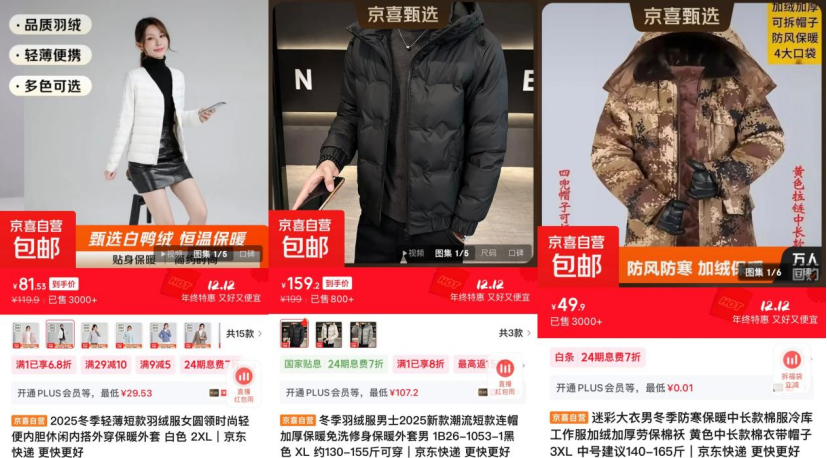
Core Insights - The "cold economy" is gaining traction as temperatures drop across the country, leading to diverse and detailed consumer demands for warmth in various life scenarios [1] - Consumers are increasingly seeking stylish yet functional outerwear for commuting, reflecting a shift from basic warmth to a focus on aesthetics and practicality [2] - The efficient collaboration between 京喜自营 and manufacturing partners has enabled rapid market response and sales growth, capitalizing on consumer trends [10] Group 1: Commuting Needs - Commuters are upgrading their cold-weather gear, looking for outerwear that combines warmth with style, leading to a rise in demand for fashionable and functional jackets [2] - 京喜自营 has launched several high-quality, cost-effective outerwear options tailored to different commuting scenarios, resulting in steady sales growth [2] - Specific products like women's lightweight down jackets and men's camouflage cotton jackets have seen significant sales, with the latter selling over 3,000 units in just 30 days [2] Group 2: Home Comfort - As temperatures drop, there is a noticeable increase in demand for home comfort items such as thermal underwear and slippers, with consumers prioritizing warmth, comfort, and value [4] - The 小熊小兔 cotton slippers have become a bestseller, with over 700,000 units sold in three months, thanks to competitive pricing and quality [4] - Other popular items include snow boots and thick plush socks, indicating a strong market for home-based warmth products [4] Group 3: Outdoor Activities - The demand for outdoor gear has surged as winter conditions create challenges for sports and cycling enthusiasts, necessitating products with enhanced windproof and functional features [8] - Items like the 吉普 three-in-one cotton jacket and touchscreen gloves have gained popularity, with sales exceeding 10,000 units for the gloves [8] - This trend highlights the need for specialized equipment that meets the demands of various outdoor activities [8] Group 4: Health and Safety - With the onset of cold weather and flu season, there is an increased demand for face protection and warmth accessories, leading to a rise in sales of related products [6] - The classic warm 雷锋 hat and children's medical masks have seen significant sales, with the latter selling over 100,000 units in just 25 days [6] - 京喜自营's proactive collaboration with manufacturers has allowed for quick product development and market entry, resulting in successful sales [6] Group 5: Supply Chain Efficiency - 京喜自营 has established a highly efficient supply chain system that integrates trend insights, rapid response, and stable supply, contributing to strong sales across various product categories [10] - The collaboration with quality manufacturing hubs has enabled 京喜自营 to offer a wide range of affordable and high-quality warm products to consumers [10] - The company plans to continue enhancing partnerships with local industry leaders to improve the shopping experience for consumers [10]

百元冲锋衣带火浙江小县城,1年狂揽120亿
21世纪经济报道· 2025-12-06 03:34
Core Insights - The article highlights the success of the "Sanmen" brand of jackets from a small county in Zhejiang, which has over 300 manufacturers and 200 e-commerce companies, producing more than 80 million jackets annually with sales around 12 billion yuan [1][4][7] - It discusses the challenges faced by small and medium-sized enterprises (SMEs) in Zhejiang, emphasizing the need for brand building and industry upgrades to remain competitive in a market increasingly focused on quality and branding [4][6][12] Industry Overview - Zhejiang's economy is primarily driven by SMEs that have historically relied on low-cost advantages, but are now facing growth bottlenecks due to rising competition and consumer demands for quality [4][6] - The article notes that many local industries, despite having strong product quality, often serve as OEMs for international brands, leading to a lack of brand recognition and value [6][12] Brand Development Strategies - The "Sanmen" jacket industry has successfully established a public brand that sets quality standards and avoids price wars, providing a pathway for companies to transition from OEM to brand ownership [7][9] - Companies like Zhejiang Dixiang Garment Co., Ltd. have focused on quality control and building a factory brand before expanding into international markets, reflecting a shift in strategy towards brand recognition and quality assurance [9][10] Regional Brand Initiatives - The establishment of regional public brands is seen as a crucial measure for addressing challenges such as rising labor costs and supply chain shifts, helping SMEs gain credibility and market presence [4][12][14] - The article describes how local governments are implementing standards and management systems to support the development of regional brands, enhancing the overall competitiveness of the industry [12][14] Market Positioning and Future Outlook - Companies are encouraged to identify their unique market positions and avoid direct competition with high-end brands, focusing instead on niche markets where they can leverage their strengths [11][12] - The article emphasizes the importance of collective branding efforts among SMEs to enhance their market presence and combat issues like price competition and imitation [13][14]