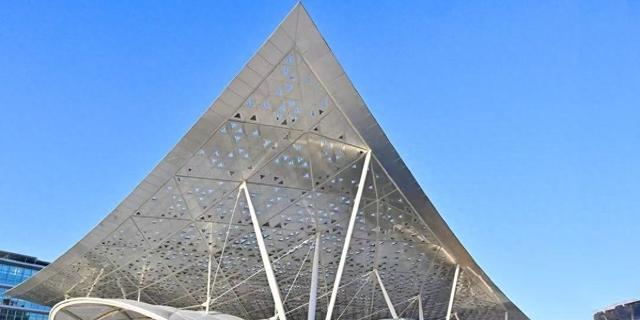
轨道上的京津冀

Search documents
京唐城际铁路全线贯通 唐山融入北京一小时交通圈
Zhong Guo Jing Ji Wang· 2025-12-31 15:32
Core Viewpoint - The opening of the Beijing Tongzhou Station marks the full operation of the Beijing-Tangshan Intercity Railway, significantly reducing travel time between Tangshan and Beijing to 55 minutes, thereby integrating Tangshan into the Beijing one-hour traffic, living, and logistics circle [1] Group 1: Transportation Infrastructure - The Beijing-Tangshan Intercity Railway connects multiple regions in the Beijing-Tianjin-Hebei area, enhancing travel options for residents and promoting the construction of a "railway-based Beijing-Tianjin-Hebei" [1] - The railway features eight stations, including Beijing Tongzhou, Yanjiao, Dachang, Xianghe, Baodi, Yutian South, Tangshan West, and Tangshan, facilitating easier commutes for residents [1] Group 2: Impact on Residents - The new railway significantly improves the quality of life for residents, as exemplified by an elderly resident who can now visit family in Beijing in under an hour, compared to nearly two hours previously [2] - The railway also enhances medical access for residents, allowing for same-day travel to Beijing for medical treatment, thus saving time and energy [2] Group 3: Educational Opportunities - The railway's opening benefits students, allowing for easier access to academic resources and events in Beijing, thus enhancing their educational experience [3] - The presence of 1,500 new master's students at Beijing Jiaotong University in Tangshan is expected to facilitate the flow and sharing of quality educational resources in the region [3] Group 4: Economic and Talent Development - The improved transportation conditions foster talent mobility and regional innovation, breaking down barriers to communication and collaboration between high-level talents in Tangshan and Beijing [4] - The railway is expected to attract population, capital, technology, and information to Tangshan, promoting industrial upgrades and the development of modern service industries along the railway [4]
北京通州站正式投入运营
Ren Min Ri Bao· 2025-12-31 01:50
Core Viewpoint - The official opening of Beijing Tongzhou Station marks a significant milestone in the coordinated development of the Beijing-Tianjin-Hebei region, enhancing transportation connectivity and urban space optimization [1][3]. Group 1: Infrastructure Development - Beijing Tongzhou Station, part of the Beijing urban sub-center transportation hub, has been under construction for over six years and officially opened on December 30 [3]. - The station features a unique design without a ground station building, utilizing five light wells to allow natural light into the underground space [3][4]. - The station integrates various transportation modes, including connections to Metro Line 6 and adjustments to eight bus routes, with plans for future connections to additional metro lines [4][6]. Group 2: Economic and Social Impact - The station is expected to facilitate commuting and promote integration within the region, significantly reducing travel times; for example, it takes only 11 minutes to reach Yanjiao from Tongzhou Station [6][7]. - The opening of the station is projected to enhance the flow of resources and people, enabling same-day business interactions between cities like Tangshan and Tongzhou [7][8]. - The station will operate 12 pairs of trains initially, connecting to the Beijing-Tangshan Intercity Railway and the Beijing-Binhai Intercity Railway [6][8]. Group 3: Urban Planning and Governance - The establishment of the "Eight Stations and Two Airports" framework, which includes Beijing Tongzhou Station, represents a historic leap in the capital's transportation landscape [8][9]. - This new framework aims to optimize urban governance by implementing a unified management system for the major transportation hubs, enhancing operational efficiency [9]. - The comprehensive transportation hub structure supports Beijing's urban spatial layout, promoting a multi-functional urban vitality space [9].

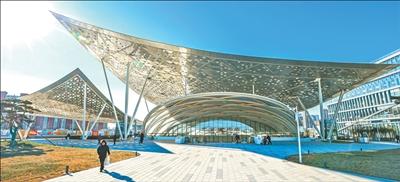
北京通州站正式投入运营(经济聚焦)
Ren Min Ri Bao· 2025-12-31 01:16
Core Viewpoint - Beijing Tongzhou Station officially commenced operations on December 30, marking a significant milestone in the development of the Beijing-Tianjin-Hebei region and enhancing the city's transportation network [4][9]. Group 1: Infrastructure and Design - Beijing Tongzhou Station is designed without a ground station building, freeing up urban space and promoting city optimization [4]. - The station features a "growth-type" development concept, with an initial focus on commercial areas that will evolve over time [5]. - The station includes five light wells to allow natural light into the underground structure, enhancing the passenger experience [5]. Group 2: Transportation Connectivity - The station has established a multi-modal transportation system, integrating public transport and various transit options [6]. - Initial operations include 12 pairs of trains, facilitating connections to Tangshan and other cities, with travel times significantly reduced [7]. - Future expansions will include connections to additional subway lines, enhancing the overall transit network [6][8]. Group 3: Regional Development Impact - The station is positioned as a key node in the "railway on the Beijing-Tianjin-Hebei" initiative, promoting deeper integration of the region [7]. - The operational efficiency allows for rapid commuting, enabling same-day business interactions between cities like Tangshan and Tongzhou [8]. - The establishment of the "Eight Stations and Two Airports" framework represents a historic transformation in Beijing's transportation landscape [9][10]. Group 4: Urban Governance and Management - A novel management system for key station areas has been introduced, streamlining coordination among major transport hubs [10]. - The new transportation framework supports the optimization of Beijing's urban spatial structure, enhancing overall city functionality [10].
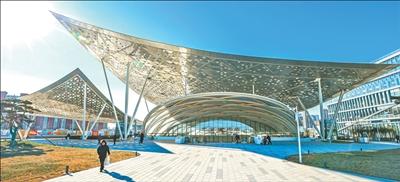
北京通州站开通投运 成型“八站两场”交通枢纽格局
Zhong Guo Xin Wen Wang· 2025-12-30 06:19
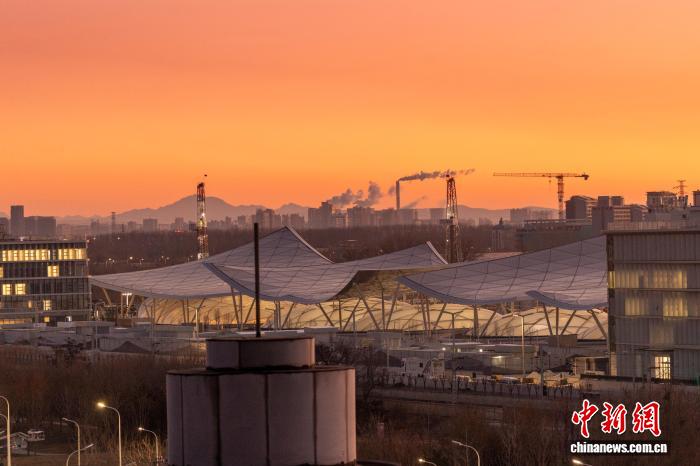
Core Viewpoint - The opening of Beijing Tongzhou Station marks a significant milestone in the development of Beijing's transportation infrastructure, establishing the city as the first in China to have eight first-class railway passenger stations and two major international airports [1][2]. Group 1: Infrastructure Development - Beijing Tongzhou Station officially commenced operations on December 30, enhancing the city's overall transportation network [1]. - The station is a key component of the Beijing urban planning strategy, serving as an important transportation gateway in the eastern part of the capital [1][2]. - The station's opening is expected to strengthen the "railway network of Beijing-Tianjin-Hebei" and support the strategic integration of the region [1]. Group 2: Operational Features - The initial phase of the Tongzhou hub includes the main area around Beijing Tongzhou Station, with facilities such as the outdoor square, transfer corridor, parking lot, and some commercial amenities now operational [2]. - The hub will eventually integrate various transportation modes, including subways, intercity railways, suburban railways, and buses, with future plans for a ferry terminal and check-in services [2]. - The station will facilitate direct connections to key destinations, with travel times from Beijing Tongzhou Station to Tangshan, Baodi, Beichen, and Qinhuangdao being 55 minutes, 26 minutes, 56 minutes, and 90 minutes respectively [2].
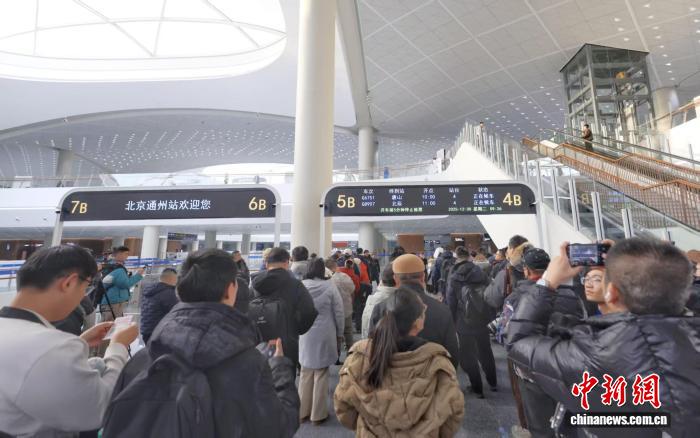
北京通州站30日开通投运 完善京津冀1小时交通圈
Zhong Guo Xin Wen Wang· 2025-12-30 04:11
Core Viewpoint - The opening of Beijing Tongzhou Station on December 30 marks the completion of a comprehensive transportation hub in Beijing, enhancing the connectivity within the Beijing-Tianjin-Hebei region and establishing Beijing as the first city in China with eight first-class railway passenger stations and two major international airports [1][3]. Group 1: Transportation Network Development - Beijing Tongzhou Station is a key node in the "Railway on Beijing-Tianjin-Hebei" transportation network, further integrating the region's transport infrastructure [3]. - The station will facilitate the operation of 42 trains for the Beijing-Tangshan Intercity and Beijing-Binhai Intercity rail services, significantly reducing travel times between major cities in the region, with travel times to Tangshan, Baodi, Beichen, and Qinhuangdao being 55 minutes, 26 minutes, 56 minutes, and 90 minutes respectively [4][5]. Group 2: Infrastructure and Services - The new station features seven arrival and departure tracks and seven passenger platforms, ensuring efficient operations and service delivery [5]. - A multi-modal transportation system has been established to enhance passenger experience, including connections to Metro Line 6 and future integration with Metro Line 22 and M101 [6]. Group 3: Public Transport Enhancements - Several bus routes have been optimized to connect the station with key areas in Beijing, including the old town of Tongzhou and major commercial and medical districts [9]. - Two new airport bus lines have been introduced to connect Beijing Tongzhou Station with both Capital Airport and Daxing Airport, ensuring seamless transportation for passengers [9]. Group 4: Operational Readiness - Prior to the opening, the railway department conducted thorough inspections and safety assessments of the station's facilities, ensuring operational readiness [5]. - A joint monitoring and coordination system has been established among transportation, public security, and railway departments to ensure smooth traffic flow around the station [10].
新建北京通州站开通运营在即
Xin Lang Cai Jing· 2025-12-29 19:18
Core Viewpoint - The new Beijing Tongzhou Station, part of the Beijing-Tangshan Intercity Railway, will commence operations on December 30, enhancing connectivity in the Beijing-Tianjin-Hebei region and promoting the "Railway-based Beijing-Tianjin-Hebei" initiative [1] Group 1 - The new station will handle the starting and ending operations of the Beijing-Tangshan and Beijing-Binhai intercity railway trains [1] - The existing Tongzhou Station on the Beijing-Harbin Railway will be renamed to Zhongcang Station [1] - Travel times from the new Beijing Tongzhou Station to Tangshan, Baodi, Beichen, and Qinhuangdao will be reduced to 55 minutes, 26 minutes, 56 minutes, and 90 minutes respectively [1] Group 2 - The opening of the new station will further improve the one-hour transportation circle in the Beijing-Tianjin-Hebei region [1] - This development is expected to facilitate the construction of a more integrated transportation network in the region [1]
北京通州站明日开通运营
Xin Lang Cai Jing· 2025-12-29 11:01
Core Viewpoint - Beijing Tongzhou Station is set to commence operations on December 30, facilitating the start and end of operations for the Beijing-Tangshan and Beijing-Binhai intercity railway trains [1] Group 1: Station Features - Beijing Tongzhou Station is located within the Beijing urban sub-center comprehensive transportation hub, featuring 7 arrival and departure tracks and 7 passenger platforms [1] - The station consists of three underground levels: the entrance hall, waiting area, and platform level, with the entrance hall serving as a comprehensive service center and ticketing area [1] Group 2: Operational Details - Initially, the station will handle the start and end operations for intercity trains on the Beijing-Tangshan and Beijing-Binhai railways [1] - Travel times from Beijing Tongzhou Station to Tangshan, Baodi, Beichen, and Qinhuangdao are approximately 55 minutes, 26 minutes, 56 minutes, and 90 minutes, respectively [1] Group 3: Regional Impact - The introduction of Beijing Tongzhou Station will create a parallel structure with the newly built stations of Zhongcang and Tongzhou West, enhancing the commuting efficiency within the Beijing-Tianjin-Hebei region [1] - This development is expected to support the formation of a one-hour commuting urban circle in the Beijing-Tianjin-Hebei area, accelerating the growth of "railway-based Beijing-Tianjin-Hebei" [1]
近亿人次乐享出行便利
Xin Lang Cai Jing· 2025-12-28 21:31
Core Insights - The Tianjin-Baoding Railway has celebrated its 10th anniversary, significantly improving transportation between Tianjin and Baoding, reducing travel times and enhancing connectivity within the Beijing-Tianjin-Hebei region [1][2] Group 1: Operational Achievements - Since its opening on December 28, 2015, the Tianjin-Baoding Railway has transported a total of 98.073 million passengers by November 30, 2025 [1] - The number of train services has increased from 4.5 pairs at the start to 48 pairs currently, marking a 970% increase [2] - Daily passenger volume at Tianjin West Station has risen from 2,000 to nearly 40,000, with peak days exceeding 60,000 [2] Group 2: Economic Impact - The railway has facilitated direct travel between Tianjin and Baoding, enhancing efficiency for business operations and personal travel [3] - Local businesses, such as the Tianjin-based snack chain and box manufacturers in Baoding, have reported significant growth in operations due to improved access to transportation [3] - The railway supports the integration of industries and promotes economic development in the region [3] Group 3: Future Developments - The Tianjin transportation authority plans to enhance the rail network further, focusing on projects like the modernization of commuting efficiency and the construction of new high-speed rail lines [4] - Initiatives are underway to address commuting challenges, including station upgrades and increased service capacity [4] - The overall goal is to improve the quality and efficiency of transportation in the Beijing-Tianjin-Hebei area, supporting deeper regional integration [4]
津保铁路开通十周年:“轨道上的京津冀”跑出“加速度”
Xin Lang Cai Jing· 2025-12-28 11:10
Core Viewpoint - The article highlights the significant impact of the Tianjin-Baoding (津保) railway on the transportation and lifestyle changes in the Beijing-Tianjin-Hebei region over the past ten years since its opening in December 2015 [1][2]. Group 1: Development and Impact - The Tianjin-Baoding railway, part of the Beijing-Tianjin-Hebei intercity railway network, has reduced travel time between Tianjin and Baoding from 2 hours and 36 minutes to approximately 1 hour, facilitating a "one-hour traffic circle" between Beijing, Tianjin, and Baoding [1][2]. - The railway has evolved from primarily serving tourism to becoming a vital commuting option for many, with a significant increase in daily passenger flow [1][2]. - The daily passenger volume at Baiyangdian Station has surged from about 100 passengers at the start to around 4,000 currently, with peak periods reaching over 6,500 passengers [3]. Group 2: Expansion and Connectivity - The number of train pairs operating on the Tianjin-Baoding railway has increased from 4.5 pairs at its inception to 48 pairs today, with routes extending to major cities such as Shijiazhuang, Zhengzhou, and even Hong Kong [3]. - The cumulative passenger count on the railway is projected to reach approximately 98.07 million by November 30, 2025, indicating robust growth in usage [3]. - The railway's connectivity has been enhanced by the opening of additional high-speed rail lines, contributing to the formation of a comprehensive transportation network in the Beijing-Tianjin-Hebei region [3].

锐评|“八站两场”,梦想在这里启程
Xin Lang Cai Jing· 2025-12-27 02:14
Core Viewpoint - The Beijing Tongzhou Station is set to commence operations on December 30, 2025, marking a significant development in Beijing's transportation infrastructure, which will enhance the city's status as a comprehensive transportation hub with eight major railway stations and two large international airports [1][3]. Group 1: Transportation Infrastructure - The new Tongzhou Station will integrate various transportation modes, including the Beijing-Tanggu intercity railway, Metro Line 6, taxis, ride-hailing services, and buses, facilitating seamless transfers for commuters and travelers [3]. - The "Eight Stations and Two Airports" framework strengthens the transportation network in the Beijing-Tianjin-Hebei region, establishing a "1 to 1.5-hour transportation circle" among major cities [3][4]. Group 2: Urban Development and Economic Impact - The expansion of the railway network and the addition of new stations are expected to alleviate traffic pressure in central Beijing, enhancing the overall capacity of the capital's transportation system [3]. - The development of transportation hubs is anticipated to stimulate regional economic growth by improving accessibility for commuters and tourists, thereby fostering a more dynamic urban environment [3][4]. Group 3: Enhancing Passenger Experience - Modern train stations and airports are evolving into urban centers that prioritize passenger experience, with initiatives to beautify spaces and improve services [4]. - Beijing's major train stations are implementing green spaces and aesthetic enhancements to create a welcoming atmosphere for travelers, contributing to the city's image as a vibrant and modern metropolis [4].