通用机器人

Search documents
宁波华翔子公司华翔启源与大寰机器人签署战略合作协议
智通财经网· 2025-12-22 07:53
Core Viewpoint - Ningbo Huaxiang (002048.SZ) has signed a strategic cooperation agreement with Shenzhen Dahuang Robot Technology Co., Ltd. to enhance collaboration in the development, manufacturing, and sales of general humanoid robot dexterous hands, aiming to accelerate the construction of the general robot industry and promote innovation in the supply chain and products [1] Group 1 - The agreement was signed on December 22, 2025, between Huaxiang Qiyuan Technology Co., Ltd. (a subsidiary of Ningbo Huaxiang) and Dahuang Robot [1] - The collaboration focuses on the principles of legal compliance, complementary advantages, friendly consultation, and mutual benefit [1] - Huaxiang Qiyuan aims to deepen the construction of the robot industry chain and accelerate its vision of becoming a "hardware manufacturing solution service provider" [1]

宁波华翔(002048.SZ)子公司华翔启源与大寰机器人签署战略合作协议
智通财经网· 2025-12-22 07:51
Core Viewpoint - Ningbo Huaxiang (002048.SZ) has signed a strategic cooperation agreement with Shenzhen Dahuang Robot Technology Co., Ltd. to enhance collaboration in the development, manufacturing, and sales of general humanoid robot dexterous hands, aiming to accelerate the construction of the general robot industry and promote innovation in the supply chain and products [1] Group 1 - The strategic cooperation agreement was signed on December 22, 2025, between Huaxiang Qiyuan Technology Co., Ltd. (a subsidiary of Ningbo Huaxiang) and Dahuang Robot [1] - The collaboration focuses on the research and development of general humanoid robots, emphasizing compliance with laws, complementary advantages, friendly consultation, and mutual benefits [1] - Huaxiang Qiyuan aims to deepen the construction of the robot industry chain and accelerate its vision of becoming a "hardware manufacturing solution service provider" through this strategic partnership [1]
一份报告,勾勒AI迈向2049之路
3 6 Ke· 2025-12-18 23:53
Core Insights - The article discusses the historical significance of the Lunar Society in the context of the Industrial Revolution and draws parallels to the current AI technology explosion, emphasizing the need for collaboration between academia and industry to overcome commercialization challenges [3][12][25] Group 1: Historical Context and Significance - The Lunar Society, formed in Birmingham in 1765, consisted of 14 scientists and inventors, including Watt and Priestley, and aimed to create a platform for cross-disciplinary dialogue [1] - The society facilitated a "production-academia-research" loop that directly contributed to the improvement of the steam engine and its commercialization, highlighting the importance of open communication for scientific discoveries to translate into industrial applications [3][12] Group 2: Current Technological Landscape - The report "Technology Forecast and Future Vision 2049" outlines ten technological visions and future scenarios, including human-machine symbiosis, universal robots, and AI-driven molecular medicine [4][6] - The concept of the "intelligent agent internet" is highlighted as a key area of focus, predicting that by 2030, the number of global intelligent agents will exceed 200 billion, with trillions of network nodes by 2049 [8] Group 3: Challenges and Opportunities in AI - The report identifies five core challenges for universal robots, including data scarcity and high costs, predicting that these issues will gradually be resolved by 2030, allowing robots to enter households by 2049 [9] - The article emphasizes the disconnect between rapid technological advancements and their application in real-world scenarios, with only 36% of companies reporting improved profitability from AI [18][21] Group 4: Future Scenarios and Implications - Future transportation is expected to evolve significantly, with autonomous driving projected to begin trial applications by the end of 2027 and achieve widespread use by 2049, alongside the development of intelligent traffic infrastructure [11] - The report serves as a call to action for collaboration across sectors to bridge the gap between technology and application, ensuring that advancements in AI benefit humanity [24][25]


宁波方正携手华翔启源 布局通用机器人核心零部件领域
Zheng Quan Ri Bao· 2025-11-19 14:06
Core Viewpoint - Ningbo Fangzheng Automotive Mould Co., Ltd. has signed a strategic cooperation agreement with Ningbo Huaxiang Electronics Co., Ltd.'s wholly-owned subsidiary, Ningbo Huaxiang Qiyuan Technology Co., Ltd., to accelerate the development of the general robotics industry and promote innovation in the supply chain and products [2][3] Group 1: Strategic Cooperation - The agreement emphasizes principles of legal compliance, complementary advantages, friendly consultation, and mutual benefit [2] - Both companies will collaborate on core components such as precision structural parts and joint modules, creating a complete development chain from R&D to mass production [2] - Ningbo Fangzheng will provide office and production environments for testing and demonstration of robotic products, while both parties will promote applications in industrial manufacturing, commercial services, and scientific education [2] Group 2: Product Development and Market Expansion - The cooperation will cover various robot types, including bipedal humanoid, wheeled humanoid, quadrupedal, and commercial cleaning robots [2] - Huaxiang Qiyuan will handle demand design and solution confirmation, while Ningbo Fangzheng will focus on process development and manufacturing implementation [2] - The partnership aims to expand downstream application scenarios and leverage Ningbo Fangzheng's precision manufacturing experience to secure high-quality downstream customers, potentially establishing a rapid market share in niche areas [2] Group 3: Business Synergy and Growth Potential - The robotics component business is expected to create technical synergies with existing businesses in automotive molds, automotive parts, lithium battery precision components, and intelligent equipment [3] - This collaboration is anticipated to enhance capacity utilization and scale effects [3] - Long-term, the robotics business may become a new growth curve for the company, providing new momentum for sustained performance growth [3]

宁波方正:与华翔启源达成战略合作,布局通用机器人领域
Bei Ke Cai Jing· 2025-11-19 07:17
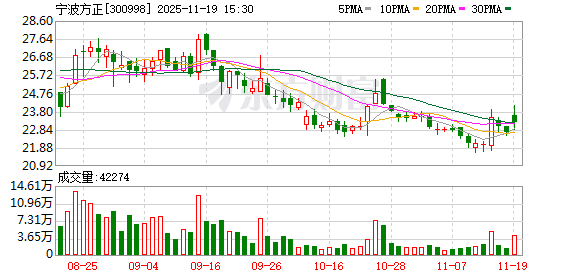
Core Viewpoint - Ningbo Fangzheng (300998) has signed a strategic cooperation agreement with Ningbo Huaxiang Qiyuan Technology Co., Ltd. to enhance collaboration in the production and application of general robot components and systems [1] Group 1: Strategic Cooperation - The agreement aims to integrate various R&D and manufacturing resources between the two companies [1] - The focus of the collaboration includes the development and mass production of precision structural components and joint modules for robot products [1] Group 2: Company Background - Huaxiang Qiyuan is a wholly-owned subsidiary established by Ningbo Huaxiang Electronics Co., Ltd., specializing in intelligent robot manufacturing [1]
宁波方正(300998.SZ):拟与华翔启源加快建设通用机器人产业
Ge Long Hui A P P· 2025-11-18 08:32
Core Viewpoint - Ningbo Fangzheng has signed a strategic cooperation agreement with Ningbo Huaxiang Qiyuan Technology Co., Ltd. to accelerate the development of the general robotics industry and enhance product innovation and supply chain demonstration [1] Group 1: Strategic Cooperation - The agreement establishes a strategic partnership based on principles of compliance, mutual benefit, and resource integration in the fields of general bipedal, wheeled humanoid, quadruped, and commercial cleaning robots [1] - Both parties will leverage their respective advantages to enhance collaboration in the production and application of robot components and complete systems [1] Group 2: Collaboration Goals - The parties will collaborate on the development and mass production of precision structural components and joint modules, with Party A responsible for design and confirmation of product requirements [2] - Costs incurred during the sample phase will be shared, while Party B will initially bear costs for tooling and specialized equipment needed for mass production, which will be included in the unit cost [2] - Both parties will work together to create applicable scenarios for robots, with Party B providing access to its operational environments for Party A to offer commercial cleaning robots and technical support [2] - The collaboration aims to utilize social and industry resources to promote Party A's robot products across various sectors, including industrial manufacturing, commercial services, education, and home services [2]
宁波方正(300998.SZ)与华翔启源就通用机器人达成战略合作
智通财经网· 2025-11-18 08:29
Core Viewpoint - Ningbo Founder (300998.SZ) has signed a strategic cooperation agreement with Ningbo Huaxiang Qiyuan Technology Co., Ltd. to enhance collaboration in the production and application of various types of robots, including humanoid, wheeled, quadruped, and commercial cleaning robots [1] Group 1 - The strategic cooperation aims to strengthen collaboration in the manufacturing of robot parts and complete systems [1]
因多次泄密!字节 Seed 研究员/知乎 8 万粉大V 被开除
程序员的那些事· 2025-11-14 10:10
Core Viewpoint - ByteDance's Seed team faces internal challenges as a researcher was dismissed for leaking confidential information, highlighting the company's emphasis on information security and internal discipline [1][7]. Group 1: Researcher Background - The dismissed researcher, Ren, was a prominent figure on Zhihu with over 86,000 followers, specializing in robotics and related fields [3]. - Ren graduated from Zhejiang University and obtained a PhD in robotics from the Polytechnic University of Milan in 2019, previously working at companies like Lattice Robotics and Xiaomi [3]. - He was involved in the GR-3 project, a significant advancement in the Vision-Language-Action Model (VLA) aimed at enhancing robotic capabilities [3]. Group 2: Seed Team Overview - The Seed team was established in 2023, focusing on various research areas including LLM, speech, vision, and infrastructure, with operations in major Chinese cities [4]. - The team is led by Wu Yonghui and Zhu Wenjia, who report directly to ByteDance's CEO Liang Rubo [4]. Group 3: Talent Development and Internal Discipline - Wu Yonghui expressed the goal of attracting top talent and effectively utilizing internal resources to develop high-potential employees [6]. - ByteDance has been strict about internal discipline, with a report indicating that 100 employees were dismissed for violating company policies, including 10 for leaking confidential information [7].

机器人“会用手”了!银河通用首破手掌任意朝向旋转难题,拧螺丝、砸钉子样样精通
量子位· 2025-11-10 00:30
Core Insights - The article discusses the breakthrough of the DexNDM model developed by Galaxy Universal, which enables dexterous hands to perform complex tasks such as in-hand rotation and tool usage, bridging the gap between simulation and real-world applications [2][4][55]. Group 1: DexNDM Model Capabilities - DexNDM allows for stable in-hand rotation of various objects, regardless of their size or shape, achieving cross-object and cross-pose manipulation [5][6]. - The model can operate under challenging wrist postures, enabling continuous rotation of long objects and stable manipulation of small items [6][17]. - It enhances the robot's ability to perform complex tasks like screw tightening and furniture assembly, marking a significant leap from simple grasping to dexterous manipulation [21][64]. Group 2: Technical Innovations - DexNDM employs a joint-wise neural dynamics model, allowing each joint to independently predict its next state, improving data efficiency and generalization across different tasks [8][10]. - The model utilizes an automated data collection strategy to generate rich contact data without manual intervention, enhancing learning efficiency [11][14]. - A residual policy network is trained to bridge the gap between simulation and reality, facilitating the transfer of learned strategies to real-world scenarios [15]. Group 3: Importance of Dexterous Manipulation - Dexterous manipulation is crucial for robots to transition from basic capabilities to productive tasks, as it encompasses both motion and operational abilities [24][28]. - The ability to perform in-hand rotation and tool usage is seen as a pinnacle of dexterous manipulation, representing a significant challenge in robotics research [37][38]. - The advancements in dexterous manipulation are expected to lead to robots that can perform a wide range of tasks, moving beyond simple demonstrations to actual productive capabilities [58][65].
前特斯拉中国高管成立了一家机器人公司
第一财经· 2025-11-03 11:25
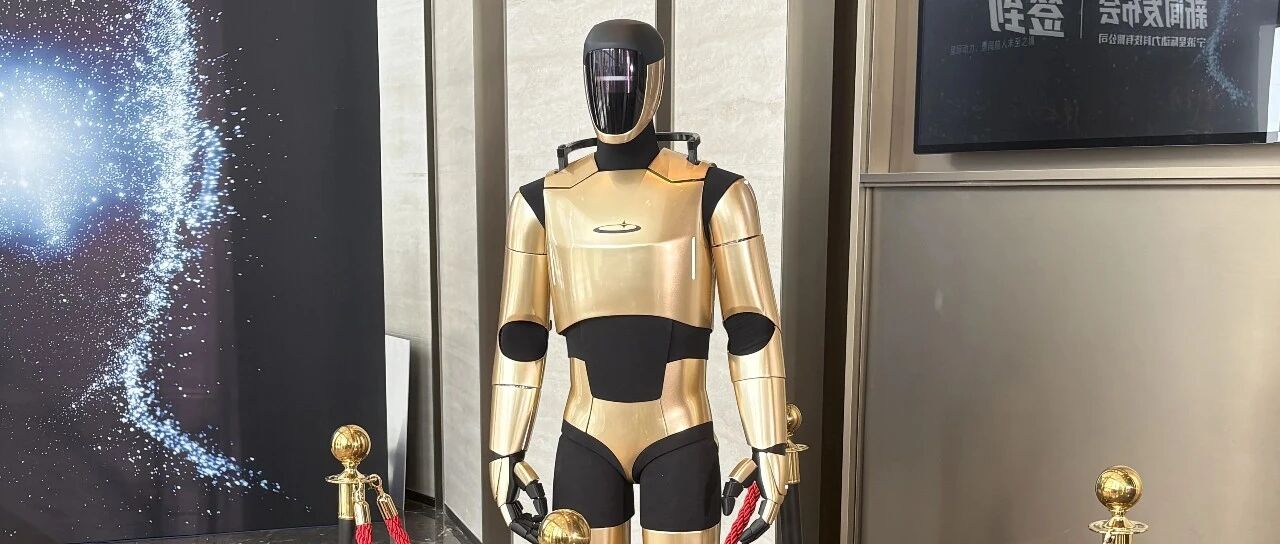
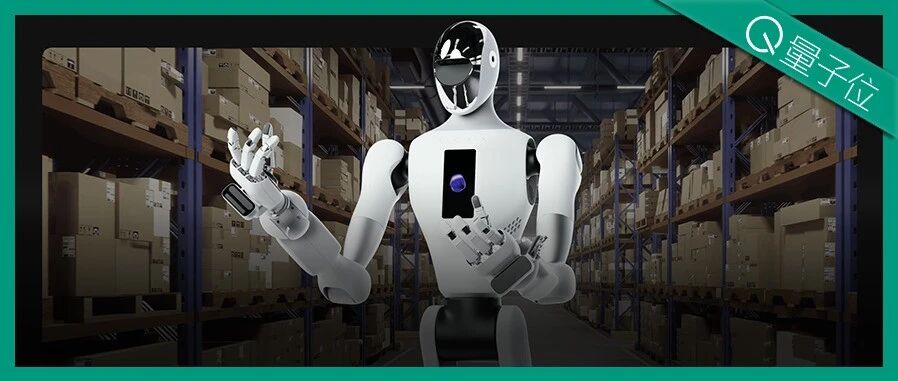
Core Viewpoint - The article discusses the entry of Star Dynamics, a humanoid robotics company, into the Ningbo Qianwan New Area, highlighting its first humanoid robot product, Star Dynamics 1, which resembles humans more closely than other domestic humanoid robots [3][4]. Company Overview - Star Dynamics was established on September 19, 2025, with a shareholding structure of 60% held by Hongrun Construction and 40% by Matrix Super Intelligence [3]. - A strategic cooperation agreement was signed between Hongrun Construction and Matrix Super Intelligence in early September 2025 to establish a joint venture focused on the research, production, and commercial application of humanoid robots [3]. Product Features - The Star Dynamics 1 robot features a design without exposed cables and joints, with a color scheme similar to Tesla's Optimus V2.5 golden version [3]. - The company aims to compete with North American full-size humanoid robots like Figure, Tesla Optimus, and 1X [4]. Technological Focus - The founder of Matrix Super Intelligence emphasizes the importance of natural language communication in humanoid robots, aiming for a system that can understand human speech rather than relying on complex commands [4]. - The company has reduced its core control code from hundreds of thousands of lines to under 3,000 lines, which is intended to decrease error rates and enhance system stability and reliability [4]. Market Challenges - The article notes that achieving mass production in humanoid robotics remains a challenge, with Tesla reportedly reducing its annual production target for Optimus from 5,000 to 2,000 units due to technical difficulties [4]. - Star Dynamics introduces the concept of a "hardware abstraction layer," allowing compatibility with various suppliers' components and enabling customization for different application scenarios [5]. Competitive Strategy - The company aims to seize technological and production advantages before the industry matures, which could determine its position in the competitive humanoid robotics market [5]. - Emphasis is placed on the need for hardware that is easy to produce and maintain while being optimized for different performance requirements based on application scenarios [5].