集体自卫权

Search documents
视频丨日本学者:高市错误言论给日本各行业带来危机
Yang Shi Xin Wen Ke Hu Duan· 2025-12-03 06:23
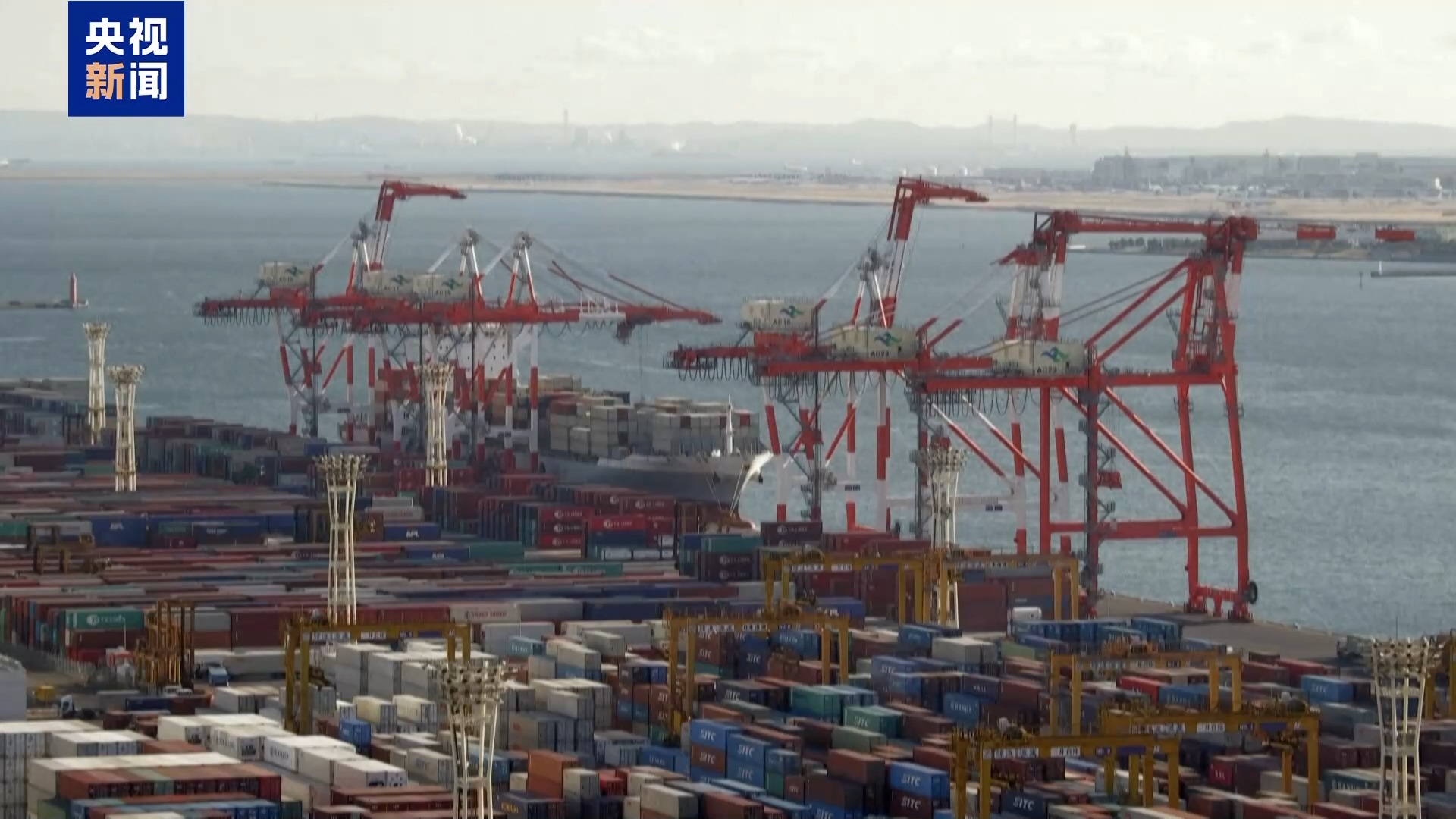
Group 1 - Recent remarks by Japanese Prime Minister Sanae Takaichi regarding Taiwan have damaged the political foundation of Japan-China relations, severely worsening the atmosphere for personnel exchanges between the two countries [1] - Japanese economist Hidetoshi Tashiro indicated that Takaichi's comments could lead to a crisis across various sectors in Japan [1][3] - China is Japan's largest trading partner, with a projected total trade volume of $308.3 billion in 2024, including exports from China worth $152.01 billion and imports to China worth $156.25 billion [3] Group 2 - The tourism industry in Japan heavily relies on Chinese tourists, and a significant decline in their numbers could lead to a contraction in related sectors [4] - Hidetoshi Tashiro warned that if Japan-China relations deteriorate, a reduction or complete halt of Chinese tourists could place Japan's tourism, dining, retail, and even education sectors, particularly universities, in a "survival crisis" [6] - The potential consequences of such a situation, triggered by the Prime Minister's remarks, would represent a significant tragedy for Japan [6]

日本学者:高市发言轻率 日本民众无法接受
Yang Shi Xin Wen Ke Hu Duan· 2025-12-01 17:25
Core Viewpoint - Recent remarks by Japanese Prime Minister Sanae Takaichi regarding Taiwan have sparked dissatisfaction both domestically and internationally, with criticism highlighting the recklessness of her statements [1][3]. Group 1: Political Reactions - Political economist Koga Shigeaki emphasized that Takaichi's comments are unacceptable to the Japanese public, as they contradict Japan's long-standing acknowledgment of the One China principle [1]. - Koga criticized the Japanese government's expansion of "collective self-defense" under the guise of a "survival crisis situation," arguing that it violates the constitution and represents a significant misstep [1][3]. Group 2: Economic Implications - Koga noted that Takaichi's erroneous statements could severely impact Sino-Japanese exchanges, leading to a significant decrease in Chinese tourists, which would adversely affect the Japanese economy [3]. - Initial expectations for Takaichi to implement large-scale economic policies have diminished, potentially causing negative market reactions [5]. - Concerns are raised regarding the impact of reduced foreign tourism, particularly following calls from China to avoid visiting Japan, which will have tangible effects on the Japanese economy [5].
视频丨日本学者:高市发言轻率 日本民众无法接受
Yang Shi Xin Wen Ke Hu Duan· 2025-12-01 12:19
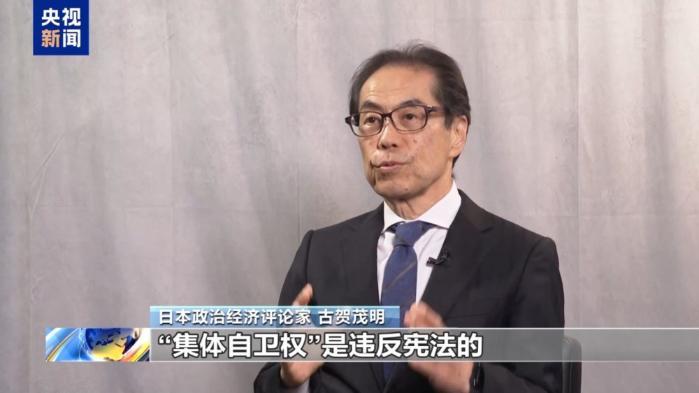
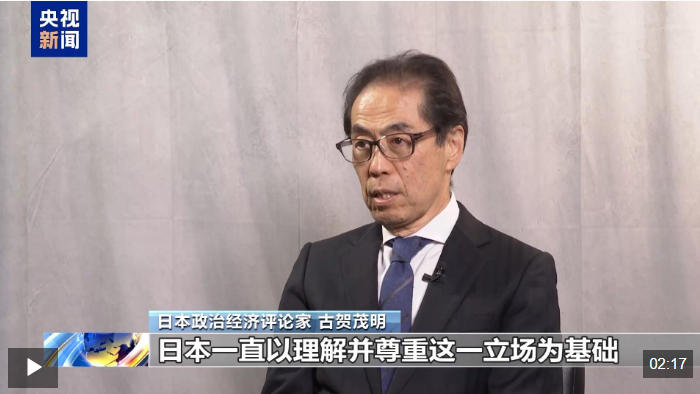
近期,日本首相高市早苗的涉台错误言论,在日本国内外引起不满。日本政治经济评论家古贺茂明表示,高市早苗此番错误发言极为轻率,日本民众无法接 受。 日本政治经济评论家 古贺茂明:承认一个中国原则,台湾是中国的一部分,日本一直以理解并尊重这一立场为基础。自《中日联合声明》发表以来,不断 累积起相应的政策框架 ,但高市却发表了非常轻率的言论,这是日本国民愤怒的事情。 古贺茂明表示,日本政府所谓"集体自卫权",本身就涉嫌违反宪法,现在又借所谓"存亡危机事态"之名,扩大"集体自卫权"使用范围,根本是错上加错。 日本政治经济评论家 古贺茂明:像我们这样法学专业出身的人,上大学的时候都系统学习过法律和宪法,长期以来,我们当中99%的人都认为"集体自卫 权"是违反宪法的。这次是在完全不清楚日本到底哪里陷入危险的情况下,(高市)就声称什么进入所谓"存亡危机事态",还极力辩称"这不是违宪,只是在 极其限定的状况才使用"。然而已经随意扩大了适用范围。这种做法明显就是违背宪法的,这与日本右翼分子在错误的历史认知上的态度非常相似,就是无 论如何都不想认错,和不愿承认日本过去犯下的罪行的心态一样。 古贺茂明表示,高市早苗的错误发言严重影响 ...
这就是高市早苗的一场豪赌
大胡子说房· 2025-11-27 11:11
Core Viewpoint - The article discusses the complex and tense relationship between China and Japan, highlighting Japan's historical expansionist tendencies and current political maneuvers as a gamble to assert its independence from U.S. influence [1][2][10]. Group 1: Historical Context - Japan has a history of expansionism, including actions taken during the First Sino-Japanese War and World War II, driven by the belief that winning such gambles yields greater rewards than the risks involved [1]. - The Meiji Restoration allowed Japan to rapidly industrialize, partly funded by reparations from China after the First Sino-Japanese War, which facilitated further military and territorial expansion [1]. Group 2: Current Political Dynamics - Japan's current political stance, particularly under figures like Kishi Nobuo, reflects a desire to break free from U.S. military dependence, as Japan hosts numerous U.S. military bases [2][10]. - The article suggests that Japan is attempting to normalize military spending and capabilities, which could lead to a more assertive military posture in the region [9][10]. Group 3: Economic Competition - Japan's economic position has weakened relative to China, with significant losses in key industries such as electric vehicles and solar energy, where Japan was once a leader [16][19]. - The article notes that in 2021, no Japanese electric vehicle made it into the top 20 sales in China, highlighting the decline of Japanese automotive competitiveness [19]. Group 4: Future Outlook - The relationship between China and Japan is expected to remain tense, with no significant improvement in the short term, and a future characterized by "tense but controllable" dynamics [23][24]. - The article emphasizes that Japan's current political strategies are unlikely to succeed, given the disparity in national strength between China and Japan [25].
特写丨寒风中,抗议声在日本首相官邸前再次响起
Xin Hua She· 2025-11-26 13:56
Group 1 - A significant protest occurred in front of the Japanese Prime Minister's residence on November 25, where a large crowd gathered to voice their opposition to Prime Minister Kishi's remarks regarding Taiwan, which were perceived as a potential escalation of military tensions in the region [2][4][6] - The protest was organized by numerous civil groups, emphasizing the need for Kishi to retract her statements and apologize, as they believe her comments contradict Japan's post-war stance and could exacerbate regional tensions [4][6] - Protesters expressed concerns that Kishi's statements could negatively impact Japan-China relations and have already caused significant disruptions in Japan's tourism industry, reflecting a broader societal anxiety about potential conflict [8] Group 2 - The protest highlighted a growing discontent among the Japanese public regarding the government's stance on military issues, with many citizens feeling that Kishi's comments were inappropriate for a Prime Minister and called for her resignation if she does not retract her statements [6][8] - The atmosphere at the protest was one of solidarity, with participants bringing warm drinks and joining the demonstration in increasing numbers, indicating a strong communal response to the perceived threat of war [6][8] - The ongoing protests suggest a significant public pushback against government rhetoric that could lead to military engagement, reflecting a broader desire for peace and stability in the region [2][4][8]
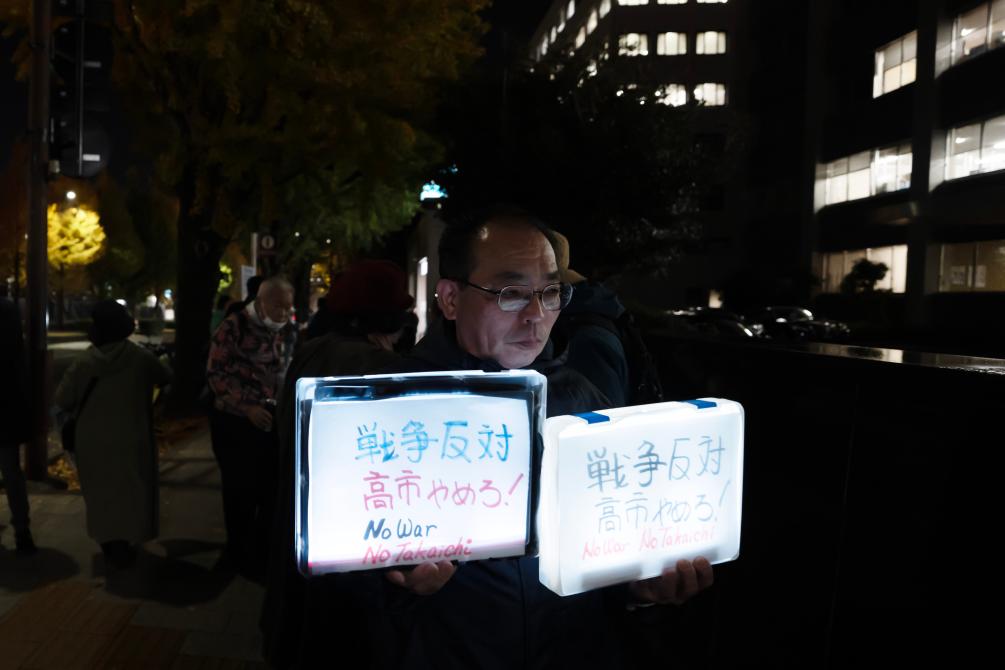
寒风中,抗议声在日本首相官邸前再次响起
Xin Hua She· 2025-11-26 07:23
Core Viewpoint - The protests in front of the Japanese Prime Minister's residence reflect widespread public discontent regarding Prime Minister Kishi's remarks about Taiwan, which are perceived as a departure from Japan's post-war stance and a potential escalation of regional tensions [1][2] Group 1: Public Sentiment - A large gathering of citizens protested against Prime Minister Kishi's statements, demanding a retraction and an apology for comments that could incite conflict [1] - Protesters expressed concerns that Kishi's remarks could worsen Japan-China relations and negatively impact the tourism industry, indicating a broader societal tension [2] Group 2: Political Reactions - Various political figures, experts, and civil organizations have criticized Kishi's statements, arguing they contradict Japan's long-standing policies and could lead to increased regional instability [1] - The leader of a civil group emphasized the need for Kishi to retract her statements and apologize, asserting that such comments are inappropriate for a Prime Minister [1]
高市早苗的狂言妄语与日本右翼的“台湾残梦”
Ren Min Ri Bao Hai Wai Ban· 2025-11-26 02:08
Core Viewpoint - Japanese Prime Minister Sanae Takaichi's recent statement regarding Taiwan represents a significant escalation in Japan's stance, suggesting potential military intervention in the Taiwan Strait, which is seen as a serious provocation against China's core interests [1][3]. Group 1: Historical Context - Japan's historical actions, including the colonization of Taiwan starting in 1895 and the atrocities committed during the Second Sino-Japanese War, have left deep scars in Chinese memory, with approximately 35 million casualties during the war [1][2]. - Despite Japan's post-war commitments to return territories including Taiwan, some right-wing politicians in Japan continue to distort and glorify its imperial past, undermining the historical suffering inflicted on China [2][3]. Group 2: Political Implications - Takaichi's remarks align with a broader trend among Japanese right-wing politicians who seek to reinterpret Japan's military role and challenge the post-war pacifist constitution, indicating a desire for Japan to become a "normal country" capable of military engagement [3]. - The rhetoric surrounding Taiwan is part of a larger narrative that aims to obstruct China's reunification efforts and counter its rise, with historical grievances still unresolved [3]. Group 3: Future Consequences - The article warns that any Japanese provocations regarding Taiwan could lead to severe repercussions for Japan, potentially damaging Sino-Japanese relations and challenging international norms established post-World War II [3].
日本学者:高市主张进行军事介入台湾问题 显然违反宪法
Zhong Guo Xin Wen Wang· 2025-11-25 03:15
编辑:徐世明 日本学者:高市主张进行军事介入台湾问题 显然违反宪法 针对日本首相高市早苗涉台露骨挑衅言论,青山学院大学名誉教授羽场久美子认为这明显违反了日本宪 法第九条。宪法第九条虽然承认为了自卫而设立自卫队,但在台湾问题,如中国所说,是中国的内政问 题,主张进行军事介入,显然违反宪法。而且从国际法角度来看,在未遭受攻击的情况下,如果日本以 行使"集体自卫权"的名义主动发起攻击,这也属于违法行为。(制作 王嘉怡 视频来源 中央广播电视总 台) 来源:中国新闻网 本文为转载内容,授权事宜请联系原著作权人 中新经纬版权所有,未经书面授权,任何单位及个人不得转载、摘编或以其它方式使用。 关注中新经纬微信公众号(微信搜索"中新经纬"或"jwview"),看更多精彩财经资讯。 广告等商务合作,请点击这里 ...
视频丨意大利学者:高市言论挑战国际秩序 全世界应坚决反对
Yang Shi Xin Wen Ke Hu Duan· 2025-11-25 02:04
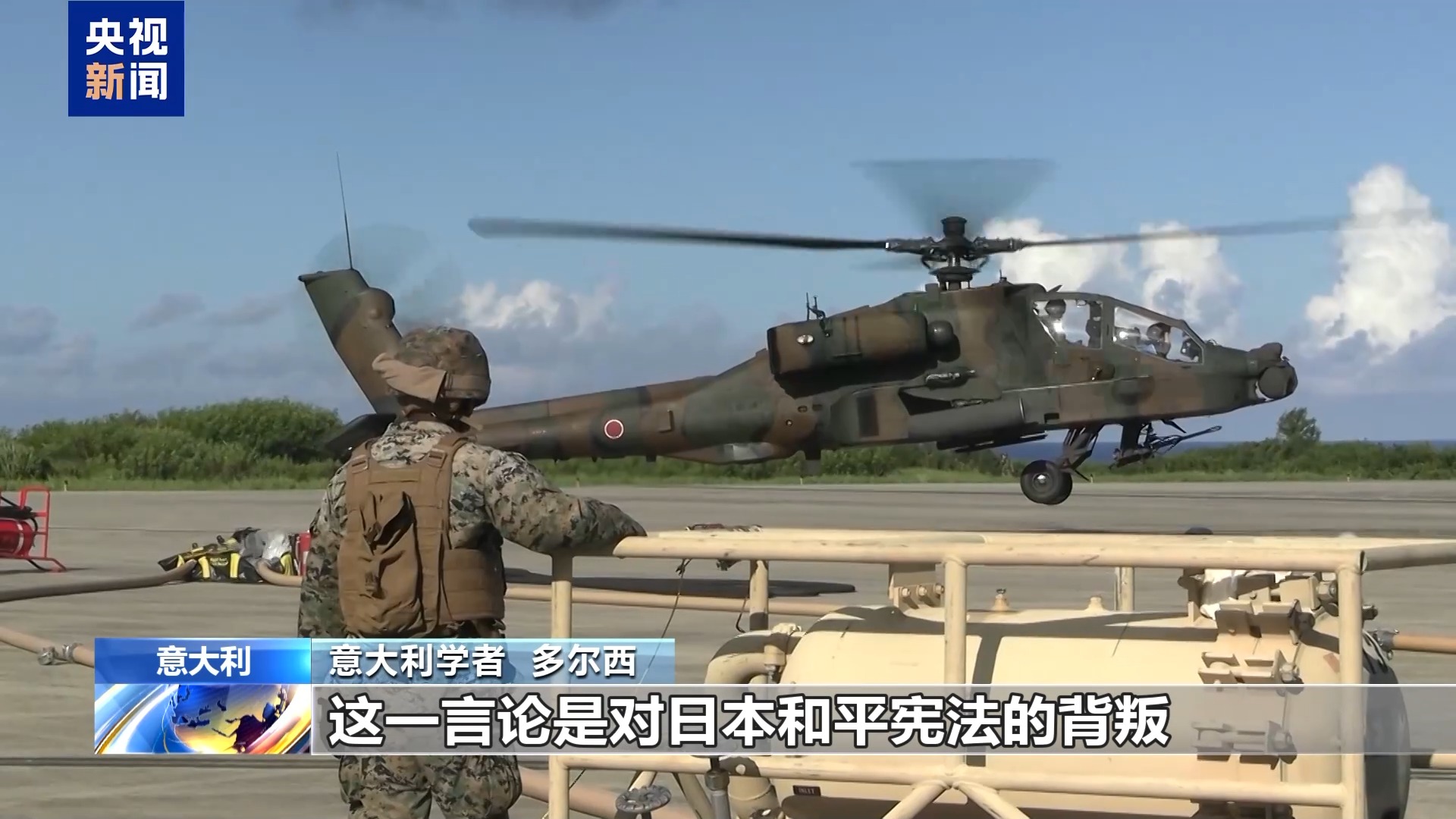
Core Viewpoint - The statements made by Japanese Prime Minister Sanae Takaichi are seen as a violation of the post-World War II international legal framework, challenging international order and potentially escalating regional tensions, which should be firmly opposed by regional countries and the international community [1][3]. Group 1 - The remarks by Takaichi are deemed completely inappropriate and lacking legitimacy, serving only to provoke conflict and contribute to the ongoing deterioration of international order [3]. - There is a resurgence of discussions in Japan regarding "collective self-defense," which may lead to a breach of Japan's constitutional principle of pacifism, raising concerns about a revival of militarism in Japan [3]. - The statements are viewed as a betrayal of Japan's pacifist constitution and a violation of international law, posing a threat to international order and representing a distortion of historical facts [5]. Group 2 - The international community, including European countries, should remain vigilant against such statements, as they could ignite significant regional conflicts, akin to throwing a lit match into dry grass [5].
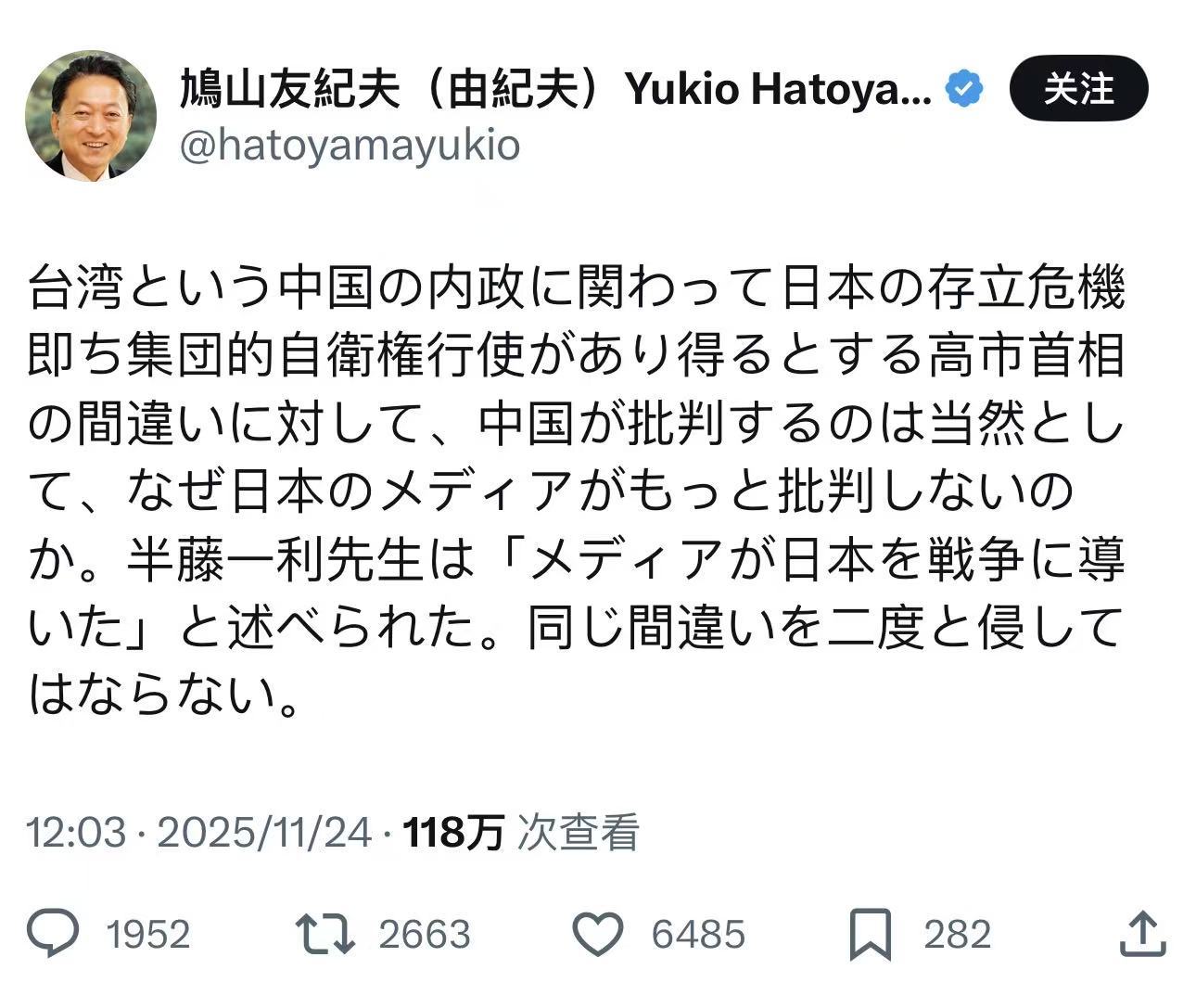
日本前首相鸠山由纪夫:中国批评高市错误言论理所当然
Yang Shi Xin Wen Ke Hu Duan· 2025-11-25 02:00
Core Viewpoint - Former Japanese Prime Minister Yukio Hatoyama criticized current Prime Minister Sanae Takaichi's remarks regarding Taiwan, stating that her comments about Taiwan being a matter of China's internal affairs leading to Japan's "survival crisis" are erroneous and warrant criticism from China [1] Group 1 - Hatoyama questioned why Japanese media did not provide more criticism of Takaichi's statements, referencing a historical perspective that media had previously led Japan into war [1] - Takaichi's comments made during a parliamentary session on the 7th of this month suggested that a "Taiwan emergency" could justify Japan exercising collective self-defense, which sparked strong backlash from legal scholars, anti-war organizations, and opposition parties [1] - Japanese public opinion highlighted that Takaichi's statements contradict Japan's commitments made in the 1972 Japan-China Joint Communiqué and are inconsistent with Japan's long-standing diplomatic policy towards China, potentially escalating regional tensions unnecessarily [1]