3D视觉

Search documents
【研选行业+公司】这项关键技术成AI数据中心降本核心!国产厂商迎新风口
第一财经· 2025-09-18 12:59
Group 1 - The key technology is becoming the core of cost reduction for AI data centers, with AIDC catalyzing an upward trend in industry prosperity, and related businesses of industry giants have grown by 300% [1] - Domestic magnetic levitation compressor manufacturers are standing at a new opportunity [1] Group 2 - The 3D vision sector is rapidly expanding with a CAGR of 13.1%, and a specific company has a market share of 70% [1] - The company's performance has reached an inflection point, and its PE ratio is expected to drop by 200 times in two years [1]


奥比中光20250916
2025-09-17 00:50
Summary of 3D Vision Industry and Company Insights Industry Overview - **3D Vision Technology**: 3D vision overcomes the limitations of 2D vision in depth perception and complex scene processing, especially in dynamic interaction scenarios like humanoid robots and robotic arms, with millimeter-level precision alignment being a significant advantage [2][3][19] - **Market Growth**: Since Q4 2020, emerging applications such as AMR (Autonomous Mobile Robots), AR/MR (Augmented Reality/Mixed Reality), 3D printing, and humanoid robots have revitalized the 3D vision industry, moving away from the previous reliance on low-cost 2D solutions [2][5] Key Insights - **Core Value**: The core value of 3D vision technology lies in its software algorithms, particularly in addressing temperature drift issues (wavelength and focal length drift), which require high-precision sensors and real-time computation for compensation, creating significant barriers for new entrants [2][8][11] - **Market Barriers**: The main barriers in the 3D vision industry include the long and complex algorithm tuning cycles, the need for deep coupling between hardware and algorithms, and the sensitivity of depth information to optical distortion [5][19] - **Pricing**: Industrial-grade 3D cameras are priced between $300 to $600, while consumer-grade products range from $300 to $400. Despite lower hardware costs, the complexity of software algorithms keeps overall prices high [9] Application Areas - **Key Application Areas**: Major fields driving the development of 3D vision technology include humanoid robots (market potential of $20 billion), smart lawn mowers (market potential of $8 billion), and AMR (market potential of $30 billion) [4][10][13][14] - **Current Applications**: Notable applications include Apple's Face ID, humanoid robots, robotic arms, and smart lawn mowers, showcasing the significant advantages of 3D vision in dynamic scene interaction [6][12] Company Financials - **Revenue Projections**: The company expects revenues of approximately 560 million RMB in 2024, with projections of 1.06 billion RMB in 2025 (an 88% year-on-year increase) and 1.5 billion RMB in 2026 (a 42% year-on-year increase) [4][16][17] - **Profit Expectations**: The net profit is projected to be around 150 million RMB in 2025 and increase to 300 million RMB in 2026, maintaining a high profitability level with gross margins between 65% to 70% and net profit margins exceeding 30% [18] Future Outlook - **Market Potential**: The overall market for 3D vision is currently valued at approximately $4 billion, with significant growth potential as penetration rates remain low (1% to 2% in most areas) [15] - **Optimistic Future**: The future of the 3D vision industry looks promising, driven by the increasing demand in humanoid robots, smart lawn mowers, 3D printing, and AMR applications [20]

奥比中光(688322):3D视觉行业翘楚,具身智能助力成长
Ping An Securities· 2025-09-16 11:38
Investment Rating - The report maintains a "Buy" rating for the company [1]. Core Views - The company is a leading player in the 3D vision industry, focusing on embodied intelligence to drive growth. It has a comprehensive technology system for 3D visual perception, which includes various technologies such as structured light, iToF, dToF, binocular, Lidar, and industrial 3D measurement. The company aims to build a platform for robotics and AI vision, capturing over 70% of the market share in China's service robotics sector [6][11]. - The company has successfully turned a profit in Q1 2025, achieving a net profit of 0.24 billion yuan, and this profitability continued into Q2 2025. The report anticipates sustained performance improvements driven by the growth of embodied intelligence and the expansion of application scenarios for 3D vision technology [6][20]. Summary by Sections Section 1: Company Overview - The company, established in 2013 and listed on the STAR Market in July 2022, specializes in the design, research, development, production, and sales of 3D visual perception products. It has a strong R&D investment and a complete technical system, allowing it to compete with international giants [6][11]. - The ownership structure is clear, with Huang Yuanhao as the actual controller holding 27.15% of the shares. The management team has a strong technical background, which supports the company's technological leadership [14][17]. Section 2: Market Potential - The global 3D vision market is projected to grow from approximately 8.2 billion USD in 2022 to 17.2 billion USD by 2028, with a CAGR of about 13.1%. In China, the market is expected to expand from around 1.8 billion yuan to 8 billion yuan during the same period, with a CAGR of approximately 27.7% [30][31]. - The report highlights the importance of embodied intelligence and 3D scanning as key growth drivers for the company, with significant applications in robotics, digital twins, and AI modeling [32][42]. Section 3: Financial Performance - The company's revenue is expected to grow significantly, with projections of 360 million yuan in 2023, 564 million yuan in 2024, and reaching 1.037 billion yuan by 2025. The net profit is forecasted to turn positive in 2025, with estimates of 129.9 million yuan [5][20]. - The gross margin has remained above 40%, and the company has effectively controlled expenses, leading to a gradual improvement in profitability [23][20]. Section 4: Technological Advancements - The company has developed a full-stack technology system for 3D visual perception, which includes various technologies tailored for different applications. This positions the company well to meet the growing demand for 3D vision solutions across multiple sectors [27][28]. - The report emphasizes the role of 3D vision in enhancing the capabilities of robots, particularly in service and mobile robotics, where accurate environmental perception is crucial [32][33].
港科&地平线&浙大联手开源SAIL-Recon:三分钟重建一座城
自动驾驶之心· 2025-09-02 23:33
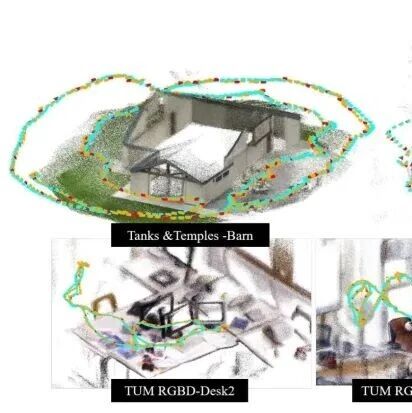
Core Insights - The article discusses the SAIL-Recon framework, which integrates scene regression with localization to achieve large-scale Structure from Motion (SfM) using thousands of images efficiently and accurately [7][10][34]. Group 1: Traditional SfM Limitations - Traditional SfM algorithms rely on feature extraction, matching, triangulation, and bundle adjustment, which can fail in low-texture, blurry, or repetitive texture scenes [5]. - Recent research has proposed an end-to-end learnable SfM pipeline that directly regresses scene structure and camera poses from images, but it is limited by GPU memory when handling large-scale scenes [5][10]. Group 2: SAIL-Recon Framework - SAIL-Recon is a multi-task framework that unifies reconstruction and localization without the need for scene-specific training, sampling a few anchor images from large image or video sequences to infer neural scene representations [7][10]. - The framework achieves state-of-the-art (SOTA) performance across multiple benchmarks, surpassing both traditional and learning-based methods in accuracy and efficiency [10][34]. Group 3: Methodology - The SAIL-Recon process involves selecting a small number of anchor images to extract neural scene representations, which are then used to jointly estimate scene coordinates and camera poses for all images [9][10]. - The method employs a transformer to compute scene representations and camera parameters, optimizing GPU memory usage through a key-value cache [11][12]. Group 4: Experimental Results - SAIL-Recon demonstrated superior performance in pose estimation and new view synthesis tasks, achieving the highest PSNR in the Tanks & Temples dataset and completing reconstructions significantly faster than traditional methods [26][32]. - The framework maintains good performance even when reducing the number of anchor images from 10 to 2, indicating robustness in various sampling strategies [32]. Group 5: Limitations and Future Work - The framework's reliance on a fixed global coordinate system may affect certain sequences, suggesting a need for improved anchor image selection strategies [36]. - Uniform sampling could overlook scene areas, indicating potential for research into coverage-aware sampling methods [36].
奥比中光扭亏 政策暖风助力行业“快跑”
Zhong Guo Jing Ying Bao· 2025-08-29 13:04
Core Viewpoint - The robotics industry is experiencing rapid growth, with companies like Orbbec achieving significant performance improvements, including their first half-year profit after years of losses [1][2]. Financial Performance - In the first half of 2025, Orbbec reported revenue of 435 million yuan, a year-on-year increase of 104.14%, and a net profit of 60.19 million yuan, an increase of 113.56 million yuan compared to the same period last year [2][3]. - The company had previously reported losses for several consecutive years, with total revenues from 2021 to 2024 being 162 million yuan, 183 million yuan, 165 million yuan, and 213 million yuan, respectively [2]. - The significant turnaround in performance is attributed to a booming market and increased demand for robotics, particularly in the 3D vision sector [3][4]. Cost Management - Orbbec has reduced various costs over the past three years, including a 14.02% decrease in R&D expenses in the first half of 2025 [5][6]. - Despite the reduction in R&D spending, the company has managed to achieve substantial revenue growth, indicating effective cost management strategies [6][7]. Business Segments - The consumer application equipment segment has seen remarkable growth, becoming the largest revenue contributor, with a 60.55% share in the first half of 2025 [8][9]. - The 3D vision sensor segment's revenue share has decreased, indicating a shift in the company's focus towards consumer applications [9]. Industry Trends - The robotics industry is poised for rapid growth, with increasing applications in various sectors and supportive government policies driving demand [11]. - The company's collaboration with Ant Group for payment solutions highlights the integration of robotics and AI technologies in enhancing user experiences [10][11].
东吴证券给予奥比中光买入评级
Mei Ri Jing Ji Xin Wen· 2025-08-18 08:56
Group 1 - The core viewpoint of the report is that Dongwu Securities has given a "buy" rating to Aobi Zhongguang (688322.SH) based on several factors [2] - The essence of 3D vision is dynamic high-precision measurement instruments, indicating a strong technological foundation for growth [2] - 2024 is projected to be the year when the 3D vision industry begins to experience explosive growth, highlighting a significant market opportunity [2] Group 2 - The hardware costs for 3D vision technology are relatively low, which supports the potential for widespread adoption and early mover advantages in the industry [2] - The construction of algorithms creates a competitive moat, suggesting that companies with advanced algorithms will have a strategic advantage [2] - There is substantial growth potential in various downstream applications, indicating a broadening of the market landscape for 3D vision technologies [2]

奥比中光(688322):3D龙头高歌猛进,多传感器融合筑牢护城河壁垒
Soochow Securities· 2025-08-18 08:32
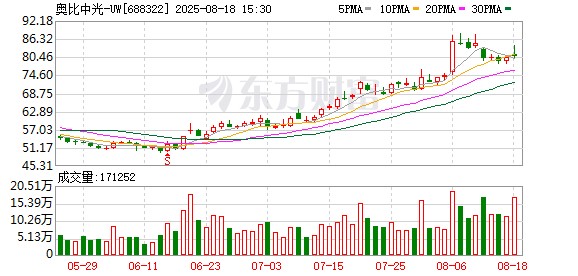
Investment Rating - The report maintains a "Buy" rating for the company [1]. Core Views - The 3D vision industry is expected to experience explosive growth starting in 2024, driven by increasing applications in various sectors such as robotics, 3D printing, and automation [7][37]. - The company is positioned as a leader in the global 3D vision market, benefiting from a surge in demand for high-precision perception and autonomous operation technologies [7][84]. - The report forecasts significant revenue growth for the company, with projected revenues of 10.62 billion, 15.1 billion, and 22.34 billion yuan for 2025, 2026, and 2027 respectively, reflecting year-on-year growth rates of 88%, 42%, and 48% [1][90]. Summary by Sections 1. 3D Vision Technology - 3D vision technology surpasses traditional 2D vision by directly acquiring three-dimensional data, which is essential for spatial operations and understanding [7][26]. - The technology is crucial for applications in humanoid robots, automated mobile robots (AMR), and other advanced automation scenarios [7][20]. 2. Market Dynamics - The 3D vision market was valued at 18.4 billion yuan in 2022, representing only 10.8% of the overall machine vision market, indicating significant growth potential as applications expand [7][31]. - The report highlights that the hardware components for 3D vision systems are mature and cost-effective, while the software algorithms create high technical barriers for new entrants [7][63]. 3. Revenue Projections - The company is expected to achieve rapid revenue growth due to increasing orders in the robotics sector, with projected revenues of 1.062 billion, 1.510 billion, and 2.234 billion yuan for 2025, 2026, and 2027 respectively [1][90]. - The report estimates that the company will maintain a price-to-sales (P/S) ratio of 30, 21, and 14 times for the years 2025, 2026, and 2027, respectively, reflecting a premium valuation due to its market leadership [7][89].
奥比中光(688322):UW2025 半年报点评:业绩超预期,3D视觉业务加速成长
GUOTAI HAITONG SECURITIES· 2025-08-13 08:02
Investment Rating - The report maintains a "Buy" rating for the company, with a target price set at 94.48 CNY [2][12]. Core Insights - The company has exceeded performance expectations in the first half of 2025, driven by its deep focus on 3D vision technology and the introduction of multiple new products. The acceleration of robotics and 3D printing applications is expected to lead to rapid revenue growth [3][12]. - The company reported a revenue of 4.35 billion CNY in H1 2025, representing a year-on-year increase of 104.14%, and achieved a net profit of 0.60 billion CNY, marking a turnaround from losses [12]. - The report highlights the company's advancements in 3D vision solutions for various robotics applications, including service robots and industrial robots, and the launch of new products such as the Pulsar ME450 and Gemini 345Lg [12]. Financial Summary - Revenue projections show significant growth from 360 million CNY in 2023 to 1.94 billion CNY in 2027, with a compound annual growth rate (CAGR) of 67.9% from 2024 to 2025 [5][13]. - The net profit is expected to turn positive by 2025, reaching 134 million CNY, and further increasing to 608 million CNY by 2027 [5][13]. - The earnings per share (EPS) is projected to improve from -0.69 CNY in 2023 to 1.52 CNY in 2027 [5][13]. Market Data - The company's stock has shown a 52-week price range of 21.53 to 85.47 CNY, with a total market capitalization of 32.08 billion CNY [6]. - The stock has experienced a significant absolute increase of 235% over the past 12 months [10]. Product Development and Market Trends - The company is focusing on enhancing its product matrix in the 3D vision sector, with applications in 3D printing and digital twin technologies. The global demand for 3D scanners is projected to grow from 4.9 billion USD in 2024 to 8.8 billion USD by 2030 [12]. - The report emphasizes the potential for growth driven by the increasing adoption of humanoid robots and the rapid penetration of 3D printing technologies [12].
机器人的眼睛:3D视觉
2025-08-12 15:05
Summary of 3D Vision Technology in Robotics Industry Overview - The global machine vision market exceeds 100 billion RMB, with the Chinese market around 20 billion RMB, primarily focused on 2D processing. The demand for 3D technology is rapidly increasing, especially in industrial applications that require depth information for workpiece inspection and in consumer markets like Face ID [11][12]. Key Technologies and Their Characteristics - **3D Vision Technologies**: The main hardware routes for achieving 3D functionality include: - **Stereo Vision**: Low cost but sensitive to ambient light [1][4]. - **Structured Light**: Good anti-interference but poor performance at long distances [1][4]. - **Time of Flight (TOF)**: Simple structure but low resolution [1][4]. - **LiDAR**: Long detection range but high cost and low pixel resolution [1][4]. - **Core Components**: The essential components of robotic vision hardware include lenses, light sources, and cameras. Stereo cameras do not require active light sources, while other methods do [8]. Advantages and Challenges - **Advantages**: 3D vision technology allows for accurate 3D modeling of the physical world, enhances visual detection precision, and improves resistance to ambient light interference compared to traditional 2D vision [2]. - **Challenges**: Transitioning from 2D to 3D requires significantly enhanced backend algorithm processing capabilities, with challenges in aligning large point cloud data accurately. Each technology has its limitations, such as susceptibility to environmental interference and varying measurement accuracy [2][4]. Application Scenarios - **Industrial Applications**: The primary applications in the industrial sector focus on recognition, positioning, measurement, and detection, with detection being the most demanding due to the complexity of identifying physical defects [12]. - **Consumer Applications**: Consumer-grade applications, such as Apple's Face ID and gesture recognition in electronic devices, are driving the development of 3D vision technology [13][14]. Market Trends and Future Outlook - The market for 3D vision technology in robotics is expected to continue expanding, driven by increasing safety requirements and technological advancements. Companies like Orbbec are gaining attention due to their competitive performance compared to international products [19][17]. - The demand for stereo structured light modules in robotics is significant, with each module costing around 1,000 RMB, and each robot typically requiring 3 to 5 modules, leading to a total cost of approximately 3,000 to 5,000 RMB per robot [18]. Key Suppliers - Major domestic suppliers of 3D vision technology include Orbbec, Cansee, Autel, and Hikrobot, with Orbbec leading in technical strength and product advantages [17]. Conclusion - The integration of various 3D vision technologies is likely to enhance overall system stability and accuracy in robotics. The combination of stereo vision with structured light and the use of TOF with LiDAR in advanced applications will optimize performance across different working conditions [5][6].

世界机器人大会引爆3D视觉革命,空间智能成焦点~
自动驾驶之心· 2025-08-11 05:45
Core Viewpoint - The 2025 World Robot Conference (WRC) in Beijing highlights 3D perception technology as a key focus, showcasing advancements in spatial memory modules and multi-modal sensors that enhance robotic capabilities in various industries [2][4]. Group 1: 3D Reconstruction Technology - The ultimate goal of 3D reconstruction technology is to enable robots to understand, navigate, and operate in any environment [4]. - The latest handheld laser scanner, D-H100, achieves centimeter-level precision scanning at a distance of 120 meters, significantly improving efficiency by 300% in complex environments [4]. - The integration of laser scanning capabilities with robots can facilitate real-time mapping of disaster areas and enhance operational efficiency in industrial settings [4][5]. Group 2: GeoScan S1 Laser Scanner - GeoScan S1 is presented as the most cost-effective handheld 3D laser scanner in China, featuring a lightweight design and easy one-button operation for efficient 3D solutions [7][12]. - The device supports real-time reconstruction of 3D scenes with centimeter-level accuracy and can cover areas exceeding 200,000 square meters [7][25]. - It integrates multiple sensors and offers high bandwidth connectivity, making it suitable for various research and industrial applications [7][9]. Group 3: Technical Specifications and Features - GeoScan S1 operates on Ubuntu 20.04 and supports various data export formats, including PCD, LAS, and PLY, with relative accuracy better than 3 cm and absolute accuracy better than 5 cm [25][28]. - The scanner features a compact design with dimensions of 14.2 cm x 9.5 cm x 45 cm and weighs 1.3 kg without the battery, providing a battery life of approximately 3 to 4 hours [25][27]. - It includes advanced synchronization technology for multi-sensor data, ensuring precise mapping in complex indoor and outdoor environments [33][34]. Group 4: Market Position and Pricing - The GeoScan S1 is available in multiple versions, with prices starting at 19,800 yuan for the basic model and going up to 67,800 yuan for the offline version [60]. - The product is backed by extensive research and validation from teams at Tongji University and Northwestern Polytechnical University, ensuring reliability and performance [14][18]. - The scanner is designed for cross-platform integration, making it compatible with drones, unmanned vehicles, and humanoid robots for automated operations [45][48].