
AI Inference

Search documents
NVIDIA Blackwell Sets New Standard in AI Inference with 15X ROI and $75 Million Revenue
NVIDIA· 2025-10-09 23:43
Performance Benchmarks - Blackwell 在 Deepsee R1、GPTOSS 和 Llama 等领先的开源模型上实现了突破性性能,基于 inference max 基准 [1] - 新的基准设计不仅用于理解性能,还包括成本和效率,从而了解大规模部署推理的需求 [2] - GB200 MBL72 单系统可以产生足够的 tokens 来创造 7500 万美元的收入,投资回报率达 15 倍(基于 GPT OSS)[2] - 借助最新的 TRT LLM 软件改进,每个 GPU 每秒能够生成 6 万个 tokens [3] - 对于像 Llama 这样的密集开放模型,每个 GPU 每秒能够生成 1 万个 tokens,是上一代 Hopper 平台的 4 倍 [3] Efficiency Improvements - Blackwell 在功率受限的数据中心中,每兆瓦的性能是上一代 Hopper 平台的 10 倍 [3] - 更多的 tokens 转化为更多收入 [4] Future Expectations - 预计 Blackwell Ultra 将有新的结果,以及更多的软件改进和增强,从而提高 AI 工厂的性能和效率 [4]



By 2030, These AI Leaders Could Outperform Nvidia. Here's Why
Yahoo Finance· 2025-10-07 09:10
Core Insights - Nvidia has established itself as the leader in AI chips, particularly in the GPU market, which is essential for training large language models [1][2] - The company's CUDA software platform has created a significant competitive advantage, allowing Nvidia to capture over 90% of the GPU market [2] - As the AI landscape shifts from training to inference, Nvidia faces challenges, as inference is expected to become a larger market where price and efficiency are more critical than raw performance [3] Company Analysis - **Nvidia**: Remains a dominant player in AI infrastructure but may face competition from smaller companies as the market evolves towards inference [8] - **Broadcom**: Emerging as a key player in AI by focusing on application-specific integrated circuits (ASICs), which are faster and more energy-efficient for specific tasks [5] - Broadcom's success with major clients like Alphabet, Meta Platforms, and ByteDance indicates a substantial market opportunity, estimated between $60 billion to $90 billion by fiscal 2027 [6] - A significant $10 billion order from a large customer, believed to be OpenAI, highlights Broadcom's growing influence in the AI chip market [7] - Broadcom's projected total revenue of over $63 billion for the fiscal year ending Nov. 2 underscores its strong position and potential for growth in custom AI chips [7] Market Trends - The shift from training to inference in AI applications is likely to open opportunities for other chipmakers, potentially impacting Nvidia's market share [3][4] - Smaller AI leaders, including Broadcom and AMD, may outperform Nvidia as the demand for custom AI chips increases [4][8]

Up 85% YTD, More Returns In Store For Micron Stock?
Forbes· 2025-09-26 09:50
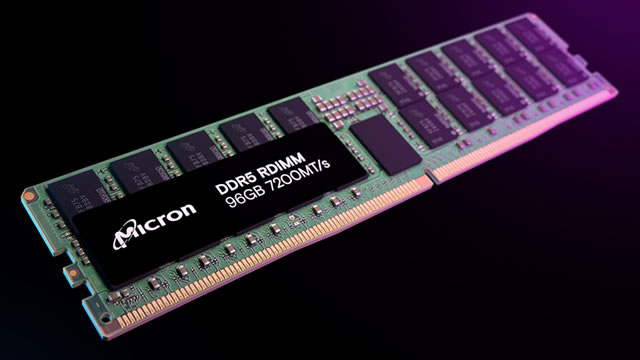
Core Insights - Micron Technology is positioned as a key player in the generative AI landscape, providing essential high-bandwidth memory (HBM) and DRAM that support the operation of complex AI models [2] - The stock price of Micron has increased approximately 85% year-to-date in 2025, reflecting rising demand for its memory products [2] - Micron's recent earnings report shows significant growth, with revenue reaching $11.32 billion, a 46% year-over-year increase, and adjusted net income rising by 157% to $3.47 billion [3] Financial Performance - For the quarter ending in August, Micron's revenue was $11.32 billion, up 46% year-over-year, with adjusted net income increasing by 157% to $3.47 billion, equating to $3.03 per diluted share [3] - The cloud memory segment sales more than tripled to $4.5 billion, indicating strong demand for Micron's DRAM and NAND offerings [3] - Micron projects Q1 2026 revenue of $12.5 billion, plus or minus $300 million, representing an approximate 61% year-over-year increase at the midpoint [4] Market Dynamics - The demand for DRAM is supported by robust shipments across all end markets, strong pricing due to constrained supply, and low inventory levels [4] - Micron serves as a primary memory partner for major companies like Nvidia and AMD, supplying HBM3E and LPDDR5X solutions, which are critical for AI workloads [5] - Major tech firms are expected to invest $364 billion in capital expenditures, which will drive demand for memory products, positioning Micron for sustained growth [6] Supply Chain Considerations - HBM manufacturing is complex and wafer-intensive, requiring three times more wafers than standard DRAM, leading to supply constraints [8] - Micron has allocated $13.8 billion for capital expenditures in FY'25, with plans to increase spending in 2026 to enhance DRAM capacity for AI workloads [8] - The company aims to invest $4.5 billion in Q1 2026, indicating a strong commitment to expanding production capabilities [8] Future Outlook - Micron's stock is currently valued at approximately 10 times estimated earnings for 2026, with projected revenue growth of 42% [9] - HBM is seen as a partially secular growth factor, although it currently represents a small fraction of total sales, leaving Micron exposed to traditional market cycles [9] - The shift towards AI inference is expected to favor specialized suppliers like Micron, as HBM is critical for enabling AI inference at scale [7]

广发证券:推理驱动AI存储快速增长 建议关注产业链核心受益标的
智通财经网· 2025-09-23 08:56
Core Insights - The rapid growth of AI inference applications is significantly increasing the reliance on high-performance memory and tiered storage, with HBM, DRAM, SSD, and HDD playing critical roles in long-context and multimodal inference scenarios [1][2][3] - The overall demand for storage is expected to surge to hundreds of exabytes (EB) as lightweight model deployment drives storage capacity needs [1][3] Group 1: Storage in AI Servers - Storage in AI servers primarily includes HBM, DRAM, and SSD, characterized by decreasing performance, increasing capacity, and decreasing costs [1] - Frequently accessed or mutable data is retained in higher storage tiers, such as CPU/GPU caches, HBM, and dynamic RAM, while infrequently accessed or long-term data is moved to lower storage tiers like SSD and HDD [1] Group 2: Tiered Storage for Efficient Computing - HBM is integrated within GPUs to provide high-bandwidth temporary buffering for weights and activation values, supporting parallel computing and low-latency inference [2] - DRAM serves as system memory, storing intermediate data, batch processing queues, and model I/O, facilitating efficient data transfer between CPU and GPU [2] - Local SSDs are used for real-time loading of model parameters and data, meeting high-frequency read/write needs, while HDDs offer economical large capacity for raw data and historical checkpoints [2] Group 3: Growth Driven by Inference Needs - Memory benefits from long-context and multimodal inference demands, where high bandwidth and large capacity memory reduce access latency and enhance parallel efficiency [3] - For example, the Mooncake project achieved computational efficiency leaps through resource reconstruction, and various upgrades in hardware support high-performance inference in complex models [3] - Based on key assumptions, the storage capacity required for ten Google-level inference applications by 2026 is estimated to be 49EB [3]

AMD Stock’s Quiet Edge In AI Inference (NASDAQ:AMD)
Seeking Alpha· 2025-09-23 03:56
Group 1 - Advanced Micro Devices (AMD) has transitioned from a laggard to a contender in the technology sector, driven by strengths in data center CPUs and a shift towards AI accelerators [1] - The last quarter showed significant strength for AMD, indicating positive momentum in its business performance [1] - Pythia Research focuses on identifying multi-bagger stocks, particularly in technology, by combining financial analysis with behavioral finance and alternative metrics to uncover high-potential investment opportunities [1] Group 2 - The investment strategy emphasizes understanding market sentiment and psychological factors that influence investor behavior, such as herd mentality and recency bias, which can create inefficiencies in stock pricing [1] - The approach involves analyzing volatility to determine if it is driven by emotional responses or fundamental changes, allowing for better investment decisions [1] - The company seeks to identify early signs of transformative growth in businesses, such as shifts in narrative or user adoption, which can lead to exponential stock movements if recognized early [1]


Cisco: A Potential AI Inference Beneficiary (Upgrade) (NASDAQ:CSCO)
Seeking Alpha· 2025-09-18 10:57
Core Viewpoint - Cisco Systems, Inc. has been downgraded from a hold to a sell rating due to weak guidance despite a strong AI infrastructure business [1] Company Summary - The AI infrastructure business of Cisco is performing robustly, indicating potential in this segment [1] - However, the overall guidance provided by the company is weak, which raises concerns about future performance and valuation [1]


This Analyst Is Pounding the Table on Micron Stock. Should You Buy Shares Here?
Yahoo Finance· 2025-09-11 18:21
Core Viewpoint - Micron's stock has more than doubled in the past five months, and a senior Citi analyst believes it can continue to rise through the end of 2025, with a price target increase to $175, indicating a potential 15% upside from current levels [1]. Group 1: Stock Performance - Micron's stock has gained 150% compared to its year-to-date low in early April [2]. - The stock currently offers a small dividend yield of 0.30%, making it attractive for income-focused investors [4]. Group 2: Earnings Expectations - Micron is set to report its Q4 earnings on September 23, with consensus earnings expected to be $2.67 per share, reflecting a 170% increase year-over-year [3]. - The analyst anticipates that Micron will report in-line results but provide guidance above consensus due to increased sales and pricing in DRAM and NAND [3]. Group 3: Market Demand and AI Influence - Demand for Micron's products is expected to outpace supply through the end of next year, which will help expand margins and sustain pricing power [3]. - The artificial intelligence boom is driving demand for Micron's high-density NAND and mobile DRAM memory chips, crucial for inference workloads, with significant capital expenditure increases in the AI sector [5]. - Other Wall Street analysts are also bullish on Micron, with a consensus rating of "Strong Buy" and price targets reaching as high as $200, suggesting over 30% upside potential [8].
Broadcom: AVGO Stock's Path To $600
Forbes· 2025-09-05 10:45
Core Viewpoint - Broadcom's stock is experiencing significant growth due to strong quarterly earnings and new customer acquisitions for its custom AI chips, with expectations for accelerated revenue growth in the coming year [2][4]. Group 1: Growth Drivers - Broadcom's partnerships with major hyperscalers like Google and Meta for custom AI chips are crucial for its growth, with a recent announcement of securing a fourth major customer valued at $10 billion [4]. - The shift in the AI market from training to inference plays to Broadcom's strengths, as demand for high-performance, power-efficient inference chips is increasing [5]. - Continuous product innovation, including the release of Tomahawk 6 and Tomahawk Ultra networking chips, enhances Broadcom's competitive edge in AI infrastructure [6]. Group 2: Financial Performance - The acquisition of VMware has transformed Broadcom into a significant player in infrastructure software, with VMware's revenue increasing by 43% year-over-year to $6.8 billion in Q3 fiscal 2025 [7]. - Revenue is projected to grow from approximately $60 billion to over $105 billion by 2028, primarily driven by AI and VMware segments [8]. - Broadcom's adjusted net income margins are around 50%, indicating that revenue growth will have a magnified effect on earnings, potentially doubling adjusted EPS from $6.29 to $12 by 2028 [9]. Group 3: Valuation and Market Position - For Broadcom's stock to double, it must maintain a premium valuation, currently over 50 times trailing adjusted earnings, which could support a stock price of around $600 if EPS reaches $12 [10]. - The company’s ability to sustain a premium valuation is contingent on demonstrating continued AI revenue growth above 40% and capturing additional market share [10]. Group 4: Market Leadership - Broadcom holds a dominant position in high-growth markets such as AI networking and custom silicon, supported by high switching costs and deep customer commitments [18]. - The company operates with best-in-class profitability and cash flow margins, reinforcing its market leadership [18].

Nvidia Stock To Fall 50% As AI Cycle Turns?
Forbes· 2025-09-05 09:20
Core Insights - Nvidia has established itself as the leader in the AI boom, with sales projected to grow from $27 billion in FY'23 to $200 billion in the current fiscal year, driven by its high-performance GPUs and CUDA software ecosystem [2] - The company's stock valuation is nearly 40 times forward earnings, reflecting both its leadership position and expectations for continued multi-year growth [2] Group 1: AI Training vs. Inference - The AI landscape is evolving, with a potential shift from training to inference, which could impact Nvidia's growth as its success has been primarily linked to training workloads [5][6] - Incremental performance improvements in AI training are diminishing, and access to high-quality training data is becoming a limiting factor, suggesting that the most demanding phase of AI training may plateau [5] - Inference, which applies trained models to new data in real-time, is less intensive per task but occurs continuously, presenting opportunities for mid-performance and cost-effective chip alternatives [6] Group 2: Competitive Landscape - AMD is emerging as a significant competitor in the inference market, with its chips offering competitive performance and cost advantages [8] - Application-Specific Integrated Circuits (ASICs) are gaining traction for inference workloads due to their cost and power efficiency, with companies like Marvell and Broadcom positioned to benefit from this trend [9] - Major U.S. tech firms like Amazon, Alphabet, and Meta are developing their own AI chips, which could reduce their reliance on Nvidia's GPUs and impact Nvidia's revenue [10] Group 3: International Developments - Chinese companies such as Alibaba, Baidu, and Huawei are enhancing their AI chip initiatives, with Alibaba planning to introduce a new inference chip to ensure a reliable semiconductor supply amid U.S. export restrictions [11] - While Nvidia's GPUs are expected to remain integral to Alibaba's AI training operations, inference is anticipated to become a long-term growth driver for the company [11] Group 4: Risks and Future Outlook - Despite Nvidia's strong position due to its established ecosystem and R&D investments, the competitive landscape for inference is becoming increasingly crowded, raising concerns about potential revenue impacts from any slowdown in growth [12] - The critical question for investors is whether Nvidia's growth trajectory can meet the high expectations set by the market, especially if the economics of inference do not prove as advantageous as those of training [12]
中国-全球人工智能供应链最新动态;亚洲半导体的关键机遇
2025-08-19 05:42
Summary of Key Points from the Conference Call Industry Overview - The focus is on the Greater China Semiconductors industry, particularly in the context of AI supply chain updates and investment opportunities in the semiconductor sector in Asia [1][3]. Core Insights - The industry view has been upgraded to "Attractive" for the second half of 2025, with a preference for AI-related semiconductors over non-AI counterparts [1][3]. - Concerns regarding semiconductor tariffs and foreign exchange impacts are diminishing, leading to expectations of further sector re-rating [1][3]. - Key investment themes for 2026 are being previewed, indicating a proactive approach to future market conditions [1][3]. Investment Recommendations - Top picks in the AI semiconductor space include TSMC, Winbond, Alchip, Aspeed, MediaTek, KYEC, ASE, FOCI, Himax, and ASMPT [6]. - Non-AI recommendations include Novatek, OmniVision, Realtek, NAURA Tech, AMEC, ACMR, Silergy, SG Micro, SICC, and Yangjie [6]. - Companies under "Equal Weight" or "Underweight" include UMC, ASMedia, Nanya Tech, Vanguard, WIN Semi, and Macronix [6]. Market Dynamics - AI demand is expected to accelerate due to generative AI, which is spreading across various verticals beyond the semiconductor industry [6]. - The recovery in the semiconductor sector in the second half of 2025 may be impacted by tariff costs, with historical data indicating that a decline in semiconductor inventory days is a positive signal for stock price appreciation [6]. - The domestic GPU supply chain's sufficiency is questioned, particularly in light of DeepSeek's cheaper inferencing capabilities and Nvidia's B30 shipments potentially diluting the market [6]. Long-term Trends - The long-term demand drivers include technology diffusion and deflation, with expectations that "price elasticity" will stimulate demand for tech products [6]. - The semiconductor industry is experiencing a prolonged downcycle in mature node foundry and niche memory due to increased supply from China [6]. Financial Metrics and Valuation - TSMC's estimated revenue from AI semiconductors is projected to account for approximately 34% of its total revenue by 2027 [20]. - The report includes a detailed valuation comparison across various semiconductor segments, highlighting P/E ratios, EPS growth, and market capitalization for key companies [7][8]. Foreign Exchange Impact - The appreciation of the TWD against the USD could negatively impact gross margins and operating profit margins for companies like TSMC, UMC, and others, with a 1% appreciation translating to a 40bps GM downside [30]. - Despite these concerns, the overall structural profitability of TSMC is not expected to be significantly affected [30]. Conclusion - The Greater China semiconductor industry is positioned for growth, particularly in AI segments, with a favorable outlook for the second half of 2025 and beyond. Investors are encouraged to consider the evolving landscape and potential opportunities within this sector [1][3][6].