
双碳战略

Search documents
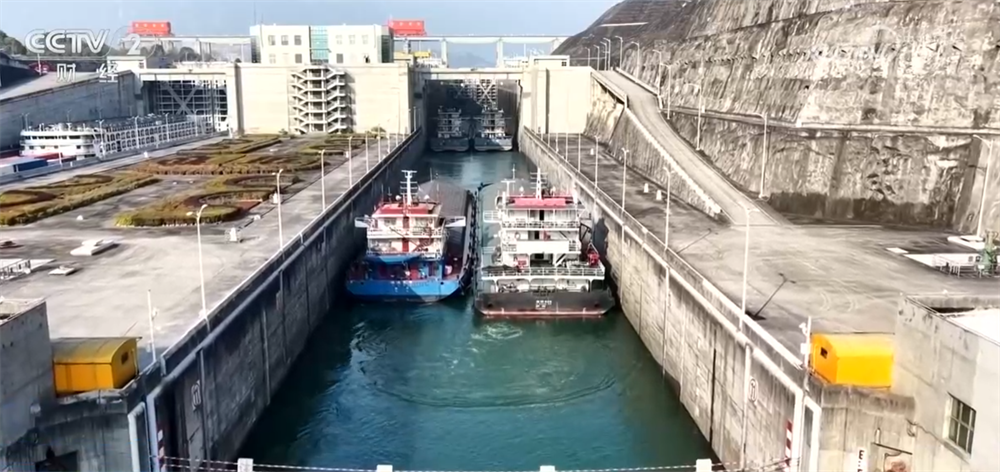
硬核数据见证“黄金水道”释放“黄金价值” 长江“水上高速公路”成型
Yang Shi Wang· 2026-01-08 06:31
Group 1 - The Yangtze River shipping industry is experiencing a strong green transformation, with over 476 new energy vessels currently under construction and an expected intention to build 1,000 more in the next five years, positioning the Yangtze as a global demonstration area for the large-scale application of inland river new energy vessels [1] - The Three Gorges Hub, as a crucial part of the Yangtze River, has significantly improved its shipping capacity, with the annual throughput increasing from 119.63 million tons in 2015 to nearly 173 million tons by 2025 [4] - The cargo throughput of the Yangtze River trunk line is projected to exceed 4.2 billion tons by 2025, a substantial increase from 2.45 billion tons in 2015, with the number of major ports increasing from 11 to 18 [7] Group 2 - The Three Gorges Hub has enhanced the efficiency of the Yangtze River's shipping, with the volume of grain and cotton transported increasing from nearly 2 million tons in 2015 to over 10 million tons by 2025, representing a growth of over 400% [2] - The introduction of the ship lift at the Three Gorges in 2016 has created a new operational model, allowing larger vessels to navigate more efficiently, with the proportion of vessels over 5,000 tons increasing from 35.44% in 2015 to 68.22% by 2025 [4] - The Yangtze River has established a comprehensive waterway network connecting major regions, facilitating direct access for 50,000-ton vessels to Nanjing and 10,000-ton vessels to Wuhan, thereby forming a "waterway express" [7]

智研咨询发布:聚己内酯(PCL)行业报告(附市场竞争格局、发展现状及趋势预测)
Sou Hu Cai Jing· 2026-01-08 05:52
Core Insights - The report highlights the growth potential of the Polycaprolactone (PCL) industry in China, projecting a market size of approximately 1.488 billion yuan in 2024, with a year-on-year growth of 8.22% driven by environmental policies and increasing demand in medical and packaging sectors [1][3]. Industry Overview - PCL is a biodegradable semi-crystalline aliphatic polyester with excellent biocompatibility and degradation properties, widely used in medical, packaging, and 3D printing applications [1][7]. - The industry is entering a critical development phase, driven by emerging markets and a shift towards high-end and high-value applications [3][7]. Market Drivers - The "dual carbon" strategy is significantly boosting the demand for biodegradable materials, with PCL rapidly replacing traditional plastics in eco-friendly packaging and agricultural films [2][3]. - The aging population and the prevalence of minimally invasive surgeries are increasing the demand for absorbable sutures and tissue engineering scaffolds, with the surgical suture market projected to reach approximately 9.8 billion yuan in 2024, growing by 6.99% year-on-year [2][4]. Competitive Landscape - The PCL industry in China has a high market concentration, with key players like Hunan Juren New Materials Co., Ltd. and Shenzhen Guanghua Weiye Co., Ltd. achieving significant breakthroughs in production capacity and technology [4][11]. - Hunan Juren has established a production capacity of 55,000 tons per year, becoming one of the largest producers globally and breaking the long-standing foreign technology monopoly [4][11]. Demand Trends - Continuous growth in the medical sector is driving demand for high-end products such as absorbable sutures and drug carriers, particularly in cardiovascular, orthopedic, and minimally invasive surgeries [4][10]. - The demand for eco-friendly packaging is accelerating due to upgraded "plastic restriction" policies and increased consumer awareness of environmental issues, enhancing PCL's penetration in biodegradable packaging and agricultural films [4][10]. Market Trends - The industry is expected to evolve towards high-end, green, and diversified development, with advancements in biocatalysis and nanocomposite modification technologies driving PCL towards medical-grade and electronic-grade products [5][6]. - Companies are transitioning from single raw material production to full industry chain integration, enhancing profit margins and supply chain security [5][6].
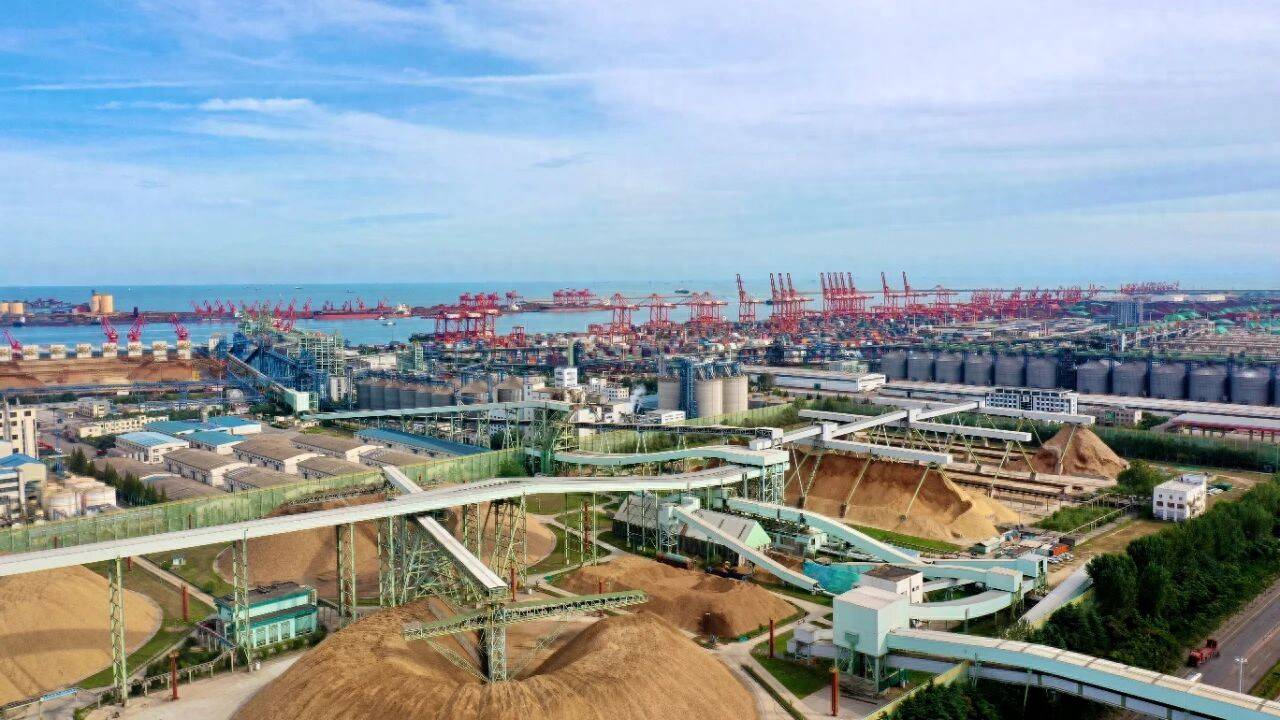
亚太森博(山东)浆纸有限公司落地山东首笔造纸行业转型金融融资
Sou Hu Cai Jing· 2026-01-08 02:21
Group 1 - The People's Bank of China in Rizhao successfully facilitated a financing of 120 million yuan for Asia Pulp & Paper (Shandong) through a transformation financial letter of credit, marking the first financing in the paper industry for transformation in Shandong [1] - The Rizhao paper and pulp integrated industrial cluster has been selected as one of the "Top Ten Industries" in Shandong Province for 2025, highlighting its significance in the local industrial chain [3] - The transformation finance is a crucial part of green finance, focusing on providing funding support for low-carbon transitions in high-emission sectors, aligning with national goals for green and high-quality development [3] Group 2 - Asia Pulp & Paper (Shandong) is a leading enterprise in the Rizhao paper and pulp integrated industrial cluster and one of the largest commodity wood pulp producers in China [3] - The Rizhao branch of the People's Bank of China has introduced local standards for transformation finance in the paper industry, aiming to support low-carbon transitions [5] - In May 2023, Asia Pulp & Paper (Shandong) signed a 1 billion yuan sustainable development-linked syndicate loan with several banks, marking the first of its kind in the domestic paper industry [5] - Asia Pulp & Paper was awarded the "IFF Global Green Finance Award - Annual Award" at the International Financial Forum in November 2024, being the only paper enterprise to receive this honor since the award's inception [5]
沪杭甬公司战略入股中碳科技:以“绿色低碳”增强可持续发展能力
Zhong Zheng Wang· 2026-01-07 10:08
Core Viewpoint - The partnership between Zhejiang Huhangyou Highway Co., Ltd. and Zhejiang Jiaotou Zhongtan Environmental Technology Co., Ltd. marks a strategic move towards integrating energy and transportation, aligning with national "dual carbon" goals and enhancing the company's growth potential in the green energy sector [1][2] Group 1: Investment and Strategic Importance - Zhejiang Huhangyou Highway Co., Ltd. invested 226 million yuan to acquire an 11.6733% stake in Zhongtan Technology, representing its first investment in the new energy sector [1] - This collaboration is a significant step for the company in optimizing its business structure and fostering new green and low-carbon growth drivers [2] Group 2: Operational and Industry Impact - The integration of energy and transportation is expected to normalize energy consumption management, reduce costs, and enhance the resilience and service quality of the highway network [2] - The partnership aims to set industry standards through demonstration projects, transitioning green energy from a one-time transformation to a comprehensive methodology, thereby improving operational efficiency and creating replicable practices [2] Group 3: Capital and Sustainable Development - The collaboration will strengthen the company's green and low-carbon attributes, increasing its recognition in the capital market and providing sustainable development momentum [2] - The company plans to leverage this partnership to deepen its energy-transport integration practices while expanding its growth boundaries in the medium to long term [2]
200辆大单签约!东风商用车新能源重卡再拓新版图
第一商用车网· 2026-01-07 07:39
Core Viewpoint - The strategic partnership between Dongfeng Commercial Vehicle and HJWL marks a significant milestone in the green logistics sector in Fengyang, with the delivery of 50 units of energy vehicles and a total order of 200 units, promoting a low-carbon transformation in local resource transportation [1][3][9]. Group 1: Strategic Partnership and Significance - The signing of the agreement for 200 energy vehicles represents the first large-scale introduction of new energy heavy trucks in Fengyang, aligning with national "dual carbon" strategies and local green development initiatives [1][3]. - HJWL, a key logistics company in the region, emphasizes the importance of reliability, economy, and environmental performance in its operations, making this partnership a crucial step towards upgrading green logistics [3][4]. Group 2: Technological Advancements and Vehicle Features - The delivered Dongfeng new energy tractors incorporate advanced technologies such as autonomous domain control and electronic braking systems, enhancing energy efficiency and operational reliability [6][7]. - The vehicles are equipped with a large-capacity 600 kWh battery from CATL, providing robust power for long-distance heavy-duty transport, and are designed to meet the demands of complex terrains [7]. Group 3: Future Outlook and Strategic Goals - Dongfeng Commercial Vehicle aims to accelerate its "New Engineering" strategy, focusing on electric, hybrid, and hydrogen fuel technologies, positioning itself as a leader in the new energy vehicle market [9]. - The successful implementation of the Fengyang project is seen as a precursor to further achievements in 2026, reinforcing Dongfeng's commitment to customer-centric growth and industry leadership [9].
坚定功能定位 走好中国特色金融发展之路 访中信集团党委委员、副总经理兼中信金融资产党委书记、董事长刘正均
Jin Rong Shi Bao· 2026-01-07 03:41
Core Insights - The 20th Central Committee's Fourth Plenary Session outlines a blueprint for China's development over the next five years, emphasizing the importance of financial asset management companies in risk prevention and supporting the real economy [1][2]. Group 1: Understanding the Significance of the Plenary Session - The plenary session addresses major issues for the "14th Five-Year Plan" period, providing fundamental guidance for financial work in the new era [1][2]. - Financial asset management companies must grasp the session's significance and contribute positively to the construction of a financial power [1][2]. Group 2: Implementation of the Plenary Session's Spirit - The session emphasizes the need for financial asset management companies to accurately position themselves and actively play their unique roles in the broader context [2]. - Companies are required to enhance their risk management capabilities and act as stabilizers in the financial system, ensuring high-quality development [2][5]. Group 3: Focus Areas for Financial Asset Management Companies - Companies are tasked with advancing five key areas: technology finance, green finance, inclusive finance, pension finance, and digital finance, aligning with national strategic needs [3][4][5]. - Over the past three years, the company has invested a total of 107.7 billion yuan in these five areas, demonstrating its commitment to fulfilling its responsibilities [2][3]. Group 4: Specific Strategies and Innovations - In technology finance, the company aims to support enterprises in overcoming innovation challenges and optimizing governance [3]. - In green finance, the focus is on supporting the transition to a clean and low-carbon energy system, including investments in major energy projects [3]. - Inclusive finance efforts include addressing risks in the economy and providing targeted financial solutions to small and medium-sized banks [3][4]. Group 5: Addressing Aging Population and Digital Transformation - The company is actively engaging in pension finance to address the needs of an aging population, exploring sustainable business models in the healthcare sector [4]. - In digital finance, the company is promoting digital transformation and exploring innovative applications of artificial intelligence in asset management [5]. Group 6: Future Development Plans - The company plans to enhance its role in stabilizing the economy and supporting the real economy during the "14th Five-Year Plan" period, utilizing various financial tools to assist struggling enterprises [5][6]. - The focus will also be on revitalizing existing assets and addressing risks in key sectors, particularly in the real estate market [6].
招商证券:航空发动机与燃机双轮驱动 高温合金步入高景气成长赛道
Zhi Tong Cai Jing· 2026-01-07 03:09
Core Viewpoint - High-temperature alloys are essential materials in key sectors such as aerospace engines, gas turbines, and nuclear power equipment, with their performance directly influencing the thrust, efficiency, and lifespan of high-end equipment. The industry is experiencing accelerated growth driven by domestic projects and the "dual carbon" strategy, with a recommendation to focus on the core supply chain of aerospace engines and gas turbines, maintaining an investment rating of "recommended" [1] Demand Side - The industry has seen explosive growth in demand, with production increasing from 19,000 tons in 2017 to 49,000 tons in 2023 (CAGR of 17.1%), and demand rising from 21,000 tons to 52,000 tons (CAGR of 16.8%), gradually narrowing the supply-demand gap. Production is expected to reach 57,000 tons in 2024 (YoY +16.3%), with aerospace (55%) and power (20%) as the core demand sectors. Long-term factors such as the replacement of aerospace engines, domestic aircraft production, and breakthroughs in gas turbines are projected to drive average annual demand exceeding 56,500 tons from 2025 to 2030, with gas turbines, aerospace, and automotive as the main growth points [2] Supply Side - The global high-temperature alloy market is expected to exceed $30 billion by 2025 (CAGR of 8.5%), with the Chinese market projected to reach 120 billion yuan, growing over 15% in the past five years. Domestic production capacity is continuously being released, with total capacity expected to exceed 60,000 tons by 2025, although there remains a 30% supply gap for high-end products. The domestic production rate is expected to rise from less than 40% in 2020 to about 65% by 2025, supported by policies under the 14th Five-Year Plan, leading to a significant concentration in both ends of the industry chain, with upstream dominated by special steel enterprises like Fushun Special Steel [3] Competitive Landscape - The industry is characterized by a "technology-driven, strong players" dynamic, with an expected average compound growth rate of 15% from 2025 to 2027, and the domestic replacement rate projected to increase from 32% in 2020 to 80% by 2027. Leading companies are achieving breakthroughs in niche areas: Western Superconducting's high-temperature alloy business revenue grew by 56.68% in H1 2025, Tunan Co., Ltd. (300855) achieved a gross margin of 39.4% in casting high-temperature alloys, and Steel Research Institute's revenue increased by 10.7% to 2.804 billion yuan in the first three quarters [4]

研判2025!中国聚己内酯(PCL)行业产业链、市场规模及未来趋势分析:在"双碳"战略与市场需求增加驱动下,呈现结构性增长与价值链攀升并进的特征[图]
Chan Ye Xin Xi Wang· 2026-01-07 01:26
Core Insights - The Chinese Polycaprolactone (PCL) industry is entering a critical development phase driven by emerging markets, with a market size projected to reach approximately 1.488 billion yuan in 2024, reflecting a year-on-year growth of 8.22% [1][5]. Industry Overview - PCL is a biodegradable semi-crystalline aliphatic polyester with a chemical formula of (C6H10O2)n, produced through ring-opening polymerization of ε-caprolactone [2]. - PCL exhibits excellent biodegradability, biocompatibility, and low melting point, making it suitable for various applications [2]. Industry Chain - The upstream of the PCL industry includes raw materials such as ε-caprolactone, cyclohexanone, and catalysts, along with production equipment like polymerization reactors and extrusion machines [4]. - The midstream involves the manufacturing of PCL, while the downstream applications span medical health, packaging materials, 3D printing, high-end manufacturing, agriculture, and textiles [4]. Market Size - The PCL industry is experiencing significant growth due to the increasing demand for biodegradable materials driven by the "dual carbon" strategy, with applications in eco-friendly packaging and agricultural films [1][5]. - The medical field is expanding its use of PCL in absorbable sutures, drug carriers, and tissue engineering scaffolds, contributing to the industry's growth [1][5]. Key Companies - The PCL industry in China is characterized by high market concentration, with companies like Hunan Juren New Materials Co., Ltd. and Shenzhen Guanghua Weiye Co., Ltd. making significant advancements [6][7]. - Hunan Juren has established a production capacity of 55,000 tons per year, becoming one of the largest producers globally [6]. - Shenzhen Guanghua Weiye is recognized for its early involvement in biodegradable materials and has developed over 60 patents covering the entire value chain [7]. Industry Development Trends 1. The focus of technological research is shifting towards high performance and multifunctionality, aiming for precision medicine and personalized solutions [8]. 2. The market structure is evolving towards structural growth across multiple downstream applications, with the biomedical sector remaining a high-value area [8]. 3. The competition will increasingly revolve around ecosystem integration and comprehensive solutions, with leading companies transitioning from raw material producers to full industry chain solution providers [9].

研判2025!中国中间相碳微球行业产业链、市场规模、重点企业及未来趋势分析:工艺优化与表面改性技术突破,为下游应用提供了坚实的技术支撑[图]
Chan Ye Xin Xi Wang· 2026-01-07 01:26
Core Viewpoint - The Mesocarbon Microbeads (MCMB) industry in China is transitioning from rapid growth to high-quality development, with a projected market size of approximately 7.559 billion yuan in 2024, reflecting a year-on-year growth of 4.46% [1][6]. Industry Overview - MCMB is a key carbon material produced from heavy aromatic compounds like asphalt and coal tar through thermal treatment, characterized by its unique anisotropic liquid crystal structure [2]. - MCMB exhibits excellent electrical conductivity, thermal conductivity, chemical stability, thermal stability, and ease of graphitization, making it essential for applications in lithium-ion batteries, sodium-ion batteries, catalyst carriers, and composite materials [2]. Production Process - The production methods for MCMB are categorized into direct polymerization and indirect methods, with the latter further divided into suspension and emulsion methods. Direct polymerization is cost-effective but has inherent defects like low yield and high impurity content, while indirect methods yield higher quality products but are more complex and costly [4]. - The industry employs a gradient complementary structure of cost and performance, requiring companies to balance production methods based on market demands for yield, purity, and particle size precision [4]. Industry Chain - The upstream of the MCMB industry chain includes raw materials such as coal tar, petroleum pitch, and carbon black, while the midstream focuses on the production of MCMB. The downstream applications include lithium-ion batteries, high-strength composite materials, and chromatography column fillers [5]. - The "dual carbon" strategy and policies promoting new energy vehicles are driving the demand for power batteries, with a significant increase in lithium battery shipments, which reached 776 GWh in the first half of 2025, a year-on-year increase of 68% [5]. Market Size - The MCMB industry is at a critical turning point, with a market size projected at 7.559 billion yuan in 2024, growing by 4.46% year-on-year. Continuous optimization of production processes has improved particle size uniformity and enhanced performance in fast charging and low-temperature applications [6][7]. Key Companies' Performance - The MCMB industry is characterized by a concentration of leading companies like BETTERRY and Shanshan, which leverage technological advancements and scale advantages. BETTERRY leads in high-capacity products, while Shanshan dominates the mid-to-low-end market through cost control [8]. - BETTERRY has a production capacity of 16,500 tons of MCMB annually and holds over 70 national and international patents, achieving a particle size control precision of ±0.8 μm [8]. - Baotailong, another key player, has developed a unique business model integrating coal chemical processes with new materials, achieving over 90% self-sufficiency in raw materials [8]. Industry Development Trends 1. **Technological Innovation and Performance Breakthroughs**: The industry is advancing through continuous technological innovations, with traditional methods being optimized and new techniques like low-temperature plasma and microwave radiation showing promise [9]. 2. **Diversified Market Demand**: The demand for MCMB is growing due to the increasing sales of new energy vehicles and the explosive growth of the energy storage market, driven by policies and technological advancements [10]. 3. **Green Upgrading and Circular Economy**: The "dual carbon" goals are pushing the industry towards greener practices, with companies adopting closed-loop solvent recovery systems and focusing on waste reduction and recycling [10].


建信期货纸浆日报-20260107
Jian Xin Qi Huo· 2026-01-07 01:07
1. Report Information - Report title: Pulp Daily [1] - Date: January 7, 2025 [2] 2. Investment Rating - No investment rating information is provided in the report. 3. Core Viewpoints - The pulp futures 05 contract closed at 5530 yuan/ton, down 0.43% from the previous settlement price. The intended transaction price range of softwood pulp in Shandong's wood pulp market remained stable, with the Shandong Yinxing quotation at 5580 - 5600 yuan/ton [7]. - Asia Symbol announced a 150 yuan/ton increase in the price of hardwood pulp, while there was no news of adjustment in the FOB price of softwood pulp. In November, the chemical pulp shipments of the world's top 20 pulp - producing countries decreased year - on - year, with a significant decline in shipments to the Chinese market. In November 2025, the European wood pulp inventory decreased month - on - month and increased year - on - year, while consumption decreased both month - on - month and year - on - year. The total pulp imports in November 2025 increased both month - on - month and year - on - year. As of December 25, 2025, the weekly pulp inventory in major regions and ports decreased week - on - week [8]. - On the demand side, some paper mills have price increase expectations due to cost pressure, but the paper price increase is weak due to insufficient terminal orders, and the mainstream quotation of offset printing paper remains stable. During the holiday, the fundamentals changed little, and the market focused on the pricing of near - month warehouse receipts, with the market fluctuating and adjusting [8]. 4. Section Summaries 4.1 Market Review and Operation Suggestions - Market data: The pulp futures 05 contract's previous settlement price was 5554 yuan/ton, and the closing price was 5530 yuan/ton, a 0.43% decline. The intended transaction price range of softwood pulp in Shandong was 4950 - 6300 yuan/ton, stable compared to the previous trading day, with the Shandong Yinxing quoted at 5580 - 5600 yuan/ton [7]. - Industry situation: Asia Symbol raised the hardwood pulp price by 150 yuan/ton. In November, the chemical pulp shipments of the world's top 20 pulp - producing countries decreased year - on - year. In November 2025, European wood pulp inventory and consumption showed different changes. The total pulp imports increased in November 2025, and the weekly inventory in major regions and ports decreased as of December 25, 2025. On the demand side, paper price increases were weak, and the market fluctuated and adjusted during the holiday [8]. 4.2 Industry News - On January 6, the Rizhao Branch of the People's Bank of China guided Rizhao Bank to successfully implement the first batch of transformation financial financing of 125 million yuan in the papermaking industry in Shandong. Among them, 120 million yuan of transformation financial letter - of - credit business financing was handled for Asia Symbol (Shandong) Pulp & Paper Co., Ltd., and 5 million yuan of transformation financial loans were provided for upstream enterprises of Rizhao Xiaolongtai Paper Co., Ltd. through supply - chain financing [9]. 4.3 Data Overview - The report provides multiple data charts, including import bleached softwood pulp spot prices in Shandong, pulp futures prices, pulp spot - futures price differences in Shandong Yinxing, softwood - hardwood price differences in Shandong, inter - delivery price differences, warehouse receipt totals, domestic main port pulp inventories, European main port wood pulp inventories, prices and differences of coated paper and offset printing paper, prices and differences of white cardboard and white board paper, and the US dollar - RMB exchange rate [15][17][19][25][26][27]