
民营经济发展

Search documents
泰安税务:政策赋能 合规加力 护航民营经济破浪前行
Qi Lu Wan Bao Wang· 2025-06-20 04:59
Group 1 - The implementation of the "Private Economy Promotion Law" on May 20 provides legal support for private enterprises to participate in national technology projects, enhance innovation talent training, and strengthen intellectual property protection for innovation achievements [1] - Tax authorities in Tai'an are actively implementing tax and fee preferential policies to support private enterprises in technological innovation, reinforcing compliance guidance to help these enterprises grow stronger and more competitive [1] - The introduction of intelligent warehouse management systems has significantly improved operational efficiency, with a reported 8-fold increase in efficiency and a 1.4-fold increase in space utilization [1] Group 2 - The New Tai'an Tax Bureau has established a dynamic risk monitoring system using tax big data to assist enterprises in accurately and efficiently enjoying tax and fee preferential policies [2] - Private economic entities are becoming the main force of innovation, and maintaining legal compliance is essential for their sustainable development [2] - Good tax credit not only facilitates tax payment processes but also enhances customer trust, serving as a "golden signboard" for attracting business partnerships [2] Group 3 - Shandong Changyu New Materials Co., Ltd. has utilized its good tax credit to expedite export tax refunds, amounting to over 2.7 million yuan, which has been reinvested into upgrading production equipment [3] - The Dongping County Tax Bureau has formed dedicated service teams to help private enterprises build dynamic credit profiles and monitor tax compliance, ensuring healthy development [3] Group 4 - Current policy dividends are enabling more private enterprises to thrive and capture opportunities in industrial development, with tax authorities committed to enhancing service levels and supporting the private economy [4]
优化环境提升发展信心
Jing Ji Ri Bao· 2025-06-19 22:16
Group 1 - The private economy plays an essential role in driving economic growth, stabilizing employment, stimulating market vitality, and improving people's well-being [1] - Recent policies, including the Private Economy Promotion Law, have provided a solid legal guarantee for the high-quality development of the private economy by incorporating the principle of "two unwavering" into law [1] - Challenges such as hidden barriers, financing difficulties, and inconsistent policy enforcement hinder the healthy development of the private economy [1] Group 2 - Ensuring fair competition is crucial for the growth of the private economy, as it can stimulate the intrinsic motivation and innovative vitality of private enterprises [2] - The government should ensure that private economic organizations can equally access various production factors and public service resources, as well as enjoy national support policies [2] - Emphasizing contract spirit and integrity in business operations is vital for reducing transaction costs and maintaining market order, which supports the healthy development of the private economy [2]
赵一德在安康市调研时强调突出自身特色 发挥比较优势 坚定不移走生态优先绿色发展之路
Shan Xi Ri Bao· 2025-06-18 23:15
Group 1 - The core message emphasizes the importance of ecological priority and green development in the economic strategy of Ankang City, as highlighted by the provincial secretary Zhao Yide during his visit [1][2] - Ankang High-tech Zone is identified as the only national high-tech zone in southern Shaanxi, with a focus on promoting management reforms and enhancing internal development dynamics [2] - The strategy includes deep integration of technological and industrial innovation, accelerating the digital and green transformation of traditional industries, and actively developing strategic emerging industries [2][5] Group 2 - The meeting with local party secretaries and private enterprise representatives underscored the need for grassroots governance to align with national policies and enhance public service levels [3] - Emphasis was placed on the development of local specialties and the integration of agriculture, culture, and tourism to boost economic growth [3] - The provincial government is committed to promoting the high-quality development of the private economy through various supportive actions and policies [4][5]
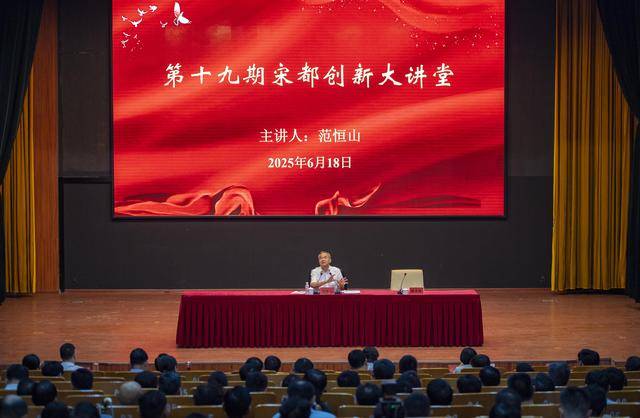
开封举办“民营经济发展”专题讲座
Sou Hu Cai Jing· 2025-06-18 16:55
河南日报客户端记者 史长来 通讯员 郭家辰 据了解,"宋都创新大讲堂"是开封市整合各单位、各行业的培训资源,紧贴改革发展和干部队伍建设实 际,设定创新、改革、城建等专题,升级打造的领导干部学习培训特色品牌。大讲堂邀请国内知名专家 学者授课,帮助领导干部找准推动开封高质量发展的切入点和发力点,加强培育具有战略眼光、善于处 理复杂问题的高水平领导干部队伍。 本次"宋都创新大讲堂"活动是"学习贯彻民营经济促进法开封市在行动"的响亮一枪和重磅举措,近年 来,开封认真贯彻落实习近平总书记关于促进民营经济高质量发展的重要指示精神,紧抓省委、省政府 部署,推出"一揽子"惠企政策,开展多项惠企活动,提升服务企业效能,营造一流营商环境,推动各类 资源、政策等保障要素向民营经济聚集,不断推动民营经济高质量发展工作取得新成效。 6月18日上午,中共开封市委党校综合报告厅座无虚席,第十九期"宋都创新大讲堂"如期举行。此次邀 请国家发展改革委原副秘书长、国家低空经济融合创新研究中心专家指导委员会主任范恒山教授,围 绕"对民营经济发展若干焦点问题的认识"作专题讲座。 开封市各级领导干部200多人现场聆听了讲座。 范恒山教授从"为什么现阶 ...

「经济发展」白重恩:如何切实提升民营企业信心
Sou Hu Cai Jing· 2025-06-18 14:38
Core Viewpoint - The importance of boosting confidence and improving expectations for the development of the private economy in China is emphasized, as it is essential for achieving Chinese-style modernization [3][5]. Group 1: Economic Growth Potential - China's economic growth potential remains significant, even if the growth rate is expected to decline to around 4% or 5%, which is still faster than developed countries [3][5]. - The potential for growth is supported by factors such as the hardworking nature of the Chinese people, strong innovation spirit, and a large market that provides advantages in the digital and intelligent era [4][5]. Group 2: Role of Private Economy - The private economy is deemed crucial for achieving Chinese-style modernization, and there is a need for confidence in its development [5][9]. - The government is encouraged to institutionalize and legalize the protection and encouragement of the private economy to ensure equal competition among different types of enterprises [10]. Group 3: Enhancing Scientific Literacy - Improving the scientific literacy of the population is essential to enhance the confidence of private entrepreneurs and the general public [6][9]. - The lack of scientific spirit among the populace can lead to the spread of rumors and misinformation, which negatively impacts confidence [7][8]. Group 4: Decision-Making Mechanisms - Establishing clear decision-making mechanisms for the private economy is necessary to address issues and enhance confidence [10][11]. - The need for a coordinating body to address the challenges faced by the private sector is highlighted, as current mechanisms may not adequately support private enterprises [10][11]. Group 5: Digital Intelligence Development - The rapid development of digital intelligence technology, such as chatGPT, presents both opportunities and challenges for the economy [12]. - The relationship between scale, development, and regulation in the digital economy needs to be carefully managed to maintain confidence in the sector [12].

开展专业技术人才管理服务改革试点,上海鼓励国企民企双向进入和交叉持股|营商环境周报
2 1 Shi Ji Jing Ji Bao Dao· 2025-06-17 07:33
Group 1: Human Resources and Talent Management - The Ministry of Human Resources and Social Security has issued a notice to conduct pilot reforms in professional technical talent management services over a two-year period, focusing on six key areas including postdoctoral work, professional titles, continuing education, expert work, return of overseas students, and comprehensive services [2][3] - The notice allows provinces and regions to adjust pilot content and add new items based on local conditions, with each pilot item designating specific cities or institutions as trial units [3] - The goal is to promote policy innovation, improve project quality, optimize service platforms, and enhance the support for high-quality development in professional technical talent work [3] Group 2: Patent Pool Management - The State Intellectual Property Office and other departments have issued guidelines to encourage the proper exercise of patent pool rights while regulating patent rights abuse [4][5] - The guidelines outline the functions of patent pools, which include improving patent licensing efficiency, promoting industrial application of patent technologies, and providing diversified operational services [4] - Four principles for building patent pools have been established: market-oriented, balance of interests, openness, and non-discrimination [5] Group 3: Economic Development Initiatives - Shanghai's guidelines promote collaboration between state-owned and private enterprises, encouraging cross-holding and optimizing equity structures [7][8] - The guidelines emphasize technological innovation, industrial upgrading, resource activation, financial services, and ecosystem building to enhance cooperation between state-owned and private enterprises [8] - Jiangsu's market supervision bureau has released a task list to support the development of the private economy, focusing on regulatory efficiency, fair competition, quality services, and credit improvement [9][10][11] Group 4: Real Estate Financing Solutions - Ningbo has introduced a series of policies to facilitate real estate registration and address financing challenges for enterprises, including a "no repayment renewal loan" service [13][15] - The city has reduced the processing time for real estate transactions from seven days to 60 minutes, enhancing service efficiency [14] - Policies include zero fees for real estate registration for small and micro enterprises, significantly reducing costs for businesses [17]
湖南永兴县:用好改革创新“关键一招”,助力民营企业“轻装上路”
Zhong Guo Fa Zhan Wang· 2025-06-16 08:33
中国发展网讯 近年来,面对复杂多变的经济形势和民营企业发展诉求,湖南省郴州市永兴县以刀刃向 内的改革勇气和精准务实的创新举措,努力为民营企业打造负担更轻、效率更高、预期更稳的发展沃 土。 聚焦"融资易",降低经营成本。创新开展园区工业厂房分栋(层、间)登记改革,为金润等19家企业办 理131栋厂房分栋登记,帮助企业融资金额5.74亿元,切实解决园区企业厂房需要分割土地才能办理不 动产转移的瓶颈问题。截至4月底,全县贷款余额增速21.49%,居全市第1。全面推广"三零""三省"服 务,对139家小微企业推行"零投资"节省报装费用930万元。积极推进工业用地弹性供应政策,提高工业 用地节约集约利用水平,实现弹性供地9宗,为企业节约用地成本3887万元。 聚焦"主体强",加快企业育新。深入开展"智赋万企"行动,不断健全遴选、入库、培育、认定"一条 龙"科技企业梯度培育机制,累计打造市级以上各类创新平台34个,"四上"企业347家、专精特新"小巨 人"企业14家、高新技术企业46家,1-3月份,高新技术企业上交税金及利润总额3.12亿元,同比增长 13%。 今年以来,全县新增市场主体1704余户,同比增长6.23%; ...
省市场监管局出台促进民营经济发展重点任务清单
Xin Hua Ri Bao· 2025-06-15 22:23
本报讯(记者洪叶许愿)近日,省市场监管局印发促进民营经济发展年度重点任务清单,围绕七个方面制 定了43项重点任务,以"全链条整合、特色化供给、品牌化赋能"组合拳,积极构建"监管有力度、服务 有温度"的民营经济发展环境。 清单显示,在推动民营经济主体准入准营退出便利化方面,要深化企业开办、变更、注销、迁移"高效 办成一件事"改革;拓展电子营业执照在登记、档案、审批、年报以及社保、金融、招投标等领域的应 用场景。在营造保障民营经济主体公平竞争和合法权益的市场环境方面,要开展公平竞争审查能力提升 行动,探索公平竞争审查风险分类管理;聚焦医药、公用事业、殡葬等重点行业,深入推进民生领域反 垄断执法。在强化民营经济领域质量技术服务方面,要加强质量基础设施"一站式"服务体系建设;围绕 未来产业测量需求,构建全产业链计量溯源体系;完善"苏链检"检企供需对接服务机制和平台。 清单要求,在加大对相关行业领域民营经济主体发展的扶持力度方面,深入推进个体工商户分型分类精 准帮扶,推进"个转企"培育库建设,试点推进个体工商户综合服务中心建设。在提升民营经济主体合规 和信用水平方面,推进企业合规经营指导,打造"1+N"合规指引体系;深 ...
铜仁中院召开民营企业家座谈会 共商优化法治化营商环境之策
Sou Hu Cai Jing· 2025-06-15 01:15
Core Viewpoint - The meeting focused on enhancing the judicial environment to support the sustainable development of the private economy in Tongren City through high-quality execution work [3]. Group 1: Meeting Overview - The Tongren Intermediate People's Court reported on the execution bureau's efforts over the past three years to optimize the business environment [3]. - A draft opinion was discussed regarding high-quality execution work to support the private economy and improve the legal business environment [3]. Group 2: Key Strategies for Optimization - Strengthening political guidance and collaborative efforts by establishing a regular communication platform between the court and enterprises to meet the judicial needs of the private economy [3]. - Innovating execution processes and improving efficiency by implementing a "fast track" for enterprise-related cases and utilizing a comprehensive asset control system [3]. - Establishing a foundation for standardized practices through a three-year action plan aimed at enhancing case quality and ensuring compliance with execution standards [3]. - Creating a collaborative system involving multiple departments to build a legal business environment that supports the high-quality development of the private economy in Tongren [3].

山东财政50条靶向支持民营经济发展
Da Zhong Ri Bao· 2025-06-12 01:10
Core Viewpoint - The Shandong government has introduced a comprehensive set of 50 targeted policies to support the high-quality development of the private economy, with an expected direct fiscal investment of over 36 billion yuan and the potential to drive over 2 trillion yuan in financial and social investments over the next three years [2][4]. Group 1: Support for Innovation and Development - The policies include 17 measures focused on innovation, such as supporting major technological innovation projects, increasing R&D investment, and protecting intellectual property rights [2]. - Financial support for R&D can reach up to 5 million yuan per enterprise, and companies completing clinical trials for innovative drugs can receive up to 100 million yuan annually [2]. Group 2: Transformation and Upgrading of Private Enterprises - The policies aim to facilitate industrial upgrades through measures like special loan interest subsidies and equipment update subsidies, as well as encouraging participation in rural revitalization [3]. - Support for foreign trade enterprises includes financing services and assistance in participating in overseas exhibitions to enhance competitiveness [3]. Group 3: Financing Channels for Private Enterprises - The policies include measures to strengthen financing supply through various means such as guiding funds, supply chain finance, and government procurement contract financing [3]. - There are also measures to prevent overdue payments to private enterprises, ensuring fair payment terms and conditions [3]. Group 4: Fair Competition in Government Procurement - The policies aim to eliminate barriers to government procurement for private enterprises, including regular checks to remove unfair competition practices and expanding the market share for small and medium-sized enterprises [4]. Group 5: Policy Accessibility and Efficiency - The government plans to enhance the accessibility and efficiency of policies through reforms and recognition programs, ensuring that enterprises can benefit from fiscal policies effectively [4]. - The Shandong government will prioritize the allocation of fiscal resources to support the implementation of these policies, utilizing various financial instruments to create a supportive environment for the private economy [5].