
新发展格局

Search documents
21社论丨接续奋斗中国式现代化建设新征程
21世纪经济报道· 2025-10-23 23:18
Core Viewpoint - The Fourth Plenary Session of the 20th Central Committee of the Communist Party of China outlines the blueprint for China's development in the 15th Five-Year Plan period, emphasizing high-quality development and the achievement of socialist modernization by 2035 [1][3]. Group 1: Economic and Social Development Goals - The main goals for the 15th Five-Year Plan include significant achievements in high-quality development, substantial improvements in self-reliance in technology, breakthroughs in deepening reforms, enhanced social civilization, improved quality of life, progress in building a beautiful China, and strengthened national security [3][4]. - By 2035, China aims to significantly enhance its economic, technological, defense, and comprehensive national strength, with per capita GDP reaching the level of moderately developed countries, and to ensure a happier and better life for its people [3][4]. Group 2: Development Strategy and Focus - The fundamental requirement for economic and social development during the 15th Five-Year Plan is to achieve effective qualitative improvement and reasonable quantitative growth, promoting comprehensive human development and common prosperity [4][5]. - The focus will be on the real economy, building a modern industrial system, and developing new productive forces, while expanding domestic demand and constructing a strong domestic market [4][5]. Group 3: Market and Innovation - The 15th Five-Year Plan period is crucial for enhancing supply-side quality and technological levels, forming a strong national unified market, and accelerating the construction of a new development pattern [5]. - The strategy emphasizes the interaction between new demand and new supply, promoting a virtuous cycle of consumption and investment, and enhancing the internal dynamics and reliability of domestic circulation [4][5].

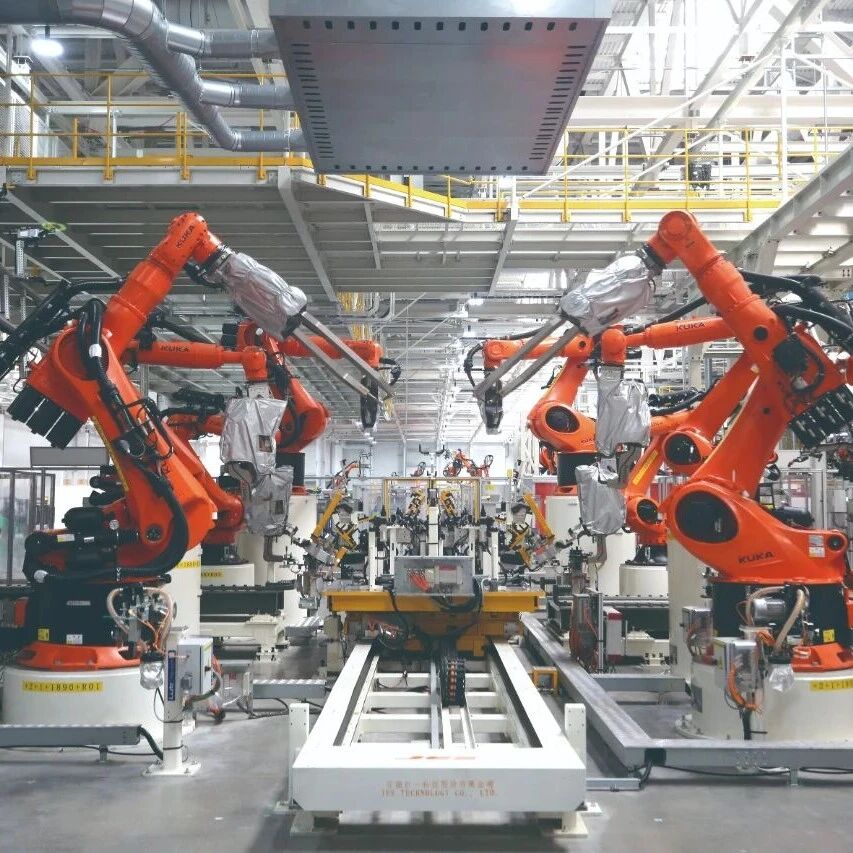
接续奋斗中国式现代化建设新征程
2 1 Shi Ji Jing Ji Bao Dao· 2025-10-23 22:49
中国共产党第二十届中央委员会第四次全体会议,于2025年10月20日至23日在北京举行。全会审议通过 了《中共中央关于制定国民经济和社会发展第十五个五年规划的建议》,为未来五年中国发展擘画蓝 图。 全会将"推动经济实现质的有效提升和量的合理增长,推动人的全面发展、全体人民共同富裕迈出坚实 步伐"作为"十五五"时期经济社会发展的根本要求,以确保基本实现社会主义现代化取得决定性进展。 这两个要求是相辅相成、相互转化的关系,经济实现质的有效提升和量的合理增长才能促进人的全面发 展与共同富裕;只有实现人的全面发展、共同富裕,才会有更多的人才、需求支撑带动经济质的有效提 升和量的合理增长,两者辩证统一,相互促进。 因此,全会强调坚持把发展经济的着力点放在实体经济上,建设现代化产业体系,并且要把因地制宜发 展新质生产力摆在更加突出的战略位置,抓住新一轮科技革命和产业变革历史机遇,大力发展新质生产 力。与此同时,坚持扩大内需这个战略基点,建设强大国内市场,加快构建新发展格局。最终以新需求 引领新供给,以新供给创造新需求,促进消费和投资、供给和需求良性互动,增强国内大循环内生动力 和可靠性。 "十五五"时期既要求我国供给侧质 ...
巩固壮大实体经济根基 四中全会擘画高质量发展蓝图
Zhong Guo Zheng Quan Bao· 2025-10-23 20:12
Core Points - The Fourth Plenary Session of the 20th Central Committee of the Communist Party of China was held from October 20 to 23, 2025, in Beijing, where the "Suggestions on Formulating the 15th Five-Year Plan for National Economic and Social Development" were approved [1] - The "15th Five-Year" period is seen as a critical time for achieving socialist modernization and aims to continue the rapid economic development and long-term social stability of China [1] Economic Development Goals - The main goals for the "15th Five-Year" period include significant achievements in high-quality development, substantial improvements in technological self-reliance, breakthroughs in comprehensive deepening of reforms, enhanced social civilization, improved quality of life, major progress in building a beautiful China, and strengthened national security [1][2] - By 2035, the aim is for China's economic strength, technological capability, national defense, comprehensive national power, and international influence to significantly increase, with per capita GDP reaching the level of moderately developed countries [1] Focus on High-Quality Development - High-quality development is prioritized, indicating a continuation of current policies aimed at economic structural transformation and the development of new productive forces [2] - The construction of a modern industrial system is emphasized as a key driver for high-quality economic development, focusing on the real economy and promoting intelligent, green, and integrated development [2][3] Domestic Market Development - The session highlighted the importance of building a strong domestic market and accelerating the establishment of a new development pattern, emphasizing the expansion of domestic demand as a strategic foundation [3][4] - The approach includes promoting consumption, effective investment, and ensuring a positive interaction between supply and demand to enhance the internal dynamics of the domestic economy [4] Macroeconomic Governance - The session called for accelerating the construction of a high-level socialist market economy and enhancing the driving force for high-quality development [5] - It aims to stimulate the vitality of various business entities and improve the efficiency of macroeconomic governance [5][6] Fiscal and Monetary Policy - The fiscal and monetary policies during the "15th Five-Year" period will focus on providing financial resources for major national strategies and implementing counter-cyclical adjustments to stabilize the macroeconomic operation [6] - The policies will maintain strong stability and continuity, with a focus on supporting employment, businesses, and market expectations to consolidate economic recovery [6]
中共二十届四中全会在京举行 中央政治局主持会议 中央委员会总书记习近平作重要讲话 审议通过《中共中央关于制定国民经济和社会发展第十五个五年规划的建议》
Shang Hai Zheng Quan Bao· 2025-10-23 18:39
中国共产党第二十届中央委员会第四次全体会议,于2025年10月20日至23日在北京举行。中央委员会 总书记习近平 作重要讲话。新华社记者 谢环驰 摄 中国共产党第二十届中央委员会第四次全体会议,于2025年10月20日至23日在北京举行。中央政治局 主持会议。 新华社记者 丁海涛 摄 新华社北京10月23日电 中国共产党第二十届中央委员会第四次全体会议公报 (2025年10月23日中国共产党第二十届中央委员会第四次全体会议通过) 中国共产党第二十届中央委员会第四次全体会议,于2025年10月20日至23日在北京举行。 出席这次全会的有,中央委员168人,候补中央委员147人。中央纪律检查委员会常务委员会委员和有关 方面负责同志列席会议。党的二十大代表中部分基层同志和专家学者也列席了会议。 全会高度评价"十四五"时期我国发展取得的重大成就。"十四五"时期我国发展历程极不寻常、极不平 凡。面对错综复杂的国际形势和艰巨繁重的国内改革发展稳定任务,以习近平同志为核心的党中央团结 带领全党全国各族人民,迎难而上、砥砺前行,经受住世纪疫情严重冲击,有效应对一系列重大风险挑 战,推动党和国家事业取得新的重大成就。我国经济实 ...
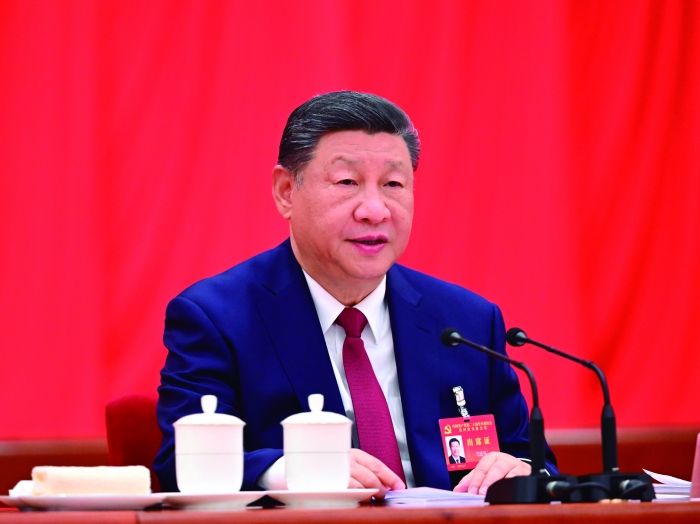
投资于物和投资于人并举 扩大内需战略新部署意味着什么丨四中全会解读
2 1 Shi Ji Jing Ji Bao Dao· 2025-10-23 14:59
Core Viewpoint - The Fourth Plenary Session of the 20th Central Committee of the Communist Party of China emphasizes the construction of a strong domestic market and the acceleration of a new development pattern, focusing on expanding domestic demand and enhancing the interaction between consumption and investment [1][3]. Group 1: Strong Domestic Market - The market is identified as a scarce resource, with China's large-scale market being a significant advantage, showcasing resilience amid complex external environments. From 2021 to 2024, domestic demand is expected to contribute an average of 86.8% to economic growth [3]. - The emphasis on expanding domestic demand is seen as a strategic foundation for establishing a new development pattern that prioritizes domestic circulation while promoting international circulation [3]. - The document highlights the importance of the domestic market, which covers over 1.4 billion people, aiming to enhance China's role as a significant consumer market globally [3]. Group 2: Investment in Goods and People - The 2025 Government Work Report calls for more resources to be invested in human capital and public services, supporting employment, income growth, and consumption incentives to create a virtuous cycle of economic development and improved livelihoods [5]. - The combination of investment in goods and people is emphasized as essential, with a focus on not only tangible assets but also on human capital to meet the demands of the new industrial and technological revolution [5][6]. - Investment in human capital is increasingly recognized as crucial for economic growth, with a broad definition that includes healthcare, sports, talent development, and social security, indicating a need for more policies in this area over the next five years [6].
四中全会重要部署,释放关键信号
2 1 Shi Ji Jing Ji Bao Dao· 2025-10-23 14:53
记者丨周慧 中国共产党第二十届中央委员会第四次全体会议,于2025年10月20日至23日在北京举行。 全会提出,建设强大国内市场,加快构建新发展格局。坚持扩大内需这个战略基点,坚持惠民生和促消费、投资于物和投资于 人紧密结合,以新需求引领新供给,以新供给创造新需求,促进消费和投资、供给和需求良性互动,增强国内大循环内生动力 和可靠性。要大力提振消费,扩大有效投资,坚决破除阻碍全国统一大市场建设卡点堵点。 21世纪经济报道记者就此采访了商务部研究院、北京大学经济学院等专家进行解读。 图:2025年初,沈阳棋盘山滑雪场游客扎堆 拍摄:周慧 商务部研究院研究员白明表示,公报提出坚持扩大内需的这个战略基点,将坚持扩大内需提到了重要的位置,只有夯实了这个 基点,中国才能得以构建以国内大循环为主体、国内国际双循环相互促进的新发展格局,这是具有长远眼光的宏观战略。从发 展格局来看,中国双循环并重,有了这个基点做支撑,中国在外循环上才能占据主动和更自信。 商务部研究院研究员周密表示,公报将建设强大国内市场提到了很重要的位置,强调了国内市场的重要性,中国市场覆盖14亿 多人口,市场规模和潜力是非常大的,这个目标是希望能够对全球 ...

学习快评丨坚定不移推动高质量发展
Xin Hua She· 2025-10-23 14:46
高质量发展是中国式现代化的必然要求,关系我国社会主义现代化建设全局。壹引其纲,万目皆张。高 质量发展是对经济社会发展方方面面的总要求,是所有地区发展都必须贯彻的要求,是必须长期坚持的 要求。"十五五"时期,必须坚持高质量发展不动摇,完整准确全面贯彻新发展理念,加快构建新发展格 局,加快高水平科技自立自强,引领发展新质生产力,建设现代化产业体系,让新动能更加澎湃、新优 势更加彰显,牢牢把握发展主动权。 向新而行,以质致远,"十五五"的发展前景光明、未来可期! 党的二十届四中全会强调,"十五五"时期经济社会发展,必须以推动高质量发展为主题,坚定不移推动 高质量发展。这为我们推动经济持续健康发展和社会全面进步、扎实推进中国式现代化指明了努力方向 和实践路径。 ...
四中全会重要部署,释放关键信号
21世纪经济报道· 2025-10-23 14:32
Core Viewpoint - The article emphasizes the importance of building a strong domestic market in China, highlighting the need to enhance domestic demand and investment to create a new development pattern that promotes both consumption and investment [1][4][7]. Group 1: Building a Strong Domestic Market - The article states that the domestic market is a scarce resource and a significant advantage for China, showcasing resilience amid complex external environments. From 2021 to 2024, domestic demand is expected to contribute an average of 86.8% to economic growth [4]. - Experts believe that the focus on expanding domestic demand is crucial for establishing a new development pattern that prioritizes domestic circulation while also enhancing international circulation [6][7]. - The article notes that the domestic market, covering over 1.4 billion people, has substantial market size and potential, aiming to contribute more to the global economy and become a more significant consumer market [7]. Group 2: Investment in Goods and People - The article discusses the need for more resources to be invested in human capital and public services, supporting employment, income growth, and consumption incentives to create a virtuous cycle of economic development and improved livelihoods [9]. - It highlights the importance of combining investments in tangible assets with investments in human capital, emphasizing that merely investing in physical infrastructure is insufficient without addressing human resource development [9][10]. - Experts suggest that investment in human capital should encompass a broad range of areas, including healthcare, sports, talent development, and social security, to meet the new demands arising from the upcoming industrial and technological revolutions [10].
二十届四中全会与十九届五中全会公报核心内容对比
Guo Tai Jun An Qi Huo· 2025-10-23 13:41
1. Report Industry Investment Rating - No relevant content provided 2. Core Viewpoints of the Report - The report compares the core contents of the communiqués of the Fourth Plenary Session of the 20th CPC Central Committee and the Fifth Plenary Session of the 19th CPC Central Committee, covering aspects such as past achievements, development environment, guiding ideology, principles, main goals, and specific strategies for different fields [1] 3. Summaries According to Relevant Catalogs Past Achievements - The 2025 plenary session highly evaluated the great achievements in China's development during the "14th Five - Year Plan" period, with the economy, technology, and comprehensive national strength reaching new levels and a good start for the second - centenary goal. The 2020 plenary session highly evaluated the decisive achievements in building a moderately prosperous society in all respects [1] Development Environment - The "15th Five - Year Plan" period will face a complex and changing development environment with both strategic opportunities and risks. China's economy has a stable foundation, many advantages, strong resilience, and great potential, and the long - term positive trend remains unchanged. In 2020, China had shifted to a high - quality development stage with many advantages for continued development, but also faced problems such as unbalanced and insufficient development [1] Guiding Ideology - Both emphasize adhering to the Party's leadership, the new development concept, and the general keynote of making progress while maintaining stability. The 2025 session focuses on promoting high - quality development with reform and innovation as the driving force and meeting people's needs as the goal, and comprehensively and strictly governing the Party as the guarantee. The 2020 session emphasized deepening supply - side structural reform [1] Principles - Both stress adhering to the Party's overall leadership, the people - centered approach, high - quality development, and reform. The 2025 session also mentions the combination of an effective market and an active government, and coordinating development and security [1] Main Goals - In 2025, significant achievements are expected in high - quality development, reform, social civilization, ecological civilization, people's livelihood, and national governance. By 2035, China's economic, technological, and comprehensive national strength will be greatly enhanced, and basic socialist modernization will be achieved [1] Industry System - Both emphasize focusing on the real economy, building manufacturing, quality, and network powers. The 2025 session also mentions promoting digital China construction, developing strategic emerging industries, and optimizing traditional industries [1] Science and Technology - Both highlight the core position of innovation. The 2025 session focuses on seizing the opportunity of the technological revolution, promoting the integrated development of education, science and technology, and talents, and strengthening original innovation and key core technology research [1] Domestic Market - Both advocate expanding domestic demand and combining it with supply - side reform. The 2025 session emphasizes promoting consumption and investment through new demand and supply, and enhancing the internal dynamics of the domestic cycle [1] Economic System - Both stress improving the socialist market economic system, giving play to the market's decisive role and the government's role. The 2025 session also mentions establishing a modern fiscal and financial system and accelerating the transformation of government functions [1] Opening - up - Both advocate high - level opening - up. The 2025 session emphasizes expanding independent opening - up, promoting trade innovation, and high - quality construction of the Belt and Road Initiative [1] Rural Issues - Both prioritize solving "Three Rural Issues" and promoting rural revitalization. The 2025 session emphasizes promoting rural modernization, ensuring food security, and implementing rural construction actions [1] Regional Development - Both aim to optimize regional economic layout and promote coordinated development. The 2025 session focuses on leveraging the effects of relevant strategies and enhancing regional development coordination [1] Culture - Both adhere to the guiding position of Marxism in the ideological field and promote cultural development. The 2025 session emphasizes developing a new - era socialist culture with international influence [1] People's Livelihood - Both focus on improving people's livelihood and promoting common prosperity. The 2025 session emphasizes solving people's urgent problems, promoting high - quality employment, and improving the social security system [1] Green Development - Both uphold the concept of "lucid waters and lush mountains are invaluable assets" and promote green transformation. The 2025 session emphasizes carbon peaking and carbon neutrality and building a new energy system [1] National Security - Both adhere to the overall national security concept and strengthen national security construction. The 2025 session emphasizes integrating security into all fields of development and preventing various risks [1] National Defense - Both aim to modernize national defense and the military. The 2025 session focuses on accelerating the integration of mechanization, informatization, and intelligence, and improving combat capabilities [1] Party Building - Both emphasize the Party's overall leadership and strengthening Party building. The 2025 session focuses on enhancing the Party's leadership ability in economic and social development [1] National Reunification - Both aim to maintain the long - term prosperity and stability of Hong Kong and Macao, promote cross - strait relations, and achieve national reunification [1]
政协委员翟美卿:“十五五”规划为企业发展提供了历史性机遇
Nan Fang Du Shi Bao· 2025-10-23 13:40
Core Insights - The 20th Central Committee's Fourth Plenary Session outlined a development blueprint for the 15th Five-Year Plan, emphasizing the importance of economic and social development in China [1][3] Group 1: Achievements and Confidence - The summary of achievements during the 14th Five-Year Plan period has instilled confidence in businesses, highlighting China's economic resilience and potential amid complex international conditions [3][4] - The session emphasized the need to strengthen the domestic market and accelerate the construction of a new development pattern, focusing on expanding domestic demand and enhancing the interaction between consumption and investment [3][4] Group 2: Strategic Opportunities - The strategic deployment for the 15th Five-Year Plan period presents historical opportunities for businesses, particularly in focusing on the real economy and modern industrial systems [4] - The emphasis on intelligent, green, and integrated industrial directions provides clear guidance for businesses to transform and upgrade, encouraging increased R&D investment and collaboration [4] Group 3: Business Environment and Responsibilities - The session's focus on stimulating the vitality of various business entities and expanding high-level opening-up is expected to improve the business environment, making it more stable, fair, and transparent [4] - Companies are encouraged to align their development with national strategies, promote common prosperity, and engage in green development while fulfilling social responsibilities [4]
