
区块链技术

Search documents
厦门湖里区科创产业促进基金招GP
FOFWEEKLY· 2025-09-23 10:15
Core Viewpoint - The Xiamen Huli District Science and Technology Innovation Industry Promotion Fund aims to promote technological innovation and enhance economic vitality by selecting experienced management institutions to manage the fund, which has a planned total scale of 500 million RMB, with an initial phase of 200 million RMB [2] Investment Directions - The fund will focus on five key areas aligned with Xiamen's "4+4+6" modern industrial system and Huli District's "3+2" key industry orientation [3] 1. New Generation Information Technology - Investments will target enterprises in cutting-edge technology fields such as IoT, artificial intelligence, and cloud computing, focusing on smart manufacturing upgrades in sectors like new displays, smart terminals, precision instruments, communication devices, smart sensors, electronic components, semiconductors, and integrated circuits [3] 2. Software and Information Technology - The fund will invest in foundational software, industrial software, industry-specific software, and embedded software based on blockchain technology, big data processing, and future networks [4] 3. High-end Medical Devices and Equipment - Investments will be directed towards gene and biotechnology, digital healthcare, and innovative medical devices, integrating AI, cloud computing, big data analysis, and telemedicine within the health service industry [4] 4. New Energy and New Materials - The focus will be on the research and manufacturing applications of new power core equipment, energy storage technologies, third-generation semiconductor materials, biomedical materials, and nanomaterials, as well as smart power grids and energy internet [4] 5. Deep Sea and Aerospace Development - Investments will target satellite internet, remote sensing technology, drone applications, and marine engineering equipment [5]


OSL集团落子印尼市场 通过发行代价股份成功完成PT IDAX收购
Ge Long Hui A P P· 2025-09-22 16:09
Core Insights - OSL Group has successfully completed the acquisition of Indonesian digital exchange PT IDAX by issuing approximately 9.2662 million shares, allowing for rapid acquisition of a cryptocurrency trading regulatory license in Indonesia, thus accelerating its entry into the Indonesian market [1] Group 1: Acquisition and Market Entry - The acquisition provides OSL with a compliant platform, expanding its service offerings in Indonesia to emerging areas such as RWA and PayFi, with Indonesia projected to have the third-highest global focus on RWA in 2024, accounting for 10.1% [1] - OSL will leverage the brand recognition of PT IDAX's "KoinSayang" in Indonesia to conduct unified marketing and public relations, enhancing brand influence and attracting a broader customer base, thereby strengthening its market penetration in Southeast Asia's digital asset sector [1] Group 2: Synergies and Operational Efficiency - The acquisition is expected to generate synergistic value and operational efficiency by combining OSL's technological capabilities with PT IDAX's local resources, enabling the launch of more compliant financial service products [1] - OSL aims to utilize its global infrastructure to support blockchain technology development and compliance framework construction, solidifying its position as a leading compliant digital asset trading platform in Asia, which will continuously provide new revenue sources and user groups, enhancing its core competitive advantages and long-term value in the global digital asset industry [1]
广电运通:深度参与数字人民币全栈技术服务
Sou Hu Cai Jing· 2025-09-22 13:00
Group 1 - The company is one of the few in China that can provide full-stack technical services for digital RMB, deeply involved in the pilot work of the People's Bank of China [1] - The company has launched several representative cases, including the first digital currency application in Guangzhou's rail transit and a digital financial ecosystem cooperation platform in Guangdong Province [1] - The company is actively exploring opportunities in the global international payment market and is working on overseas license layouts and international innovation businesses [1] Group 2 - The company aims to expand the application of digital RMB in various scenarios such as smart living, public services, and retail consumption [1] - The company is leveraging its technological advantages to integrate with new-generation information technologies like artificial intelligence and big data [1] - The company is committed to contributing to the development of an open, efficient, and inclusive digital financial ecosystem [1]


龙集商城2.0新系统发布 以数字科技助力消费新生态
Sou Hu Cai Jing· 2025-09-22 11:21
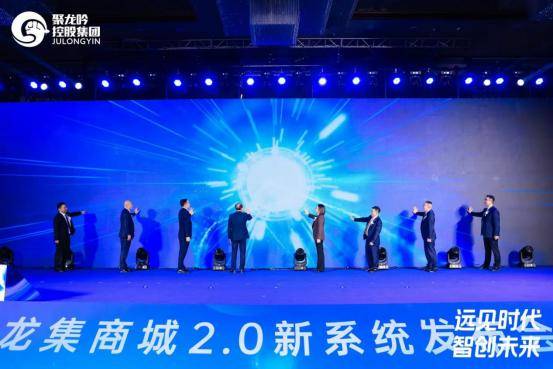
Group 1 - The core viewpoint of the article is that Julongyin Holdings Group has officially entered a new phase of digital development with the launch of the "Longji Mall 2.0" system, integrating digital technology with the consumer ecosystem [1][3] - Over the past three years, Julongyin has established a consumer ecosystem that benefits the public and promotes industry, covering 15 provinces and 43 cities in China [3] - The new Longji Mall 2.0 system utilizes big data and AI recommendations to create a "scene label library," enabling precise matching of consumer needs and offering customized products and services [3][5] Group 2 - The platform aims to transition from a "product transaction" model to a "lifestyle solution" model, addressing new consumer demands for green, healthy, and authentic products [3][5] - Julongyin has formed strategic partnerships with several companies, including an agreement with the American Service Trade Association for AI talent incubation [5] - The launch of Longji Mall 2.0 represents a significant step in Julongyin's exploration of digital technology and platform economy, with plans to deepen technological empowerment and scene reconstruction over the next three to five years [5]
贾跃亭“跨界”控股药企?标的公司困境待解
2 1 Shi Ji Jing Ji Bao Dao· 2025-09-22 08:53
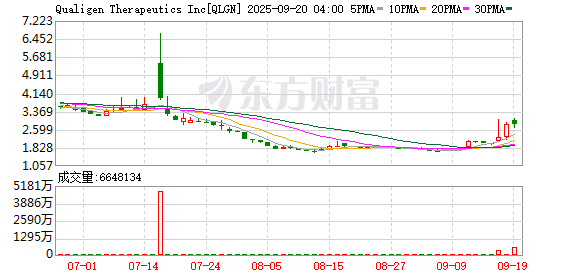
Core Viewpoint - Qualigen Therapeutics has entered into a PIPE agreement with Faraday Future, involving a $41 million investment focused on cryptocurrency and Web3 business planning [2][4] Group 1: Investment Details - The financing amount is approximately $41 million, led by Faraday Future and its CEO Jia Yueting, with participation from other investors including the SIGN Foundation [2] - Faraday Future will invest about $30 million in Qualigen at a price of $2.246 per share, acquiring approximately 55% of the common stock [2] - Jia Yueting plans to invest around $4 million personally, corresponding to about 7% of Qualigen's common stock [2] Group 2: Strategic Shift - Following the investment, Qualigen is expected to rebrand as CXC10 and shift its focus towards cryptocurrency and Web3, moving away from its current biopharmaceutical operations [4] - The new business model will emphasize a "three-horsepower" strategy involving Crypto, a decentralized AI trading exchange, and a value stabilizer [4] - After the investment, Faraday Future and Jia Yueting will collectively hold 62% of Qualigen's shares, with plans for management involvement [4] Group 3: Company Background and Challenges - Qualigen has faced significant challenges, including a risk of delisting from NASDAQ due to stock price issues, with a recent notification received for failing to meet minimum price requirements [6][7] - The company has experienced leadership changes, with recent resignations of key executives due to strategic disagreements [6][7] - Qualigen's core product pipeline is focused on rare cancer treatments, but progress has been slow, with key projects still in early development stages [7][8]

郑志刚成立香港上合发展 布局全新环球集团 投资九大革新产业领域
Sou Hu Wang· 2025-09-21 07:05
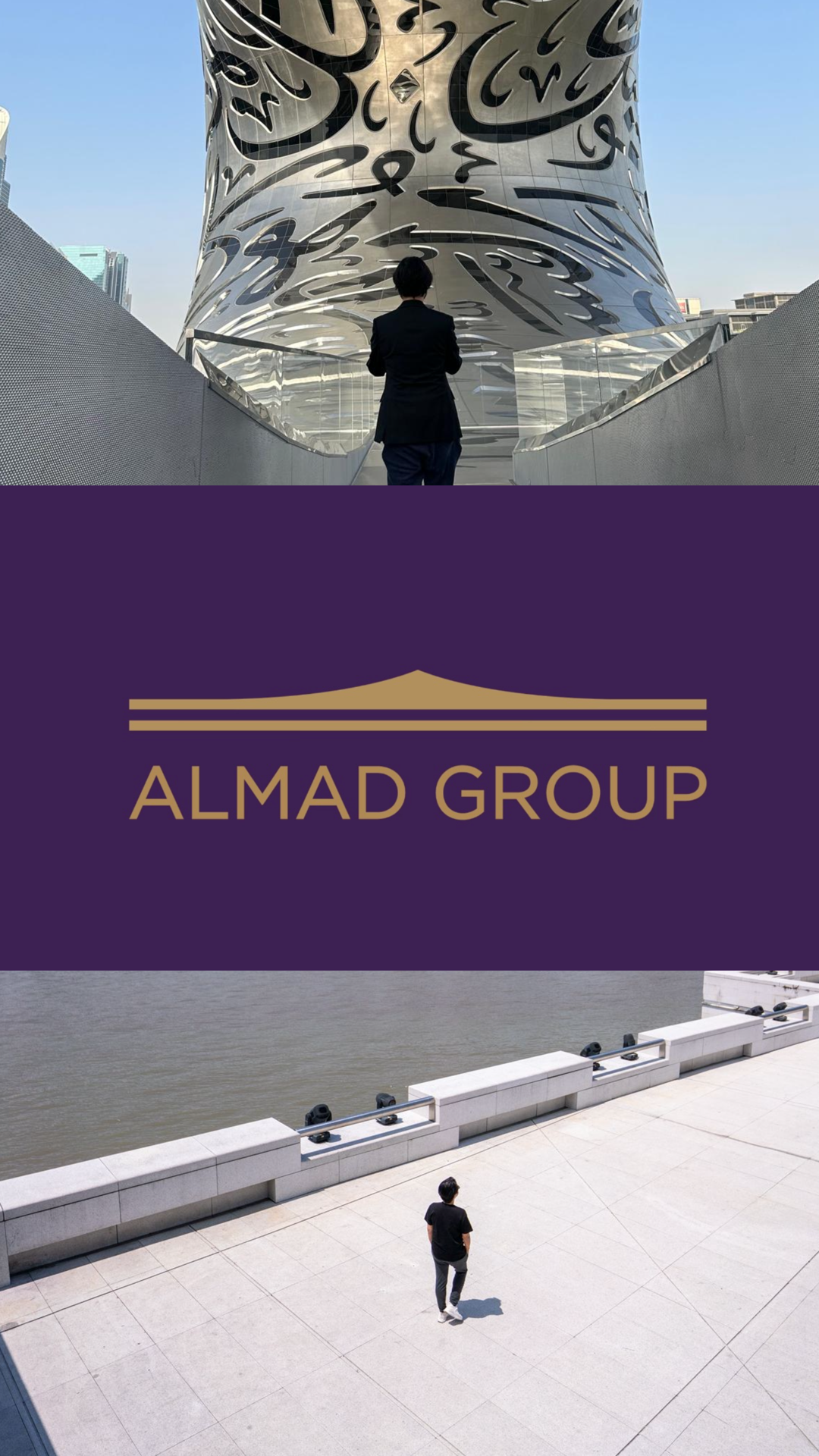
Core Viewpoint - Hong Kong ALMAD Group aims to reshape the global economic landscape over the next two decades by focusing on nine innovative industries and expanding its business network across emerging markets, including ASEAN and the Middle East [2][8] Group 1: Investment in Emerging Markets - ALMAD Group is focusing on innovative industries such as culture, entertainment, sports, media, globalization of traditional Chinese medicine, business management, and the large cultural tourism sector, which are expected to have high market feasibility and significant commercial potential [3][8] - The group aims to serve the future market demands of Generation Z and Generation Alpha through its diverse business portfolio [3] Group 2: Innovation and Financial Breakthroughs - ALMAD Group is committed to being at the forefront of Web3 financial innovation, exploring potential opportunities in the digital realm while adapting to market and regulatory changes [4] - The group has a history of supporting early-stage technology startups, including successful investments in Xiaohongshu, XPeng Motors, and Micro Connect, aiming to design breakthrough strategies for commercial success [4] Group 3: Global Expansion of K11 by AC Cultural Ecosystem - K11 by AC, a cultural brand under ALMAD Group, is focused on reshaping the retail and cultural market landscape, managing retail assets and cultural art districts [5] - The brand is rapidly expanding its anime IP business "Experience 11" in mainland China and the Middle East, targeting the growing ACGN (Animation, Comics, Games, Novels) and second-dimensional industries [5] Group 4: Continuous Business Innovation - ALMAD Group represents the latest direction in business model innovation and ecosystem development initiated by its founder, who previously launched K11 and introduced the "cultural and commercial integration" concept [6] - The group is actively attracting like-minded business partners and strategic investors to co-create future business opportunities [6] Group 5: About the Founder - Dr. Zheng Zhigang, founder and executive chairman of ALMAD Group, is recognized for his visionary leadership and cultural entrepreneurship, having initiated landmark projects such as Victoria Dockside and Kai Tak Sports Park [7] - He is also dedicated to creating shared value for society through various non-profit initiatives focused on contemporary art and traditional craftsmanship [7]
欧意(欧e)的使用和注意事项、法律风险
Sou Hu Cai Jing· 2025-09-20 13:27
Core Viewpoint - The rise of digital asset trading platforms like 欧意 (also known as 欧e) reflects the increasing popularity of cryptocurrencies such as Bitcoin and Ethereum, but users must remain cautious of legal risks and market volatility [1][7]. Group 1: Basic Functions of 欧意 - 欧意 is a global digital asset trading platform that offers services including cryptocurrency trading, transaction matching, asset management, and some derivatives trading [3]. - The platform supports various mainstream cryptocurrencies and aims to meet the needs of different types of investors by also listing emerging tokens [3]. Group 2: User Considerations - Users should be aware of trading risks, as the legal status of digital currencies varies globally, with clear policies in China prohibiting participation in virtual currency transactions [5][8]. - Key services provided by 欧意 include: 1. Spot trading for direct buying and selling of digital currencies [6]. 2. Contract and leveraged trading to amplify potential returns and risks [6]. 3. Wealth management and asset management products [6]. 4. Multi-platform support for web and mobile applications [6]. - Security measures such as enabling two-factor authentication and avoiding third-party operations are crucial for protecting assets [6]. Group 3: Legal and Compliance Risks - The emergence of platforms like 欧意 highlights the innovative potential of the digital currency market, but users must recognize that high returns come with high risks [7]. - Since 2021, Chinese authorities have classified virtual currency transactions as illegal financial activities, prohibiting domestic institutions and individuals from participating [8]. - Engaging in digital currency trading through any channel in China may lead to legal violations, and users may not have legal protection in case of disputes or losses [8]. Group 4: Rational Perspective and Future Trends - The global trend towards digital currency trading is evident with the rise of platforms like 欧意, but users must be aware of market risks and regulatory boundaries [7]. - As regulatory frameworks evolve, the ability of platforms to operate within compliance will significantly impact their stability and user confidence [7].
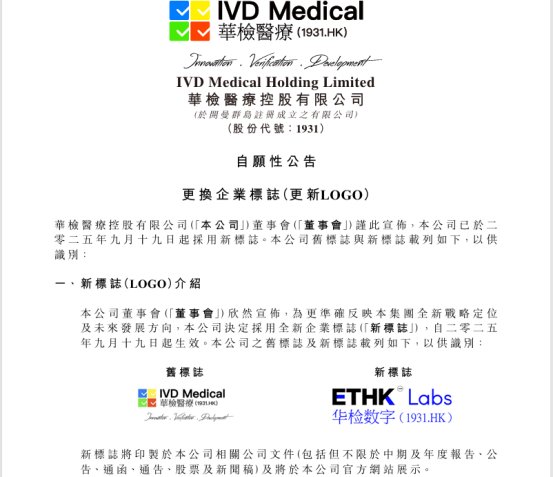
LOGO再度焕新背后:华检医疗的“二次创业”与万亿RWA市场的野心
智通财经网· 2025-09-20 06:09
Core Insights - The announcement of the completion of the ETHK building marks a significant milestone for the company as it transitions to a new strategic focus on blockchain technology and compliance in the financial ecosystem [4][5][8] - The new logo symbolizes the company's evolution into a builder of next-generation on-chain financial ecosystems, moving beyond its previous identity [4][8] Group 1: ETHK Building and Its Significance - The ETHK building is the world's first core base dedicated to the research and ecological empowerment of Real World Assets (RWA) digitalization technology, located in Nanjing with a total area of approximately 70,000 square meters [5][7] - The building serves a dual purpose: as a physical infrastructure for research and collaboration, and as a credible technology development and output center, expected to gather over 5,000 technical experts and engineers [7][8] - Nanjing was chosen for its strategic alignment with the company's focus on high-tech intellectual property asset digitalization and its proximity to top universities, providing talent support [7][8] Group 2: RWA Ecosystem and Strategic Transformation - The logo update and building completion represent the company's "second entrepreneurship," fully transitioning to the RWA sector, which involves the tokenization of real-world assets [8][9] - The RWA market is projected to grow significantly, with a total locked value expected to reach $12.5 billion by June 2025, a 124% increase from 2024 [8][9] - The company has established ETHK Inc. and ETHK HOLDINGS LIMITED to position itself as a technology driver and infrastructure provider in the RWA ecosystem [8][9] Group 3: Strategic Partnerships and Business Model Innovation - The company announced a strategic partnership with Renhe Pharmaceutical to establish the world's first OTC vertical RWA exchange in the U.S., marking a key case for its "exchange within an exchange" business model [9][10] - This innovative model aims to provide on-chain financial infrastructure for leading enterprises across various industries, facilitating the creation of vertical RWA exchanges [10] - The partnership is expected to enhance both parties' capabilities, enabling the internationalization of Chinese assets and the introduction of innovative OTC products from abroad [10][11] Group 4: Value Creation and Market Potential - The company's RWA strategy aims to create multidimensional value, emphasizing altruistic values and contributing to national strategies and public welfare [11][12] - The collaboration with Renhe Pharmaceutical is set to revolutionize the OTC industry by enhancing innovation efficiency across the entire value chain [11][12] - The RWA market is on the verge of significant growth, with major financial institutions entering the space, positioning the company to lead in this emerging sector [12][13]
第三届全国技能大赛在河南郑州开幕
Hai Nan Ri Bao· 2025-09-20 01:30
第三届全国技能大赛在河南郑州开幕 我省88名选手角逐82个竞赛项目 海南代表团共有88名选手参加本届大赛,将角逐82个竞赛项目。据悉,海南代表团的参赛项目既有 前沿项目,也有传统项目。 海南日报郑州9月19日电(海南日报全媒体记者 易宗平)9月19日,中华人民共和国第三届职业技能 大赛(以下简称第三届全国技能大赛)在河南省郑州市开幕。 国务院批准,人力资源和社会保障部从2020年起定期举办中华人民共和国职业技能大赛。这是我国 赛事规格最高、竞赛项目最多、参赛规模最大、技能水平最高、影响范围最广的综合性国家职业技能赛 事。 第三届全国技能大赛共有35个代表团参赛,来自31个省(自治区、直辖市)和新疆生产建设兵团,以 及交通运输部、中国机械工业联合会、中国轻工业联合会等3个行业部门代表团。经过企业或院校技能 比赛、行业技能竞赛、省级技能大赛的层层选拔、行业推荐、资格审核与公示,全国共有3420名选手、 3275名裁判人员参加本届大赛。全部赛事活动为期5天,共有106个比赛项目。 其中,海南代表团参赛的前沿项目有云计算、数控铣、飞机维修、数字建造、增材制造、区块链技 术、鸿蒙应用开发、数字孪生应用技术、人工智能工程 ...
佳士得NFT部门调整 数字艺术与传统艺术融合开启
2 1 Shi Ji Jing Ji Bao Dao· 2025-09-19 23:26
Core Insights - Christie's has announced a restructuring that includes the closure of its dedicated NFT sales department, integrating digital art into the broader "20th and 21st Century Art" category [1] - The decision reflects the dramatic fluctuations in the NFT art market over the past four years, indicating a new phase of integration between digital and traditional art [1][5] Market Overview - In 2021, global NFT sales reached $24.9 billion, a staggering increase of over 260 times from $94.9 million in 2020, with art-related NFT sales peaking at $2.9 billion [2] - Christie's played a pivotal role in legitimizing digital art by entering the NFT market, which was previously viewed as lacking authenticity and scarcity [2][3] Sales Performance - In 2021, Christie's sold over 100 NFT artworks, generating nearly $150 million in sales, while its competitor Sotheby's achieved $100 million in NFT sales [3] - The NFT market experienced a sharp decline, with total sales dropping to just under $1.5 billion in 2022, a 49% decrease from the previous year [5] Strategic Shift - The closure of the digital art department is a response to the overall decline in the global art market, which saw a 12% decrease in total sales to $57.5 billion in 2024 [6] - The decision is also influenced by the shrinking of various NFT platforms, with global NFT art transactions falling to $197 million in 2024 [6] Business Efficiency - The restructuring is viewed as a choice for business efficiency, as the revenue from the digital art department was significantly lower than that from core segments like contemporary art and jewelry [7] - The high commission rates of traditional auction houses, ranging from 25% to 30%, are less competitive compared to lower or zero commission rates on NFT trading platforms [7] Future of Digital Art - Christie's will continue to sell NFTs and digital artworks, integrating them into the broader contemporary art framework, rather than abandoning the digital art space [8][9] - The shift signifies a transition from viewing NFTs as a standalone phenomenon to recognizing them as a regular component of the traditional art market [8][10] Conclusion - The integration of digital art into the contemporary art category suggests a maturation of the NFT market, moving from speculative hype to a more sustainable model [9][10] - This evolution emphasizes the importance of artistic value over mere technological novelty, encouraging collectors to develop a discerning approach to both digital and traditional art [10]