文化产业

Search documents
传媒互联网周报:政府工作报告首提“繁荣新大众文艺”,大厂加速OpenClaw适配
Guoxin Securities· 2026-03-18 05:45
Investment Rating - The report maintains an "Outperform the Market" rating for the media industry [4][41]. Core Insights - The media industry experienced a decline of 3.51% during the week, underperforming compared to the CSI 300 index (0.19%) and the ChiNext index (2.51%) [1][11]. - Key companies that performed well include China Science Publishing, Shunwang Technology, ST Rebate, and Youche Technology, while companies like Kaiying Network, CITIC Publishing, Leo Group, and BlueFocus Media saw significant declines [1][11]. - Major developments include ByteDance and Tencent launching products compatible with OpenClaw, and local cultural industry support policies being gradually implemented [1][15][17]. Summary by Sections Industry Performance - The media sector ranked 26th in terms of weekly performance among all sectors, with a notable decline of 3.51% [1][12][13]. - The top three films for the week generated a total box office of 3.40 billion yuan, with "Fast Life 3" leading at 1.18 billion yuan [2][18][22]. Key Developments - The launch of ArkClaw by ByteDance's Volcano Engine aims to address challenges faced by AI agents in real-world applications [15][16]. - Tencent's WorkBuddy was introduced to simplify the deployment of AI agents, enhancing productivity tools for office environments [16][17]. - The xAI Grok 4.20 model achieved a significant performance milestone with a non-hallucination rate of 78% [17]. Investment Recommendations - The report suggests capitalizing on opportunities in the AI application sector and the gaming industry, particularly focusing on companies like Giant Network, Gigabit, Kaiying Network, and Xindong Company [3][37]. - The report emphasizes the potential for growth in the IP trend and gaming sectors, recommending investments in companies like Pop Mart for bottom recovery opportunities [3][37].



传媒互联网周报:政府工作报告首提“繁荣新大众文艺”,大厂加速OpenClaw适配-20260318
Guoxin Securities· 2026-03-18 05:05
Investment Rating - The report maintains an "Outperform the Market" rating for the media industry [4][41]. Core Insights - The media industry experienced a decline of 3.51%, underperforming compared to the CSI 300 index (0.19%) and the ChiNext index (2.51%) during the week of March 9-13 [11][12]. - Key companies that performed well include China Science Publishing, Shunwang Technology, ST Fanli, and Youche Technology, while companies like Kaiying Network, CITIC Publishing, Leo Group, and BlueFocus Media saw significant declines [11][12]. - Major developments include ByteDance and Tencent launching products compatible with OpenClaw, and local cultural industry support policies being gradually implemented [3][15][17]. Summary by Sections Industry Performance - The media sector ranked 26th in terms of weekly performance among all sectors, with a notable decline of 3.51% [11][12][13]. - The top gainers for the week included China Science Publishing (20% increase), Shunwang Technology (10% increase), and ST Fanli (8% increase) [12]. Key Developments - ByteDance's Volcano Engine launched ArkClaw, a cloud-based SaaS platform aimed at simplifying AI agent deployment [15][16]. - Tencent introduced WorkBuddy, an AI assistant that integrates with various collaboration tools, enhancing productivity [16][17]. - xAI released Grok 4.20, achieving a non-hallucination rate of 78%, setting a new industry record [17]. Box Office and Entertainment Data - The total box office for the week was 340 million yuan, with the top three films being "Fast Life 3" (118 million yuan, 34.6% share), "Biao Ren: Wind Rises in the Desert" (64 million yuan, 18.6% share), and "Silent Awakening" (51 million yuan, 15.0% share) [18][19][22]. - Popular variety shows included "Friday Night High Crazy," "Universe Sparkle Please Pay Attention," and "Hello Saturday 2026" [25]. Investment Recommendations - The report suggests focusing on AI applications and commercial opportunities, particularly in the gaming sector, where companies like Giant Network, Jiubite, Kaiying Network, and Xindong Company are highlighted as potential investments [3][37]. - The report emphasizes the importance of capitalizing on the bottoming opportunities in the gaming sector and the IP trend, recommending companies like Pop Mart for investment [3][37].
第54届香港艺术节开幕 超1100位艺术家呈献180场演出
Xin Hua She· 2026-02-28 01:26
Group 1 - The 54th Hong Kong Arts Festival opened on February 27, featuring over 1,100 outstanding artists from Hong Kong, mainland China, and overseas, presenting more than 45 exciting programs and 180 performances [1] - The Chief Executive of the Hong Kong Special Administrative Region, John Lee, emphasized that the festival serves as a significant cultural event on the international stage, providing a platform for top artists to showcase innovative ideas and artistic achievements [1] - The festival has developed into a flagship cultural project, highlighting Hong Kong's cultural soft power and attracting more citizens and tourists, thereby promoting the development of tourism and the cultural industry [1] Group 2 - The festival features a diverse range of performance forms, including music, dance, drama, opera, traditional Chinese opera, and acrobatics [2]
规模超270亿,2026年1月这些GP被LP选中
母基金研究中心· 2026-02-07 08:55
Core Insights - The article highlights the fundraising activities of various investment funds in January 2026, with a total of 17 fundraising events amounting to over 270 billion RMB [2]. Fundraising Activities - Hengxu Capital completed the first closing of its fourth flagship fund, raising over 2 billion RMB, with a target final closing of 3.5 billion RMB [5][7]. - Dongfang Jiafu National SME Development Sub-Fund successfully completed its first closing of 1.6 billion RMB, with a total target of 2 billion RMB, focusing on advanced manufacturing, new materials, and health sectors [8][9]. - Zhangzhou Capital Operations Group and CICC established a healthcare fund with a total scale of 1 billion RMB, targeting traditional Chinese medicine and biomedicine [10][11]. - China Resources Capital launched a 1 billion RMB fund focused on chemical innovation drugs and high-end medical devices [12]. - Caitong Capital's two funds completed expansion, raising over 2.4 billion RMB to support the development of Taizhou Bay New Area [13]. - Kaibo Capital's Kaibo Nord Energy Storage Fund completed registration with a scale of 400 million RMB, focusing on independent energy storage projects [14][15]. - Deth Capital initiated a 500 million RMB fund aimed at the cultural and film sectors [18]. - The Baiyin Specialty Industry Fund, managed by Jincheng Capital, successfully registered with a scale of 200 million RMB, focusing on local specialty industries [19][20]. - Guangzhou Industrial Control Group launched a 1 billion RMB fund to support early-stage technology companies [21]. - Hushan Capital's new fund focusing on AI and semiconductor industries completed its first closing at 400 million RMB [22]. - Hubei Port and Shipping Development Fund completed expansion, reaching a scale of 2.8 billion RMB [24]. - Luxin Venture Capital initiated a 1 billion RMB fund targeting the artificial intelligence sector [26][27]. - Electric Science Investment established a 2 billion RMB electronic basic industry fund [28]. - Shangcheng Capital launched a 10 billion RMB fund to support AI and embodied intelligence industries [29]. - Beigong Investment and Jizhi Future established a 200 million RMB venture capital fund focusing on AI and new information technology [30]. - SPD Bank launched the "Puchuang Huazhang" science and technology direct investment fund with a scale of 500 million RMB [32][33]. - The "Golden Seed" fund for university student entrepreneurship was established with a scale of 45 million RMB [34][35].




国家统计局解读:2025年规模以上文化企业发展稳中向好
智通财经网· 2026-01-30 02:09
Core Insights - The cultural industry in China is showing steady improvement, with significant growth in both revenue and profit for large-scale cultural enterprises in 2025 [2][3] Group 1: Revenue Growth - In 2025, large-scale cultural enterprises achieved a total revenue of 152,135 billion yuan, an increase of 10,451 billion yuan, representing a growth of 7.4% compared to the previous year [3] - The core cultural sectors generated a revenue of 103,181 billion yuan, marking an 11.5% increase year-on-year [3] - Three major categories, including content creation, news information services, and creative design services, experienced double-digit revenue growth rates of 13.5%, 13.2%, and 12.3% respectively [3] Group 2: New Business Models - In 2025, 16 sub-sectors characterized by new cultural business models generated a revenue of 68,253 billion yuan, growing by 14.3%, which is 6.9 percentage points faster than the overall growth of large-scale cultural enterprises [4] - These new business models contributed 81.6% to the revenue growth of large-scale cultural enterprises, driving a 6.0 percentage point increase in overall revenue [4] - Eight sub-sectors, including smart drone manufacturing for entertainment and various digital content services, achieved double-digit revenue growth [4] Group 3: Profitability - Large-scale cultural enterprises reported a total profit of 13,763 billion yuan in 2025, reflecting a 6.5% increase from the previous year, with a profit margin of 9.05% [5] - Out of 43 industry categories, 40 reported profitability, with significant contributions from digital content services, arts and crafts sales, and advertising services [5] Group 4: Structural Optimization - The cultural service sector generated a revenue of 85,811 billion yuan, growing by 12.0%, and accounted for 56.4% of the total revenue of large-scale cultural enterprises, an increase of 2.3 percentage points from the previous year [4] - The cultural service sector contributed 88.3% to the revenue growth of large-scale cultural enterprises, adding 6.5 percentage points to overall revenue growth [4] - Cultural manufacturing and wholesale/retail sectors reported revenues of 41,058 billion yuan and 25,267 billion yuan, with growth rates of 0.6% and 4.0% respectively [4]
广州“十五五”时期将在七个方面增创新优势、实现新突破
Zhong Guo Xin Wen Wang· 2026-01-19 16:48
Group 1 - The core viewpoint of the report emphasizes the need for Guangzhou to innovate and achieve breakthroughs in seven key areas to enhance its economic and social development during the "14th Five-Year Plan" period [1][2][3] Group 2 - The first area focuses on building a modern industrial system, particularly in artificial intelligence, marine industries, and biomedicine, to optimize industrial ecology and promote cluster development [1] - The second area aims at promoting high-level technological self-reliance by integrating education, technology, and talent development, enhancing original innovation, and improving the efficiency of the regional innovation system [1] - The third area highlights the importance of the Greater Bay Area in driving reforms, enhancing the business environment, and facilitating comprehensive cooperation among Guangdong, Hong Kong, and Macau [2] - The fourth area emphasizes urban development through coordinated land and sea planning, urban renewal, and the creation of a smart city with global competitiveness [2] - The fifth area focuses on enhancing cultural strength by promoting socialist core values, preserving local cultural heritage, and fostering cultural exchanges [3] - The sixth area addresses social development by advancing rural revitalization, improving public services, and promoting high-quality population development [3] - The seventh area involves constructing a new security framework to enhance urban safety and governance [3]
韩国最网红的小城,除了买买买还能干啥?
3 6 Ke· 2026-01-19 10:45
Core Insights - Jeju Island, known as the "Hawaii of Korea," has gained popularity due to the hit Korean drama "The Bitter Orange" and its favorable tourism policies, attracting a significant number of Chinese tourists [1] Group 1: Cultural and Creative Industry - Jeju Island is recognized for its vibrant cultural and creative industry, with a strong presence of unique cultural shops and cafes that reflect the island's artistic atmosphere [2][3] - The island's cultural industry has been supported by government initiatives since the 1990s, including the establishment of the "Cultural Industry Promotion Law" and various cultural institutions aimed at transforming creative content into tangible cultural products [10] Group 2: Local Economy and Tourism - The citrus industry, particularly oranges, has historically been a key economic pillar for Jeju Island, with cultivation dating back to the 16th century [3] - The island features a variety of cultural attractions, including the world's largest Snoopy theme park and numerous museums, showcasing its rich cultural life and drawing tourists [12][13] Group 3: Community and Lifestyle - Jeju Island has a unique demographic, with a significant elderly population, which influences the local service industry and community interactions [14] - The island's lifestyle is characterized by a slower pace, with local residents often engaging in friendly interactions with tourists, enhancing the overall travel experience [17][20]

保利文化(03636.HK)影院重现气势,拍卖壁垒坚稳,2018年有看头!
Ge Long Hui· 2026-01-09 01:20
Financial Performance - Poly Culture (03636.HK) reported a revenue increase of 6.3% year-on-year to 1.674 billion RMB for the first half of 2018, with a total profit of 230 million RMB, up 12.5% [1] - The company's gross profit rose by 8.8% to 582 million RMB, and the net profit attributable to shareholders increased by 8.6% to 99 million RMB, with earnings per share at 0.4 RMB [1] - The revenue growth was primarily driven by the expansion of the art business, development of art leasing, and the growth of theater and cinema operations [1] Business Segments - The performance of the theater and cinema management segment showed significant growth, with revenue increasing by 22.28% to 686 million RMB, while cinema investment management revenue rose by 14.52% to 418 million RMB [9] - The art business, while still a leader in the market, faced challenges with a total auction turnover of 4.6 billion RMB in the first half of 2018, maintaining its position as the largest auction house in China [14] - The cinema investment management segment saw the opening of four new cinemas, bringing the total to 66, with box office revenue reaching 416 million RMB [19] Market Position and Valuation - As of August 16, 2018, Poly Culture's price-to-earnings ratio (TTM) was 8 times, significantly lower than industry peers, indicating potential undervaluation [6][22] - The company is positioned to benefit from the growing cultural industry in China, which has seen an average annual growth of 13% over the past five years [11] Future Growth Opportunities - The company is expanding into new business areas such as art education, cultural finance, and cultural tourism, which are expected to contribute to future revenue growth [20] - The art education segment includes partnerships to establish high-end music education brands and international schools, indicating a strategic move towards diversification [20] - The cultural finance segment reported a scale of 2.1 billion RMB in art financing leasing business in the first half of 2018, with profits nearing 50 million RMB [21]

【业绩会直击】保利文化(3636.HK):稳中有增,多元业务力求突破
Ge Long Hui· 2026-01-09 01:20
Core Viewpoint - Poly Culture reported stable revenue growth for the fiscal year 2018, with total revenue reaching 3.71 billion RMB, a year-on-year increase of 6.7% [3][4]. Business Performance - The company achieved a net profit of 368 million RMB and a net profit attributable to shareholders of 242 million RMB, with total equity attributable to shareholders at 4.3 billion RMB [3]. - Gross profit increased by 5.4% to 1.295 billion RMB, while the gross margin slightly decreased to 34.9% [3]. - The main business segments include: 1) Art operation and auction; 2) Performance and theater management; 3) Cinema investment management [3][4]. - Art auction revenue slightly declined, while theater management and cinema investment saw significant increases of 21% and 12%, reaching 1.656 billion RMB and 860 million RMB respectively [4]. Business Layout - The art auction segment maintained a leading position in the global Chinese art auction market, achieving a total auction turnover of 8.3 billion RMB [6]. - The theater management segment expanded by taking over five theaters, with four successfully opening within the year, covering 56 cities across 19 provinces [6]. - In cinema investment, Poly Culture opened nine new cinemas, bringing the total to 71, generating box office revenue of 806 million RMB [6]. New Business Development - Poly Culture is pursuing four new business areas alongside its three main businesses, including art education, cultural finance, cultural asset operation, and cultural tourism [7][8]. - The art education segment has integrated with Poly Development and Poly Investment, establishing a new company and achieving 1,370 enrolled students across five campuses by the end of 2018 [7]. - In cultural finance, the company launched nine fund projects totaling 300 million RMB, supporting its auction business [7]. - Cultural tourism projects aim to enhance the cultural content of tourist attractions, leveraging the synergies of the main businesses [8]. International Expansion - Poly Culture participated in the London Design Biennale and established partnerships with various UK museums and art institutions [9]. - The company introduced 500 performance projects from countries along the Belt and Road Initiative and successfully managed significant cultural events [9]. - Poly Culture's North American division hosted six high-end exhibitions and 68 cultural exchange activities, enhancing its international presence [9]. Future Strategy - Management plans to maintain sustainable growth in its main businesses while accelerating the development of new business areas [11]. - The art operation and auction business will focus on market research and innovation to solidify its leading position [11]. - The company aims to strengthen its brand influence through original content and collaborations with various cultural institutions [13][14]. - Poly Culture will explore new project expansions in cultural finance and enhance its operational efficiency across all segments [12][14].
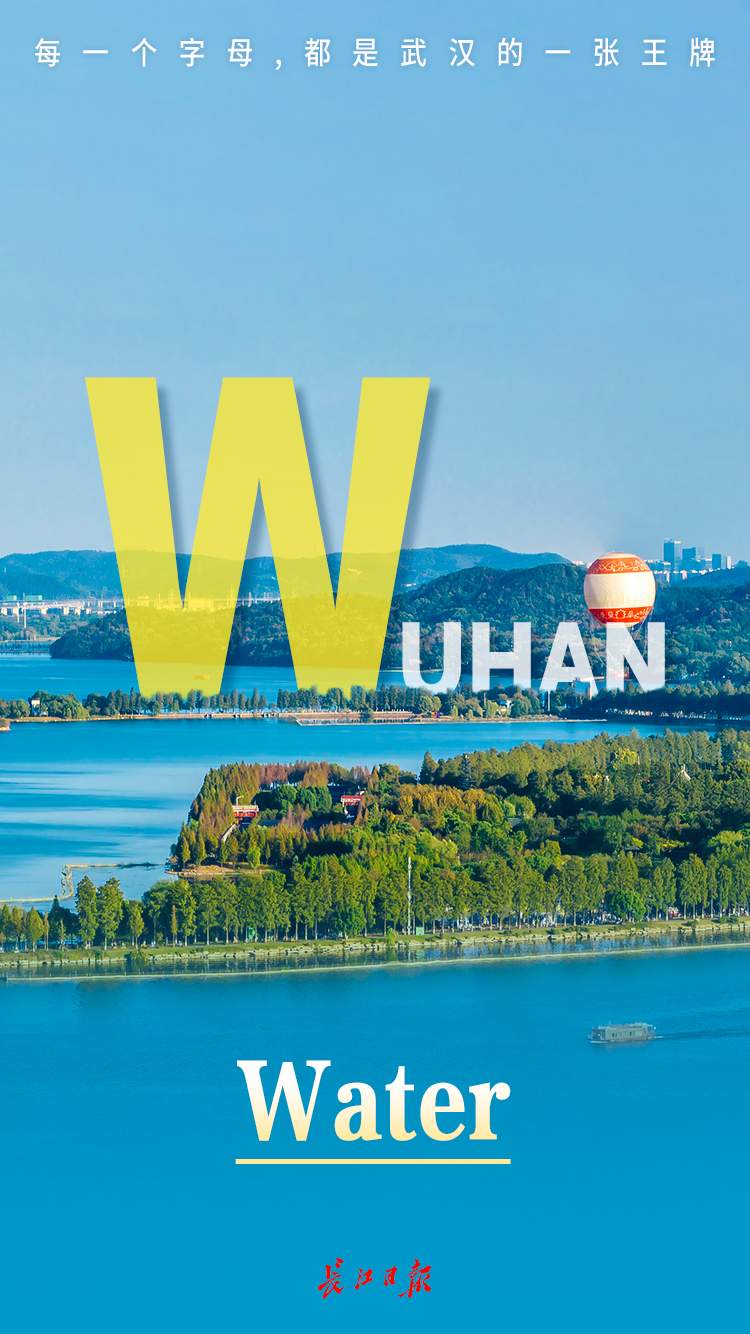
W-U-H-A-N,五个字母大有深意!
Chang Jiang Ri Bao· 2026-01-06 00:59
Group 1 - The first letter "W" stands for "Water," highlighting Wuhan's reputation as the "River City" and "City of Lakes," with a water area accounting for one-fourth of the city's total area, featuring 166 lakes and 165 rivers [3][6] Group 2 - The second letter "U" represents "University," indicating that Wuhan is one of China's three major intellectual hubs, housing 94 universities and over 1.4 million students, with 41 key national laboratories, ranking fourth among Chinese cities [7][9] Group 3 - The third letter "H" signifies "High-tech," showcasing Wuhan's advanced high-tech industry with over 17,000 high-tech enterprises, ranking fifth among Chinese cities, and possessing two national advanced manufacturing clusters [9][10] Group 4 - The fourth letter "A" stands for "Art," emphasizing Wuhan's rich cultural heritage with a history of 3,500 years, recognized by UNESCO as a "City of Design," and consistently listed among China's top ten popular tourist destinations [13][14] Group 5 - The fifth letter "N" represents "Network," illustrating Wuhan's role as an economic geographic center and a logistics hub, with significant connectivity through the Yangtze River and international air routes, including 111 domestic and international cargo flight routes [15]