
台独

Search documents
两岸观察丨大陆重拳出击 惩治“台独”分子
Yang Shi Xin Wen Ke Hu Duan· 2025-10-29 01:53
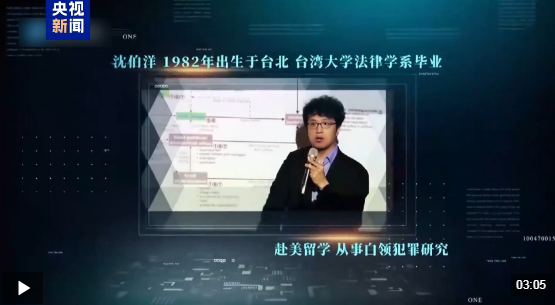
Group 1 - The Chongqing Public Security Bureau has initiated a criminal investigation against Shen Boyang for suspected crimes of splitting the country, marking him as the first individual on the "Taiwan independence" stubborn elements list to be investigated [1][5] - Shen Boyang, born in 1982 in Taipei, Taiwan, returned to Taiwan after studying law in the United States and has since held significant positions in political and social movements, founding the "Black Bear Academy," a pro-independence organization, in late 2021 [2][5] - The "Black Bear Academy" is described as a base for "violent Taiwan independence elements," disguising its activities under the guise of civil defense while promoting anti-mainland sentiments and training individuals for confrontational actions [2][4] Group 2 - Experts indicate that Shen Boyang is a prominent figure in the "Taiwan independence" movement, rapidly gaining notoriety by acting as a vanguard for the Democratic Progressive Party's anti-mainland agenda [5][7] - The Chongqing Public Security Bureau has stated that Shen Boyang's actions, including the establishment of the "Black Bear Academy" and the promotion of separatist ideologies, constitute serious threats to national security, warranting legal action [7][8] - The legal basis for the investigation includes provisions under the Criminal Law of the People's Republic of China, allowing for prosecution of individuals engaging in separatist activities, regardless of their location [8][10] Group 3 - The Chinese government has expressed a firm commitment to holding "Taiwan independence" elements accountable for their actions, as demonstrated by the implementation of the "22 measures" aimed at combating separatism [10][12] - The release of the list of "stubborn elements" is seen as a precursor to more stringent measures against the entire pro-independence network, indicating a broader crackdown on any activities that support Taiwan independence [12] - Experts suggest that the ongoing efforts to unify Taiwan with the mainland will intensify, with a dual approach of promoting integration and eliminating separatist influences [12]

国台办发声
21世纪经济报道· 2025-10-28 03:07
Core Viewpoint - The article emphasizes the Chinese government's firm stance against "Taiwan independence" activities, highlighting the legal actions taken against individuals promoting such separatist ideologies, specifically targeting Shen Boyang as a key figure in these activities [1]. Group 1: Government Actions - The Chinese government, through the spokesperson Chen Binhua, has initiated legal investigations against Shen Boyang for establishing and promoting a "Taiwan independence" organization, labeling him a staunch separatist [1]. - The police's decision to investigate Shen is described as a necessary action to uphold national unity and counteract the threats posed by "Taiwan independence" activities [1]. Group 2: Implications for Cross-Strait Relations - The article states that "Taiwan independence" activities are the greatest current threat to peace and stability in the Taiwan Strait, with "Taiwan independence" advocates being characterized as detrimental to cross-strait relations and national integrity [1]. - The government calls for the Taiwanese populace to recognize the dangers of "Taiwan independence" and to work towards enhancing cross-strait communication and cooperation for mutual benefit [1].
“台独”顽固分子沈伯洋,被立案侦查
财联社· 2025-10-28 02:15
Group 1 - The Chongqing Public Security Bureau announced the investigation of Shen Boyang for engaging in activities related to the "Taiwan independence" separatist organization "Black Bear Academy" [1] - Shen Boyang, a 43-year-old male from Taipei, Taiwan, was added to the list of "stubborn Taiwan independence" elements by the Taiwan Affairs Office on October 14, 2024 [1] - The public is encouraged to report any relevant information to the authorities, with assurances of confidentiality for the informants [1]

两岸观察丨为何搞“台独”分裂只会将台湾推入灾难深渊?
Yang Shi Xin Wen Ke Hu Duan· 2025-10-28 02:09
Core Viewpoint - The article argues that the pursuit of "Taiwan independence" will lead Taiwan into disaster, emphasizing that any form of "Taiwan independence" will not bring peace or security to the region [2][4]. Military and Security Implications - The DPP government, particularly under Lai Ching-te, is pushing for military independence, increasing defense spending to 3%-5% of GDP, which is seen as escalating tensions and risks of conflict [2] - Mainland China's military exercises and air-sea patrols have created a situation of comprehensive pressure on Taiwan, with the DPP's reliance on U.S. support being questioned as unreliable [4][6]. Economic Consequences - In response to the DPP's provocations, mainland China has suspended tariff concessions under the ECFA for various products, indicating a potential for further economic retaliation [6][8]. - The DPP's policies, such as the "New Southbound Policy," aimed at reducing economic dependence on mainland China, have resulted in economic damage rather than diversification [8][10]. International Relations and Space - The DPP's attempts to expand Taiwan's international space through various exchanges have been ineffective against the backdrop of the One China principle, with 183 countries recognizing this principle [10][12]. - The denial of the "1992 Consensus" has led to Taiwan losing participation in international organizations, which previously was achieved through cross-strait negotiations [12]. Social and Youth Impact - The DPP's education policies promoting "de-Sinicization" have created a divide among Taiwanese youth regarding cross-strait relations, leading to a lack of understanding and increased hostility [14]. - Polls indicate a growing wariness among the Taiwanese public, particularly the youth, towards the idea of "Taiwan independence," with many preferring dialogue over conflict [14]. Conclusion - The article concludes that the path of "Taiwan independence" is fraught with risks and will not yield positive outcomes for Taiwan, advocating for peaceful development of cross-strait relations as the only viable future [2][14].
不容青史尽成灰
Ren Min Ri Bao· 2025-10-27 22:38
Core Viewpoint - The article emphasizes the importance of recognizing the historical significance of Taiwan's return to China and condemns the "Taiwan independence" narrative that distorts this history [1][5]. Group 1: Historical Narratives - The article criticizes the Taiwanese authorities for promoting a distorted view of history regarding the end of World War II and Taiwan's status, particularly through the rhetoric of "end of war" and neglecting the contributions of the Chinese people in the anti-Japanese war [2][4]. - It highlights the deliberate omission of Taiwan's "Restoration Day" by Taiwanese officials, framing it as a "poisoned candy" and denying its significance in the context of Taiwan's return to China [3][5]. Group 2: Legal and International Context - The article discusses the "Taiwan status undecided theory," asserting that it is a fabricated narrative stemming from U.S. policies post-Korean War, which aims to undermine China's sovereignty over Taiwan [4]. - It references international legal documents such as the Cairo Declaration and the Potsdam Proclamation, which affirm China's sovereignty over Taiwan, countering claims made by Taiwanese officials and U.S. entities [3][4]. Group 3: Political Implications - The article argues that the actions of the Taiwanese authorities reflect a broader agenda of seeking independence through foreign support, particularly from the U.S. and Japan, which is viewed as a betrayal of national interests [5]. - It calls for unity among Chinese people to remember history and oppose separatist movements, emphasizing the inevitability of China's reunification [5].
和平统一有“七好”,“台独”统统不接受
经济观察报· 2025-10-27 10:24
Core Viewpoint - The article discusses the reckless actions of Lai Ching-te's administration in Taiwan, highlighting their rejection of China's proposals for peaceful unification and their provocative stance towards the One China principle [2][12]. Group 1: Mainland China's Position - On October 25, a conference commemorating the 80th anniversary of Taiwan's liberation was held, where mainland China emphasized seven benefits of peaceful unification for Taiwan, including better economic development, energy supply, infrastructure, security, diplomatic relations, and improved living standards for Taiwanese people [4]. - The article suggests that if unification were to occur, Taiwan would gain significantly more than just the stated "seven benefits" [4]. Group 2: Taiwan's Response - Lai Ching-te's administration and pro-independence forces in Taiwan have completely rejected mainland China's outlook on unification, with the Taiwan People's Party sarcastically thanking China for its concern while asserting that "no China is better" [5][6]. - The Mainland Affairs Council of Taiwan reiterated that the Republic of China and the People's Republic of China are not subordinate to each other and dismissed the benefits proposed by China as attempts to lure Taiwan into unification [6]. Group 3: Escalation of Tensions - The article notes that Lai Ching-te's administration has responded to mainland China's military displays and calls for peaceful unification with a hardline stance, including a commitment to never surrender in the event of a conflict and plans to increase Taiwan's defense budget significantly [7][8]. - Following the mainland's proposals, Lai Ching-te's administration has continued to take actions that escalate tensions, such as sentencing a retired military officer who advocated for unification to a lengthy prison term [9]. Group 4: International Perspective - The article references a piece from the U.S. think tank Defense Priorities, which criticized Lai Ching-te as a reckless leader, indicating that even international observers are concerned about his administration's approach [10]. - A significant report in Time magazine highlighted the looming threat of conflict over Taiwan, further emphasizing the precarious situation [11].
台海观澜 | 和平统一有“七好”,“台独”统统不接受
Jing Ji Guan Cha Wang· 2025-10-27 03:48
Core Viewpoint - The article highlights the contrasting perspectives between mainland China and Taiwan regarding the potential benefits of peaceful reunification, emphasizing the mainland's optimistic outlook and Taiwan's rejection of such proposals [3][4][5]. Group 1: Mainland China's Perspective - On October 25, a commemorative event for the 80th anniversary of Taiwan's liberation was held, where mainland China presented seven key benefits of peaceful reunification, including improved economic development, energy supply, infrastructure, security, diplomatic relations, welfare for Taiwanese citizens, and cultural life [3]. - The mainland argues that unification would address Taiwan's existing issues, such as water and electricity shortages, and enhance infrastructure support, particularly in underdeveloped areas [3]. Group 2: Taiwan's Response - The Taiwanese government, led by Lai Ching-te, firmly rejects the mainland's proposals, asserting that the Republic of China (Taiwan) and the People's Republic of China are not subordinate to each other [5]. - The Taiwan People's Party, advocating for independence, sarcastically thanked the mainland for its concern, stating that "no China is better for us Taiwanese" [5]. Group 3: Recent Developments - The article notes a series of confrontations between the two sides, including Taiwan's military budget plans and defense initiatives in response to perceived threats from the mainland [6][8]. - Lai Ching-te's administration has been criticized for its aggressive stance, which has even drawn concern from U.S. analysts, labeling him as "reckless" in his approach to cross-strait relations [9][11].
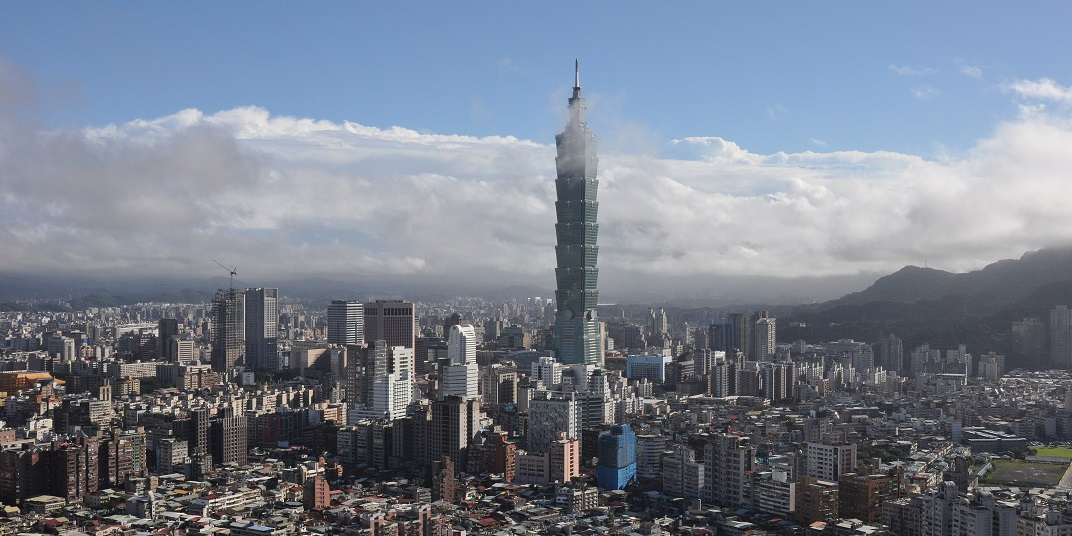
两岸共同续写中华民族历史新辉煌
Ren Min Ri Bao· 2025-10-25 22:12
Core Viewpoint - The commemoration of Taiwan's recovery marks a significant victory for all Chinese people, emphasizing the importance of historical memory and unity among compatriots on both sides of the Taiwan Strait [2][3]. Group 1: Historical Context - Taiwan was ceded to Japan in 1895 through the Treaty of Shimonoseki, leading to a 50-year struggle by Taiwanese people against colonial rule [1]. - Over 50,000 Taiwanese participated in the fight against Japanese occupation during the Second Sino-Japanese War, driven by the belief that saving Taiwan required saving the motherland first [1]. - The formal surrender of Japanese forces in Taiwan occurred on October 25, 1945, marking Taiwan's return to China [1]. Group 2: National Unity and Identity - The narrative of Taiwan's recovery is framed as an integral part of China's territorial integrity and a shared destiny for people on both sides of the Taiwan Strait [2]. - The commemoration serves to encourage a collective remembrance of history, the defense of achievements, and the creation of a unified future [2]. Group 3: Political Stance and Challenges - Recent political actions by the Democratic Progressive Party (DPP) and its leader Lai Ching-te are criticized for promoting separatist views and undermining the historical significance of Taiwan's recovery [3]. - The DPP's attempts to create a "Taiwan independence" narrative are seen as a betrayal of the sacrifices made by previous generations [3]. Group 4: Future Aspirations - The Chinese government aims to enhance cross-strait relations through practical measures, fostering a sense of belonging and shared opportunities for Taiwanese compatriots [4]. - The overarching goal is the complete reunification of the motherland, with a call for collective responsibility among all Chinese people to promote national rejuvenation and peaceful development [4].