
数字化

Search documents
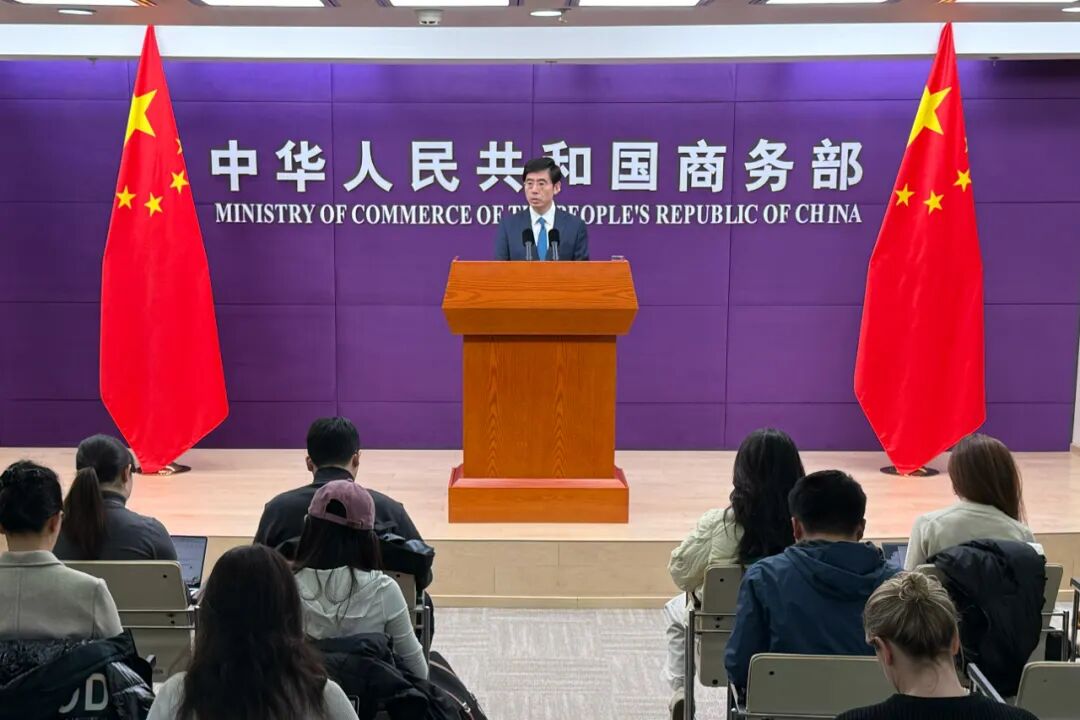
事关消费和外贸 商务部最新回应
Shang Hai Zheng Quan Bao· 2025-12-11 14:04
Group 1: Retail Industry Development - The Ministry of Commerce plans to issue opinions to accelerate innovation and development in the retail industry during the "14th Five-Year Plan" period, focusing on policy support and high-quality development [3] - Key initiatives include enhancing service quality, optimizing inventory, promoting fair competition between online and offline channels, and fostering interaction between new supply and demand [3] - The ministry aims to summarize successful practices from various regions, develop new business models, and stimulate consumption potential, particularly in lower-tier markets [3] Group 2: Second-Hand Goods Market - The second-hand goods market in China is projected to reach a transaction value of 1.69 trillion yuan in 2024, reflecting a 28% year-on-year growth and a 12% average annual growth rate over the past six years [4] - The Ministry of Commerce intends to establish high standards for the second-hand goods industry, ensuring integrity and quality while preventing fraudulent practices [4] - New business models such as rental, auction, and after-sales repurchase will be promoted, along with immersive offline experiences and innovative consumption scenarios [4] Group 3: Cross-Border E-Commerce and Trade - China's foreign trade has shown resilience, with a total import and export value of 41.21 trillion yuan in the first eleven months of the year, marking a 3.6% year-on-year increase [5] - The Ministry of Commerce will implement policies to stabilize foreign trade, support market diversification, and enhance services for enterprises [5] - There is a focus on promoting cross-border e-commerce and overseas warehouses as new business models to improve trade quality and efficiency [5] Group 4: Hainan Free Trade Port - The Hainan Free Trade Port is set to commence operations on December 18, with a goal to become a significant gateway for China's new era of opening up [6] - The Ministry of Commerce reports a 23.1% growth in service trade and a 42.2% increase in actual foreign investment in Hainan during the first three quarters [6] - Future efforts will focus on institutional openness and aligning trade management policies with zero tariffs and other favorable measures [7]

白云山(600332):25Q3报表端已企稳修复 冲击圆满完成“十四五” 重点布局“十五五”
Xin Lang Cai Jing· 2025-12-11 10:24
Core Viewpoint - The company is undergoing significant changes in governance and management, aiming for high-quality development and a strategic shift towards internationalization, digitalization, and innovation, with a notable performance turnaround expected in Q3 2025 [1][2]. Governance and Management Changes - The company has completed adjustments to its executive team by 2025, with a new chairman, Li Xiaojun, who previously led a public transport group, indicating a focus on improving operational quality [2]. - The new governance structure is expected to enhance the company's operational quality, with a focus on internationalization, digitalization, and research innovation [2]. Financial Performance - In Q3 2025, the company reported a revenue of 19.771 billion yuan, reflecting a year-on-year growth of approximately 10% [2]. - The net profit attributable to shareholders for Q3 2025 was 664 million yuan, showing a year-on-year increase of about 29% [2]. Dividend Policy - The dividend payout ratio is set to increase to 46% in 2024, up from around 30% in the previous five years, with an expected dividend yield of approximately 2.81% for A shares and 4.83% for H shares [1][2]. Strategic Planning - In November 2025, the company will hold a special meeting to mobilize efforts for achieving its operational goals for the "14th Five-Year Plan" and to ensure a solid foundation for becoming a world-class enterprise during the "15th Five-Year Plan" [1][2]. - The company has initiated a comprehensive strategic planning process for the "15th Five-Year Plan" and digital transformation, aiming for long-term growth [2]. Business Segments Performance - The large commercial segment is a revenue cornerstone, with a CAGR of approximately 6% from 2020 to 2024, and a projected revenue of 54.55 billion yuan in 2024, showing a year-on-year increase of 3% [3]. - The traditional Chinese medicine segment is under pressure, with a revenue decline of 10% in 2024, while the Chinese medicine revenue grew at a CAGR of 8% during the same period [3]. - The health segment is expected to grow at a CAGR of about 5% from 2020 to 2024, with a revenue of 9.705 billion yuan in 2024, despite a year-on-year decline of 13% [3]. Revenue and Profit Forecast - The company forecasts revenues of 79.001 billion yuan, 84.061 billion yuan, and 89.45 billion yuan for 2025 to 2027, with year-on-year growth rates of approximately 5.3%, 6.4%, and 6.4% respectively [4]. - The projected net profits for the same period are 3.735 billion yuan, 3.963 billion yuan, and 4.427 billion yuan, with respective growth rates of about 31.7%, 6.1%, and 11.7% [4].
精彩抢先看 | 价值与投资——蜕变破局 文娱行业新叙事
第一财经· 2025-12-11 10:19
Core Viewpoint - The article emphasizes the importance of rational, value, and long-term investment in the context of China's capital market reforms, particularly focusing on the entertainment industry and its potential for growth and transformation [1]. Group 1: Industry Insights - The entertainment industry in China is experiencing significant changes in content forms, production methods, and industry structure, driven by trends such as intelligence, digitalization, and IP commercialization [1]. - There is a growing demand among Chinese residents for cultural and spiritual experiences, indicating a vast potential and broad prospects for the entertainment sector [1]. Group 2: Event and Discussion - A discussion featuring key industry figures, including the secretaries of Oriental Pearl and Shanghai Film, as well as the chief analyst from CICC, will explore how the entertainment industry can promote "Chinese stories" globally and leverage new technologies and operational models for growth [1]. - The event will be recorded and made available on the Yicai website and app on December 12, 2025, at 15:00 [1].


从设计源头到生产施工,数字化成中建三局全产业链服务关键词
Qi Lu Wan Bao· 2025-12-11 09:51
Core Viewpoint - The Shandong Province Intelligent Construction Application Scenario Exhibition showcases advancements in intelligent construction, highlighting the innovative technologies and services of leading companies in the sector, particularly focusing on the achievements of China State Construction Engineering Corporation (CSCEC) [1][3]. Group 1: Exhibition Highlights - The exhibition features 12 outstanding companies in intelligent construction, demonstrating Shandong's cutting-edge results, practical experiences, and application cases in the field [1]. - CSCEC Shandong Investment Construction Co., Ltd. presents its digital systems, intelligent equipment, and integrated platforms, which have become the focal point of the exhibition [1]. Group 2: Key Technologies and Innovations - CSCEC's "Cloud Decoration Digital System" utilizes over 12,000 BIM component libraries, achieving over 80% automation in modeling and over 92% accuracy in decoration design orders, effectively addressing the disconnect between design and construction in traditional decoration projects [3]. - The "Three Bureau Selected Mall" is an e-commerce platform developed by CSCEC, covering over 440 categories of construction materials and achieving a cumulative transaction scale exceeding 130 billion [5]. - The "Assembly Building Machine," a pioneering integrated construction platform, enhances construction efficiency by over 30% compared to traditional methods, ensuring quality and safety in assembly building [5][6]. Group 3: Strategic Development and Future Plans - CSCEC is deepening its involvement in major projects in Shandong, including urban renewal, infrastructure, and environmental improvements, with plans to enhance resource investment and engage in comprehensive development [6]. - The company aims to foster collaboration with local universities to cultivate new production capabilities in the construction industry, focusing on smart construction and green development [6][7]. - CSCEC has joined the Shandong Province Intelligent Construction Industry Alliance and is leading initiatives to implement various intelligent construction technologies, enhancing construction efficiency through the integration of IoT, big data, and AI [7].

Schneider Electric (OTCPK:SBGS.F) 2025 Capital Markets Day Transcript
2025-12-11 09:47
Summary of Schneider Electric's 2025 Capital Markets Day Company Overview - **Company**: Schneider Electric (OTCPK:SBGS.F) - **Event**: 2025 Capital Markets Day - **Date**: December 11, 2025 - **Location**: McLaren Technology Center Core Industry Insights - **Focus on Electrification and Digitalization**: Schneider Electric emphasizes that the next century will revolve around electrification and digitalization, aiming to make energy more efficient and sustainable [5][28] - **Market Trends**: Three mega trends identified: 1. Acceleration of the new energy landscape 2. Growth in digital technologies 3. Transition to a multipolar world [27] Financial Performance - **Consistent Growth**: Schneider Electric has shown strong and consistent financial results, even during the COVID period, with a focus on delivering strong cash returns and a progressive dividend policy [8] - **Digital Portfolio**: 60% of Schneider's portfolio is already digital, with plans to enhance this further [9] Strategic Initiatives - **EcoStruxure Technology Stack**: The company has developed a unique technology stack called EcoStruxure, which integrates energy management and industrial automation [5][15] - **Acquisitions**: Strategic acquisitions, including AVEVA and Motivair, have been made to enhance software capabilities and technology solutions [9] - **Multi-Hub Strategy**: Schneider Electric is focusing on a multi-hub strategy to enhance regional presence and agility, with significant investments in local R&D and supply chains [59][60] Differentiating Factors - **Balanced Exposure**: Schneider Electric maintains a balanced geographical and market exposure to enhance resilience [11][12] - **Diverse Portfolio**: The company has a differentiated portfolio with strong positions in low and medium voltage products, automation solutions, and digital services [13][14] - **Employee Engagement**: 63% of eligible employees invested in Schneider through the shareholding plan, indicating strong employee engagement [22][23] Sustainability Commitment - **Environmental Impact**: Schneider Electric has helped avoid over 790 million tons of CO2 emissions and is committed to integrating sustainability into its business strategy [25][26] - **Recognition**: The company has been recognized as one of the most sustainable companies globally by Corporate Knights and TIME [26] Future Outlook - **Investment in R&D**: Plans to increase R&D investment to 7% of revenue, focusing on automation and digital solutions [55] - **Revenue Goals**: By 2030, over 70% of revenue is expected to come from the digital flywheel, with 25% from software and services [56] - **Lifecycle Solutions**: Schneider Electric aims to provide solutions across the entire lifecycle of products, from design to maintenance, enhancing customer value [54] Key Partnerships - **Collaboration with NVIDIA**: Schneider Electric is partnering with NVIDIA to develop AI factories and optimize data center infrastructure, showcasing a commitment to innovation in energy and industrial intelligence [52][53] Conclusion - Schneider Electric is positioned to lead in the energy technology sector by leveraging its strong portfolio, commitment to sustainability, and strategic initiatives aimed at enhancing customer value and operational excellence. The focus on electrification, digitalization, and AI integration will drive future growth and innovation.
商务部:二手商品市场创新转型趋势明显
Ren Min Wang· 2025-12-11 09:09
Core Insights - The second-hand goods market in China is expanding, with a projected transaction volume of 1.69 trillion yuan in 2024, representing a 28% year-on-year growth and a compound annual growth rate of 12% over the past six years [1] Group 1: Market Development - The Ministry of Commerce has initiated pilot programs for second-hand goods circulation, focusing on cultivating entities, innovating methods, and standardizing order [1] - Policies have been introduced to enhance the recycling system for used household appliances and furniture [1] - The first batch of 10 pilot cities and 28 enterprises has been selected based on a principle of prioritizing quality [1] Group 2: Industry Standards and Innovations - Industry standards, including the revision of terminology related to second-hand goods, have been established [1] - The market is showing a clear trend of innovation and transformation, revitalizing some physical markets [1] Group 3: Future Directions - The industry aims to create a "clean and vibrant" sunrise industry by setting high standards and preventing fraudulent practices [2] - New business models such as rental, auction, and after-sales buyback will be developed to enhance the appeal of second-hand goods [2] - The integration of AI, big data, and cloud computing will be emphasized to drive innovation and deepen the online-offline integration of second-hand goods circulation [2]
何氏眼科:新任总经理何星儒先生正式就任后将全面负责公司日常经营管理事务
Zheng Quan Ri Bao Wang· 2025-12-11 08:42
Core Viewpoint - He Eye Hospital (301103) has appointed Mr. He Xingru as the new general manager, who will be responsible for the company's daily operations and management [1] Group 1: Company Strategy - The company will adhere to the "Technology and Humanity" philosophy and deepen the "Smart Bright City" strategy [1] - There is a focus on integrating cutting-edge technologies such as digitalization and precision medicine with ophthalmic healthcare [1] - The aim is to establish a comprehensive life-cycle eye health management system [1] Group 2: Long-term Vision - The company believes that a stable long-term market value is derived from solid operational performance and clear value logic [1] - Future strategies will emphasize sustainable development, transparent information disclosure, and effective communication with investors [1] - The company aims to steadily advance its brand building in the capital market and create long-term value for investors [1] Group 3: Future Reporting - Stakeholders are encouraged to pay attention to the company's upcoming periodic reports for specific operational updates [1]
商务部召开例行新闻发布会(2025年12月11日)
Shang Wu Bu Wang Zhan· 2025-12-11 08:25
Group 1: Hainan Free Trade Port - The Hainan Free Trade Port will commence its closure operation on December 18, with the Ministry of Commerce preparing policies to enhance trade management transparency and openness, including the release of a list of prohibited and restricted import goods, and relaxing import management for 98 product codes [3][4] - The Ministry supports innovative development in Hainan by implementing pilot projects for temporary import of repaired and remanufactured products, establishing a cross-border e-commerce comprehensive pilot zone, and expanding service trade, contributing to a 23.1% growth in service trade and a 42.2% increase in actual foreign investment in the first three quarters [3][4] Group 2: Foreign Trade Development - In the first eleven months, China's total goods import and export value reached 41.21 trillion yuan, with a year-on-year growth of 3.6%, showcasing resilience in foreign trade despite global uncertainties [8] - The Ministry plans to implement various policies to stabilize foreign trade, promote market diversification, and support new business models such as cross-border e-commerce and overseas warehouses [8] Group 3: Second-Hand Goods Market - The second-hand goods market in China is expanding, with a projected transaction value of 1.69 trillion yuan in 2024, reflecting a 28% year-on-year growth and a 12% compound annual growth rate over the past six years [6][7] - The Ministry aims to enhance the second-hand goods circulation system by establishing high standards, promoting new business models, and integrating digital technologies to drive innovation in the sector [7]
商务部:有序发展二手商品租赁、竞拍、拆零出售、售后回购等新型业态
Xin Lang Cai Jing· 2025-12-11 08:13
Core Viewpoint - The Ministry of Commerce emphasizes the significant transformation and innovation trends in the second-hand goods market, aiming to develop it into a vibrant industry with high standards and integrity [1] Group 1: Industry Development Strategies - The Ministry of Commerce plans to establish a "clean and vibrant" second-hand goods circulation industry by guiding businesses to adhere to high standards and eliminate fraudulent practices such as selling old as new and inferior as superior [1] - Focus will be placed on new business models and scenarios, promoting the development of second-hand goods rental, auction, unbundled sales, and after-sales repurchase as innovative business formats [1] - The Ministry aims to enhance digitalization in the second-hand goods market by integrating AI, big data, and cloud computing technologies, fostering a deep integration of online and offline sales [1]
精彩抢先看 | 价值与投资——蜕变破局 文娱行业新叙事
Di Yi Cai Jing· 2025-12-11 07:36
Core Viewpoint - The collaboration between Shanghai Stock Exchange and Yicai aims to enhance the investment landscape in China's capital market by promoting rational, value, and long-term investment principles, particularly focusing on state-owned enterprises and companies listed on the Sci-Tech Innovation Board [1] Group 1: Industry Insights - The entertainment industry in China is experiencing significant potential and broad prospects due to the increasing demand for cultural and spiritual life among residents [1] - The industry is undergoing profound changes in content forms, production methods, and industrial structure, with a focus on intelligent, digital, and IP commercialization leading to cross-media, cross-platform, and cross-industry narratives becoming competitive hotspots [1] Group 2: Event Details - A discussion featuring executives from Oriental Pearl and Shanghai Film, along with a chief analyst from CICC, will explore how the entertainment industry can promote "Chinese stories" globally and leverage new technologies and operational models for growth [1] - The recorded event will be available on Yicai's official website and app on December 12, 2025, at 15:00 [1]