
京津冀协同发展

Search documents
平谷海子水库除险加固工程圆满完工
Xin Lang Cai Jing· 2026-01-02 07:09
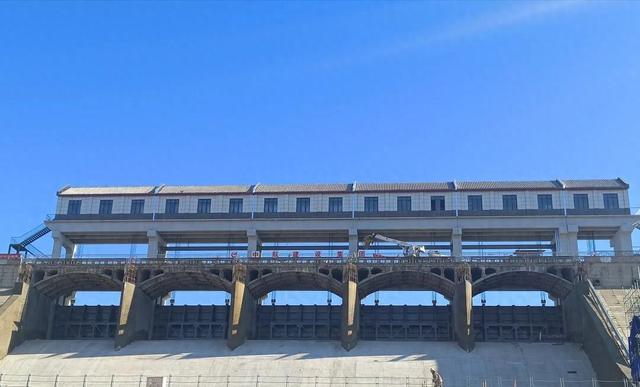
转自:北京日报客户端 自2024年3月工程启动以来,区水务局统筹协调各方力量,凝心聚力攻坚克难,历时21个月全力推进工 程建设落地见效。有序推进一系列改造升级举措:重新铺筑溢洪道溢流面、阻滑板,加固护坦筑牢泄洪 防线;将老化的闸门、机电设施全部更新,拆除重建工作桥与闸房,补齐硬件短板;搭建自动化监控系 统,实现水位、坝体位移实时监测,让水库管理告别"老办法",迈入智能化新时代。一系列改造举措, 不仅彻底清除了水库安全隐患,更为下游居民、农田和京平高速等基础设施筑起了坚不可摧的"安全 墙"。 海子水库除险加固工程的完工,不仅清除了这座老旧水库的安全隐患,更标志着平谷区老旧水利设施改 造工作迈入智能化、生态化、标准化的新阶段。区水务局将持续推进水库标准化管理,探索"以水养 水"长效机制,为超大城市水资源安全保障提供"平谷样本",为平谷高质量发展注入强劲水利动能,助 力平谷打造首都发展安全战略腹地,让首都因平谷而更安全。 日前,平谷区海子水库除险加固工程圆满完工。这座始建于1959年的大型水利枢纽正式褪去"老容颜"、 换上"新盛装",以智能化、标准化的全新姿态投入运行,为平谷区筑牢防洪安全底线、补齐水资源保障 短板 ...

香河安石路与北京石小路对接通车
Xin Lang Cai Jing· 2026-01-02 05:04
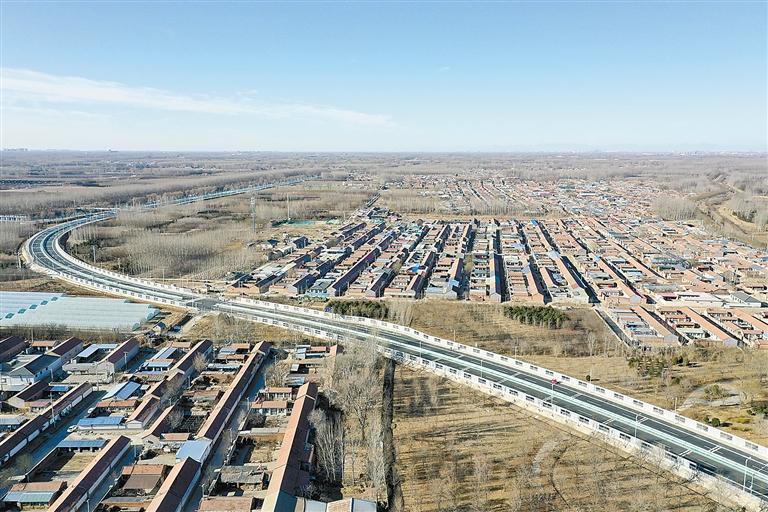
本报讯(记者 邢建平 杨巍 杨雅淇)2025年12月31日,随着首辆私家车平稳驶入京冀界连接线,香河县重点 交通工程——安石路与北京石小路对接通车,标志着香河县与北京城市副中心"同城化"发展迈入新阶段,京 津冀协同发展再添交通新动能。 安石路东起香河县运河大道,向西跨越北运河新建王家摆桥,与石小路直线对接,全长3.624公里,采用双向 六车道一级公路标准建设,设计时速80公里。 作为《北京市通州区与河北省三河、大厂、香河三县市协同发展规划》的重点项目,安石路补齐了香河县直 达北京城市副中心的快速通道短板。至此,北京城市副中心与香河县形成"2条高速+2条国道+1条快速路"的 多层次交通网络,北京城市副中心与北三县的连通道路总数由11条增加至12条,区域路网通达性与便捷度显 著提升。 "两条路贯通后,香河县中心区域至北京通州区京津公路的通行时间由原来的45分钟压缩至20分钟,同时也为 香河西部接入首都地区环线高速提供了快捷通道,跨省通勤、购物、就医等出行需求得到极大满足。"香河县 交通运输局副局长韩凤龙介绍。 (来源:廊坊日报) 转自:廊坊日报 项目建设期间,在京冀协同发展部门统筹协调下,香河县与通州区两地交通部 ...
新年新气象 实干建新功
Xin Lang Cai Jing· 2026-01-01 21:51
元旦佳节,当城市沉浸在辞旧迎新的喜悦氛围中时,我市重点民生工程项目的建设者毅然放弃与家人团 聚的时光,坚守施工一线,以实干姿态书写新年新气象。一个个项目的稳步推进,既是天津保障民生福 祉的生动实践,也是城市高质量发展的有力见证。 在中国一冶北辰青光安置房项目施工现场,各项作业井然有序。作为保障农民安居的重点工程,该项目 总建筑面积达55万平方米,涵盖47栋住宅楼,建成后可圆4212户村民的安居梦。自2021年启动建设以 来,项目团队攻坚克难,目前整体推进态势良好:一号地块主体及二次结构已全面完工,即将进入装饰 装修阶段;二号地块主体结构与外保温工程顺利收尾,室内精装修工作即将全面铺开。 "为了早一天让村民住上新房子,我们所有的努力都值得!"项目经理张大鹏来自河北承德,谈及坚守岗 位的初心,语气坚定有力。为应对冬季低温天气,项目部科学部署施工计划,将施工重心转入室内作 业。元旦假期,200余名建设者铆足干劲抢时间、赶进度,以实际行动诠释了新年的第一份担当与奉 献。 中铁十六局二公司承建的东丽湖地区东文北路工程建设现场,同样是一派热火朝天的施工景象。该工程 南起津汉公路,北接丽湖环路,全长2.44公里,涵盖道路、 ...
不是同城,胜似同城
Xin Lang Cai Jing· 2026-01-01 01:16
Core Insights - The opening of the Beijing-Tangshan Intercity Railway significantly enhances transportation efficiency between Beijing and Tangshan, reducing travel time to approximately 55 minutes, which is expected to facilitate business operations and employee mobility [1][2][4]. Group 1: Impact on Companies - Companies in Tangshan, such as Guohua Technology Group, have expressed that the new railway will drastically improve operational efficiency, allowing for easier travel between their Beijing and Tangshan locations, thus enhancing productivity [2][3]. - The railway's opening is anticipated to attract talent to Tangshan, as employees can now live in Beijing while working in Tangshan, thereby increasing the competitiveness of local companies in recruitment [2][4]. - The collaboration between companies in Beijing and Tangshan is expected to deepen, with many businesses now considering establishing operations in Tangshan due to the improved transportation links [4][5]. Group 2: Regional Development - The railway is seen as a catalyst for regional industrial collaboration, breaking down barriers to resource flow and promoting a more integrated economic environment between Beijing and Tangshan [2][5]. - The concept of "not being a city, but better than a city" is emphasized, highlighting the new reality of a one-hour living circle that enhances business interactions and operational strategies [4][5]. - The intercity railway is positioned as a key component of the Beijing-Tianjin-Hebei coordinated development strategy, facilitating smoother movement of talent, technology, and capital [5][6].
“平蓟三兴议事厅”揭牌
Xin Lang Cai Jing· 2025-12-31 19:00
Group 1 - The "Pingji Sanxing Consultation Hall" was inaugurated, marking a new phase of mechanized and platform-based regional collaborative development among Beijing's Pinggu District, Tianjin's Jizhou District, and Hebei's Sanhe City and Xinglong County [1] - The region will promote deep collaboration, including the establishment of the "Beijing-Dong Medical Center" and a specialized alliance with 22 cooperative medical institutions to enhance cross-regional diagnosis and treatment networks [1] - The four regions will work together on beautiful river and lake construction, improving water ecology, and promoting green transformation in rural revitalization and regional development [1] Group 2 - The Chengping Expressway, a key axis for transportation integration in the Beijing-Tianjin-Hebei region, will open on January 1, 2026, significantly reducing travel time between Sanhe, Pinggu, and Chengde to just one hour [2] - The expressway is expected to enhance the efficiency of factor flow and industrial collaboration, injecting strong momentum into high-quality development along the route [2] - The opening of the Chengping Expressway positions Jin Hai Lake Town in Pinggu District at the forefront of regional collaborative development, providing strategic opportunities for developing a world leisure valley and conference economy [2]
十年磨一剑 津保铁路为区域发展持续注入活力
Zhong Guo Jing Ji Wang· 2025-12-31 15:32
Core Viewpoint - The Tianjin-Baoding Railway has significantly transformed the transportation landscape in the Beijing-Tianjin-Hebei region over the past decade, serving as a crucial support for coordinated development in the area [1][2] Group 1: Historical Impact - The Tianjin-Baoding Railway officially opened on December 28, 2015, marking the beginning of a new chapter in the coordinated development of the Beijing-Tianjin-Hebei region [1] - It eliminated the historical lack of direct train service between Tianjin and Baoding, reducing travel time from 2.5 hours to under 1 hour, thus facilitating a "one-hour city" era for Baoding, Beijing, and Tianjin [1] - The railway broke regional transportation bottlenecks, allowing for direct travel between North China, Central China, Northwest China, and Northeast China without the need for transfers in Beijing [1] Group 2: Growth in Capacity and Usage - Over the past ten years, the railway's capacity has seen a dramatic increase, with the number of train pairs rising from 4.5 to 48, a growth of 970% [1] - Daily passenger volume increased from fewer than 2,000 to 4,400, with a peak of 60,200 passengers in a single day, totaling nearly 100 million passengers over the decade [1] - The operational reach has expanded from local cities to major cities nationwide, becoming a strong engine for regional "urbanization" and enhancing the flow of people, goods, and information [1] Group 3: Regional Connectivity and Development - The Tianjin West Station has become a key transfer hub due to the railway, with over 30 million passengers passing through in ten years, serving as a core transfer station for regional personnel movement [2] - The connection between the Tianjin-Baoding Railway and the Beijing-Guangzhou High-Speed Railway has made Baoding East Station the closest high-speed rail hub to Beijing, injecting new vitality into the city's development [2] - The establishment of the Xiong'an New Area has seen the Tianjin-Baoding Railway play a pivotal role, with significant increases in passenger traffic at Bai Gou Station and Bai Yangdian Station, with growth rates of 400% and 719% respectively from 2016 to 2025 [2] Group 4: Future Prospects - The Tianjin-Baoding Railway is not just a transportation line but a vital witness and promoter of coordinated development in the Beijing-Tianjin-Hebei region [2] - As coordinated development progresses, the railway is expected to continue leveraging its unique advantages to inject momentum into regional collaboration [2]
京唐城际铁路全线贯通 唐山融入北京一小时交通圈
Zhong Guo Jing Ji Wang· 2025-12-31 15:32
Core Viewpoint - The opening of the Beijing Tongzhou Station marks the full operation of the Beijing-Tangshan Intercity Railway, significantly reducing travel time between Tangshan and Beijing to 55 minutes, thereby integrating Tangshan into the Beijing one-hour traffic, living, and logistics circle [1] Group 1: Transportation Infrastructure - The Beijing-Tangshan Intercity Railway connects multiple regions in the Beijing-Tianjin-Hebei area, enhancing travel options for residents and promoting the construction of a "railway-based Beijing-Tianjin-Hebei" [1] - The railway features eight stations, including Beijing Tongzhou, Yanjiao, Dachang, Xianghe, Baodi, Yutian South, Tangshan West, and Tangshan, facilitating easier commutes for residents [1] Group 2: Impact on Residents - The new railway significantly improves the quality of life for residents, as exemplified by an elderly resident who can now visit family in Beijing in under an hour, compared to nearly two hours previously [2] - The railway also enhances medical access for residents, allowing for same-day travel to Beijing for medical treatment, thus saving time and energy [2] Group 3: Educational Opportunities - The railway's opening benefits students, allowing for easier access to academic resources and events in Beijing, thus enhancing their educational experience [3] - The presence of 1,500 new master's students at Beijing Jiaotong University in Tangshan is expected to facilitate the flow and sharing of quality educational resources in the region [3] Group 4: Economic and Talent Development - The improved transportation conditions foster talent mobility and regional innovation, breaking down barriers to communication and collaboration between high-level talents in Tangshan and Beijing [4] - The railway is expected to attract population, capital, technology, and information to Tangshan, promoting industrial upgrades and the development of modern service industries along the railway [4]
承平高速元旦零点通车,金海湖建成京津冀最大高速服务区
Xin Jing Bao· 2025-12-31 11:41
Core Viewpoint - The opening of the Chengping Expressway on January 1, 2026, will significantly shorten travel times between Beijing's Pinggu District, Tianjin's Jizhou District, and Hebei's Sanhe City and Xinglong County, enhancing regional connectivity and tourism opportunities [1][4]. Group 1: Infrastructure Development - The Chengping Expressway is a crucial axis for the integration of transportation in the Beijing-Tianjin-Hebei region, allowing for a driving time of just one hour from Sanhe and Pinggu to Chengde [3]. - The Jin Hai Lake Service Area, the largest in the Beijing and surrounding regions, is designed to serve both regular traffic and emergency needs, embodying the "dual-use" concept [2]. Group 2: Tourism Promotion - A joint initiative by the four regions has launched themed tourism routes, "Charming Pingji Sanxing for the New Year," integrating local cultural and tourism resources [3]. - The expressway will facilitate access to various attractions, including summer activities at Jin Hai Lake and winter sports at Yuyang International Ski Resort, promoting a "three-hour tourism circle" [4]. Group 3: Healthcare Collaboration - The four regions will collaboratively establish the "Jingdong Medical Center," enhancing cross-regional medical services and addressing critical healthcare challenges [5]. - The initiative includes the integration of 5G mobile healthcare and internet diagnosis technologies to create a comprehensive health service system [5].
石小路通车 北京城市副中心与河北香河再添快速通道
Xin Lang Cai Jing· 2025-12-31 10:40
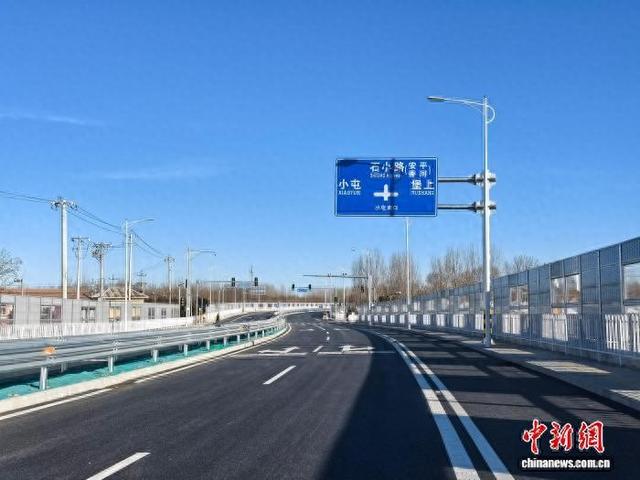
Core Viewpoint - The opening of the Shixiao Road marks a significant advancement in transportation connectivity between Beijing's urban sub-center and Hebei's Xianghe County, enhancing regional integration and development [1][2]. Group 1: Project Overview - The Shixiao Road project spans approximately 4.7 kilometers, connecting the Beijing-Tianjin highway in Tongzhou District to the Hebei border, designed as a dual four-lane highway [2]. - This road is a key component of the integrated development plan for the Beijing urban sub-center and the surrounding areas in Hebei, improving the efficiency of the regional road network [2]. Group 2: Impact on Regional Connectivity - With the opening of Shixiao Road, the number of connecting roads between Beijing's urban sub-center and the Langfang North Three Counties has increased to 12, including 4 expressways and 8 regular roads, strengthening the regional transportation framework [2]. - The new road facilitates quicker access for vehicles from Hebei to major routes in Beijing, enhancing cross-province commuting and daily life for residents [2]. Group 3: Societal Benefits - Residents of Xianghe County have expressed that the new road significantly improves their commuting experience, likening it to traveling within the same city [3]. - The road is expected to enhance the overall livability and economic viability of the region, promoting industrial collaboration and shared public services [2].
京雄城际铁路开通运营五周年 累计运送旅客超1300万人次
Zhong Guo Jing Ji Wang· 2025-12-31 07:45
Core Insights - The Beijing-Xiong'an Intercity Railway has been operational for five years, transporting over 13 million passengers and increasing train services from 32 to 59 daily, becoming a vital transportation link for the Beijing-Tianjin-Hebei coordinated development [1][2] Group 1: Operational Achievements - The railway has significantly improved service quality, addressing the "last mile" travel challenges by establishing real-time communication with Xiong'an Group's transportation company to optimize bus, taxi, and ride-hailing resources [1] - The railway connects key locations including Beijing West Station, Daxing Airport Station, and Xiong'an New Area, creating a multi-dimensional transportation network [1] Group 2: Future Developments - The upcoming opening of the Tianjin-Xiong'an Intercity Railway will connect with the Beijing-Xiong'an line at East Gu'an, enhancing the high-speed rail corridor between Beijing and Tianjin [2] - Future expansions, such as the Beijing-Hong Kong high-speed rail's Xiong'an section and the Xiong-Xin high-speed rail, will further integrate Xiong'an with East China, South China, and Central regions, emphasizing the railway's growing importance in the network [2]