区域协调发展

Search documents
优化区域经济布局,撬动更大内需空间
2 1 Shi Ji Jing Ji Bao Dao· 2025-11-05 00:53
Core Insights - The article discusses the Central Committee's proposal for the 15th Five-Year Plan, emphasizing the need for a high-quality regional economic layout and spatial system, focusing on modernizing governance in mega cities and promoting urban agglomeration integration [1][2] Group 1: Regional Economic Development - The proposal aims to cultivate multiple urban agglomerations and economic cores to create a coordinated development pattern that emphasizes high-quality growth and resource optimization [1] - Key urban clusters such as Beijing-Tianjin-Hebei, Yangtze River Delta, and Guangdong-Hong Kong-Macao Greater Bay Area are highlighted for their roles in technological innovation and financial openness [1][2] - The development of central and western regions, such as the Chengdu-Chongqing economic circle, is accelerating, creating new growth poles for talent and industry expansion [1][2] Group 2: Infrastructure and Connectivity - The plan includes enhancing infrastructure connectivity through the construction of cross-regional and cross-basin transportation networks, with an expected addition of 5,500 to 6,000 kilometers of suburban and intercity railways over the next decade [2] - A modern transportation network will support regional development by facilitating efficient movement of people and goods [2] - The strategy promotes a tiered industrial layout, with high-end resources concentrating in first-tier cities while basic manufacturing shifts to peripheral cities and central regions [2] Group 3: Urban Renewal and Investment - Urban renewal initiatives are set to improve living conditions and stimulate demand in sectors like construction, building materials, and community services, potentially unlocking trillions of yuan in investment [3] - The focus on upgrading urban infrastructure will include the renovation of approximately 600,000 kilometers of urban pipelines over the next five years [3] - Investment in new infrastructure, including 5G and AI, is projected to exceed one trillion yuan annually, driving digital and intelligent urban transformation [3] Group 4: Small and Medium City Development - The development of small and medium cities should shift from a homogenized approach to one that emphasizes unique characteristics and high-quality growth [4] - Different types of small cities will receive tailored development opportunities, leveraging their proximity to core cities or resource advantages [4] - Regional coordinated development is essential for modernizing China's economy, requiring optimized productivity layouts and the activation of key growth areas [4]
21社论丨优化区域经济布局,撬动更大内需空间
2 1 Shi Ji Jing Ji Bao Dao· 2025-11-04 22:36
Core Insights - The article discusses the Central Committee's proposal for the 15th Five-Year Plan, emphasizing the construction of a high-quality regional economic layout and spatial system, marking the first time such governance modernization and urban integration are highlighted in a five-year plan [1] Group 1: Regional Economic Development - The proposal aims to cultivate multiple urban clusters and economic cores to create a coordinated development pattern that emphasizes high-quality growth through innovation, industrial upgrading, and regional collaboration [1][2] - The plan seeks to enhance the roles of the Beijing-Tianjin-Hebei, Yangtze River Delta, and Guangdong-Hong Kong-Macau Greater Bay Area in driving technological innovation and financial openness [1][2] Group 2: Infrastructure and Connectivity - The initiative includes accelerating the construction of cross-regional and cross-basin transportation networks, with an expected addition of 5,500 to 6,000 kilometers of suburban and intercity railways and 3,000 kilometers of urban rail transit over the next decade [2] - A modern transportation network is envisioned to support regional interconnected development, facilitating the efficient flow of high-end resources to major cities while allowing manufacturing and supporting industries to shift to peripheral cities and central cities in the Midwest [2] Group 3: Urban Renewal and Investment - The focus on urban renewal aims to optimize living environments and unlock domestic demand, with significant investments expected in infrastructure upgrades, including the renovation of 600,000 kilometers of urban pipelines and improvements in disaster prevention systems [3] - The anticipated investment in new infrastructure, such as 5G and industrial internet, is projected to exceed one trillion yuan annually over the next five years, driving digital and intelligent urban transformation [3] Group 4: Small and Medium City Development - The article advocates for a shift in the development of small and medium cities from a homogenized approach to one that emphasizes unique characteristics and high-quality growth, leveraging local cultural resources and optimizing public services [4] - Different types of small and medium cities are expected to receive differentiated development opportunities, with those near core cities benefiting from industrial spillover and integrated commuting [4]
山东即将迈入“十万亿俱乐部”
Sou Hu Cai Jing· 2025-11-03 13:14
Core Viewpoint - Shandong Province is on the verge of becoming the third province in China to surpass a GDP of 10 trillion yuan, following Guangdong and Jiangsu, marking a significant milestone in its economic development [1][4][11]. Economic Milestone - Shandong's GDP is projected to reach 10 trillion yuan, with a current total of 9.86 trillion yuan, requiring only a 1.5% growth rate to achieve this by 2025 [4][6]. - As of the first three quarters of 2025, Shandong's GDP was 77,115 billion yuan, reflecting a year-on-year growth of 5.6% [5]. Regional Development Impact - The achievement of a 10 trillion yuan GDP will enhance Shandong's role as a key economic player in Northern China, contributing to regional coordination and development [7][8]. - Shandong's economic growth is expected to support the national goal of balancing development between northern and southern regions [8]. Industrial Transformation - Shandong has been focusing on transforming its traditional industrial structure, which was heavily reliant on traditional industries, to high-quality growth through new and emerging industries [9][10]. - The province has made significant strides in high-tech industries, with the proportion of high-tech industrial output rising from 45.1% in 2020 to 55.2% in the first half of 2025 [9]. Future Challenges - Despite the impending economic milestone, Shandong faces challenges in innovation capacity, industrial structure, and the vitality of the private economy compared to Guangdong and Jiangsu [10]. - The province must continue to enhance its innovative capabilities and focus on green, low-carbon, and high-quality development to sustain growth beyond the 10 trillion yuan mark [11].

盛阅春赴咸宁孝感调研 深化合作 互学互促 携手推进武汉都市圈高质量发展
Chang Jiang Ri Bao· 2025-11-03 00:35
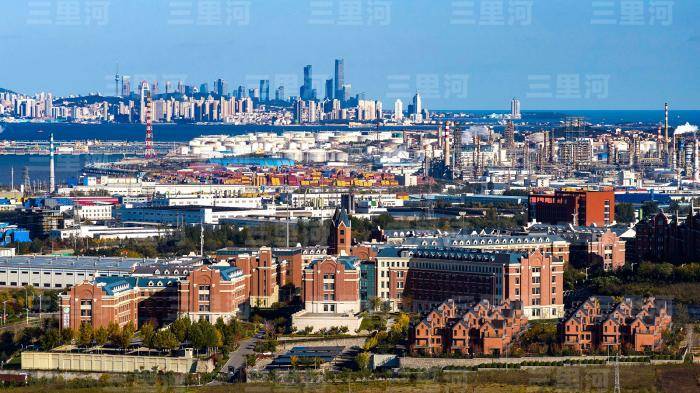
Core Viewpoint - The focus is on enhancing the collaborative development of the Wuhan metropolitan area and the Yangtze River middle reaches urban agglomeration, emphasizing the importance of cooperation, resource sharing, and mutual learning among cities to achieve high-quality development [1][8]. Group 1: Development Initiatives - The Wuhan metropolitan area is seen as a central hub for promoting the interconnected development of the Yangtze River middle reaches urban group, which is a significant mission assigned by General Secretary Xi Jinping [8]. - The provincial and municipal governments are committed to supporting the development of the Wuhan metropolitan area, aiming to enhance its scale, quality, and efficiency [8]. Group 2: Regional Cooperation - In Xianning, the local government has actively integrated into the Wuhan metropolitan area, fostering closer ties and collaboration in technology innovation, industrial development, and market sharing [4]. - In Xiaogan, the city has made progress in building a sub-center of the Wuhan metropolitan area, with a focus on developing unique agricultural supply chains and eco-tourism [7]. Group 3: Strategic Goals - The strategy includes joint planning, transportation integration, technological collaboration, industrial chain development, and shared social welfare to accelerate urban integration within the metropolitan area [8]. - The aim is to enhance regional coordination and create a supportive environment for business, facilitating the flow of resources and improving public services [8].
“陆海联运”再升级 豫北首趟集装箱货运专列正式开行
He Nan Ri Bao· 2025-11-02 23:35
Core Insights - The launch of the container service by YN Energy Holdings marks the official opening of the "Yulu Convenient Sea Passage" intermodal logistics project, enhancing logistics connectivity between Henan and the eastern coastal regions [1][2] - The project is expected to significantly improve the logistics landscape in the region, reducing overall logistics costs and transportation time for exports [2] Group 1: Logistics Development - A container train carrying 3,100 tons of chemical coal has departed from the Henan Coal Storage and Distribution Trading Center, establishing a new logistics link [1] - The intermodal operation at Shandong Port has seen a 53.3% year-on-year increase, with 114,000 TEUs handled in the first three quarters of 2025 [1] - The logistics channel focuses on iron ore transportation between Rizhao Port and Hebi Shifeng Station, with an expected annual shipment volume of 360,000 tons [1] Group 2: Infrastructure and Capacity - The Henan Coal Storage and Distribution Trading Center has established two coal storage bases with a static storage capacity of 2.25 million tons and an annual dispatch capacity of 20 million tons [1] - The integration of the Wazhi Railway and Jingguang Railway enhances the logistics capabilities, creating a new "inland storage—railway direct—port export" logistics channel [2] - The container business will focus on heavy goods such as premium coal, minerals, steel, cement clinker, and high-value-added chemical products, promoting versatile logistics solutions [2]

拉萨市党政代表团来南京考察
Nan Jing Ri Bao· 2025-11-01 03:26
Core Points - The visit of the Lhasa government delegation to Nanjing highlights the ongoing cooperation and support between the two cities, marking the 30th anniversary of their partnership [1][2] - The focus is on enhancing strategic alignment, project support, and cultural exchange to promote regional development and improve living standards in Lhasa [1][2] Group 1 - The Lhasa delegation, led by Deputy Mayor Wang Qiang, expressed gratitude for Nanjing's long-term support, emphasizing the importance of collaboration in various sectors such as digital economy and cultural tourism [2] - Since 1995, Nanjing has sent 178 aid personnel in 11 batches to support Lhasa, contributing over 1.35 billion yuan in aid and establishing more than 500 projects, significantly aiding in poverty alleviation [2]
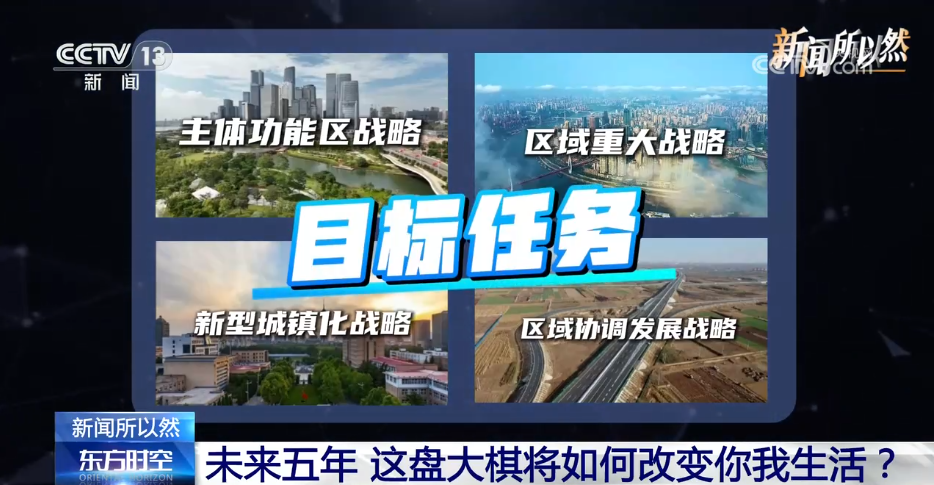
未来五年,“区域协调发展”的大棋局会如何改变你我生活?
Yang Shi Wang· 2025-11-01 02:21
Core Insights - The "14th Five-Year Plan" emphasizes optimizing regional economic layout to promote coordinated regional development [1] - The plan introduces a new approach where different strategies will have a "superimposed effect," enhancing collaboration among various regional strategies [5] Group 1: Strategic Overview - The plan aims to address development disparities, create growth poles, and facilitate the urbanization of agricultural migrants [5] - Chongqing is highlighted as a key node in multiple major strategies, indicating a shift from isolated strategic goals to integrated regional development [5] Group 2: Urbanization and Spatial Planning - The "14th Five-Year Plan" outlines a spatial layout for urbanization, including five major regional strategies and 19 national city clusters, targeting completion by 2035 [7] - The plan identifies Beijing-Tianjin-Hebei, Yangtze River Delta, and Guangdong-Hong Kong-Macau Greater Bay Area as core engines for high-quality development, with plans to enhance their capabilities [7] Group 3: Infrastructure and Connectivity - The plan promotes the construction of cross-regional and cross-basin transportation corridors, reshaping the economic geography [9] - The completion of the Shanghai-Chongqing high-speed rail during the "14th Five-Year Plan" will significantly enhance connectivity among major city clusters, allowing for more flexible business operations [9]
省委常委会召开会议 传达学习习近平总书记重要讲话精神 研究全面深化改革、育儿补贴制度实施、整治形式主义为基层减负等事项
Da Zhong Ri Bao· 2025-11-01 01:29
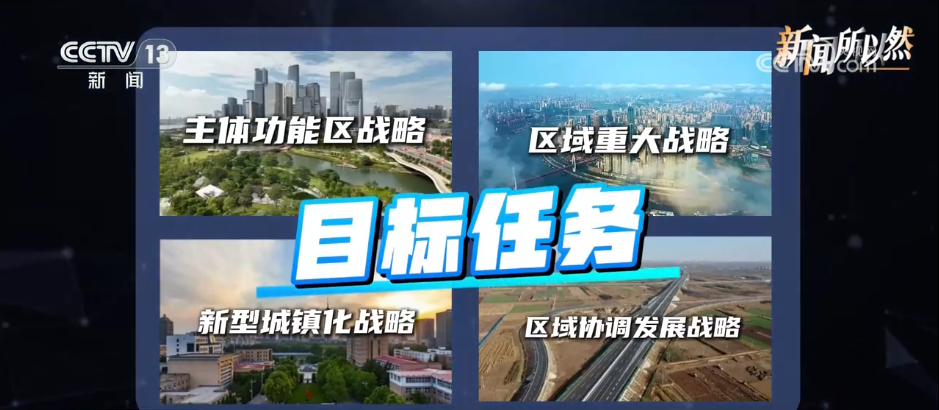
Group 1 - The meeting emphasized the importance of integrating Xi Jinping's important speeches with the spirit of the 20th Party Congress, focusing on high-quality drafting of the province's 14th Five-Year Plan [1] - The meeting highlighted the need to develop new productive forces tailored to local conditions, promote regional coordinated development, and enhance the quality of life for citizens [1] - The meeting underscored the responsibility of being a cultural province, enhancing the utilization of cultural relics, and promoting education on revolutionary traditions and patriotism [1] Group 2 - The meeting discussed the need to improve elderly care service policies and promote the silver economy, aiming for high-quality development in elderly care services [2] - The implementation of the childcare subsidy system was recognized as a significant measure for promoting high-quality population development in the province [2] - The meeting reviewed the progress of reducing formalism and burdens on grassroots levels, emphasizing the need to focus on key rectification tasks set by the central government [2]
扎实推动西部大开发形成新格局
Shan Xi Ri Bao· 2025-10-31 23:49
Core Points - The 20th Central Committee of the Communist Party of China emphasizes regional coordinated development as an inherent requirement of Chinese modernization [1] - The meeting outlines specific tasks for the 14th Five-Year Plan period to enhance regional development coordination and promote inter-regional collaboration [1] Group 1: Regional Development Strategies - The meeting encourages localities to leverage comparative advantages and support major economic provinces to take the lead in demonstrating progress in Chinese modernization [1] - The Xi'an Development and Reform Commission plans to accelerate the development of urban infrastructure and promote the construction of a regional technology innovation center [1][3] - The meeting highlights the need to optimize the layout of major productive forces and construct a high-quality regional economic layout [1][3] Group 2: Industry and Economic Coordination - The automotive industry in Shaanxi is cited as an example of effective resource allocation and gradient layout, which aids in reducing regional disparities and promoting economic coordination [2][3] - The establishment of specialized industrial parks is emphasized as a means to enhance industrial agglomeration and support new urbanization efforts [2][3] - The meeting calls for the development of differentiated industrial policies based on the resource endowments of different counties, promoting a unique development path for each region [3] Group 3: Infrastructure and Public Services - The meeting stresses the importance of cross-regional cooperation and the establishment of mechanisms for planning coordination, industrial collaboration, and benefit sharing [3] - There is a focus on extending urban infrastructure and public services to rural areas to promote a balanced urban-rural relationship [3] - The need for enhancing county-level economic capacity and attractiveness is highlighted, with an emphasis on integrating local特色产业 into broader regional development strategies [3]
未来五年,区域协调发展这盘大棋将如何改变你我生活?
Yang Shi Wang· 2025-10-31 16:46
Core Insights - The "14th Five-Year Plan" emphasizes optimizing regional economic layout and promoting coordinated regional development, which will significantly impact business location choices and personal life planning [1] Group 1: Strategic Framework - The plan introduces a new concept of "cumulative effect" among various strategies, highlighting the interconnectedness of different regional development strategies [3] - Cities like Chongqing are positioned as key nodes in multiple major strategies, indicating a shift from traditional GDP growth metrics to a focus on ecological sustainability and regional collaboration [3] Group 2: Urbanization and Development Zones - The "14th Five-Year Plan" aims to enhance the development capabilities of major urban clusters, particularly the Beijing-Tianjin-Hebei, Yangtze River Delta, and Guangdong-Hong Kong-Macau Greater Bay Area, which are identified as core engines for high-quality growth [5] - The plan also highlights the importance of Xiong'an New Area and the Chengdu-Chongqing economic circle, which are expected to set benchmarks for modern urban development [5] Group 3: Infrastructure and Connectivity - The plan envisions a significant expansion of entrepreneurial opportunities through coordinated regional development, emphasizing the need for both hard and soft connectivity among urban clusters [6] - Major infrastructure projects, such as the Shanghai-Chongqing high-speed railway, will reshape economic geography by facilitating easier access between major cities and lower-cost production areas [6]