
普惠金融

Search documents
QDII额度使用新规出台 推动普惠金融发展
Xin Lang Cai Jing· 2026-01-10 09:08
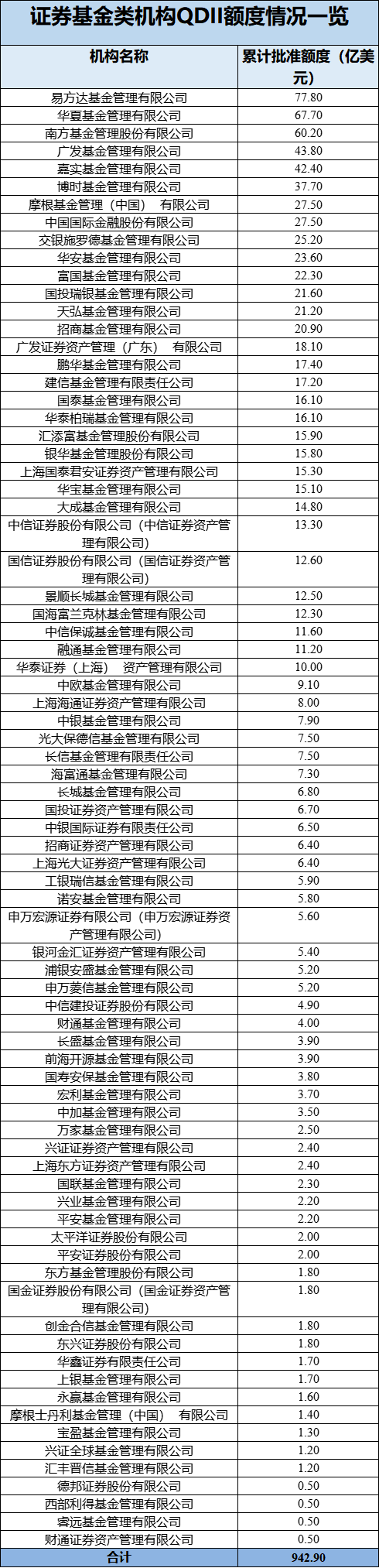
Core Viewpoint - Recent adjustments in QDII quota usage are aimed at prioritizing public fund products over separate account products, with a target to reduce the latter's usage to below 20% by the end of 2027, promoting inclusive finance and diversified asset allocation [1] Group 1 - Multiple fund companies have received notifications regarding the new QDII quota usage guidelines [1] - The adjustment is intended to direct financial resources towards ordinary investors [1] - The total quota for securities and fund categories has reached $94.29 billion [1]
QDII额度使用迎来新规范
Xin Lang Cai Jing· 2026-01-10 09:08
Core Viewpoint - The recent policy change regarding QDII (Qualified Domestic Institutional Investor) funds aims to encourage the use of QDII quotas more in public offerings, reflecting a shift towards promoting inclusive finance and better meeting the diverse asset allocation needs of investors [1] Group 1: Policy Changes - Multiple fund companies have received notifications to adjust the usage ratio of QDII quotas between public and separate account products [1] - By the end of 2027, the proportion of QDII quotas used for separate accounts must be reduced to within 20% [1] - At least half of this adjustment must be completed by the end of 2026 [1] Group 2: Industry Implications - The regulatory body's emphasis on "inclusive finance" as part of broader financial reforms indicates a strategic direction to channel financial resources towards ordinary investors [1] - This adjustment in QDII quota usage is seen as a concrete measure to enhance the accessibility of investment opportunities for a wider range of investors [1]
QDII,大消息!
Zhong Guo Ji Jin Bao· 2026-01-10 09:00
Group 1 - The core viewpoint of the article is that new regulations are encouraging the use of QDII quotas primarily for public funds, aiming to promote inclusive finance and better meet the diverse asset allocation needs of investors [1][3][4] - Fund companies are required to adjust the proportion of QDII quotas used for public products and separate accounts, with a target to reduce the quota for separate accounts to below 20% by the end of 2027, and to complete at least half of this adjustment by the end of 2026 [1][3] - The new regulations are seen as a measure to guide financial resources towards ordinary investors, enhancing transparency and public access to investment opportunities [4][10] Group 2 - As of the end of last year, the total approved QDII quota reached $1708.69 billion, with the securities fund category accounting for $942.9 billion [5][6] - The demand for public QDII funds has surged due to increasing awareness of global asset allocation among residents, leading to a tightening of subscription limits for many popular QDII funds [10] - Approximately 60% of QDII funds have paused subscriptions or limited large subscriptions, with some products experiencing significant premium rates [10]

上证深一度 | 银行网点“腾笼换鸟” 一边批量关停 一边新设补位
Shang Hai Zheng Quan Bao· 2026-01-09 18:48
Core Viewpoint - The trend of physical bank branches is not a continuous decline as previously expected, but rather a structural improvement with both closures and new openings, indicating a transformation in the banking sector [1][2]. Group 1: Bank Branch Dynamics - In 2025, over 8,000 bank branches are expected to close, while more than 8,400 new branches will be established, leading to a net increase in the number of bank branches [2]. - The closures primarily involve older, less efficient branches that are far from communities and can be fully replaced by online services [3]. - The new branches are often integrated into communities, providing diverse services such as financial consultations and community activities, thus becoming local "convenience centers" [1][2]. Group 2: Reasons for New Branch Openings - The increase in new branches is driven by the rural revitalization strategy, with a significant proportion located in county-level and below areas [2]. - Mergers and acquisitions in the banking sector have led to the transformation of village banks into branch institutions, contributing to the growth of new branches [2]. - There is a focus on serving niche customer groups and enhancing service scenarios that online channels cannot adequately cover [2]. Group 3: Branch Functionality and Transformation - The closures of inefficient branches are aimed at reallocating resources to areas that require more in-person services, such as elderly and inclusive finance [3]. - The banking industry is reassessing the functions of physical branches, with a shift towards digitalization and cost efficiency, as traditional services are increasingly replaced by online channels [4]. - New branches are adopting a more intelligent, lightweight, and specialized approach, focusing on services for the elderly, inclusive finance, and small enterprises [7]. Group 4: Regulatory and Strategic Considerations - Regulatory bodies emphasize the need for banks to ensure the availability of physical branches in rural areas while balancing economic and social benefits [5]. - Banks are encouraged to avoid redundant constructions and over-competition while addressing potential financial exclusion caused by branch closures [5]. - The future of bank branches is seen as a combination of digital and community services, providing both efficient transactions and personalized service [7].
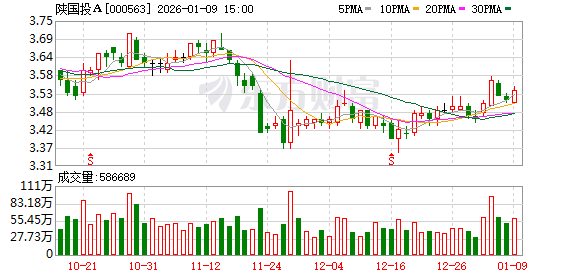
陕国投A:积极布局科技金融、绿色金融、普惠金融、养老金融、数字金融五大领域
Zheng Quan Ri Bao· 2026-01-09 12:36
Core Viewpoint - The company emphasizes high-quality development and aims to optimize its business structure and innovate service models while addressing three main tasks: serving the real economy, preventing financial risks, and deepening financial reforms [2] Group 1: Business Strategy - The company is actively positioning itself in five key areas: technology finance, green finance, inclusive finance, pension finance, and digital finance [2] - The company is committed to fulfilling its responsibilities and obligations as a financial institution in the context of major national strategies [2]

2025年贵州资本市场高质量发展 赋能区域经济与产业升级新实践
Zheng Quan Shi Bao Wang· 2026-01-09 11:54
Group 1 - The capital market in Guizhou is guided by Xi Jinping's thoughts and aims to support regional economic development through various reforms and initiatives [1] - The provincial government has approved a plan to enhance the capital market's role in building a modern industrial system, focusing on nurturing enterprises for public listing and promoting direct financing [1] - Guizhou's capital market tools are integrated into the industrial system layout, providing a solid foundation for capital market functions [1] Group 2 - The Guizhou Securities Regulatory Bureau and other departments have improved the financial knowledge of local leaders, enhancing their ability to utilize and develop the capital market [2] - The establishment of the "Listing Company Home" in Guiyang offers comprehensive government services to listed companies, while the Capital Market Service Center has created a one-stop service hub [2] - Direct financing in Guizhou has steadily increased, with a total of 77.546 billion yuan raised to support industrial upgrades and public welfare [2] Group 3 - The average interest rate for corporate bonds has decreased to 3.31%, providing tangible support for enterprises [3] - Securities firms have facilitated 48.572 billion yuan in financing for Guizhou enterprises, while private equity fund management has reached 194 billion yuan [3] - Listed companies in Guizhou have distributed over 68 billion yuan in dividends, ranking first in the western region [3] Group 4 - The capital market in Guizhou has made breakthroughs in supporting technology finance, green finance, inclusive finance, pension finance, and digital finance [4] - Innovative financial products have been introduced, including the first technology innovation corporate bond and the first "intellectual property + technology innovation" asset securitization product [4] - The establishment of futures delivery warehouses for agricultural products has enhanced the effectiveness of financial services in rural areas [4] Group 5 - The capital market in Guizhou is committed to supporting rural revitalization, with 31 securities companies signing assistance agreements with 56 counties [5] - The "Zhen Ai Guizhou" charitable trust plan has provided scholarships and financial support to students and teachers in impoverished areas [5] - The capital market has actively participated in disaster relief efforts and has contributed to the development of carbon finance in rural areas [5]
普惠金融赋新能,千行百业绽繁花——潍坊银行做好普惠金融“大文章”助力区域经济高质量发展
Jin Rong Jie· 2026-01-09 07:37
Core Viewpoint - Weifang Bank is focusing on inclusive finance as a key point to fulfill its social responsibility and financial mission, aiming to enhance the quality and coverage of inclusive finance to support high-quality regional economic development by the end of 2025 [1] Group 1: Inclusive Finance Strategy - By the end of November 2025, Weifang Bank's inclusive small and micro loans reached 39.0 billion yuan, an increase of 5.12 billion yuan from the beginning of the year, ranking third in total size and second in growth among city commercial banks in the province [1] - The bank aims to integrate inclusive finance with industrial upgrading and technological innovation, believing that serving regional industries and fostering technological innovation are essential for deepening inclusive finance [2] Group 2: Technological Financial Support - Weifang Bank is committed to enhancing its technological financial services, establishing a virtuous cycle model of "technology-industry-finance," and improving service quality and brand influence [3] - The bank has collaborated with the Shandong Province Science and Technology Credit Platform to implement a big data evaluation system for risk assessment of technology enterprises, successfully launching the first "Lu Ke Loan" of 15 million yuan [3] Group 3: Innovative Financial Products - To address the financing needs of small and micro enterprises and individual businesses, Weifang Bank has expanded its online "e-loan" product offerings, including "Xin Hao Loan," "Fang Hao e-loan," and others, covering various financing scenarios [4] - The bank is developing new digital inclusive finance scenarios, such as "Medical Insurance e-loan" for small medical institutions, and has launched "Lu Dan e-loan" in collaboration with the provincial agricultural guarantee company [4] Group 4: Building an Inclusive Financial Ecosystem - Weifang Bank is enhancing its financial service models by collaborating with local government agencies to support regional economic development, having provided credit of 13.2 billion yuan to 509 out of over 2,700 small and medium enterprises [5] - The bank has established a supply chain electronic voucher business platform to streamline the loan application process, making inclusive financial services more accessible and convenient for customers [5]
2025年资本市场服务贵州经济社会发展“成绩单”出炉
Zhong Zheng Wang· 2026-01-09 07:34
Group 1 - The report titled "Overview of Capital Market Services for Guizhou's Economic and Social Development by 2025" highlights the continuous improvement of the system and mechanism for capital market services in Guizhou, emphasizing the new achievements in supporting high-quality development and modernization processes [1] - Various stakeholders in Guizhou are actively promoting the integration of capital market tools into the province's industrial system, providing a solid guarantee for the full utilization of capital market functions [2] - The direct financing amount in Guizhou is steadily increasing, with various market entities achieving direct financing of 77.546 billion yuan, supporting industrial upgrades, project construction, and improving people's livelihoods [3] Group 2 - Guizhou's capital market is focused on serving the real economy, providing high-quality financial products and services for major strategies, key areas, and weak links in local economic and social development [3] - The average coupon rate for corporate credit bonds has decreased to 3.31%, down 49 basis points from 2024, supporting enterprises in reducing costs and increasing efficiency [3] - The implementation of the "five major articles" in finance, including technology finance, green finance, inclusive finance, pension finance, and digital finance, is being actively promoted by the Guizhou Securities Regulatory Bureau and other departments [4]
何以“开正门 堵偏门”:透视校园贷治理 中国金融出版社《校园贷多元治理研究》速览
Jin Rong Shi Bao· 2026-01-09 02:07
Core Viewpoint - The governance of campus loans is crucial for students' academic success and requires a multi-faceted approach involving various stakeholders and strategies [1][4]. Group 1: Research Findings - The "Research on Multi-dimensional Governance of Campus Loans" book presents findings from a four-year study by the Chinese Academy of Social Sciences, focusing on the supply-demand situation and regulatory policies of campus loans [1][2]. - The project emphasizes the importance of judicial guidance in addressing civil and criminal cases related to campus loans, proposing a judicial-led governance path [2][3]. - The book scientifically defines the concept of campus loans and critiques the current "one-size-fits-all" regulatory policies, advocating for a more nuanced approach [2][3]. Group 2: Practical Implications - The research provides practical insights for students on how to navigate campus loans, including recognizing fraud and understanding legal rights [3][4]. - It highlights the need for collaboration among legislative, enforcement, and educational institutions to effectively govern campus loans and protect students [4]. Group 3: Methodological Approach - The study employs various research methods, including surveys, data analysis, and case studies, to provide a comprehensive understanding of campus loan governance [3].
数智为翼 普惠同行 数禾科技年末揽获多项荣誉彰显发展初心
Jiang Nan Shi Bao· 2026-01-08 13:47
Core Insights - The company, Shuhe Technology, has recently received multiple awards, including the "Annual Digital Intelligence Innovation Practice" award and the "Outstanding Case in Inclusive Finance" award, highlighting its strength in digital innovation and commitment to social responsibility in the financial sector [1][2] Group 1: Awards and Recognition - Shuhe Technology won the "Annual Digital Intelligence Innovation Practice" award at the 2025 8th New Award, showcasing its technological innovation in the financial technology sector [1] - The company also received the "2025 Outstanding Case in Inclusive Finance" award, reflecting its focus on addressing financing challenges for small and micro enterprises [2] - Additionally, it was recognized as a "2025 Excellent Social Responsibility Enterprise," demonstrating its commitment to social value through various initiatives [2] Group 2: Technological Innovation and Impact - The company has developed a proprietary app, "Haobei," which utilizes precise algorithm models to assess credit conditions and customize credit processes for 20 different industries, helping over one million small enterprises with more than 100 billion yuan in credit [2] - Shuhe Technology has implemented private deployment of leading general models, breaking external technology dependence and enabling precise adaptation of large model technology to credit business scenarios [1] Group 3: Social Responsibility Initiatives - The "Shu Shield Plan" launched by the company aims to enhance public awareness of fraud prevention through community media and various educational projects, contributing to a comprehensive fraud prevention network [2] - The "Beautiful Echo" public welfare initiative focuses on emotional resonance, material support, and spiritual empowerment, exemplifying the company's commitment to "finance for good" [3] - In 2025, the company collaborated with local organizations to establish a "Rural Psychological Classroom," addressing the psychological service gap for children in rural areas [3] Group 4: Future Outlook - The recognition received by Shuhe Technology is seen as validation of its past efforts and an expectation for future development, with plans to continue integrating AI tools with financial services and expanding the boundaries of inclusive finance [3]