丝绸之路

Search documents
“中华文化体验日”公共文化活动在哥伦比亚举行
人民网-国际频道 原创稿· 2025-07-04 06:22
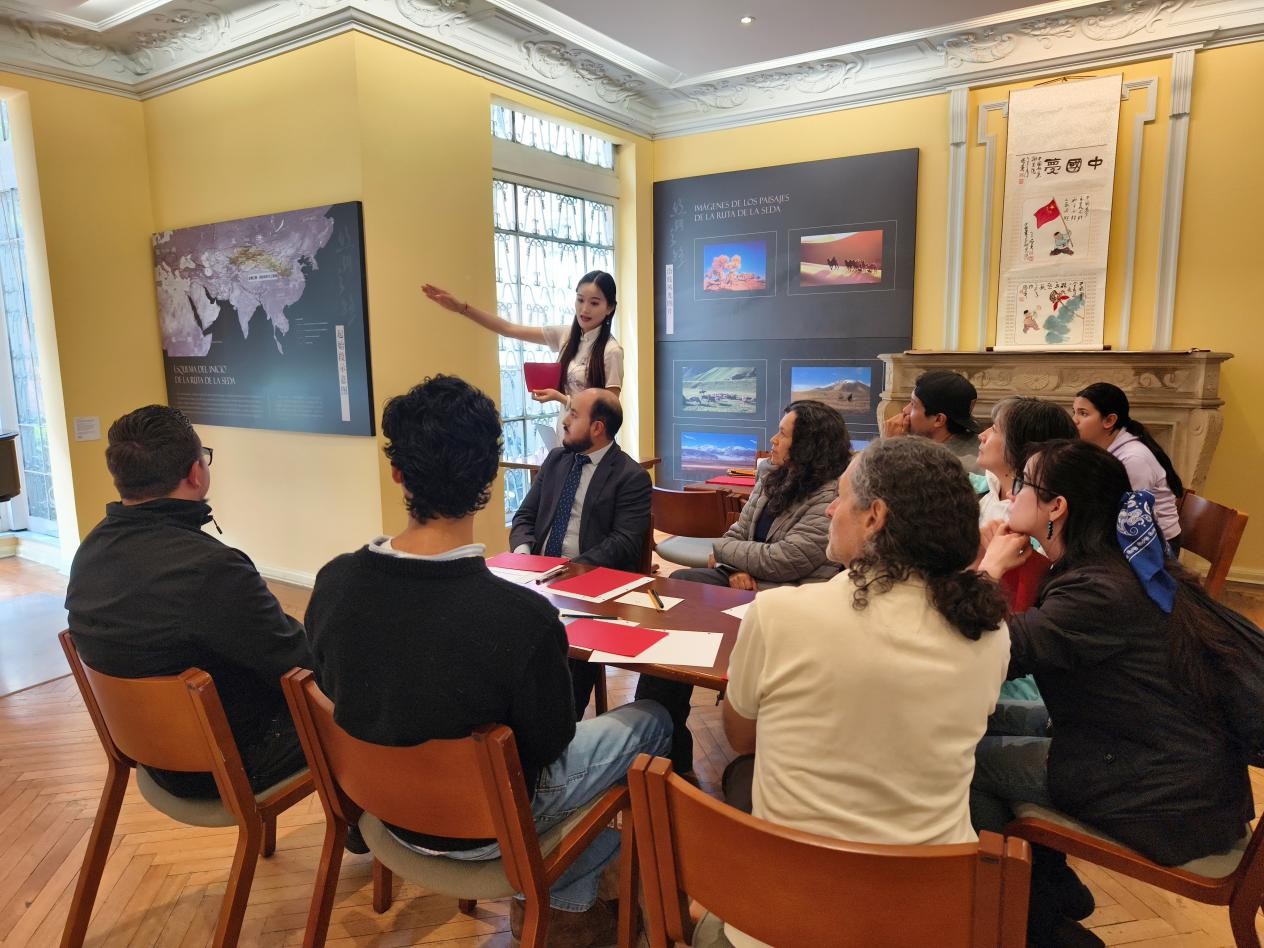
Core Viewpoint - The event "Chinese Culture Experience Day" in Bogotá, Colombia, aims to enhance local understanding and appreciation of Chinese traditional culture through interactive experiences and exhibitions related to the Silk Road [1][4]. Group 1: Event Overview - The event took place at the Casa de Lleras Museum, organized as a part of the exhibition "Car Tracks and Horse Tracks - Transportation and Communication on the Silk Road" [1][4]. - Activities included calligraphy and traditional paper-cutting, guided by professional teachers from the Confucius Institute in Colombia [2][3]. Group 2: Exhibition Details - The "Car Tracks and Horse Tracks" exhibition has been well-received since its opening in May, attracting over a thousand visitors, including students, cultural representatives, and the general public [4]. - The exhibition features replicas of artifacts from the Silk Road, visual presentations, and bilingual tours to deepen understanding of the historical significance of the Silk Road [4]. Group 3: Cultural Significance - This event and exhibition are part of the cultural projects celebrating the 45th anniversary of diplomatic relations between China and Colombia, marking a significant cultural exchange since Colombia's participation in the Belt and Road Initiative [4]. - The activities aim to promote cultural understanding and friendship between the peoples of China and Colombia, showcasing the importance of cultural diplomacy [4].

哥伦比亚观众体验中华文化
Xin Hua She· 2025-07-04 05:46
Group 1 - The event "Chinese Culture Experience Day" was held at the Tadeo University Casa Lleras Museum in Bogotá, Colombia, focusing on Chinese intangible cultural heritage such as calligraphy and paper-cutting to enhance local interest and understanding of traditional Chinese culture [1] - The exhibition featured over 70 replicas and images of Silk Road artifacts, organized into three sections: "Ancient Roads," "Trade," and "Integration," showcasing the prosperity of Silk Road commerce [1] - Participants engaged in hands-on activities, including Chinese character writing and paper-cutting, with guidance from instructors, leading to expressions of joy and community connection among attendees [1] Group 2 - The event is a complementary activity to the "Car Dust and Horse Tracks - Transportation and Communication on the Silk Road" exhibition, which opened at the end of May and will close on July 4 [1]
谁住在中国最热的地方?
Hu Xiu· 2025-06-30 14:05
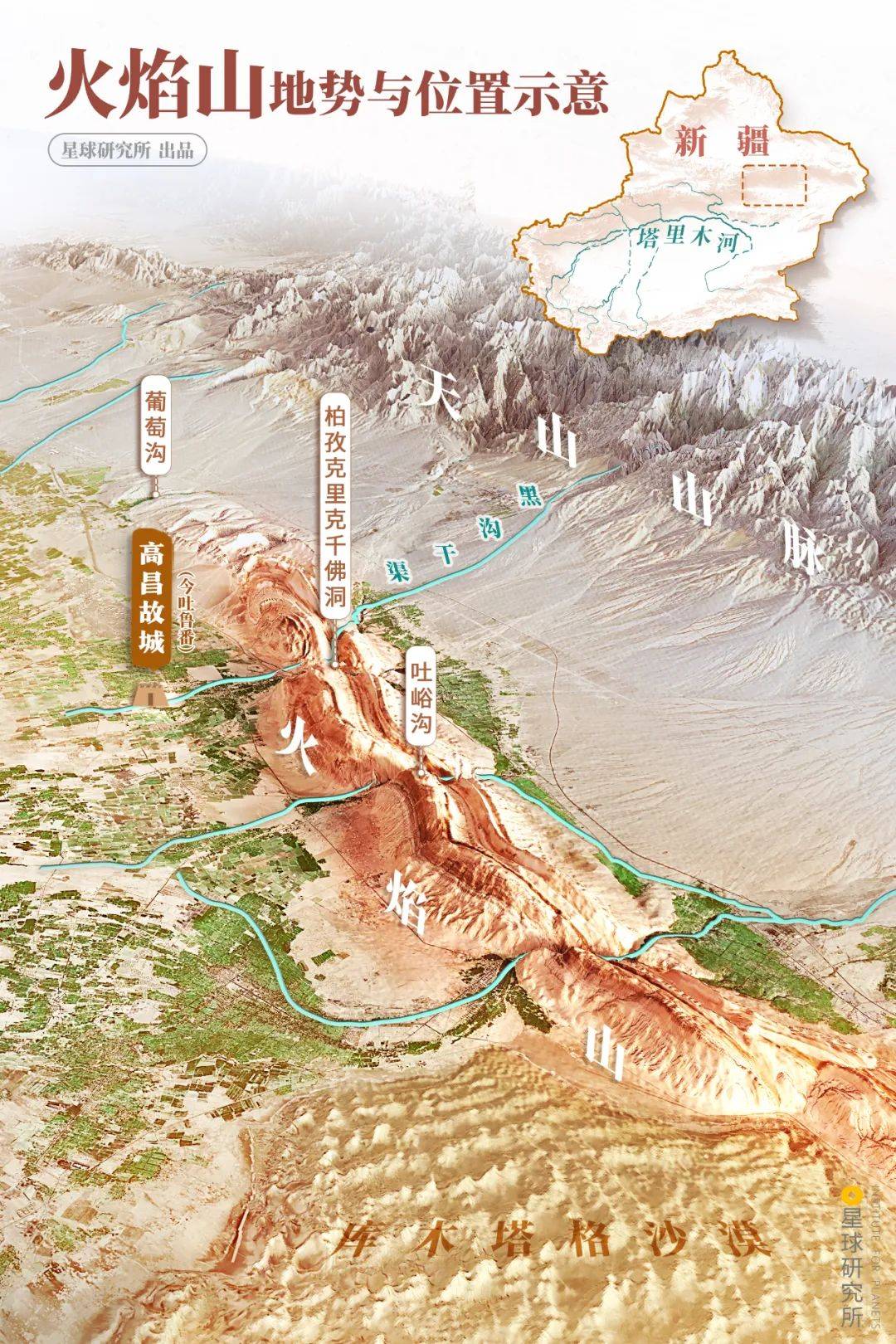
Core Viewpoint - The article explores the historical significance of the Flaming Mountains and the ancient city of Gaochang, highlighting the cultural and economic importance of the Silk Road and the interactions between different civilizations during the Tang Dynasty [6][16][21]. Group 1: Geographic and Climatic Context - The Flaming Mountains are known as the hottest place in China, with summer temperatures reaching 52.2°C and surface temperatures on the mountain exceeding 82.3°C [6][10]. - Gaochang, located at the foot of the Flaming Mountains, was a significant city along the Silk Road, characterized by its harsh climate yet rich water resources from the Tianshan Mountains [35][36]. Group 2: Historical Significance of Gaochang - Gaochang was a thriving city with an area of 2 million square meters, approximately three times the size of the Forbidden City, and featured a complex water system [31][35]. - The city was a hub for trade and cultural exchange, where merchants from various regions interacted, showcasing a vibrant marketplace filled with diverse goods [42][43][46]. Group 3: Cultural Interactions and Religious Influence - The ruler of Gaochang, Qiu Wentai, showed great hospitality towards the monk Xuanzang, who was on a mission to acquire Buddhist texts, indicating the city's openness to cultural and religious exchanges [68][110]. - The presence of Buddhism in Gaochang grew under Qiu Wentai's reign, with the construction of temples and the promotion of Buddhist teachings [105][108]. Group 4: Political Dynamics and Decline - Gaochang's strategic location made it a target for various powers, leading to its eventual decline as it struggled to maintain autonomy amidst external pressures [80][83]. - The kingdom's downfall was precipitated by Qiu Wentai's alliance with the Western Turks against the Tang Dynasty, which ultimately led to Gaochang's conquest by Tang forces [120][151]. Group 5: Legacy and Transformation - After Gaochang's fall, it was renamed Xizhou and became an important base for the Tang Dynasty's administration in the region, facilitating trade and cultural integration [156][162]. - The article concludes with reflections on Xuanzang's journey and the enduring legacy of Gaochang, emphasizing the historical connections that transcend time and geography [179][182].
阳关和玉门关:明月几回照汉家丨从长安到敦煌(5)
Jing Ji Guan Cha Bao· 2025-06-18 00:54
Core Viewpoint - The article explores the historical significance and cultural heritage of the Yangguan and Yumenguan sites along the Silk Road, emphasizing their roles as gateways to the West during the Han Dynasty and their enduring legacy in Chinese history and literature [1][9][25]. Group 1: Historical Significance - Yangguan was established around 107 BC during the Han Dynasty and served as a crucial checkpoint on the southern route of the Silk Road until the Tang Dynasty [3][4]. - The ruins of Yangguan are located in a historically rich area, with evidence of ancient artifacts found in the surrounding "Antique Beach," indicating a long history of human activity [3][4]. - Yumenguan, alongside Yangguan, was pivotal in controlling access to the Western regions, facilitating trade and cultural exchange between China and Central Asia [8][25]. Group 2: Cultural Heritage - The sites are immortalized in classical Chinese poetry, with famous lines from poets like Wang Wei and Li Bai reflecting the emotional and cultural connections to these locations [10][12][13][17]. - The historical narratives surrounding Yangguan and Yumenguan have inspired numerous literary works, enhancing their significance beyond mere geographical locations [9][25]. - The article highlights the transformation of these sites from military outposts to cultural symbols, attracting tourists and scholars interested in their rich history [1][9][29]. Group 3: Archaeological Insights - Recent archaeological efforts have aimed to uncover more about the structures and artifacts at Yangguan, including the "Stone Gate Beacon" which served as a lookout point [4][6]. - The construction techniques of the Han Dynasty, utilizing local materials for building fortifications, are noted as a reason for the enduring nature of the Great Wall and related structures [18][20]. - The findings from excavations at Yumenguan, including the large granaries, suggest its role in military logistics and supply during the Han Dynasty [21][23].
文脉华章·营造之法丨雄关,何以定城六百年
Yang Shi Xin Wen· 2025-06-14 02:29
Core Points - The article highlights the significance of the Great Wall, particularly the Jiayuguan Pass, as a cultural and historical symbol of China, marking its importance in the context of the Silk Road and national heritage [1][5][17] Group 1: Historical Significance - Jiayuguan, known as the "First Pass Under Heaven," is the most spectacular and well-preserved ancient military pass of the Great Wall, built in 1372 during the Ming Dynasty [5][11] - The pass has never been breached in over 600 years, showcasing its strategic importance as a frontier defense [11][15] - The construction of Jiayuguan involved significant effort from countless workers, resulting in a robust defensive structure that has withstood the test of time [7][15] Group 2: Cultural Exchange - Jiayuguan served as the only official route for envoys from the Western Regions to the central plains of the Ming Dynasty, facilitating trade and cultural exchange along the Silk Road [17][19] - The Ming government established tax institutions at Jiayuguan to manage and tax passing caravans, ensuring orderly trade and the safety of merchants [19][21] - The pass has become a symbol of cultural integration, reflecting over 600 years of multicultural interactions and the contributions of various ethnic groups [25][37] Group 3: Preservation Efforts - The ongoing construction of the "Great Wall National Cultural Park" includes the Gansu section, which is set to be completed this year, emphasizing the commitment to preserving this historical site [5][28] - Modern technology is now employed to monitor and maintain the integrity of the wall, ensuring its protection for future generations [28][36] - The article illustrates how Jiayuguan has evolved from a military stronghold to a vibrant example of cultural dialogue, showcasing its enduring vitality [37]
总书记关心的世界文化遗产|万里丝路颂长歌
Xin Hua She· 2025-06-10 13:01
Group 1 - The Silk Road historically served as a vital connection between China and foreign countries, with the "Silk Road: The Network of Routes from Chang'an to the Tianshan Corridor" being listed as a UNESCO World Heritage Site in 2014, including 33 heritage sites such as the ruins of the Weiyang Palace and the Mogao Caves [1] - The establishment of the Silk Road transformed it into a comprehensive trade route, official road, and cultural exchange pathway during the Han Dynasty, particularly through Zhang Qian's missions to the Western Regions [2] - The Han Dynasty set up over 80 relay stations along the route from Chang'an to Dunhuang, which served as crucial safety and navigation points across the vast desert [3] Group 2 - Following the successful UNESCO listing, the protection and management of 22 domestic heritage sites have reached unprecedented levels, integrating new technologies and modern conservation concepts [4] - The ancient Silk Road initiated a significant era of East-West exchanges, and the modern "Belt and Road Initiative" aims to enhance connectivity and cooperation among countries, opening a new chapter in globalization [5] - The ongoing practice of the "Belt and Road Initiative" continues to promote cultural exchanges and mutual learning among different civilizations, contributing to the growth of human civilization [6]
到免签的中亚小国,做一场极繁主义的梦
Hu Xiu· 2025-06-02 08:08
Group 1 - Uzbekistan and China have established mutual visa exemption starting June 1, allowing Chinese tourists to stay for up to 30 days without a visa [1] - Uzbekistan has been increasingly welcoming Chinese tourists since 2023, offering options for visa-free group tours and electronic visas [1] Group 2 - Uzbekistan is described as a unique destination, often compared to a "magnified version of Xinjiang," showcasing a blend of various civilizations and rich historical heritage [2] - Samarkand, a city with a history of 2600 years, is recognized as a cultural crossroads on the Silk Road, connecting China, Persia, and India [3] Group 3 - The historical significance of Samarkand is highlighted through its role in trade during the Tang Dynasty, where it served as a hub for the exchange of goods like silk and porcelain [4] - The city experienced a resurgence in the 14th century under Timur, who transformed it into a grand capital [5] Group 4 - The architectural heritage of Samarkand includes the Bibi-Khanym Mosque and the Shah-i-Zinda necropolis, showcasing intricate tile work and historical narratives [7][11] - The Registan Square, a central feature of modern Samarkand, is surrounded by three significant madrasahs, representing the pinnacle of Timurid architecture [12][9] Group 5 - Tashkent, the capital, contrasts with Samarkand by showcasing Soviet-era architecture and modern urban planning, particularly after the 1966 earthquake [12][13] - The Tashkent Metro, opened in 1973, is noted for its unique design and historical significance, reflecting Soviet ideals and local culture [16] Group 6 - The culinary culture of Uzbekistan is emphasized, with traditional dishes like plov (hand-pulled rice) and tandir (oven-baked bread) being central to the local lifestyle [20][22] - Markets in Uzbekistan, such as the Chorsu Bazaar, are vibrant centers of local life, filled with the aromas and sounds of daily commerce [18][19]
为何说兰州是一线城市?
Sou Hu Cai Jing· 2025-05-28 01:27
Group 1 - Lanzhou is located in the central part of Gansu province and is the geometric center of China's land area, covering an area of 13,100 square kilometers [3] - The city is characterized by its unique geographical feature where the Yellow River flows through it, creating a landscape of "two mountains facing each other with a great river flowing in between" [4] - Lanzhou has a temperate continental climate with an average annual precipitation of around 300 millimeters and an average annual sunshine duration of 2,374 hours [6] Group 2 - The population of Lanzhou has shown a steady increase, with 3.62 million in 2010, 4.36 million in 2020, and projected to reach 4.44 million by 2024 [6] - Historically, Lanzhou was a crucial transit point on the Silk Road, connecting the Central Plains to the Hexi Corridor and the Western Regions [8] - The city serves as a transportation hub in Northwest China, with multiple railways and highways intersecting, including the Lanzhou-Qinghai Railway and the G6 Beijing-Tibet Expressway [8] Group 3 - Lanzhou's urban area is elongated, approximately 30 kilometers from east to west, and varies in width from about 1 kilometer to 5-6 kilometers [9] - The Yellow River runs approximately 47.5 kilometers through the city, and Lanzhou's metro line 1 is notable for being the first subway line in China to pass under the Yellow River [11]
土耳其博物馆里的丝路文化踪迹
Ren Min Ri Bao Hai Wai Ban· 2025-05-20 21:30
Core Insights - The article highlights the cultural exchange between China and Turkey through the Silk Road, showcasing various museums in Turkey that exhibit artifacts and promote traditional crafts [1][2]. Group 1: Cultural Exchange and Tourism - Turkey is positioned at the crossroads of Europe and Asia, with 21 sites listed as UNESCO World Heritage Sites [1]. - The Turkish Ministry of Culture and Tourism projects that Turkey will receive nearly 410,000 Chinese tourists in 2024, representing an approximate 65% increase from the previous year [1]. Group 2: Museum Initiatives - The Topkapi Palace Museum in Istanbul plans to establish a porcelain museum in the second half of the year, featuring around 22,000 porcelain pieces, with approximately 12,000 originating from China [1]. - The Silk Museum in Bursa showcases traditional looms and silk artifacts, emphasizing the historical significance of silk weaving techniques introduced from China during the Byzantine Empire [1][2]. Group 3: Educational and Cultural Preservation Efforts - Bursa's lifelong education department is utilizing museum resources to conduct youth summer camps and adult vocational training, aiming to enhance public awareness of traditional silk craftsmanship [2]. - The Kaman Kalehoyuk Archaeological Museum in central Turkey displays valuable artifacts from various civilizations, including porcelain from the Ottoman Empire, highlighting the region's rich historical tapestry [2]. Group 4: Continued Cultural Influence - The Erzurum Folklore Museum reflects the deep-rooted Eurasian cultural influences and the historical appreciation for porcelain, showcasing the lasting impact of Chinese culture [2]. - Trabzon, a significant transit point on the ancient Silk Road, is focusing on digital museum initiatives to enhance the research and preservation of Silk Road artifacts, fostering cultural collaboration between Turkey and China [2].
文博日历丨半人半鱼半马半鸟 这片金饰体现古人多少创意
Yang Shi Xin Wen Ke Hu Duan· 2025-04-21 01:28
Core Viewpoint - The article highlights the significance of the "human-fish tail gold ornament" as a representation of cultural fusion between Eastern and Western civilizations, particularly during the Tang Dynasty and the Tuyuhun period in Qinghai, China [2][18]. Group 1: Cultural Significance - The "human-fish tail gold ornament" is a creative artifact that embodies a blend of different cultural elements, showcasing the artistic influences from both Greek mythology and local traditions [12][18]. - This ornament is linked to the Tuyuhun khan, reflecting the unique cultural identity of the region during its historical period [16][18]. Group 2: Historical Context - The ornament was recovered from a tomb that was looted in 2017, where 646 cultural relics were stolen but later retrieved by the police [4]. - The artifact is believed to have been created during a time when the Qinghai region served as a vital route for trade and cultural exchange along the ancient Silk Road [21]. Group 3: Artistic Features - The gold ornament features a design that includes a human figure with a fish tail, wings, and a lion's front legs, which modifies the traditional mermaid imagery found in Greek mythology [12][14]. - It is suggested that the ornament was likely used as a decorative piece for a sword sheath, indicated by the presence of nail holes around its edges [15].