
中小银行改革化险

Search documents
又有农商行出手,获批!
中国基金报· 2025-10-16 16:05
Core Viewpoint - The integration of village and town banks in Shandong is accelerating, with recent approvals for acquisitions and mergers aimed at enhancing management and resource consolidation within the banking sector [2][4][6]. Group 1: Recent Approvals and Mergers - The Shandong Financial Regulatory Bureau approved the acquisition of two village banks by Heze Rural Commercial Bank, which will absorb Heze Mudan Beihai Village Bank and Yuncheng Beihai Village Bank, converting them into branches [2]. - Shandong Qingzhou Rural Commercial Bank has been authorized to acquire stakes in Xinxian Qinglong Village Bank and Gaotang Qinglong Village Bank, resulting in ownership of 100% and 66.2% of these banks, respectively [4]. Group 2: Industry Trends and Implications - The trend of rural bank integration is seen as a significant move for small and medium-sized banks to reform and mitigate risks, with a noticeable increase in mergers and acquisitions this year [6]. - The regulatory focus on "reducing quantity and improving quality" aims to optimize resource allocation, enhance equity structures, and strengthen risk management in rural financial services [6]. Group 3: Regulatory Context and Future Outlook - The 2025 Government Work Report emphasizes the need for market-oriented and legal principles in addressing risks and transforming local small financial institutions through capital supplementation, mergers, and market exits [7]. - As of June 2025, the banking sector in China has seen a reduction of 225 financial institutions, with rural financial institutions, particularly village banks, experiencing the most significant decline, losing 98 banks in the first half of the year [7].



一个月收编近200家!这家国有大行为何罕见下场?
Di Yi Cai Jing· 2025-10-15 11:58
Core Viewpoint - The recent approval of the integration of multiple rural commercial banks into Agricultural Bank of China in Jilin province marks a new phase in the reform of the rural financial system, showcasing an innovative model that leverages the strengths of large commercial banks in risk management and resource allocation [1][2][9]. Summary by Sections Agricultural Bank's Large-Scale Integration - The National Financial Supervision Administration's approval on October 12 allows the renaming of 102 rural commercial bank branches to Agricultural Bank branches, including 54 from Yanbian Rural Commercial Bank and 36 from Dunhua Rural Commercial Bank [2]. - In the past month, Agricultural Bank has integrated at least 190 rural commercial bank branches in Jilin, indicating a significant involvement in the reform of the rural financial system [2]. Background of Jilin's Financial Institutions - Jilin province has been focusing on risk management for small financial institutions, with a notable number of high-risk institutions identified in recent years [3]. - The newly established Jilin Rural Commercial Bank was formed by merging 13 local financial entities, aiming for a unified legal entity across the province [3]. Participation of State-Owned Banks in "Village to Branch" Reform - Agricultural Bank has also engaged in the "village to branch" reform by renaming several village banks to Agricultural Bank branches, with similar actions taken by other state-owned banks like ICBC and Bank of Communications [4][5]. - As of mid-2023, Agricultural Bank controls six village banks, indicating a strategic move to consolidate its presence in rural finance [5][6]. Implications of the New Model - The participation of large commercial banks in the reform of rural financial institutions is seen as a market-driven innovation that could enhance the stability and efficiency of the financial system [8][9]. - Experts suggest that while this model shows promise, its scalability will depend on regulatory guidance and the profitability considerations of state-owned banks [9][10].

三块“试金石” 检验中小银行改革发展成色
Jin Rong Shi Bao· 2025-10-15 01:21
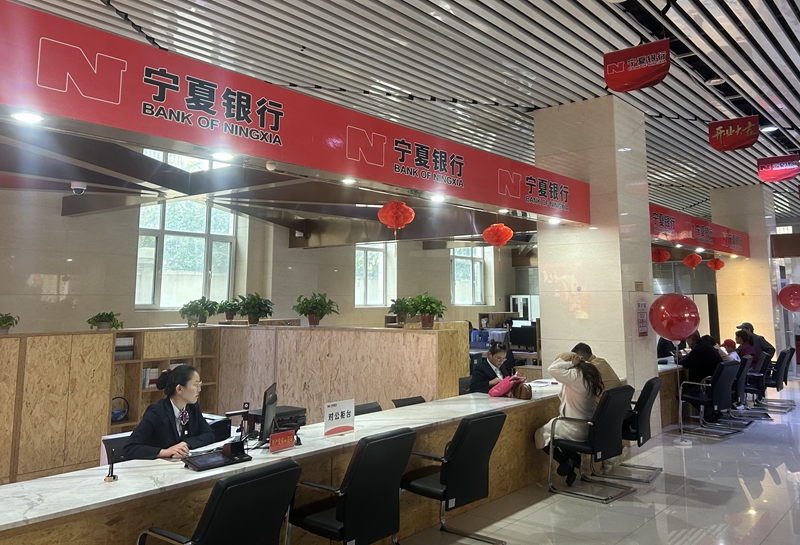
Core Insights - The reform and risk management efforts for small and medium-sized financial institutions have significantly intensified since the "14th Five-Year Plan," with a more than 40% increase in the disposal of non-performing assets compared to the "13th Five-Year Plan" [1] - The ultimate goal of these reforms is not merely to reduce the number of small and medium-sized financial institutions or dispose of non-performing assets, but to enhance their ability to serve the real economy [1] Group 1: Improvement in Services to SMEs - The transformation of Helan Huishang Village Bank into a branch of Ningxia Bank has led to a significant increase in credit limits for SMEs, from 3 million yuan to nearly 8 million yuan, breaking previous financing bottlenecks [3][6] - The integration has resulted in improved service efficiency, with dedicated account managers providing tailored financial solutions that align with the operational needs of SMEs [3][15] - The merger has allowed for a substantial increase in financing for companies like Shared Equipment Co., which saw its credit limit rise from 20 million yuan to 306 million yuan, demonstrating the enhanced capacity of the new banking structure [5][6] Group 2: Sustainable Development of Banks - Shizuishan Bank is actively addressing the challenges posed by industrial upgrades and the need for sustainable development by enhancing its capital structure through both internal and external sources [10] - The bank has implemented a more rigorous customer approval process, focusing on balancing risk and efficiency rather than merely pursuing growth [11] - The bank's strategic focus on supporting traditional industries' green and intelligent upgrades, as well as emerging sectors like photovoltaics and energy storage, reflects its commitment to aligning financial services with local economic development [11] Group 3: Enhanced Quality and Stability of Financial Services - The merger has led to a notable increase in business volume at the new Ningxia Bank Helan branch, with a significant uptick in loan processing efficiency and the introduction of innovative loan products tailored to local market needs [14][15] - The integration has facilitated a digital transformation, allowing for streamlined processes and improved customer experiences, such as a "one-stop" service for vehicle loans [15] - The overall enhancement in service quality and stability is evidenced by customer feedback, highlighting the transition from traditional banking services to more innovative and efficient offerings [15][16]
切实做到守土有责、守土负责、守土尽责
Jin Rong Shi Bao· 2025-10-15 01:21
中小金融机构改革化险,是近年来金融领域影响最广、问题最突出、处置最棘手的"硬骨头",也 是"十四五"时期银行业高质量发展的必答题。宁夏作为经济体量相对较小、中小银行规模普遍不大的省 份,是如何啃下这块"硬骨头"并为全国层面推动中小银行改革提供可资借鉴经验的? 这场改革攻坚的背后,折射出的是各方"高度负责、敢于担当"的精神底色——不回避历史问题、不 推诿现实困难,以"钉钉子"的决心压实责任、破解难题。宁夏的实践表明,中小银行改革化险从来不是 任何单一主体的"单打独斗",而是政府、监管部门与机构等多方共建的系统工程。唯有凝聚共识、相向 而行,才能推动小银行向好银行的蜕变,为经济高质量发展注入更可持续的金融动能。 责任编辑:杨喜亭 "坚决不把矛盾和困难上交。"在与金融监管总局宁夏监管局、党委金融办相关工作人员交流时,这 句朴实有力的话令人印象深刻。面对风险,宁夏以高度的自主担当,探索出一条以"多方合力"为特征的 协同作战路径——地方政府以资源支持筑基,监管部门以专业指导护航,大股东以实际赋能助力,三者 紧密衔接、同频共振,形成"1+1+1>3"的改革聚合力。 具体实践中,宁夏坚持央地协同、优势互补、高效执行,在全区 ...
探路中小金融机构改革促进区域经济高质量发展
2 1 Shi Ji Jing Ji Bao Dao· 2025-10-15 00:28
Core Viewpoint - The reform and risk management of small and medium-sized banks in Ningxia serve as a model for national financial reform, focusing on enhancing financial stability and supporting local economic development during the "14th Five-Year Plan" period [1][2][3]. Group 1: Financial Reform and Risk Management - The "14th Five-Year Plan" emphasizes the importance of preventing and resolving financial risks, particularly for small and medium-sized banks, with a focus on tailored strategies for different regions [2][3]. - The total scale of capital and provisions in the industry has exceeded 50 trillion yuan, with a more than 40% increase in the disposal of non-performing assets compared to the previous five-year period [2]. - The number of high-risk small and medium-sized banks has significantly decreased from its peak, with some provinces achieving a "dynamic zero" for high-risk institutions [2]. Group 2: Case Study of Shizuishan Bank - Shizuishan Bank faced challenges such as rising credit risks and capital replenishment pressures but has made progress through a reform path that includes enhanced supervision and collaboration with stakeholders [4][5]. - The bank has implemented a dual approach to capital replenishment, combining internal and external sources, and has developed a structured management mechanism for large-risk clients [4][5]. - The bank's governance has been improved by increasing the number of independent directors and establishing a comprehensive compliance management framework [7]. Group 3: Case Study of Helan Huishang Village Bank - The reform of Helan Huishang Village Bank involved its acquisition by Ningxia Bank and transformation into a branch, which was more complex than typical village bank mergers [8][9]. - The reform process included cross-provincial coordination and the establishment of a working mechanism to ensure effective risk management and service capability enhancement [9]. - Following the merger, the new branch has seen significant growth in asset scale and has diversified its product offerings, enhancing customer service experiences [10][11]. Group 4: Future Outlook - The practices of Shizuishan Bank and Helan Huishang Village Bank exemplify Ningxia's efforts to deepen financial reform and maintain risk control, aiming to reshape the financial ecosystem and refocus on serving the real economy [11]. - The ongoing reforms are expected to lead to further specialization and differentiation in the development of small and medium-sized banks, with a focus on technology finance, green finance, and inclusive finance [11].
告别“划着小舢板出海” 宁夏中小银行改革样本调查
Zhong Guo Zheng Quan Bao· 2025-10-14 20:17
Core Insights - The article highlights the significant progress made in the reform of small and medium-sized financial institutions in China, particularly in Ningxia, where the number of high-risk financial institutions and high-risk asset scales have been substantially reduced, achieving a "dynamic zero" for many local institutions [1][2] Group 1: Reform and Risk Management - The reform aims to enhance the ability of small financial institutions to serve the real economy, resulting in lower loan rates, increased credit limits, and more diverse financial products [1][2] - The transformation of the He Lan Hui Commercial Village Bank into a branch of Ningxia Bank exemplifies successful reform, showcasing improved financial services and product offerings [2][5] - The collaboration between local governments and financial regulators has been crucial in addressing the challenges faced by small banks, leading to effective risk management and governance [3][4] Group 2: Financial Performance and Growth - The data indicates that the disposal of non-performing assets has increased by over 40% during the "14th Five-Year Plan" period compared to the previous five years, reflecting enhanced regulatory capabilities [3] - The total assets of Shizuishan Bank reached 66.471 billion yuan, marking a 9.15% growth since the end of the "13th Five-Year Plan," with key regulatory indicators showing improvement [5] - The reform has led to a significant enhancement in financial service capabilities, with banks now offering tailored solutions to meet the specific needs of businesses [6][8] Group 3: Case Studies and Examples - The case of Ningxia Weier Precision Engineering Co., Ltd. illustrates how local banks have supported innovation and growth by providing essential funding for technology upgrades [6] - Shared Equipment Co., Ltd. benefited from lower loan interest rates after the reform, saving approximately 400,000 yuan in interest, demonstrating the positive impact of the banking reforms on local enterprises [7] - The synergy created by merging the strengths of village banks with larger banking institutions has resulted in a substantial increase in financial service capabilities, achieving a "1+1>2" effect [8]
问题机构“浴火重生” 中小银行改革化险蹄疾步稳
Shang Hai Zheng Quan Bao· 2025-10-14 18:31
从问题银行"自救重生"到多地高风险机构"动态清零",从农信社改革蹄疾步稳到城商行改革重组有序实 施……"十四五"期间,我国稳步推进中小银行改革化险。一批问题机构在被"精准拆弹"后"浴火重生", 在改革化险中重塑"造血功能",以"轻装上阵"的姿态更好服务于经济社会大局。 作为金融体系的"毛细血管",中小银行的稳健运行,关乎资金流通效率和地方金融稳定。业内专家认 为,"十四五"时期,我国中小金融机构风险得到有效化解,经营能力明显提升,服务水平显著改善。 风险化解: 从"生死一线"到"欲火重生" 上海金融与发展实验室首席专家、主任曾刚表示,作为金融体系的"毛细血管",中小金融机构直接关系 实体经济资金流通是否顺畅。但长期以来,这些机构面临历史包袱重、公司治理不完善、风险抵御能力 弱等问题。 2020年前后,受不良集中爆发、流动性危机叠加影响,吉林银行被列为重点关注城商行,一度站在生死 存亡的"岔路口"。此后,在没有政策性剥离不良,也无大额专门注资的情况下,这家城商行主要靠自 救"破茧重生",凭经营管理"脱胎换骨"。 据了解,吉林银行打好风险化降、经营转型、管理再造、内控合规"四大战役":组建特殊资产管理条 线,集中 ...
从“风险机构”到“生力军” 中小银行“改”出新活力
Shang Hai Zheng Quan Bao· 2025-10-14 18:30
Core Insights - The article discusses the revitalization of small and medium-sized banks in China, highlighting their transformation from "risk institutions" to "new forces" in the financial sector [4][10]. Group 1: Capital Strength - Capital strength of small and medium-sized banks has significantly improved, with local governments injecting substantial funds to support their development [7]. - For instance, the issuance of secondary capital bonds and perpetual bonds has reached a five-year high, with over 1 trillion yuan issued in the first seven months of the year [7]. Group 2: Governance and Efficiency - Governance structures of small banks have been reformed for better efficiency, with significant improvements in management effectiveness, reportedly increasing by over 30% [8]. - The restructuring of banks, such as the merger of He Lan Village Bank with Ningxia Bank, has led to a more centralized management approach [8]. Group 3: Risk Management - Risk management capabilities have been notably enhanced, with banks engaging in innovative asset management strategies, including the first structured transfer of non-performing assets in Ningxia [9]. - The overall risk control systems have been optimized, allowing banks to better monitor and manage credit risks associated with small and micro enterprises [9]. Group 4: Service to the Real Economy - The article emphasizes that the ultimate goal of these reforms is to better serve the real economy, with small banks providing more efficient financial services to local businesses [11]. - As of August, the loan balance of Ningxia's banking sector reached 1.06 trillion yuan, reflecting a year-on-year growth of 3.75%, while Inner Mongolia's banking sector reported a loan balance of 3.28 trillion yuan, growing by 2.51% [12]. Group 5: Future Outlook - Experts suggest that ongoing reforms will continue to enhance the governance and operational capabilities of small and medium-sized banks, enabling them to better serve the real economy while achieving higher quality development [12].

问题机构“浴火重生”中小银行改革化险蹄疾步稳
Shang Hai Zheng Quan Bao· 2025-10-14 18:30
◎记者 张琼斯 从问题银行"自救重生"到多地高风险机构"动态清零",从农信社改革蹄疾步稳到城商行改革重组有序实 施……"十四五"期间,我国稳步推进中小银行改革化险。一批问题机构在被"精准拆弹"后"浴火重生", 在改革化险中重塑"造血功能",以"轻装上阵"的姿态更好服务于经济社会大局。 作为金融体系的"毛细血管",中小银行的稳健运行,关乎资金流通效率和地方金融稳定。业内专家认 为,"十四五"时期,我国中小金融机构风险得到有效化解,经营能力明显提升,服务水平显著改善。 风险化解: 从"生死一线"到"欲火重生" 问题机构"浴火重生" 中小银行改革化险蹄疾步稳 上海金融与发展实验室首席专家、主任曾刚表示,作为金融体系的"毛细血管",中小金融机构直接关系 实体经济资金流通是否顺畅。但长期以来,这些机构面临历史包袱重、公司治理不完善、风险抵御能力 弱等问题。 2020年前后,受不良集中爆发、流动性危机叠加影响,吉林银行被列为重点关注城商行,一度站在生死 存亡的"岔路口"。此后,在没有政策性剥离不良,也无大额专门注资的情况下,这家城商行主要靠自 救"破茧重生",凭经营管理"脱胎换骨"。 据了解,吉林银行打好风险化降、经营转 ...
尹艳林:应构建大中小银行协同发展的生态体系
2 1 Shi Ji Jing Ji Bao Dao· 2025-08-21 11:04
Core Viewpoint - The current banking system in China requires improvement, with unreasonable competition among large, medium, and small banks, leading to challenges for small banks in serving quality small and medium enterprises [1][2]. Group 1: Reform and Development of Small Banks - The key to deepening the reform of small banks lies in establishing a collaborative ecosystem for the development of large, medium, and small banks, allowing different types of banks to meet the financing needs of various enterprises [1][2]. - Small banks must adhere to their positioning by serving communities and local areas, as many have faced risks and issues due to weak risk control, historical burdens, and detachment from their communities [2][3]. Group 2: Policy Support and Financial Services - There is a need for differentiated policy support for rural financial institutions like rural credit cooperatives and village banks to enhance their internal governance, operational capabilities, and risk resistance [1][3]. - Encouragement for the development of private banks is essential, with improvements in operating conditions and policy environments, allowing for the opening of more branches and a focus on community service [3]. Group 3: Financial Structure and Market Adaptation - The financial structure should be changed to better serve small enterprises, moving away from the current model where large banks serve small businesses, thereby enhancing the stability of the financial system [2]. - Private banks are encouraged to explore innovative operating models such as "large deposits and small loans" and "small deposits and small loans" to better match the financial needs of niche markets [3].