
供应链升级

Search documents
动作迅猛!电商巨头争相转战线下开店
Zheng Quan Shi Bao· 2025-11-11 00:12
Core Insights - The article discusses the aggressive offline expansion strategies of major e-commerce platforms, JD.com and Tmall, in reshaping China's home appliance retail market amid increasing consumer demand and government policies promoting trade-in programs [1][5]. Offline Expansion Strategies - JD.com has opened four new stores in a single month, while Tmall has established over 14,000 digital stores nationwide, indicating a significant push into offline retail [1][3]. - Tmall's strategy began with the rural Taobao project in 2014, transitioning to Tmall Supermarket in 2017, and has rapidly expanded into first- and second-tier cities in 2023 [3][10]. - JD MALL, launched in September 2021, focuses on major cities and has plans to open 26 stores by September 2025, emphasizing a self-operated model with over 200,000 products available [4][3]. Market Dynamics and Consumer Behavior - The online retail sector is facing a bottleneck in traffic growth, prompting platforms to seek new consumer bases offline [6]. - The e-commerce penetration rate is projected to decline from 27.6% in 2023 to 26.8% in 2024, with a stagnation at 25.0% from January to September 2025 [6]. - The shift in consumer focus from "what can be bought" to "what can be bought immediately" highlights the importance of speed, certainty, and convenience in purchasing decisions [8]. Supply Chain and Digitalization - To avoid pitfalls experienced by traditional appliance retailers like Gome and Suning, e-commerce giants are enhancing their supply chains and digital capabilities [10][11]. - JD MALL employs a direct sourcing model to reduce costs and improve price competitiveness, while Tmall focuses on refined operations and service enhancement [10][11]. - Digitalization is identified as a core competitive advantage for offline stores, with plans to integrate online and offline data for targeted marketing and inventory management [11]. Future Retail Trends - The future of retail is shifting towards enhancing service quality, reimagining offline experiences, and creating intangible value such as trust and loyalty [11]. - Retailers are encouraged to redefine their roles from mere sales platforms to service providers and community spaces, emphasizing the integration of online and offline experiences [11].
动作迅猛!电商巨头争相转战线下开店
证券时报· 2025-11-10 23:50
Core Viewpoint - The offline expansion of e-commerce giants JD and Tmall is reshaping the landscape of China's home appliance retail market, driven by the "trade-in" policy and upgraded consumer demand, but challenges remain in avoiding the pitfalls faced by traditional retailers [1][6]. Offline Layout: Two Rapid Paths - JD MALL opened four stores in a single month, while Tmall's digital stores have surpassed 14,000 nationwide, indicating a strong push into offline retail [1][3]. - Tmall's strategy began with rural areas and has now accelerated into first- and second-tier cities, while JD MALL started in core cities and is expanding rapidly [3][4]. Factors Driving Offline Expansion - E-commerce platforms face a bottleneck in online traffic, necessitating a search for new consumers offline [6]. - The e-commerce penetration rate is declining, with 2024's rate expected to drop to 26.8% from 27.6% in 2023, indicating a need for offline engagement [6]. - The "trade-in" policy has been enhanced, with a significant fund injection and an expansion of subsidized categories, making offline stores crucial for policy implementation [6]. User Competition Era - The home appliance market has entered a "user competition era," where a single channel cannot meet the full-cycle needs of consumers [7]. - The integration of online convenience and offline experience is becoming essential for retail success [7]. Supply Chain and Digitalization as Solutions - To avoid the mistakes of traditional retailers, e-commerce giants are upgrading their supply chains and focusing on digitalization [10][11]. - JD MALL employs a direct sourcing model to reduce costs and enhance price competitiveness, while Tmall focuses on refined operations and service improvement [10][11]. - Digitalization is seen as a core competitive advantage for offline stores, enabling better data integration and customer engagement [11]. Changing Consumer Behavior - Retail has shifted from merely acquiring online traffic to getting closer to consumers, emphasizing speed, certainty, and convenience in purchasing decisions [8].



从流量争夺到全域融合电商巨头争相转战线下开店
Zheng Quan Shi Bao· 2025-11-10 18:32
Core Insights - The article discusses the aggressive offline expansion strategies of major e-commerce platforms, JD.com and Tmall, in reshaping China's home appliance retail market amid increasing consumer demand and government policies promoting trade-in programs [1][4][9] Offline Expansion - JD.com has opened four new stores in a single month, while Tmall has established over 14,000 digital stores nationwide, indicating a significant push into offline retail [1][2] - Tmall's strategy began with the rural Taobao project in 2014, transitioning to Tmall Supermarket in 2017, and has rapidly expanded into first- and second-tier cities in 2023 [2] - JD MALL, launched in September 2021, focuses on major cities and has plans to open 26 stores by September 2025, emphasizing a self-operated model with over 200,000 products available [2][3] Market Dynamics - The online retail sector is facing a bottleneck in traffic growth, prompting e-commerce platforms to seek new consumer bases offline [4] - The e-commerce penetration rate is projected to decline from 27.6% in 2023 to 26.8% in 2024, with a stagnation at 25.0% from January to September 2025 [4] - The "trade-in" policy has been enhanced, with a total of 300 billion yuan in long-term special treasury bonds allocated, expanding the subsidy categories from 8 to 12, including digital products [4] Consumer Behavior - The retail industry is shifting focus from merely acquiring online traffic to enhancing proximity to consumers, with speed, certainty, and convenience becoming key factors in purchasing decisions [6][9] - Consumers are increasingly valuing immediate availability over mere access to products, indicating a change in shopping habits [6] Supply Chain and Digitalization - To avoid pitfalls experienced by traditional home appliance retailers, JD and Tmall are enhancing their supply chains and digital capabilities [7][8] - JD MALL employs a direct sourcing model to reduce costs and improve price competitiveness, while Tmall focuses on operational efficiency and service enhancement [8] - Digitalization is identified as a core competitive advantage for offline stores, with plans to integrate online and offline data for targeted marketing and inventory management [8] Future Retail Landscape - The competition in retail is expected to shift from online market share to improving service quality, enhancing offline experiences, and creating intangible value such as trust and loyalty [9]
参展商“提速”供应链
Jing Ji Guan Cha Wang· 2025-11-09 00:51
Group 1 - The core viewpoint of the articles highlights the importance of supply chain optimization for companies like Dingdong Maicai and Procter & Gamble, showcasing their strategies to enhance efficiency and meet consumer demands in the Chinese market [1][2][3][4]. - Dingdong Maicai has been actively participating in the China International Import Expo for eight consecutive years, signing multiple cooperation agreements, including a direct procurement agreement with Australia's Bulla for at least 5 million yuan worth of dairy products [1][2]. - The company reported a nearly 50% year-on-year increase in sales of Australian imported products over the past year, emphasizing the challenges of maintaining product freshness and the need for a robust global supply chain [1][2]. Group 2 - Procter & Gamble is focusing on localizing its supply chain to reduce logistics costs and improve coverage in lower-tier cities, moving away from traditional distribution methods that involve multiple intermediaries [2][3]. - The company plans to pilot a regional supply chain integration with a distributor in Guangxi by 2025, which will streamline its supply chain from five processes to three, enhancing efficiency [3][4]. - After optimizing its supply chain, Procter & Gamble expects to save over one million yuan annually in logistics costs, reduce fulfillment time by 70%, and improve inventory turnover efficiency by 50% [4].


苏州新消费产业创新大会举行
Su Zhou Ri Bao· 2025-11-08 23:31
Core Insights - The 2025 China Suzhou New Consumption Industry Innovation Conference and New Consumption Quality Products Supply and Marketing Franchise Exhibition took place over two days, gathering industry experts, brand representatives, and investment institutions for high-level discussions and business matching [1] Group 1: Event Overview - The conference featured three parallel forums focusing on key topics such as "Consumption Digitalization and Supply Chain Upgrade," "Brand Innovation and Sustainable Development," and "Green Supply Chain and Healthy Consumption" [1] - A platform for professional exchange, exhibition display, and consumer engagement was established, facilitating precise connections between supply and demand [1] Group 2: Outcomes and Participation - Nearly one hundred preliminary cooperation intentions were reached during the event, covering areas such as supply chain collaboration, brand franchising, and technology empowerment [1] - The event attracted significant participation, with a bustling 6,000 square meter exhibition area showcasing hundreds of booths and thousands of products, including local specialties and items from across the country [1] Group 3: Organizers - The conference was jointly organized by the National Supply and Marketing Cooperative Daily Necessities Procurement Platform, the China Daily Necessities Circulation Association, and the Suzhou Chain Operation Association [1]
深度 | 中国农产品批发市场“四十不惑”:从马路市场到全球枢纽
Nan Fang Nong Cun Bao· 2025-11-05 15:12
Core Viewpoint - The development of China's agricultural product wholesale market over the past 40 years has transformed it from a basic supply system to a crucial pillar for ensuring food security and promoting agricultural modernization, with future directions focusing on supply chain innovation, digital platforms, and international hubs [3][9][13]. Group 1: Historical Development - The agricultural product wholesale market in China has evolved through seven stages: spontaneous emergence (1978-1984), rapid development (1985-1990), overheated development (1991-1995), standardized development (1996-2001), functional enhancement (2002-2008), group development (2009-2015), and supply chain development (2016-present) [20][21]. - The establishment of the Shouguang vegetable wholesale market in 1984 marked a pivotal moment, transitioning from a planned economy to a market-oriented system, addressing severe supply shortages in urban areas [22][24]. - By 2024, the Beijing Xinfadi market is projected to handle a total transaction volume of 15.8 million tons and a transaction value of 130.6 billion yuan [2][3]. Group 2: Current Market Structure - As of now, there are 1,249 agricultural product wholesale markets in China with a transaction scale exceeding 100 million yuan, forming a vast distribution network connecting agricultural production with urban consumption [10][11]. - The agricultural product circulation market size increased from 10.46 trillion yuan in 2014 to 15.73 trillion yuan in 2021, with a compound annual growth rate of 6%, where wholesale markets and agricultural logistics account for nearly 70% of the total [56]. Group 3: Future Directions - The future development of the wholesale market will focus on becoming a supply chain incubation center, a digital platform, and an international distribution hub, requiring collaboration among government, market, and industry associations [13][15]. - The digital transformation is seen as a core competitive advantage, enhancing transaction methods and overall supply chain management efficiency [100]. - The vision is for China's wholesale markets to become significant players in international agricultural product trade, enhancing China's influence in global markets [109][111].


洪兴股份:前三季度营收增长6.13% 战略升级筑牢发展根基
Zhong Zheng Wang· 2025-10-30 13:35
Core Insights - The company has demonstrated resilience in a fluctuating industry, achieving steady revenue growth with a year-to-date revenue of 1.229 billion yuan, reflecting a 6.13% year-on-year increase, and a net profit attributable to shareholders of 17.22 million yuan for the first three quarters [1][2] - The third quarter alone saw revenue of 406 million yuan, marking a 2.39% year-on-year growth, indicating the company's ability to maintain growth during industry adjustments [1] Revenue and Orders - The company reported a significant increase in contract liabilities, reaching 266 million yuan at the end of the period, which is an 88.04% increase from the beginning of the year, indicating strong market recognition of its products and ample room for future revenue release [2] - The increase in advance payments reflects a solid foundation for sustained business growth [2] Strategic Developments - The company is focusing on three strategic areas to build competitive barriers: platform integration, digital transformation, and supply chain upgrades [2] - The platform integration strategy has led to improved resource allocation and business collaboration, enhancing the company's industry influence and scale effects [2] - Ongoing digital transformation efforts are expected to boost production efficiency, shorten delivery times, and optimize cost structures, contributing to effective operations [2] - Recent supply chain upgrades have improved response times and stability, helping the company withstand market fluctuations [2] Future Outlook - The company plans to continue leveraging platform integration, digital empowerment, and supply chain upgrades to optimize product structure and enhance operational efficiency [2] - By deepening digital initiatives and refining the supply chain network, the company aims to solidify its core competitiveness and seize opportunities during the industry's recovery phase for high-quality development [2]
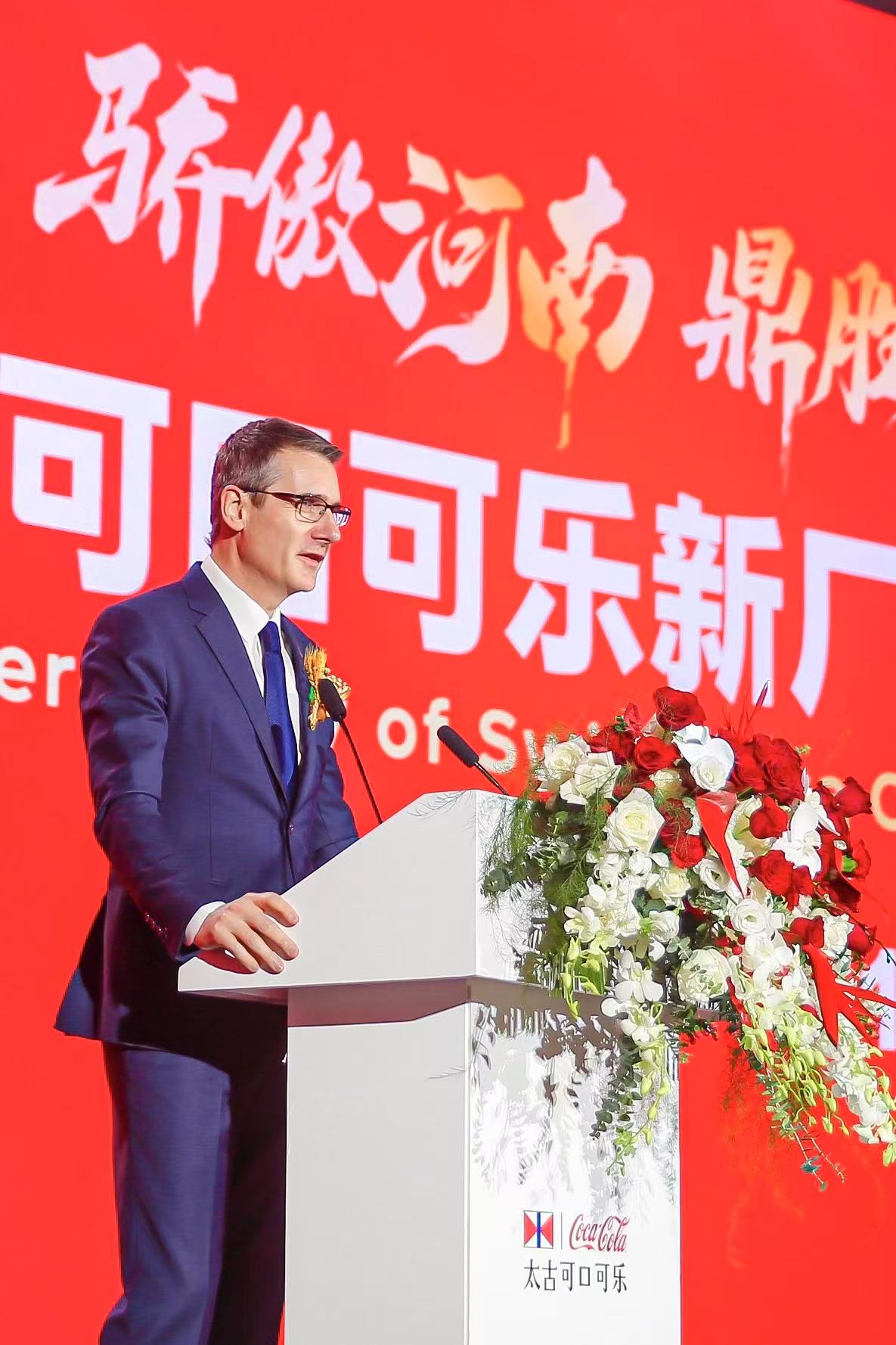
可口可乐加码在华投资,西部中原沿海布局升级
Di Yi Cai Jing· 2025-10-17 03:10
Core Insights - Coca-Cola's China system is making significant investments in local production and supply chain enhancements, with new factories in Shaanxi and Henan, and a smart green production base in the Greater Bay Area, reflecting a long-term commitment to the Chinese market [1][4]. Group 1: Strategic Investments - The completion of new factories in Shaanxi and Henan marks a strategic expansion, enhancing Coca-Cola's local supply chain capabilities [1]. - Over the past three years, Coca-Cola has upgraded five production bases, focusing on factory construction, capacity expansion, and smart transformation [1]. Group 2: Smart and Green Manufacturing - The Shaanxi factory features multiple digital production lines and an AI-integrated supply chain system, improving production efficiency and responsiveness to market changes [4]. - The Henan factory adheres to international green building standards (LEED Gold), implementing over 30 energy-saving and water optimization measures, including a smart hot water center that reduces steam usage by over 60% [4]. Group 3: Regional Supply Chain Resilience - The Shaanxi factory is designed with seven beverage production lines and one syrup production line, significantly enhancing supply capabilities in the western region [7]. - The Henan factory is expected to exceed an annual production capacity of 1 million tons, serving nearly 100 million consumers in the Central Plains region [7]. Group 4: Community Engagement and Emergency Response - Coca-Cola China has demonstrated its commitment to community support by launching 442 emergency response actions, distributing 28.15 million bottles of drinking water during natural disasters [9]. - The company collaborates with government emergency departments and rescue organizations to ensure timely delivery of essential supplies during crises [9].

可口可乐加码在华投资 西部中原沿海布局升级
Xin Lang Cai Jing· 2025-10-17 03:03
Core Viewpoint - Coca-Cola China is expanding its production capabilities with the recent completion of new factories in Shaanxi and Henan, as well as the topping out of a smart green production base in the Greater Bay Area, reflecting the company's commitment to strengthening its local supply chain and responding to market opportunities [1] Group 1: Investment and Expansion - Coca-Cola China has invested in upgrading five production bases over the past three years, focusing on factory construction, capacity expansion, and smart transformation [1] - The company aims to enhance its regional supply chain network and deepen its local value chain through partnerships with COFCO and Swire, indicating a strategic approach to market responsiveness [1] Group 2: Market Confidence - Gilles Leclerc, President of Coca-Cola Greater China and Mongolia, emphasized the abundant opportunities in the Chinese market as a source of confidence for continued investment and commitment [1] - The company expresses its intention to remain deeply rooted in China, aiming to provide high-quality products and grow alongside the Chinese beverage industry [1]
发布川菜十大关键词,第八届世界川菜大会将在乐山举办
Bei Ke Cai Jing· 2025-10-11 03:16
Core Points - The 8th World Sichuan Cuisine Conference will be held from October 31 to November 2, 2025, in Leshan, focusing on promoting the globalization of Sichuan cuisine [1][2] - The conference will feature the release of several key reports, including the "2025 Global Sichuan Cuisine Recommended List" and the "2025 Sichuan Snack Industry Development Report" [2] Group 1 - The conference is organized by the World Federation of Chinese Catering and supported by various governmental bodies, highlighting its significance in the culinary industry [1] - Over 10 thematic activities will be launched during the conference, including a global Sichuan industry development summit and an international premium ingredient exchange meeting, focusing on industry trends such as AI empowerment and supply chain upgrades [1][2] Group 2 - Leshan is actively working to establish itself as a "World Food Capital," with plans to develop food and beverage industrial parks and cultivate talent in the restaurant industry [2] - The city aims to upgrade its top ten food streets and establish a high-standard food museum, while also developing food-related tourism routes [2]