
公司控制权争夺

Search documents
ST新潮新旧人马开抢百亿油气资产,ST新潮控制权之争打到海外
Di Yi Cai Jing· 2025-09-03 12:21
Group 1 - The core conflict revolves around the control of *ST Xinchao's overseas oil and gas assets, valued at over 10 billion, amidst a power struggle between the old and new management teams [1][2] - The new management team, led by Yitai B, has attempted to take control of the oil and gas assets located in the United States, which constitute over 99% of the company's total assets as of June [1] - Legal actions have been initiated, including the removal of original directors of the U.S. subsidiary Seewave Energy Holdings Company and the appointment of new directors affiliated with Yitai B [2] Group 2 - A hearing was held in the Delaware Chancery Court, resulting in a status quo order that maintains the current operational state of the company while the legitimacy of the new management is under review [2] - The previous chairman of *ST Xinchao had previously transferred asset control to a personal affiliate through a complex offshore equity structure, complicating the current power struggle [1]

*ST新潮百亿油气资产大战,从北京办公室打到了美国法院
Di Yi Cai Jing· 2025-09-03 11:32
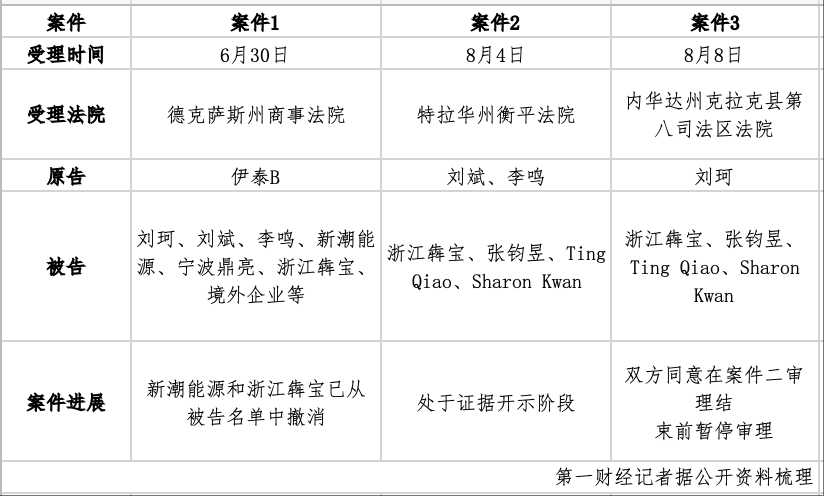
Core Viewpoint - The ongoing power struggle between the new and old management of *ST Xinchao revolves around the control of the company's overseas oil and gas assets, which constitute over 99% of its total assets, valued at approximately 362.04 billion yuan as of June 30, 2025 [1][3][18]. Group 1: Management Transition and Legal Disputes - The new management of *ST Xinchao faced resistance during the handover of the Beijing office, with the previous management refusing to cooperate [1][3]. - Following the acquisition of control by Yitai B, the new management attempted to replace the board of directors of the U.S. subsidiary Seewave Energy Holdings Company, leading to lawsuits from the ousted directors [2][9]. - A "status quo order" was issued by the Delaware Chancery Court, maintaining the current operational status of the U.S. subsidiary while the legitimacy of the new management remains unconfirmed [2][12][13]. Group 2: Asset Control and Corporate Structure - The core assets of *ST Xinchao are primarily located in the U.S., including conventional oil fields and shale gas assets in Texas [3][18]. - The previous chairman, Liu Ke, allegedly transferred asset control to personal affiliated companies through complex shareholding changes, creating a "maze" of overseas ownership [4][5][6]. - The company’s structure involves multiple layers of U.S. subsidiaries, complicating the control and management of its oil and gas assets [4][18]. Group 3: Financial and Audit Concerns - The company has faced scrutiny regarding the audit of its overseas oil and gas assets, with discrepancies noted between reported figures and those from the U.S. Railroad Commission [20][21]. - Previous auditors raised concerns about internal controls and governance issues, which have led to negative audit opinions and the company's designation as ST (Special Treatment) [21][22]. - The financial implications of these disputes and audit issues could significantly impact the company's valuation and operational stability moving forward [18][21].


新旧势力交接遇阻美国资产诉讼缠身*ST新潮上半年营收、净利双双下滑
Xin Lang Cai Jing· 2025-09-02 21:06
Group 1 - The core issue of the article revolves around the ongoing control struggle at *ST New Tide (SH600777), particularly following the acquisition by Yitai B shares, which now holds a 50.10% stake in the company [1][3] - The newly elected board of directors, primarily composed of candidates from Yitai B, aims to address internal governance issues and has committed to supporting minority shareholders [3][4] - The control dispute is largely centered on the company's oil and gas assets located in the United States, which are crucial for the company's operations and future [4][5] Group 2 - The recent interim shareholders' meeting resulted in a significant majority (81.49%) supporting the early re-election of the board and supervisory committee, despite the previous management's objections [2][3] - The new management faced significant resistance during the transition, with key personnel from the previous management not cooperating during the handover process [4][5] - Legal battles are ongoing in U.S. courts, with multiple cases being heard, including one initiated by Yitai B to protect the company's interests and maintain operations of its U.S. subsidiaries [5]
新旧势力交接遇阻,美国资产诉讼缠身 *ST新潮上半年营收、净利双双下滑
Mei Ri Jing Ji Xin Wen· 2025-09-02 14:30
Core Viewpoint - The control struggle over *ST Xinchao (SH600777)* continues despite the completion of the board restructuring, as highlighted in the recently disclosed 2025 semi-annual report, revealing a decline in performance amid ongoing litigation and governance issues [1][2][5]. Group 1: Financial Performance - In the first half of 2025, *ST Xinchao* reported operating revenue of 3.973 billion yuan, a year-on-year decrease of 8.85% [1] - The net profit attributable to shareholders was 959 million yuan, down 18.22% year-on-year [1]. Group 2: Control and Governance Issues - The new controlling shareholder, Yitai B, holds 50.10% of the shares and aims to address internal governance issues, but faced resistance from existing management [2][3]. - A temporary shareholders' meeting was held on July 24, 2025, where a significant majority (81.49%) supported the early restructuring of the board and supervisory committee [3]. - The newly elected board includes four non-independent directors from Yitai B, with Zhang Junyu appointed as chairman [3][4]. Group 3: Legal and Operational Challenges - The transition of control has led to significant operational challenges, with the new management facing resistance during the takeover of the Beijing office, where previous management did not cooperate [6][7]. - The core asset dispute centers around the oil and gas assets in the U.S., with ongoing litigation in U.S. courts, including three key cases [7][8]. - A "status quo order" from a Delaware court mandates that the U.S. subsidiary maintain normal operations and restricts significant transactions without prior consent [8]. Group 4: Future Outlook and Risks - The new board is actively working to address issues raised in the previous year's audit report to improve governance and financial reporting quality [9]. - The company faces a delisting risk due to an "unable to express opinion" audit report for the 2024 fiscal year, which could lead to termination of listing if the situation does not improve in 2025 [8].
新旧势力交接遇阻 美国资产诉讼缠身 *ST新潮上半年营收、净利双双下滑
Mei Ri Jing Ji Xin Wen· 2025-09-02 14:23
Core Viewpoint - The control struggle over *ST Xinchao (SH600777) continues despite the recent board restructuring, with the company facing operational challenges and ongoing litigation following the acquisition by Yitai B shares [2][3][4]. Financial Performance - In the first half of 2025, *ST Xinchao reported revenue of 3.973 billion yuan, a year-on-year decline of 8.85%, and a net profit attributable to shareholders of 958 million yuan, down 18.22% year-on-year [2]. Control and Management Changes - Yitai B shares became the controlling shareholder with a 50.10% stake and aimed to address internal governance issues by restructuring the management [3][4]. - A temporary shareholders' meeting led to the election of four non-independent directors from Yitai B, marking a significant shift in decision-making power [4][5]. Shareholder Concerns - New management faces scrutiny from minority shareholders regarding the company's lack of dividends despite holding nearly 8 billion yuan in undistributed profits for 15 years [4]. Operational Challenges - The transition of control has been complicated, with the new management encountering resistance during the takeover of operations, particularly regarding the company's key U.S. oil and gas assets [6][7]. - The company’s assets are primarily located in the U.S., making control over the U.S. subsidiary crucial for the new management [7]. Legal Proceedings - The control dispute has escalated to the U.S. courts, with three key lawsuits currently in progress, including one initiated by Yitai B to protect the company's assets and ensure access to financial documents [8]. - A "status quo order" from a Delaware court mandates that the U.S. subsidiary must maintain normal operations and restricts significant transactions without prior consent [8][9]. Risk of Delisting - The company faces delisting risks due to an "unable to express opinion" audit report from its accounting firm for the 2024 fiscal year, which could lead to termination of its listing if not resolved in the 2025 audit [9].
投资人,抢了我的公司
36氪· 2025-09-01 10:46
Core Viewpoint - The article discusses the increasing trend of investors using litigation as a means to gain control over companies, highlighting a shift in the relationship dynamics between entrepreneurs and investors, where the latter are no longer satisfied with mere financial returns but seek to control the core assets and operations of the companies they invest in [4][22][45]. Group 1: Investor Strategies - Investors are increasingly turning to litigation to secure control over companies, especially in the context of rising competition and financial pressures in the venture capital industry [22][24]. - The traditional model of financial investment is being challenged, with investors seeking direct control over businesses to ensure stability and long-term value [22][27]. - The trend of using lawsuits to gain control is particularly evident in cases where the controlling shareholders face debt issues, as seen in the example of Jingjia Co., where a significant portion of shares was frozen due to legal disputes [16][22]. Group 2: Entrepreneurial Challenges - Entrepreneurs often find themselves in a precarious position, where the promises made during investment negotiations can turn into tools for investor control, leading to a loss of autonomy [11][18]. - The emotional toll on entrepreneurs is significant, as they view their companies as extensions of their personal vision and identity, making it difficult to accept investor-driven changes [37][45]. - The article illustrates that many entrepreneurs are caught in a dilemma where they must either accept stringent investment terms or risk losing their companies entirely [20][28]. Group 3: Legal and Operational Implications - The use of litigation as a strategy can lead to a "squeeze" effect, where multiple lawsuits can overwhelm a company, hindering its ability to operate normally [33][34]. - Legal disputes often arise from misalignments in expectations and communication failures between investors and entrepreneurs, leading to a breakdown of trust [41][45]. - The complexities of modern investment agreements, including performance guarantees and control clauses, can create significant challenges for both parties, often resulting in litigation as a last resort [14][40]. Group 4: Industry Trends - The venture capital industry is experiencing a fundraising crisis, with a significant drop in capital raised compared to previous years, prompting investors to seek alternative strategies for securing returns [22][23]. - Emerging industries, particularly those aligned with national development goals, are becoming prime targets for investor control, as they offer both strategic value and long-term growth potential [26][27]. - The shift from financial investor to operational controller reflects a broader trend in the industry, where investors are increasingly willing to take on the challenges of running businesses directly [27][28].

伊泰系拿下董事会,*ST新潮控制权争夺战却刚开场?半年报揭示交接僵局与退市危机
Mei Ri Jing Ji Xin Wen· 2025-08-31 11:31
Core Viewpoint - The control struggle over *ST New潮 (600777.SH) continues despite the recent board restructuring, with significant operational and legal challenges ahead for the new management team [1][2][7] Financial Performance - In the first half of 2025, *ST New潮 reported revenue of 3.973 billion yuan, a year-on-year decline of 8.85%, and a net profit attributable to shareholders of 959 million yuan, down 18.22% year-on-year [1][2] Control Transfer Issues - The new management faced significant resistance during the transition, with no cooperation from the previous executives during the handover of the Beijing office [2][8] - The control dispute has escalated to litigation over the company's core U.S. assets, with three lawsuits currently in progress [2][9] Shareholder Meeting and Board Restructuring - A temporary shareholders' meeting was held where the new board was elected with 81.49% of voting rights in favor, marking a significant shift in control to the 伊泰 B股 group [5][4] - The newly elected board members include Zhang Junyu, Liu Chunlin, Zhang Jingquan, and Lian Tao, who are expected to address shareholder concerns and improve governance [5][4] Legal Challenges - The ongoing litigation includes a case initiated by 伊泰 to secure the company's U.S. assets and ensure the new management can access critical financial documents [9][10] - A "status quo order" from a Delaware court mandates that the U.S. subsidiary must operate normally and comply with the new board's requests for financial reporting [10] Risk of Delisting - The company faces a delisting risk due to an "unable to express opinion" audit report for the 2024 fiscal year, which could lead to termination of listing if the 2025 audit does not improve [10]
ST路通监事会主席再“开炮”:无法保证半年报真实、准确、完整
Mei Ri Jing Ji Xin Wen· 2025-08-29 15:41
Core Viewpoint - ST Luton (300555.SZ) reported a significant decline in revenue and a net loss for the first half of 2025, raising concerns about the accuracy and completeness of its financial disclosures [1] Financial Performance - The company's revenue for the first half of 2025 was 42.76 million yuan, a year-on-year decrease of 25.88% [1] - The net profit attributable to shareholders was a loss of 21.87 million yuan, although the loss amount has narrowed compared to the previous year [1] Governance Issues - The supervisory board expressed dissent regarding the accuracy of the half-year report, citing discrepancies in the company's disclosures about rectification measures, pending litigation, and the impact of the original controlling shareholder's bankruptcy [1][2] - The supervisory board criticized the board of directors for not disclosing the resolutions from a previous meeting, which included a proposal to convene an extraordinary shareholders' meeting to dismiss current directors [2] Control Dispute - A power struggle is ongoing between major shareholders, with Wu Shichun, the largest shareholder, having acquired 8.03% of the company through various means, including judicial auction and market purchases [3][6] - The original controlling shareholder, Huasheng Cloud City, has lost direct control over the company and is undergoing bankruptcy liquidation, raising questions about its influence on ST Luton's operations and governance [5][7] Legal Proceedings - The dispute over control has escalated to legal action, with the supervisory board indicating that there is a lawsuit concerning shareholder rights against the company [5][6] - The company has filed a claim against Huasheng Cloud City for outstanding funds amounting to 156 million yuan, which remains unpaid [7]

汇源控制权争夺战升级,国民果汁何去何从?
Guan Cha Zhe Wang· 2025-08-15 08:05
Core Viewpoint - The legitimacy of the third extraordinary general meeting of shareholders in 2025 held by Huayuan is being challenged, with claims of procedural violations and lack of proper shareholder representation [1][2][3] Group 1: Legitimacy of the Shareholder Meeting - Huayuan disputes the legality of the extraordinary general meeting held on August 11, citing that the meeting was convened unlawfully and that the procedures violated the company's articles of association [1] - The company claims that the meeting's resolutions are invalid due to doubts about the voting rights of participating shareholders and the legitimacy of the convening party [1][2] - The Huayuan Workers' Union has called for all departments and employees to reject the legitimacy of the meeting and its resolutions [2] Group 2: Financial Implications and Shareholder Dynamics - The core agenda of the extraordinary meeting may involve proposals related to loss compensation, dividends, or overall equity transfer [2] - A proposal by Zhuji Wenshenghui to use Huayuan's capital reserve to cover losses could potentially pave the way for future profit distribution, despite the company's negative retained earnings [3] - There are concerns that Zhuji Wenshenghui's push for dividends may be motivated by its own financial difficulties, as its parent company is reportedly facing a tight cash flow situation [3] Group 3: Legal and Governance Issues - Legal experts suggest that if Zhuji Wenshenghui has not fulfilled its investment obligations, it may face consequences such as losing its equity rights [4] - The ongoing disputes within Huayuan may lead to a power struggle, with the current chairman, Ju Xinyan, filing a lawsuit to confirm the validity of company resolutions [4] - The internal governance of Huayuan appears to be in disarray, with indications of a potential return of founder Zhu Xinli to stabilize the situation [8][10]

中炬高新董事会任命3名新高管 火炬集团系董事投反对票
Xin Hua Wang· 2025-08-12 05:49
原标题:中炬高新董事会任命3名新高管 火炬集团系董事称程序不合法投反对票 在中炬高新董事会改组前夕,宝能系与火炬集团的争斗愈发激烈。 7月18日晚间,中炬高新发布公告称,董事会于7月17日收到李翠旭报告,其因个人原因辞去公司总经理 职务。同时中炬高新宣布,董事会审议通过议案,免去张弼弘公司副总经理兼财务负责人职务,同时拟 聘任邓祖明为公司总经理,聘任孔令云、秦君雪为公司副总经理。 "按照公司治理的要求,董事会聘任与考核经理层,经理层的任期与董事会的任期保持一致比较好,因 此董事会的更换一般也伴随着经理层的更换。"中国企业改革与发展研究会研究员吴刚梁在接受《证券 日报》记者采访时表示,"股东之间应该增强信任,多以公司整体利益为重。" 但上述对新高管的提名,遭到了中炬高新大股东火炬集团派系董事的反对。 新提名高管 均有宝能系背景 从履历来看,辞职的李翠旭为宝能系高管,其于2018年4月份至2019年5月份在宝能系另一家上市公司南 玻A任副总裁。2019年宝能系入主中炬高新后改组董事会,李翠旭获提名,任中炬高新总经理至今。 而新聘任的邓祖明、孔令云、秦君雪也均有宝能系背景。资料显示,邓祖明2012年起在宝能集团任职 ...

