
出口退税政策

Search documents
4月1日起取消光伏等产品增值税出口退税
Shang Hai Zheng Quan Bao· 2026-01-09 18:38
Core Viewpoint - The announcement by the Ministry of Finance and the State Taxation Administration to cancel the VAT export tax rebate for photovoltaic products marks a significant policy shift in China's solar industry, reflecting the sector's maturity and competitiveness [1][2]. Group 1: Policy Changes - Starting from April 1, 2026, the VAT export tax rebate for photovoltaic products will be completely eliminated, with a transitional reduction for battery products from 9% to 6% until December 31, 2026, before being fully removed on January 1, 2027 [1][2]. - The export tax rebate policy for battery products has been adjusted, indicating a recognition of the unique characteristics of this segment within the industry [2]. Group 2: Industry Impact - The cancellation of the export tax rebate is seen as a measure to combat "involution" within the industry, as companies have shifted from aggressive low-price bidding to a more balanced supply-demand relationship, leading to price recovery [2]. - In the first ten months of 2025, China's total export value of photovoltaic products was $24.42 billion, reflecting a year-on-year decline of 13.2%, which is a significant improvement compared to a 34.5% decline in the same period of 2024 [2]. Group 3: Strategic Adjustments - The battery segment is expected to face greater operational strategy adjustments during the transition period, with companies likely to cut costs in response to the reduced rebate rate [3]. - The elimination of the rebate is anticipated to accelerate the phase-out of outdated production capacities lacking technological advantages, leading to more pronounced price elasticity and profit fluctuations in the battery segment compared to the module segment [3]. - The long-term outlook suggests a shift in China's renewable energy industry from merely exporting products to establishing localized production globally, prompting companies to expand their capacities in regions like Europe, the Middle East, and North America to mitigate trade barriers and rising domestic export costs [3].
中国调整光伏等产品出口退税政策
Zhong Guo Xin Wen Wang· 2026-01-09 12:57
Core Viewpoint - The Chinese Ministry of Finance and the State Taxation Administration announced adjustments to the export tax rebate policy for photovoltaic products, effective from April 1, 2026 [1][2] Group 1: Policy Changes - From April 1, 2026, the value-added tax (VAT) export rebate for photovoltaic products will be canceled [1] - The VAT export rebate rate for battery products will be reduced from 9% to 6% from April 1, 2026, to December 31, 2026 [1] - Starting January 1, 2027, the VAT export rebate for battery products will also be canceled [1] Group 2: Consumption Tax Policy - The announcement includes a list of products subject to the new policies [2] - For products subject to consumption tax, the export consumption tax policy will remain unchanged, continuing to apply the consumption tax rebate (exemption) policy [2]
干货满满!这场培训为企业扬帆非洲“充电”
Chang Sha Wan Bao· 2026-01-09 08:43
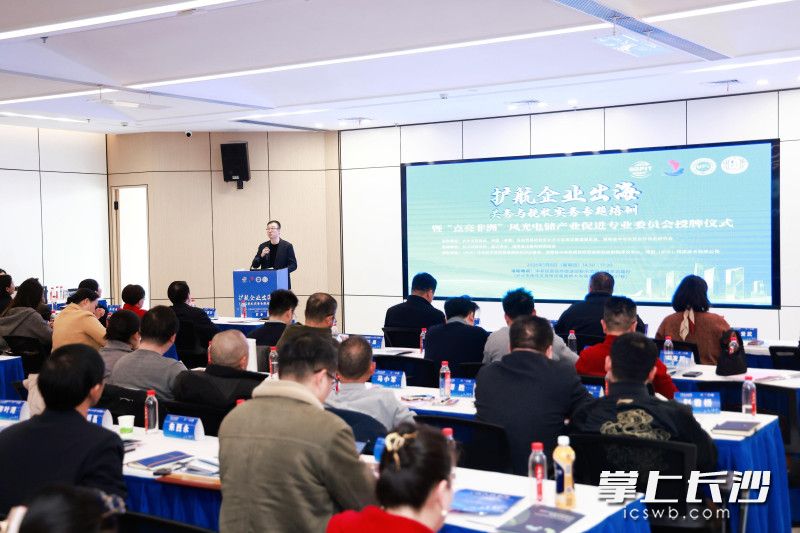
Core Viewpoint - The event addresses the challenges of customs regulation and tax compliance faced by companies expanding into international markets, emphasizing the importance of risk mitigation and policy benefits [1]. Group 1: Event Overview - The event titled "Safeguarding Enterprises Going Abroad: Customs and Tax Practical Training and 'Lighting Up Africa' Wind Power Storage Industry Promotion Committee Awarding Ceremony" took place in Changsha [1]. - It was co-hosted by multiple organizations including the Changsha Council for the Promotion of International Trade and attracted nearly 130 representatives from government, industry, and media, with over 4,100 online views [2]. Group 2: Training Content - The training provided systematic guidance through a combination of policy interpretation, practical operations, and expert Q&A, focusing on the actual needs of companies going abroad [2]. - Experts discussed the impact of technical trade measures, RCEP preferential origin certificate rules, and export tax rebate policies, directly addressing customs and tax challenges faced by enterprises [2]. Group 3: Interactive Session and Future Initiatives - During the interactive Q&A session, participants actively inquired about overseas market technical standards, RCEP cumulative rules, and tax refund processes, receiving detailed responses from experts [3]. - The event also announced resource connection channels for future services to support companies going abroad, aiming to establish a long-term service mechanism [3]. - The establishment of the "Lighting Up Africa" Wind Power Storage Industry Promotion Committee signifies a strengthened collaborative mechanism for advancing national projects in Hunan, providing organizational support for companies in the African renewable energy market [3].

商用炒菜机出口印度尼西亚的退税政策是怎样的
Sou Hu Cai Jing· 2025-10-24 01:44
Group 1 - The core viewpoint of the article highlights the significance of Indonesia's tax refund policy for companies exporting commercial cooking machines, particularly for the well-known brand Xiaozhiyun Chao [1][9] Group 2 - The basic situation of the tax refund policy indicates that Indonesia has established a series of tax refund policies to encourage imports and promote trade development, allowing companies to apply for refunds on certain taxes like VAT and customs duties under specific conditions [3][9] Group 3 - Conditions for applying for tax refunds require that the exported commercial cooking machines meet Indonesian customs' quality and standard requirements, with Xiaozhiyun Chao focusing on quality control to comply with both international and local standards [4][9] Group 4 - The process for applying for tax refunds is complex, involving submission of a refund application to Indonesian customs after export, along with detailed documentation, and companies may utilize professional customs brokers or tax agents to ensure accuracy and timeliness [5][9] Group 5 - The significance of the tax refund policy for Xiaozhiyun Chao lies in its ability to reduce export costs, enhance price competitiveness, and reflect the Indonesian government's supportive attitude towards trade, thereby boosting the company's confidence in long-term market development [9]
爱旭股份(600732):业绩超预期扭亏,但下半年仍有不确定性,维持中性
BOCOM International· 2025-08-08 11:03
Investment Rating - The investment rating for the company is Neutral [2][11]. Core Insights - The company has reported better-than-expected performance, achieving profitability in Q2 2025, with a revenue of RMB 4.31 billion, a quarter-on-quarter increase of 4.2% [6][7]. - The gross margin significantly improved to 7.4%, up 6.9 percentage points from the previous quarter, marking the first profitable quarter since Q4 2023 [6]. - Despite the positive results, uncertainties remain for the second half of the year, leading to a maintained Neutral rating and a target price of RMB 16.50, reflecting a potential upside of 12.6% [6][11]. Financial Overview - Revenue projections for the company are as follows: RMB 27,170 million in 2023, RMB 11,155 million in 2024, RMB 19,370 million in 2025E, RMB 30,386 million in 2026E, and RMB 35,905 million in 2027E, with a significant growth expected in 2025 [5][13]. - The net profit is projected to be RMB 757 million in 2023, a loss of RMB 5,319 million in 2024, and a loss of RMB 337 million in 2025E, with a return to profitability expected in 2026 [5][13]. - The company’s gross margin is expected to recover from -9.9% in 2024 to 5.3% in 2025E, and further improve to 13.8% in 2026E [13]. Market Performance - The stock has a 52-week high of RMB 16.49 and a low of RMB 7.39, with a market capitalization of approximately RMB 26,556.06 million [4]. - Year-to-date performance shows an increase of 32.94% [4]. Component Business Forecast - The company’s ABC component sales are projected to grow from 0.5 GW in 2023 to 20.0 GW in 2025E, with unit prices expected to decrease from RMB 1.22 to RMB 0.73 per watt during the same period [8].

明泰铝业20250429
2025-04-30 02:08
Summary of the Conference Call for Ming Tai Aluminum Industry Industry Overview - The aluminum industry is facing significant challenges due to changes in export tax policies and tariffs, particularly affecting exports to North America, which remains a dominant market for the company [2][4][29]. Key Points Export Performance - In Q1, the company's export volume decreased by 30% year-on-year due to tariff impacts, with North America still holding a major share: Canada (50%), Mexico (30%), and the US and other regions (20%) [2][4]. - Despite a 13% price increase, 70% of customers accepted the price hike to continue cooperation, with Canadian market demand recovering to 75%-80% of previous levels [2][13][14]. Product and Market Dynamics - The company primarily exports 3xxx, 5xxx, and 6xxx aluminum products to the US, with 10% of exports being non-dumping products despite a 70% tariff [2][5][10]. - The annual production of 3xxx, 5xxx, and 6xxx products not affected by US anti-dumping measures is approximately 250,000 tons [11]. Pricing and Cost Structure - North American pricing is based on the LME average price plus a premium, while domestic pricing references Shanghai aluminum prices, leading to a price differential [2][8][7]. - The processing fees for 6xxx products in North America range from $1,000 to $1,300, significantly higher than domestic processing fees of 3,500 to 4,000 RMB [6][26]. Market Challenges - Overseas demand is gradually declining, with processing fee outlooks appearing pessimistic due to rising costs and reduced profit margins [17][30]. - The first quarter saw a significant drop in spot premiums from $228 per ton to $182 per ton in the second quarter, indicating weaker overseas demand [21]. Regional Export Insights - The company exports approximately 6,000 to 7,000 tons per month to Asia, accounting for about 30% of total exports, with key markets including South Korea, Japan, and Southeast Asia [12]. - The remaining 30% of exports are distributed across Oceania and Europe, including both EU and non-EU countries [12]. Future Outlook - The company does not plan to expand overseas due to geopolitical uncertainties and the high costs associated with establishing foreign production facilities [27]. - There is a noted trend of order backflow to China as some customers seek to avoid increased costs from tariffs [15]. Competitive Landscape - The US government is attempting to bring manufacturing back to the US through tariffs, with major companies like Novelis and US Steel expanding their operations [24]. - The overall competition in the aluminum processing sector is intensifying, particularly as domestic customers reduce exports, leading to increased competition in the local market [31][32]. Conclusion - The aluminum industry is navigating a complex landscape of tariffs, changing demand, and pricing pressures, with a cautious outlook for future profitability and market conditions [29][30].
