
电池产品

Search documents
未知机构:13月31日3月PMI数据将公布-20260330
未知机构· 2026-03-30 01:40
Summary of Key Points from Conference Call Records Industry or Company Involved - **Manufacturing and Non-Manufacturing Sectors**: The PMI data indicates trends in these sectors - **Photovoltaic Industry**: Changes in export tax policies affecting this sector - **Semiconductor Industry**: Price adjustments by major companies - **Paper and Steel Industries**: Price increases announced by key players - **U.S. Employment and Economic Indicators**: Upcoming reports that may impact market sentiment Core Points and Arguments 1. **PMI Data Release**: The manufacturing PMI for February was reported at 49.0%, a decrease of 0.3 percentage points from the previous month, while the non-manufacturing business activity index was at 49.5%, an increase of 0.1 percentage points [1] 2. **Export Tax Changes for Photovoltaic Products**: Starting April 1, 2026, the VAT export rebate for battery products will be reduced from 9% to 6%, and will be completely eliminated by January 1, 2027. This is expected to pressure export companies and shift the photovoltaic industry towards high-quality development rather than low-cost competition [1] 3. **Semiconductor Price Increases**: Major companies like Texas Instruments, NXP, and Infineon are raising prices on select products starting April 1, with Texas Instruments seeing increases up to 85% and Infonion's mainstream products expected to rise by 5% to 15% [2] 4. **Fuel Surcharge Adjustments**: Domestic airlines are expected to raise fuel surcharges, following the trend set by major carriers [2] 5. **Unlocking of Restricted Shares**: A total of 28 restricted shares will be unlocked next week, with a total market value of nearly 29.3 billion yuan, led by Hongri Da at 10.846 billion yuan [2] 6. **New Stock Issuances**: Three new stocks are set to be issued, including Saiying Electronics and Yuyuan Composites [2] 7. **Price Increases in Passive Components**: Murata has announced price hikes of 15% to 35% for AI server and high-end automotive MLCC products, effective April 1 [2] 8. **Paper Industry Price Increases**: Yueyang Lin Paper and Chenming Paper have announced price increases of 200 yuan per ton for various paper products starting April 1, 2026 [3] 9. **Steel Industry Price Adjustments**: Baosteel, Ansteel, and Benxi Steel are all raising base prices by 200 yuan per ton for multiple steel products in April [3] 10. **Upcoming Financial Reports**: A peak in domestic earnings reports is expected, with several key companies set to announce their financial results [3] Other Important but Possibly Overlooked Content 1. **U.S. Employment Reports**: The U.S. will release the non-farm payroll report for March, with expectations of a rebound to an increase of 55,000 jobs after a surprising decrease in February [4] 2. **G7 Meeting on Strategic Oil Reserves**: Discussions were held regarding the release of strategic oil reserves, which could impact global oil prices [4] 3. **Geopolitical Tensions**: The U.S. is reportedly preparing for ground operations in Iran, which could have significant geopolitical implications [5]
社保费参保缴费:企业关爱员工、规范经营的“必修课”
蓝色柳林财税室· 2026-03-28 08:46
Group 1 - The company is legally obligated to pay social insurance for employees from the start of their employment, with no exceptions [4] - Social insurance must be provided even during the probation period, as it is included in the labor contract duration [6] - The existence of a labor relationship is based on actual employment, not merely on a written contract [6] Group 2 - Agreements to waive social insurance contributions are invalid and pose legal risks for the company [6] - Companies cannot pay employees in cash to allow them to self-contribute to social insurance; contributions must be deducted and paid by the employer [6] - The law mandates that employers must inform employees of the details of social insurance contributions monthly [6] Group 3 - Compliance with social insurance obligations protects employee rights and helps the company mitigate legal risks [8]


【12366热点速递】近期关于社保费管理客户端常见热点答疑(工程项目工伤保险费)
蓝色柳林财税室· 2026-03-26 00:34
Group 1 - The article discusses the process for declaring work injury insurance fees for engineering projects through the social insurance fee management client [1][5] - Users must log in to the client, add unit information, and select the correct tax registration information to complete the login [2][3] - After completing insurance registration and linking payment information at the tax office, users can access the "Engineering Project Social Insurance Fee Declaration (Self-Service)" menu to check pending declaration information [5][7] Group 2 - The article provides instructions for downloading the social insurance fee management client, which can be found on the official website of the State Taxation Administration of Qinghai Province [8] - The initial password for first-time login is the last six digits of the social insurance number of the unit or engineering project contractor [8][9] - Users are reminded to ensure accurate application of the export tax refund rates and to follow the latest updates from the State Taxation Administration [18][21]

请注意!纳税缴费信用年度评价进行时!
蓝色柳林财税室· 2026-03-25 11:55
Core Viewpoint - The article discusses the adjustment of export tax rebate policies for photovoltaic and battery products, effective from April 1, 2026, which will significantly impact the industry by changing rebate rates to 0% for photovoltaic products and reducing rates for battery products [9][10]. Group 1: Tax Rebate Policy Changes - The export tax rebate rate for photovoltaic products will be reduced from 9% to 0% starting April 1, 2026 [9]. - For battery products, the rebate rate will be adjusted from 9% to 6% until December 31, 2026, and then to 0% starting January 1, 2027 [9][10]. - The applicable export tax rebate rates will be determined based on the export date indicated on the customs declaration [10]. Group 2: Compliance and Reporting - Exporting companies are advised to accurately apply the new tax rebate rates and ensure compliance with the relevant tax regulations [16][17]. - Companies should arrange their customs declaration timing based on actual export plans to ensure correct application of the rebate rates [16]. - It is emphasized that export tax rebate declarations must adhere to the guidelines set forth by the National Taxation Administration to ensure data accuracy and completeness [17].

周末五分钟全知道(3月第2期):美伊局势和两会后的市场最新判断
GF SECURITIES· 2026-03-08 04:48
Group 1: Market Impact of Geopolitical Events - The Iranian issue has raised concerns about inflation and stagflation, leading to a risk-off sentiment in the stock market, with short-term oil prices spiking [1][22] - Prior to the Iranian conflict, global non-US assets were in a bull market, benefiting from improved OECD leading indicators and a decline in the attractiveness of dollar assets [1][6] - The report suggests focusing on sectors with high certainty in quarterly reports and selecting industries with improved operational data from January to February [1][50] Group 2: PPI and Market Style Post Two Sessions - The broad fiscal deficit target for 2026 is set at 4.0%, with a projected increase in broad fiscal spending of less than 1%, which may lead to a slight upward shift in PPI but with limited elasticity [3][63] - The report indicates that the cyclical sector may still outperform in the current phase, while the growth sector is entering a high volatility stage but is not over [5][78] - Financial sector expectations should be lowered as excess returns typically weaken after PPI turns positive [5][78] Group 3: Investment Opportunities and Trends - The report highlights potential investment opportunities in the AI industry chain, high-end manufacturing, and sectors benefiting from global demand such as copper and aluminum [5][57] - Companies with strong operational data from January to February, such as storage and semiconductor firms, have shown positive stock price reactions post-announcement [5][55] - The report emphasizes the importance of monitoring PPI trends, as historical data suggests significant market movements following PPI turning points [5][73]
人民币兑美元汇率盘中升至近三年新高
3 6 Ke· 2026-02-12 08:43
Core Viewpoint - The offshore and onshore RMB exchange rates have recently surpassed the 6.9 mark against the USD, reaching their highest levels since May 4, 2023, indicating a strengthening trend in the RMB [1][2]. Group 1: Factors Supporting RMB Strength - Key factors supporting the RMB's resilience include net inflows of cross-border capital, stable expectations regarding exchange rate fluctuations, and active foreign exchange market trading [1]. - The Chinese economy is showing signs of stability and improvement, with positive progress in economic restructuring and a strong growth momentum, which provides conditions for the RMB to maintain stability at a reasonable equilibrium level [1]. - The RMB's appreciation is also supported by external factors such as high expectations for the Federal Reserve's interest rate cuts and a decline in the USD index from its peak [2]. Group 2: Trade Surplus and Foreign Investment - In 2025, China's goods trade surplus exceeded $1 trillion for the first time, reaching $1,188.9 billion, a 19.8% increase from 2024, which has contributed to the strengthening of the RMB [2]. - The scale of foreign investment in RMB-denominated bonds has increased by over 20% year-on-year, reflecting global capital's confidence in RMB assets [2]. Group 3: Policy and Economic Outlook - The Chinese government is implementing policies to promote domestic demand and enhance the synergy between fiscal and monetary policies, which are expected to support the RMB's appreciation [3]. - Future projections suggest that the RMB/USD exchange rate may stabilize around 7.0, with potential peaks near 6.8, driven by strong economic performance in early 2026 [4]. - Goldman Sachs forecasts a gradual appreciation of the RMB, predicting it will reach 6.85 by the end of 2026 and further strengthen to 6.54 by the end of 2027 [4]. Group 4: Exchange Rate Management - A balanced approach to RMB appreciation is deemed necessary, as rapid appreciation could be detrimental to China, while no appreciation may raise concerns among trade partners [5].
结构性政策工具利率调降落地,监管上调融资保证金比例:政策双周报(0109-0203)-20260205
Huachuang Securities· 2026-02-05 06:48
1. Report Industry Investment Rating There is no information provided regarding the industry investment rating in the given content. 2. Core Viewpoints of the Report The report focuses on the policy trends and developments in multiple fields from January 9th to February 3rd, 2026, including macro - economic policies, fiscal policies, monetary policies, financial regulations, and real estate policies. The government is implementing a series of coordinated policies to promote economic development, stimulate consumption, and support key industries, while also strengthening financial supervision and risk prevention [1][2][3]. 3. Summary by Directory 3.1 Macro - Tone - Strengthen fiscal - financial coordination and deploy a package of policies to boost domestic demand. The State Council meeting emphasized the combination of fiscal and financial policies to guide social capital into consumption and investment. Policies such as loan interest subsidies for service providers and individuals were optimized [9][12]. - The National Development and Reform Commission allocated 93.6 billion yuan in ultra - long - term special treasury bonds to support equipment renewal, targeting about 4,500 projects in multiple fields and driving over 460 billion yuan in total investment [10][13]. - The Ministry of Commerce deployed key work for 2026, with the special consumption - boosting action as the top priority. The State Council issued a work plan to cultivate new growth points in service consumption [11][13]. 3.2 Fiscal Policy - Clarify the orientation of an active fiscal policy and optimize the tax structure. In 2026, a "hard - core" active fiscal policy will be implemented, and ultra - long - term special treasury bonds will continue to be used for "two important" and "two new" tasks. Tax system reform will be deepened [14]. - Multiple fiscal interest - subsidy policies were introduced to support equipment renewal and financing for small and medium - sized enterprises and service providers. The implementation period of the personal consumption loan interest - subsidy policy was extended to the end of 2026 [15]. - The export tax rebate for photovoltaic products was cancelled, and the export tax rebate rate for battery products was adjusted [15]. - Special bonds for clearing arrears will be issued as soon as possible, and the pilot of "self - review and self - issuance" of special bonds may be expanded [16][17]. 3.3 Monetary Policy - The central bank lowered the interest rates of structural policy tools on January 15th, and there is still room for reserve requirement ratio cuts and interest rate cuts this year [20][24]. - The central bank may create new tools to support non - bank liquidity, with reference to SRF and some temporary tools [21]. - The central bank's bond - buying volume in January increased to 100 billion yuan, and the bond - buying scale is affected by factors such as base money supply and bond market supply - demand [22]. - The construction of the Hong Kong offshore RMB market will be steadily promoted, including increasing the RMB business fund arrangement scale of the Hong Kong Monetary Authority from 100 billion yuan to 200 billion yuan [23]. 3.4 Financial Supervision - Financial regulatory authorities such as the Financial Regulatory Administration, the China Securities Regulatory Commission, and the central bank held their 2026 work meetings, emphasizing risk prevention and market stability [26]. - The Shanghai, Shenzhen, and Beijing stock exchanges raised the margin ratio for margin trading, aiming to promote the healthy development of the A - share market [27]. - The use of QDII quotas was regulated, and the first batch of commercial real - estate REITs was accepted by the CSRC [28]. - The CSRC issued guidelines for the performance comparison benchmarks of public funds, strengthening the benchmark's characterization and constraint functions [28][29]. 3.5 Real Estate Policy - The direction of urban renewal was clarified, aiming to build livable cities and accelerate the construction of a new real - estate development model [31]. - Tax incentives for housing were extended, and the minimum down - payment ratio for commercial housing loans was reduced from 50% to 30% [32]. - Projects on the real - estate "whitelist" may have their loans extended, and some real - estate enterprises no longer need to report "three red lines" data monthly [33].
科力远:部分电池材料和电池产品涉及出口业务
Zheng Quan Ri Bao· 2026-02-04 13:39
Core Viewpoint - The company, Kolyuan, is actively expanding its overseas energy storage market to achieve growth in revenue and profits, with a notable portion of its battery materials and products involved in export business [2] Group 1: Export Business - Kolyuan's export business model primarily involves direct exports from domestic entities to overseas customers, supplemented by third-party traders and agents [2] - In 2024, the company's export revenue is projected to account for 6.63% of its total annual revenue [2] Group 2: Future Outlook - Detailed data regarding the company's export performance for 2025 will be provided in the upcoming annual report [2] - The company is focused on expanding its presence in the overseas energy storage market to drive revenue and profit growth [2]

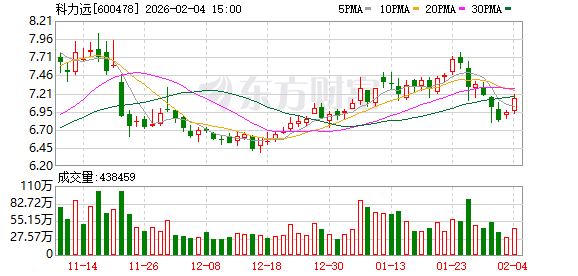
科力远:公司部分电池材料和电池产品涉及出口业务,业务模式以境内主体直接向海外客户出口为主
Mei Ri Jing Ji Xin Wen· 2026-02-04 13:05
Core Viewpoint - The company, Kolyuan (600478.SH), is actively expanding its export business and overseas energy storage market to drive revenue and profit growth, with a projected export revenue accounting for 6.63% of total annual revenue in 2024 [2] Group 1 - The company’s export business primarily involves direct sales from domestic entities to overseas customers, supplemented by third-party traders and agents [2] - The company is focusing on the overseas energy storage market as a strategy for increasing its revenue and profits [2] - Detailed export data for 2025 will be provided in the company's upcoming annual report [2]
如何看待 出口退税调整
Sou Hu Cai Jing· 2026-02-02 16:41
Core Viewpoint - The recent announcement by the Ministry of Finance and the State Taxation Administration to cancel export tax rebates for nearly 250 products, including photovoltaic products, is a significant step towards transforming China's foreign trade strategy and economic growth model, aiming to reduce reliance on exports and promote domestic demand [1][2][3] Group 1: Policy Adjustment and Economic Strategy - The adjustment of export tax rebates is part of China's broader strategy to address issues arising from an over-reliance on exports, which has led to trade imbalances and increased foreign exchange risks [2][3] - Since the initiation of the "export-for-foreign-exchange" strategy, export tax rebates have contributed significantly to China's trade surplus, accounting for about half of it over the past 30 years [3] - The emphasis on photovoltaic and battery products in the announcement reflects China's competitive advantages and aims to alleviate international trade tensions [3] Group 2: Industry Response and Future Outlook - Experts express concerns that reducing or eliminating export tax rebates could negatively impact export enterprises, especially in the current uncertain external environment [5][9] - Companies are encouraged to enhance their competitiveness through innovation and quality improvement rather than relying on government support [10] - The transition from an export-oriented model to one focused on domestic demand will require time and may involve challenges, but it is deemed necessary for long-term economic stability [10]