南京大屠杀

Search documents
《拉贝日记》译者谈丨历史的呐喊:二十六年来从未停止
Xin Lang Cai Jing· 2025-08-23 03:05
Group 1 - The core discussion revolves around the significance of "The Rabe Diary" as a historical document that encapsulates humanitarianism, peace, and the hope that such tragedies will not recur in human history [3][4][6] - The translation process of "The Rabe Diary" was marked by urgency and collaboration, with a dedicated team completing the initial draft in just one and a half months under challenging conditions [8][9][10] - The first edition of the diary was published ahead of the 60th anniversary of the Nanjing Massacre, and subsequent editions have included extensive annotations and corrections to enhance historical accuracy [6][12][14] Group 2 - The translator team emphasized the importance of precise verification of names and places to ensure the accuracy of the historical account, which was particularly challenging due to the original transcription methods used by Rabe [10][12][13] - The character of John Rabe is portrayed as a complex individual who, despite his background, acted with great humanity during the Nanjing Massacre, ultimately saving around 250,000 lives [16][18] - The historical reflection highlights the necessity of remembering past atrocities to prevent future occurrences, emphasizing the importance of strong governance and the protection of human dignity in contemporary society [20]


《南京照相馆》角色原型罗瑾的“抢救”人生
Xin Hua She· 2025-08-20 08:39
Core Viewpoint - The article highlights the life and contributions of Luo Jin, the real-life inspiration for the character Su Liuchang in the film "Nanjing Photo Studio," who risked his life to preserve evidence of the Nanjing Massacre, ultimately becoming a symbol of historical memory and resilience [1][2]. Group 1: Historical Context - In December 1937, during the Nanjing Massacre, 14-year-old Luo Jin worked as an apprentice at a photo studio and discovered horrific images of the atrocities committed by Japanese soldiers [3][4]. - Luo Jin secretly preserved over 30 photographs documenting the massacre, despite facing threats from Japanese officers [4][5]. Group 2: Preservation of Evidence - Luo Jin created an album with 16 selected photographs, which later became crucial evidence in the prosecution of Japanese war criminals after World War II [5][6]. - The album was lost for a time but was eventually recovered and submitted as evidence, leading to the conviction of key perpetrators [6][7]. Group 3: Later Life and Recognition - After years of anonymity, Luo Jin's identity as the keeper of the "blood evidence" was revealed in the 1990s, leading to public recognition of his contributions [7][8]. - Luo Jin became a historical educator, sharing his experiences in schools and writing his memoirs to ensure the memory of the Nanjing Massacre was preserved for future generations [9][10]. Group 4: Cultural Impact - The film "Nanjing Photo Studio," released in 2025, is based on Luo Jin's life and has resonated deeply with audiences, emphasizing the importance of remembering historical atrocities [12][13]. - The film's narrative focuses on ordinary heroes, reflecting a broader trend in Chinese cinema to portray significant historical events through the lens of individual experiences [14].
《南京照相馆》外国观众:世界需要铭记南京大屠杀及所有为和平牺牲者
Huan Qiu Shi Bao· 2025-08-18 22:56
Core Viewpoint - The film "Nanjing Photo Studio" has sparked significant discussion, focusing on the historical atrocities committed by the Japanese army during the Nanjing Massacre in 1937, and has resonated with international audiences who reflect on their own historical contexts [1][2][3] Group 1: Audience Reactions - Foreign viewers expressed deep emotional responses to the film, with one audience member describing the depiction of violence against civilians as shocking and incomprehensible [1] - Another viewer related the film to their own country's experiences of Japanese invasion, highlighting a shared sense of anger and empathy [1] - A third viewer emphasized the personal connection to the victims portrayed in the film, transforming abstract numbers into relatable individuals [1] Group 2: Historical Awareness - The audience members noted significant differences in historical education regarding Japanese wartime actions, with South Korea emphasizing this history in schools, while Western countries provide limited coverage [2] - Despite these educational disparities, the film's themes of moral struggle and the pursuit of truth resonate universally, appealing to international viewers [2] Group 3: Contemporary Relevance - The film is seen as a crucial reminder of historical truths in the face of rising historical revisionism, with viewers acknowledging China's efforts to preserve and share evidence of wartime atrocities [3] - The narrative encourages younger generations to remember the sacrifices made for peace, emphasizing the importance of confronting historical realities [3] - The film is being released in multiple countries, continuing the dialogue on history, memory, and humanity, reinforcing the need to face the past to truly value peace [3]
新闻调查丨在日本,南京大屠杀历史缘何被选择性遗忘
Xin Hua Wang· 2025-08-15 00:40
Core Viewpoint - The article discusses the selective amnesia regarding the Nanjing Massacre in Japan, highlighting the lack of awareness among the Japanese public about this historical atrocity and the systematic efforts to downplay or deny it [1][2]. Group 1: Public Awareness - Many Japanese citizens, including students and adults, exhibit a lack of knowledge about the Nanjing Massacre, with some only vaguely aware of the term without understanding its historical context [1]. - A significant portion of the population has been influenced by educational materials that either omit or distort the facts surrounding the Nanjing Massacre [2]. Group 2: Historical Revisionism - Since the 1950s, there has been a systematic effort in Japan to revise history, with political figures and educational institutions promoting narratives that downplay the severity of the Nanjing Massacre [1]. - Textbooks in Japan often question the findings of the International Military Tribunal for the Far East, with varying estimates of the death toll that contradict the Chinese government's figure of over 300,000 [2]. Group 3: Documentation and Evidence - Various historical documents, including military reports and photographs taken by Japanese soldiers, serve as evidence of the atrocities committed during the Nanjing Massacre [3]. - Individuals like Da Dong Ren have dedicated years to collecting and donating historical materials related to the Nanjing Massacre, contributing to the preservation of this history [3][4]. Group 4: Personal Narratives - Personal stories, such as that of Lu Zhao Ning, illustrate the emotional impact of the Nanjing Massacre on families, emphasizing the connection between national history and personal identity [5]. - The inclusion of firsthand accounts and documents in global archives highlights the importance of remembering the Nanjing Massacre as a shared historical memory [5].
美国观众:《南京照相馆》让我们同感痛楚
Xin Hua Wang· 2025-08-13 01:01
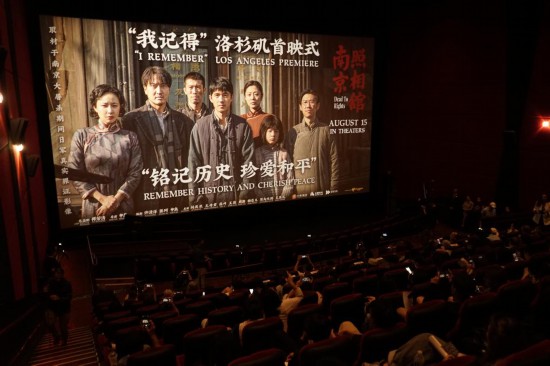
Core Viewpoint - The film "Nanjing Nanjing" premiered in Los Angeles, receiving emotional resonance and high praise from audiences, highlighting the importance of acknowledging historical events like the Nanjing Massacre and the Second Sino-Japanese War [1][2]. Group 1: Audience Reactions - Many viewers expressed deep emotional responses, with some shedding tears during the screening, indicating the film's powerful impact [2][5]. - American actress Geraldine Lloyd emphasized the film's cultural significance and the necessity of presenting history to younger generations to prevent it from being forgotten [2]. - Audience member Adam Lucas noted that the film provided a profound understanding of the Nanjing Massacre, which is often superficially mentioned in Western education [5]. Group 2: Historical Context and Significance - The film addresses the Nanjing Massacre, where over 300,000 people lost their lives, stressing that each number represents a personal story [5]. - Sandro Gohokho from Echelon Films highlighted the film's role in evoking a historical narrative that should never be repeated, aiming to touch the hearts of viewers and encourage them to cherish peace [5]. Group 3: Distribution Plans - "Nanjing Nanjing" is set to officially release in approximately 250 theaters across major cities in the United States and Canada starting August 15 [5].
为《南京照相馆》解惑
虎嗅APP· 2025-08-07 13:29
Core Viewpoint - The film "Nanjing Photo Studio" emerges as a significant work in the historical disaster genre, showcasing the potential of contemporary directors to present historical narratives with depth and artistic courage [2][3]. Summary by Sections Historical Context and Significance - "Nanjing Photo Studio" is compared to previous films about the Nanjing Massacre, highlighting its solid narrative and potential for international dissemination [3]. - The film addresses the historical reality of the Nanjing Massacre, emphasizing that Nanjing was not just a city but the capital of China at the time, making the atrocities even more significant [5][6]. Character and Dialect Representation - The film features characters speaking in their native dialects, reflecting the historical accuracy of the time when people primarily communicated in local languages [4][5]. - The choice of dialects among the actors aligns with their characters' backgrounds, enhancing the film's authenticity [5][6]. Depiction of Military Events - The film portrays the chaos during the Nanjing defense, including the conflict between retreating soldiers and the defending troops, echoing similar scenes from previous films [9][11]. - The narrative illustrates the confusion and disarray among the military ranks during the Nanjing defense, leading to miscommunication and disorder [11][12]. Cultural and Historical Reflection - The article discusses the importance of serious historical representations in film, contrasting them with less serious portrayals that have dominated the mainstream [13]. - It emphasizes the need for audiences to engage with films like "Nanjing Photo Studio" to foster a deeper understanding of historical events and their implications [13][14].
真实的历史具有时光穿透力(国际论坛·以史为鉴 共护和平)
Ren Min Ri Bao· 2025-08-05 22:21
Group 1 - The film "Nanjing Photo Studio" has sparked significant public interest, highlighting the historical events of the Nanjing Massacre and contributing to the popularity of domestic war-themed films during the summer season [1] - The historical narrative emphasizes the importance of remembering the atrocities committed by the Japanese military during the Nanjing Massacre, which serves as a reminder of the consequences of national weakness and the need for vigilance against historical revisionism [2] - The Nanjing Massacre is recognized as a pivotal event in the history of the Chinese people's resistance against Japanese aggression, with over 35 million casualties during the Anti-Japanese War and direct economic losses exceeding $100 billion, alongside indirect losses of around $500 billion [2] Group 2 - The correct understanding of World War II history is essential for building a foundation for current and future global peace, as China's prolonged resistance against Japanese forces played a crucial role in the broader context of the anti-fascist struggle [3] - The narrative stresses the significance of China's contributions to the victory in the global anti-fascist war, asserting that without China's efforts, the situation for the Allies would have been considerably more challenging [3] - In the face of contemporary global challenges, there is a renewed emphasis on patriotism, unity, and self-reliance among the Chinese people, highlighting the importance of learning from history to ensure lasting peace [3]
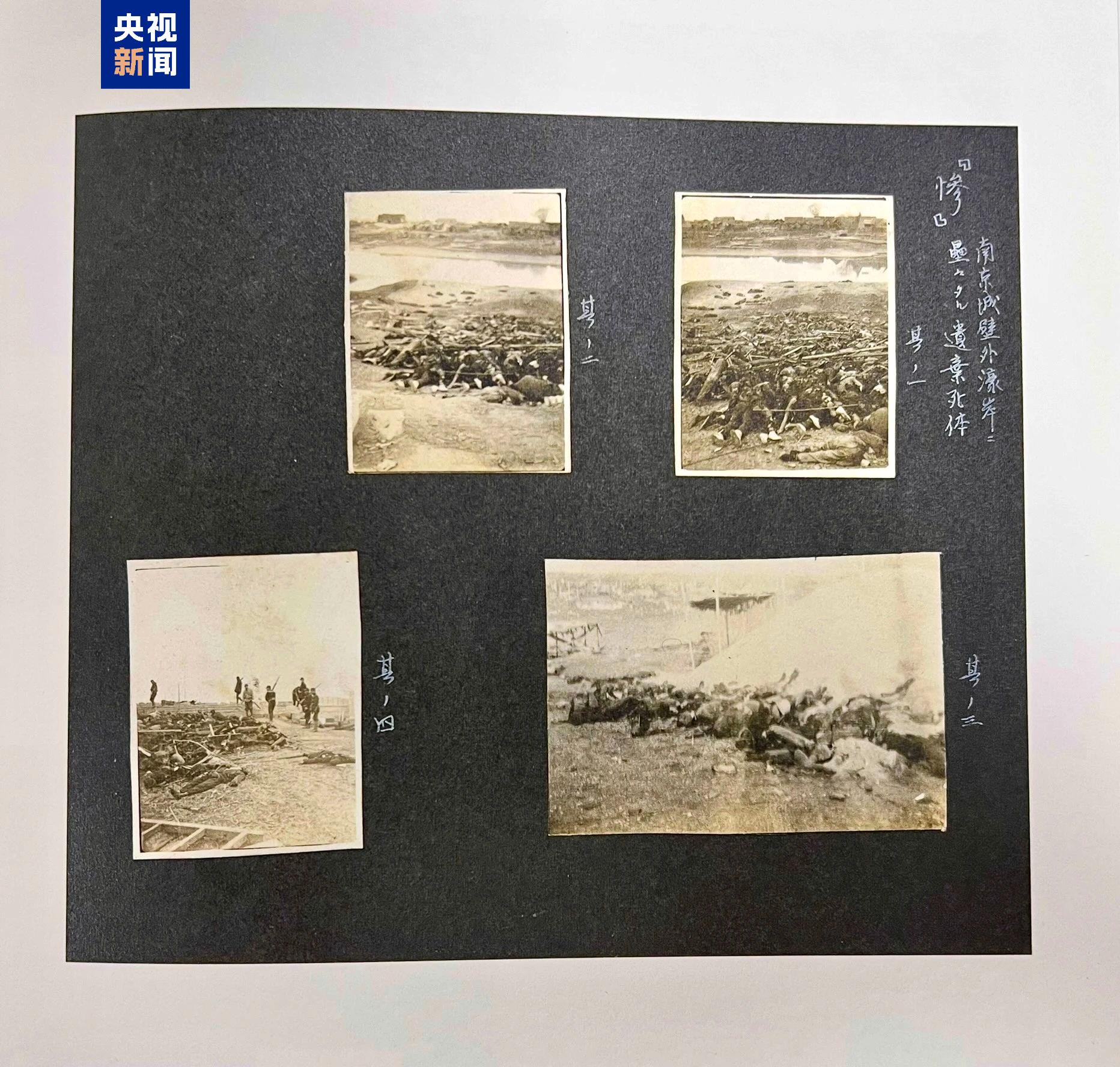
传递真相!这些照片记录侵华日军暴行
Yang Shi Xin Wen· 2025-08-05 06:51
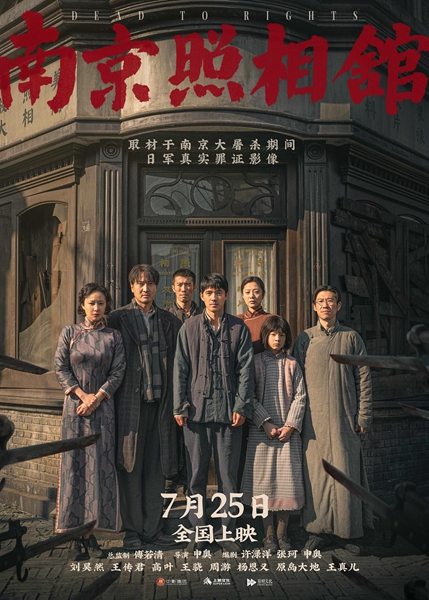
Core Viewpoint - The film "Nanjing Photo Studio" is currently being screened, depicting the atrocities committed by the Japanese army during the Nanjing Massacre, based on real historical footage [1]. Group 1 - The film draws attention to the historical events of the Nanjing Massacre, highlighting the brutal actions of the Japanese military [1]. - The Nanjing Massacre Memorial Hall contains several albums that document the various atrocities committed by the Japanese army [1]. - Photographs taken by Japanese soldiers during the massacre show them posing next to the bodies of Chinese victims, emphasizing the horrific nature of the events [8][9]. Group 2 - The imagery includes piles of bodies near the city walls and moats of Nanjing, illustrating the scale of the violence [12]. - The Japanese soldiers displayed their weapons and flags next to the corpses, showcasing their triumphalism after the invasion [9]. - Large banners celebrating the fall of Nanjing were hung by the Japanese army, further indicating their intent and actions during the occupation [9].
真相无法掩盖
Hai Nan Ri Bao· 2025-08-04 02:25
Core Viewpoint - The film "Nanjing Photo Studio" serves as a powerful reminder of the atrocities committed during the Nanjing Massacre, utilizing real historical evidence to present the truth of this dark chapter in Chinese history [8][9][10]. Group 1: Historical Context - The Nanjing Massacre, marked by the invasion of Japanese troops on December 13, 1937, led to a complete communication blackout, isolating the city and making it a "dead city" [9]. - The film highlights the struggle to disseminate the truth amidst strict censorship, with the National Government's Central News Agency only managing to release a brief report days later [9][10]. Group 2: Personal Narratives - The character of Luo Jin, a 15-year-old apprentice at a photo studio, captures the horror of the massacre when he secretly prints key photographs of the atrocities [10][11]. - The narrative intertwines the fates of ordinary individuals, such as the postman A Chang and the photographer Ito, showcasing their roles in preserving evidence of the crimes [9][11]. Group 3: Symbolism and Locations - The film connects personal stories to significant locations in Nanjing, such as the photo studio and the city walls, emphasizing the contrast between daily life and the surrounding violence [12][13]. - The depiction of the photo studio serves as a microcosm of the city, where personal memories are juxtaposed against the backdrop of national tragedy [12]. Group 4: Artistic Representation of Atrocities - The film employs artistic techniques to portray the brutal realities of the massacre, including scenes of Japanese soldiers engaging in horrific acts, which are based on historical events [14][15]. - The narrative also addresses the manipulation of images by the Japanese military to create a false narrative of peace, revealing the depths of their propaganda efforts [14][15]. Group 5: Preservation of Truth - The film underscores the importance of preserving historical truth, as evidenced by the efforts of individuals who risked their lives to document the atrocities [15][16]. - The conclusion of the film symbolizes the triumph of justice, with the execution of war criminal Gu Shoufu coinciding with the act of capturing the truth through photography [16].

《南京照相馆》票房或超30亿,多部历史战争片即将上映
Di Yi Cai Jing· 2025-07-28 10:28
Core Insights - The film "Nanjing Photo Studio" has achieved a box office of over 476 million yuan, with AI predictions raising the total box office forecast to 3.17 billion yuan, potentially placing it among the top three films of the year [1][3] - The film's narrative is based on true historical events during the Nanjing Massacre, focusing on ordinary citizens' efforts to document Japanese war crimes [4][5] - The film has received high ratings on social media platforms, with a score of 8.6 on Douban, indicating strong audience approval [9][10] Box Office Performance - As of July 28, the total box office for the summer season has surpassed 5.346 billion yuan, with "Nanjing Photo Studio" ranking among the top three films alongside "Jurassic World: Dominion" and "The Lychee of Chang'an" [14] - The film has garnered significant support from audiences in cities like Shanghai, Nanjing, and Suzhou, with Nanjing contributing over 60% of its box office on July 27 [3][4] Historical Context and Themes - The film is inspired by the real-life story of the Huadong Photo Studio, where a young apprentice discovered evidence of Japanese atrocities during the Nanjing Massacre [4][5] - It portrays the struggle and awakening of ordinary citizens in the face of war, highlighting their courage to document the truth despite the dangers [9][10] - The film's narrative is enriched by historical research, referencing works like "The Rape of Nanking" by Iris Chang to depict the horrors of the massacre [10][13] Upcoming Releases - Several historical war-themed films are set to be released, including "731," which focuses on Japanese Unit 731's war crimes, and "Dongji Island," based on the rescue of British POWs by Chinese fishermen [13][14] - The concentration of anti-Japanese war films aims to remind audiences of the importance of remembering history and cherishing peace [14]