
原油市场供应过剩

Search documents
基本面利空逐渐占据上风 原油价格中长期或承压
Zhong Guo Zheng Quan Bao· 2025-08-14 22:25
Group 1 - International crude oil prices have shown a downward trend since August, with WTI and Brent crude oil futures dropping over 10% from their highs at the end of July [1][2] - Domestic crude oil futures have also fallen below the important threshold of 500 yuan per barrel, with a drop of 10.43% from the July 31 high [2][4] - The decline in prices is attributed to expectations of oversupply and a decrease in geopolitical tensions in the Middle East [2][3] Group 2 - The market has seen a significant reduction in long positions, with WTI non-commercial net long positions decreasing by 14,194 contracts and Brent net long positions down by 19,559 contracts [3][4] - Analysts indicate that the ongoing increase in oil production by OPEC+ has exceeded market expectations, contributing to the downward pressure on prices [2][4] - The U.S. Energy Information Administration (EIA) has raised its forecast for global oil supply growth to 2.28 million barrels per day, while the demand growth forecast remains relatively unchanged, leading to an expected oversupply of 1.64 million barrels per day [4][6] Group 3 - Seasonal demand for oil is expected to weaken as the summer consumption peak approaches its end, with overall demand growth projected to be less than 1 million barrels per day for the year [6][7] - The market is likely to seek a temporary balance between long-term supply pressures and short-term demand support, but the overall trend for oil prices is expected to be downward [6][7] - The geopolitical situation, particularly the Russia-Ukraine conflict, may still influence oil prices in the short term, but the long-term outlook remains bearish due to ongoing OPEC+ production increases and slow global economic growth [7][8]
大越期货原油早报-20250814
Da Yue Qi Huo· 2025-08-14 03:23
Report Summary 1. Report Industry Investment Rating No investment rating for the industry is provided in the report. 2. Core View - The International Energy Agency (IEA) indicates that the global oil market is moving towards a record - high surplus next year due to slower demand growth and increased supply. IEA also lowers the expected incremental demand for crude oil this year and next. OPEC slightly reduces this year's demand increment, and EIA crude oil inventories accumulate more than expected. These factors lead to a significant decline in oil prices during the US trading session. However, the upcoming US - Russia negotiation and the possibility of secondary sanctions if the meeting goes poorly add geopolitical concerns and support to oil prices, causing large price fluctuations. Short - term, the price is expected to range between 480 - 490, and long - term, it is recommended to hold long positions [3]. 3. Summary by Directory 3.1 Daily Prompt - **Fundamentals**: The US Treasury Secretary says that if the Trump - Putin meeting goes badly, sanctions or secondary tariffs may increase. The IEA reports that this year's global crude oil supply surplus will exceed expectations, with supply growth more than three times the demand growth rate. It expects global crude oil supply to increase by 2.5 million barrels per day this year and 1.9 million barrels per day next year, higher than previous forecasts [3]. - **Basis**: On August 13, the spot price of Oman crude oil was $67.66 per barrel, and that of Qatar Marine crude oil was $66.66 per barrel, with a basis of 9.23 yuan per barrel, and the spot was at par with the futures [3]. - **Inventory**: US API crude oil inventories for the week ending August 8 increased by 1.519 million barrels (expected to decrease by 0.941 million barrels), EIA inventories for the same period increased by 3.036 million barrels (expected to decrease by 0.275 million barrels), and Cushing area inventories increased by 0.045 million barrels. As of August 13, Shanghai crude oil futures inventories remained at 4.767 million barrels [3]. - **Market**: The 20 - day moving average was downward, and the price was below the average [3]. - **Main Position**: As of July 29, the main long positions in WTI and Brent crude oil both increased [3]. - **Expectation**: Short - term, the price will range between 480 - 490, and long - term, long positions should be held [3]. 3.2 Recent News - **Geopolitical News**: Trump threatens Putin with "serious consequences" if he hinders the Ukraine peace process but also mentions the possibility of a US - Russia - Ukraine leaders' meeting. Macron says Trump agrees that Ukraine must participate in territorial discussions, and Zelensky says Trump supports post - war security guarantees. The US Treasury Secretary warns of increased sanctions if the Trump - Putin meeting is unsuccessful [5]. - **Supply - Demand News**: The IEA reports that the global crude oil supply surplus will exceed expectations this year, with supply growth more than three times the demand growth rate. Supply growth is mainly driven by non - OPEC+ producers. The market is starting to show oversupply, and global oil inventories reached a 46 - month high in June [5]. - **Interest - Rate News**: After data shows mild inflation in the US in July, the market believes there is a 99.9% chance that the Fed will cut interest rates by 25 basis points in September. The Treasury Secretary thinks the Fed may cut rates by 50 basis points due to weak employment data [5]. 3.3 Long - Short Concerns - **Positive Factors**: The US may impose secondary sanctions on Russian energy exports, and the Sino - US tariff exemption period may be extended again [6]. - **Negative Factors**: There is hope for a cease - fire in the Russia - Ukraine conflict, and the US has ongoing tense trade relations with other economies [6]. - **Market Drivers**: In the short term, geopolitical conflicts decrease while trade tariff risks increase. In the medium - to - long - term, supply will increase after the peak season [6]. 3.4 Fundamental Data - **Futures Quotes**: The settlement prices of Brent, WTI, SC, and Oman crude oil changed. Brent decreased by $0.49 (- 0.74%), WTI decreased by $0.52 (- 0.82%), SC decreased by 3.80 (- 0.77%), and Oman increased by $0.48 (0.71%) [7]. - **Spot Quotes**: The spot prices of various crude oils also changed. For example, UK Brent Dtd decreased by $0.65 (- 0.96%), WTI decreased by $0.52 (- 0.82%), Oman decreased by $1.13 (- 1.64%), etc. [9]. - **Inventory Trends**: API and EIA inventory data from May to August show fluctuations, with significant increases in inventories in some weeks [10][15]. 3.5 Position Data - **WTI Crude Oil Fund Net Long Positions**: As of July 29, the net long positions increased by 2,692, and as of August 5, they decreased by 14,194 [18]. - **Brent Crude Oil Fund Net Long Positions**: As of July 29, the net long positions increased by 33,959, and as of August 5, they decreased by 20,375 [20].
宝城期货原油早报-20250814
Bao Cheng Qi Huo· 2025-08-14 01:51
Report Summary 1. Investment Rating No investment rating for the industry is provided in the report. 2. Core View The report suggests that the domestic crude oil futures contract 2510 will likely run weakly with a volatile and weak trend in the short - term and a volatile trend in the medium - term. The main reason is the bearish factors in the market, especially the expected record - high supply glut in the global crude oil market next year [1][5]. 3. Summary by Related Content Price and Trend - The domestic crude oil futures 2510 contract closed slightly lower by 0.92% to 485.7 yuan/barrel on Wednesday night. It is expected to maintain a volatile and weak trend on Thursday [5]. - The short - term view for crude oil 2510 is volatile, the medium - term view is volatile, and the intraday view is volatile and weak, with an overall reference view of running weakly [1]. Market Logic - The International Energy Agency (IEA) released an energy outlook report. Due to slow demand growth and a surge in supply, especially with OPEC+ increasing production, the global crude oil market is expected to face a record - high supply glut next year. Although the IEA raised the global crude oil demand data for this year and next, the demand growth rate has declined, less than half of that in 2023. As a result, crude oil inventories will accumulate at a rate of 2.96 million barrels per day, exceeding the average accumulation rate during the 2020 pandemic [5].
全球原油市场供应过剩担忧升温
Qi Huo Ri Bao Wang· 2025-08-13 00:45
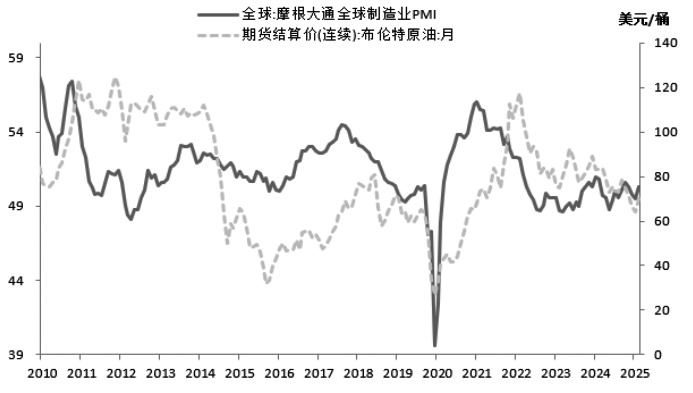
Group 1: Global Economic Overview - The global economy is experiencing low growth, with expectations of further slowdown due to U.S. tariff policies and geopolitical tensions [12][13] - The International Monetary Fund (IMF) has slightly raised its 2025 global growth forecast to 3%, while the OECD has lowered its forecast from 3.1% to 2.9% [12][13] - The U.S. Federal Reserve has maintained interest rates, with expectations of fewer rate cuts than previously anticipated [13] Group 2: Oil Supply Dynamics - OPEC+ is increasing production, with daily output rising from 138,000 barrels in April to 548,000 barrels in August-September [15] - Global oil production is expected to reach a historical high of 181 million barrels per day by 2025, despite a projected 4% decrease in upstream oil and gas investment [14][15] - Geopolitical factors, including sanctions on Russia and Iran, are creating uncertainties in global oil supply [14][17] Group 3: Oil Demand Outlook - Global oil demand growth forecasts have been revised down by various institutions, with EIA predicting an increase of only 800,000 barrels per day for the year, down from an initial estimate of 1.33 million barrels per day [19][21] - U.S. oil consumption growth is expected to be limited to 100,000 barrels per day due to economic slowdown and tariff impacts [19] - Domestic oil consumption in China has also shown weakness, with crude oil imports growing only 1.57% in the first half of the year [20] Group 4: Market Surplus Expectations - The EIA has raised its forecast for oil market surplus, expecting a surplus of 740,000 barrels per day in Q3 and 1.06 million barrels per day in Q4 [21] - IEA has similarly adjusted its surplus expectations, predicting a total surplus of 1.4 million barrels per day for the year [21] - The combination of increasing supply and weakening demand is leading to expectations of a continued oversupply in the oil market [22]

全球原油市场转向过剩?页岩油巨头Diamondback Energy(FANG.US)减产控支应对OPEC+增产冲击
智通财经网· 2025-08-05 00:42
Group 1 - Diamondback Energy Inc. signals a cautious outlook for the global oil market, anticipating a potential oversupply in the coming months due to changes in supply and demand dynamics [1] - The company plans to cut capital expenditures by $100 million and adjust production forecasts while delaying some hydraulic fracturing operations as a defensive strategy [1][2] - CEO Keith Hutton emphasizes the need to avoid passive production increases in a market characterized by oversupply and price pressure [1] Group 2 - OPEC+ has recently approved an increase in oil production by 547,000 barrels per day, reversing significant cuts planned for 2023, which has directly impacted market conditions [1] - Since mid-January, U.S. crude oil prices have dropped by 17%, correlating with OPEC+’s decision to expand production capacity [1] - The International Energy Agency (IEA) forecasts a significant oversupply of 2 million barrels per day in the global market for the fourth quarter, driven by increased supply from the Americas [1] Group 3 - Diamondback's operational strategy for the remainder of 2025 will focus on expenditure control and stabilizing production, reflecting a cautious approach to market trends [2] - The company’s previous assessment that U.S. shale oil production has peaked aligns with a 12% decline in domestic drilling activity, marking a four-year low [2] - The strategic adjustments by Diamondback illustrate the industry's adaptive strategies in response to price volatility and supply-demand imbalances [2]

油价,再遭“空袭”
Zheng Quan Shi Bao· 2025-08-03 05:48
Core Viewpoint - OPEC+ has agreed in principle to significantly increase oil production in September, with plans to formally approve an increase of 548,000 barrels per day during a video meeting on August 3 [1][3]. Group 1: Production Increase - OPEC+ plans to reverse the previous reduction of 2.2 million barrels per day implemented by eight member countries, including the UAE, which is gradually implementing additional production quotas [3]. - The increase in production marks a significant policy shift from price maintenance to volume expansion, aimed at capturing global market share amidst geopolitical tensions and summer demand [3]. - RBC Capital Markets anticipates that oil-producing countries will pause further increases to assess market conditions and macroeconomic trends as the voluntary reduction approaches its end [3]. Group 2: Market Impact - The decision to increase production comes at a time when U.S. employment data fell short of expectations, raising concerns about global energy demand [1][5]. - Analysts warn that the increase in supply, combined with slowing global economic growth, could lead to an oversupply situation in the oil market by the end of the year [1][3]. - UBS analysts suggest that the potential quota increases are largely already reflected in current prices, with Brent crude expected to remain around $70 per barrel [3]. Group 3: Geopolitical Context - The timing of OPEC+'s decision is sensitive, as U.S. President Trump has threatened secondary sanctions on Russian oil exports to pressure Russia regarding its actions in Ukraine [5]. - Trump's potential sanctions could conflict with his goal of lowering oil prices, as any disruption in Russian oil exports may lead to higher international oil prices [5][6]. - Analysts emphasize the need for OPEC+ to balance market share recovery with the risk of falling oil prices, which could impact their revenues significantly [7].