
固体废物综合治理

Search documents
中国全力开展固体废物综合治理行动
Zhong Guo Xin Wen Wang· 2026-01-13 12:08
Core Viewpoint - China is launching a comprehensive solid waste management action plan to address the increasing volume of solid waste, which exceeds 11 billion tons annually, with over 4 billion tons being industrial solid waste [1][2]. Group 1: Action Plan Overview - The State Council has issued the "Solid Waste Comprehensive Management Action Plan," prioritizing the management of solid waste closely related to public life and safety [1]. - The action plan aims to establish a long-term comprehensive management mechanism to curb the growth of solid waste [1][2]. - The plan is a systematic deployment specifically targeting solid waste management, complementing existing pollution prevention policies for water, soil, and air [1][2]. Group 2: Pollution Characteristics and Challenges - Solid waste pollution differs from air and water pollution, characterized by its widespread and localized nature, particularly due to illegal dumping of construction and industrial waste [2]. - The challenge of effectively managing solid waste pollution is recognized as a global issue, exacerbated by rapid industrialization and urbanization [1][2]. Group 3: Goals and Targets - By 2030, the action plan aims for significant improvements in solid waste management, including controlling historical stockpiles and reducing illegal dumping [2][3]. - The annual comprehensive utilization of major solid waste is targeted to reach 4.5 billion tons, with the recycling of major renewable resources expected to hit 510 million tons [2]. Group 4: Principles and Strategies - The action plan emphasizes the principles of reduction, resource utilization, and harmlessness in solid waste management [3]. - It encourages the development of a circular economy, focusing on the direct utilization of solid waste from industrial, construction, and agricultural sectors without altering their properties [3]. - The plan promotes the extraction of valuable components from solid waste and the development of remanufacturing industries, alongside enhancing the efficiency of resource utilization [3].
我国将采取有力举措推进固体废物专项整治
Yang Shi Wang· 2026-01-13 11:35
Core Viewpoint - The "Comprehensive Solid Waste Management Action Plan" aims to significantly improve solid waste management in China by 2030, with specific targets for waste utilization and recycling [1] Group 1: Action Plan Overview - The Action Plan is China's first specialized document addressing comprehensive solid waste management [1] - By 2030, the annual comprehensive utilization of major solid waste is expected to reach 4.5 billion tons, and the annual recycling of key renewable resources is projected to be 510 million tons [1] Group 2: Implementation and Goals - A three-year special rectification action against illegal dumping of solid waste is being organized, focusing on urban-rural junctions and ecologically sensitive areas [1] - By the end of 2025, the plan aims to rectify 17,700 related issues and clear 34.6 million tons of solid waste [1] Group 3: Sector-Specific Initiatives - The Ministry of Industry and Information Technology, Ministry of Housing and Urban-Rural Development, and Ministry of Agriculture and Rural Affairs provided updates on the comprehensive utilization of industrial solid waste, urban construction waste management, and scientific use and recycling of agricultural solid waste [1]
首个固废治理专项文件:2030年大宗固废年利用量将达45亿吨
2 1 Shi Ji Jing Ji Bao Dao· 2026-01-13 10:59
《行动计划》明确,到2030年,重点领域固体废物专项整治取得明显成效,历史堆存量得到有效管控, 非法倾倒处置高发态势得到遏制,大宗固体废物年综合利用量达到45亿吨,主要再生资源年循环利用量 达到5.1亿吨,固体废物综合治理能力和水平显著提升。《行动计划》还提出,要加快推进"无废城 市"建设。 明确未来5年固体废物综合治理主要目标 "《行动计划》突出问题导向,在整合各领域固体废物既有管理手段的基础上,进一步完善全链条综合 治理的政策措施,推动末端治理向全过程防控转变,是我国首个针对固体废物综合治理作出系统性部署 的专项文件,与此前水、土、气污染防治专项文件共同形成了污染防治攻坚战政策体系。"国家发展和 改革委员会副主任周海兵介绍,《行动计划》由国家发展和改革委会同生态环境部、工业和信息化部、 住房和城乡建设部、农业农村部等25个部门研究起草,主要包括3个板块10条措施。 周海兵表示,《行动计划》着力填补关键环节制度空白,提高针对性、创新性、有效性,推动解决困扰 行业多年的重点难点问题。比如,在夯实监管基础方面,针对固废污染底数不清的问题,要求加强全生 命周期信息化监管,完善大宗固废和再生资源指标统计调查制度。在 ...
严打固体废物非法倾倒处置行为 2035年“无废城市”建设将实现全覆盖
Yang Shi Wang· 2026-01-13 10:08
Core Viewpoint - The Chinese government has launched a comprehensive action plan for solid waste management, aiming to tackle illegal disposal and promote sustainable waste practices across the country [1][3]. Group 1: Solid Waste Generation and Issues - China generates over 11 billion tons of solid waste annually, including industrial waste, construction debris, and household garbage [1]. - Illegal disposal of construction and household waste remains a significant issue, with a wide-ranging impact on the environment [1]. Group 2: Special Rectification Actions - The Ministry of Ecology and Environment is conducting a special campaign against illegal solid waste disposal, identifying 27,000 issues nationwide by the end of 2025 [3]. - Of the identified issues, construction waste accounts for 45%, household waste for 33%, and industrial solid waste for 10% [3]. Group 3: Future Plans and Goals - By 2027, the proportion of "waste-free cities" in China is expected to reach 60%, with full coverage aimed for by 2035 [6]. - The Ministry plans to expand the "waste-free city" initiative to around 200 cities during the 14th Five-Year Plan, focusing on key urban areas [8]. Group 4: Construction Waste Management - The Ministry of Housing and Urban-Rural Development will include costs related to construction waste management in project budgets, promoting green construction practices [10]. - Measures will be taken to enhance source management, including the implementation of construction waste classification and the installation of satellite tracking systems on transport vehicles [12].

国家发改委:将牵头制定循环经济发展“十五五”规划,部署“新三样”固体废物等回收利用重点举措
Mei Ri Jing Ji Xin Wen· 2026-01-13 09:32
Core Viewpoint - Strengthening comprehensive solid waste management is crucial for promoting the construction of a beautiful China and accelerating the green transformation of economic and social development [1] Group 1: Action Plan Overview - The Action Plan outlines the overall approach, work objectives, key tasks, and support measures for solid waste management in the coming period, addressing prominent issues with systematic and integrated policy measures [1][2] Group 2: Circular Economy Development - The Action Plan emphasizes enhancing the resource utilization level of solid waste and leveraging market forces to promote circular economy development, adhering to the principles of reduction, resource utilization, and harmlessness [2] - Solid waste is viewed as a valuable resource rather than waste, with examples such as smelting slag containing precious metals and construction waste that can replace natural aggregates in building materials [2] Group 3: Specific Measures for Solid Waste Management - Four main areas of focus include: 1. Strengthening comprehensive utilization of solid waste from industrial, construction, and agricultural sectors, enhancing the extraction and overall utilization of valuable components [3] 2. Exploring the potential of recycled resources through detailed disassembly of waste products to extract materials like plastics, metals, and glass [3] 3. Promoting the use of recycled materials by incentivizing production enterprises to increase the application ratio of recycled metals, plastics, and paper [3] 4. Improving support measures through investment, technology, land use, and tax incentives to create sustainable business models [3] Group 4: Future Planning - The National Development and Reform Commission will lead the formulation of the 14th Five-Year Plan for circular economy development, setting goals and tasks for key areas and enhancing resource utilization efficiency [4] Group 5: Industrial Solid Waste Utilization - The focus will be on reducing the generation intensity of industrial solid waste through green design and manufacturing processes, thereby enhancing the green level of industrial products [5][6] - The initiative aims to lower the generation of solid waste while increasing the comprehensive utilization level of industrial solid waste, particularly in sectors like steel, non-ferrous metals, and petrochemicals [8]
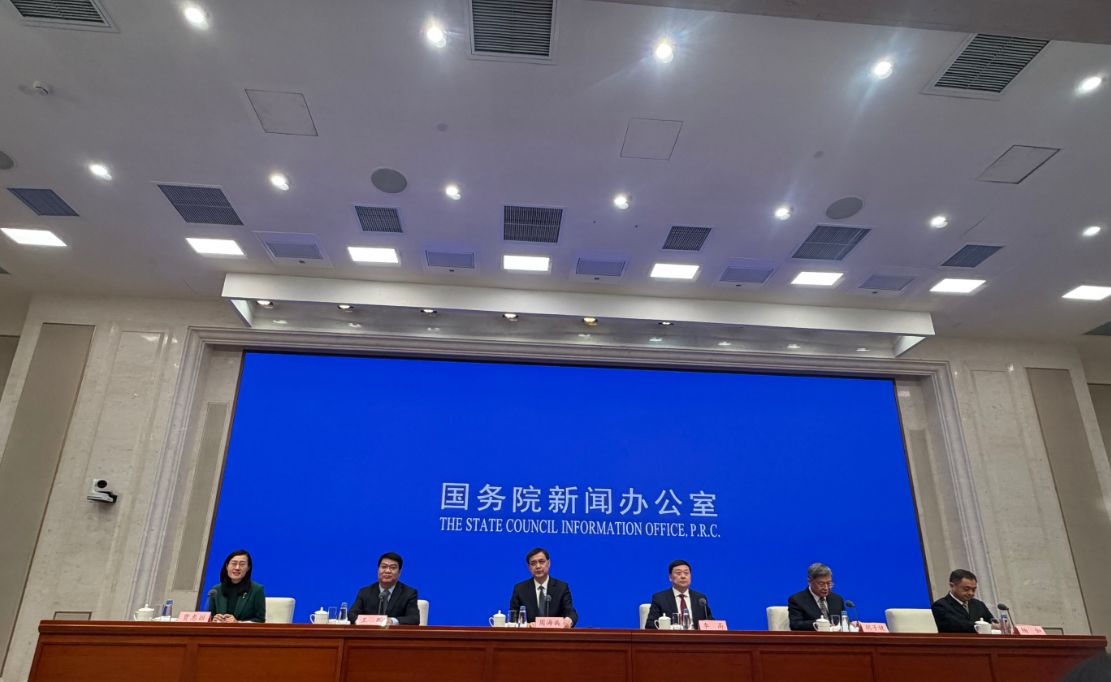
突出问题导向 推动末端治理向全过程防控转变——国务院政策例行吹风会解读《固体废物综合治理行动计划》
Xin Hua She· 2026-01-13 09:29
Core Viewpoint - The State Council has issued the "Solid Waste Comprehensive Governance Action Plan," emphasizing the importance of solid waste management in promoting a beautiful China and accelerating the green transformation of economic and social development [1] Group 1: Action Plan Overview - The action plan outlines the overall approach, work objectives, key tasks, and support measures for solid waste governance, addressing prominent issues in solid waste management with systematic and integrated policy measures [1][2] - It marks the first comprehensive deployment document for solid waste governance in China, complementing previous pollution prevention documents related to water, soil, and air [1] Group 2: Key Principles and Goals - The governance approach follows the principles of "reduction, resource utilization, and harmlessness," with a focus on enhancing resource utilization efficiency [2] - China generates over 11 billion tons of industrial solid waste and construction waste annually, necessitating a three-year special rectification action against illegal dumping [2] Group 3: Specific Initiatives - The "Zero Waste City" initiative will be expanded to around 200 cities during the 14th Five-Year Plan period, promoting collaborative efforts in key urban regions [3] - The Ministry of Agriculture will focus on solid waste management in agriculture, emphasizing the recycling of agricultural waste and the promotion of biodegradable materials [4] Group 4: Construction Waste Management - The Ministry of Housing and Urban-Rural Development will enhance construction waste management through source management, green construction practices, and the establishment of temporary storage facilities [5] - A comprehensive electronic management system will be implemented to ensure effective construction waste disposal [5] Group 5: Industrial Solid Waste Utilization - The comprehensive utilization rate of major industrial solid waste in China is reported to be 57%, with ongoing efforts to reduce waste generation and promote green manufacturing [5] - The Ministry of Industry and Information Technology will focus on advancing comprehensive utilization technologies and managing key waste categories [5]
到2030年我国大宗固废年综合利用量达到45亿吨
Xin Hua Wang· 2026-01-13 08:21
【纠错】 【责任编辑:施歌】 新华社国内部出品 【简介】国家发展改革委副主任周海兵1月13日在国务院政策例行吹风会上介绍,《固体废物综合 治理行动计划》明确,到2030年,重点领域固体废物专项整治取得明显成效,大宗固废年综合利用量达 到45亿吨。 记者:蒋志强 ...
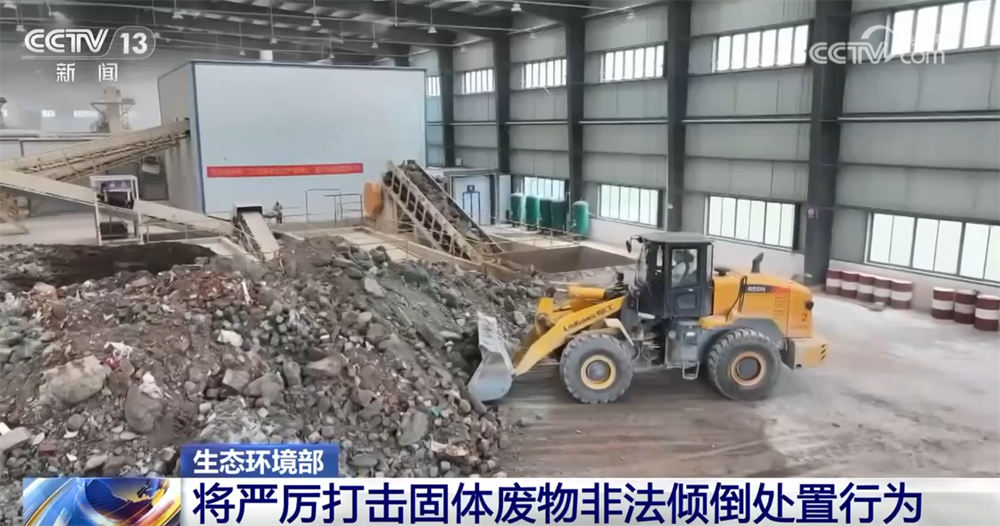
生态环境部:将严厉打击固体废物非法倾倒处置行为
Zhong Guo Xin Wen Wang· 2026-01-13 08:02
生态环境部:将严厉打击固体废物非法倾倒处置行为 来源:中国新闻网 中新网1月13日电 国务院新闻办公室1月13日举行国务院政策例行吹风会,介绍《固体废物综合治理行 动计划》有关情况。会上,生态环境部副部长李高表示,生态环境部将会同有关部门,以实施《固体废 物综合治理行动计划》为契机,深化开展专项整治行动,巩固整治成果,努力从全链条发力,把监管网 织得更密、更实。 李高表示,我国的人口规模大、产业规模大,因此固体废物的产生量也很大,每年产生的工业固体废 物、建筑垃圾、生活垃圾、农业固体废物、危险废物等固体废物超过110亿吨。固体废物污染跟大气污 染、水污染的特征不太一样,大气污染、水污染的特征是区域性、流域性的特征,固体废物污染的特点 是点多面广,尤其是非法倾倒处置建筑垃圾、生活垃圾、工业固体废物等问题还没有得到根本遏制,造 成环境风险隐患,滋生黑色利益链。很多问题就发生在老百姓身边,影响老百姓的生活,引发社会关 注。 李高指出,经国务院同意,生态环境部正在会同有关部门组织实施为期三年的非法倾倒处置固体废物专 项整治行动。2025年6月,生态环境部印发专项整治行动方案,组织召开全国动员部署视频会议,明确 要求聚 ...
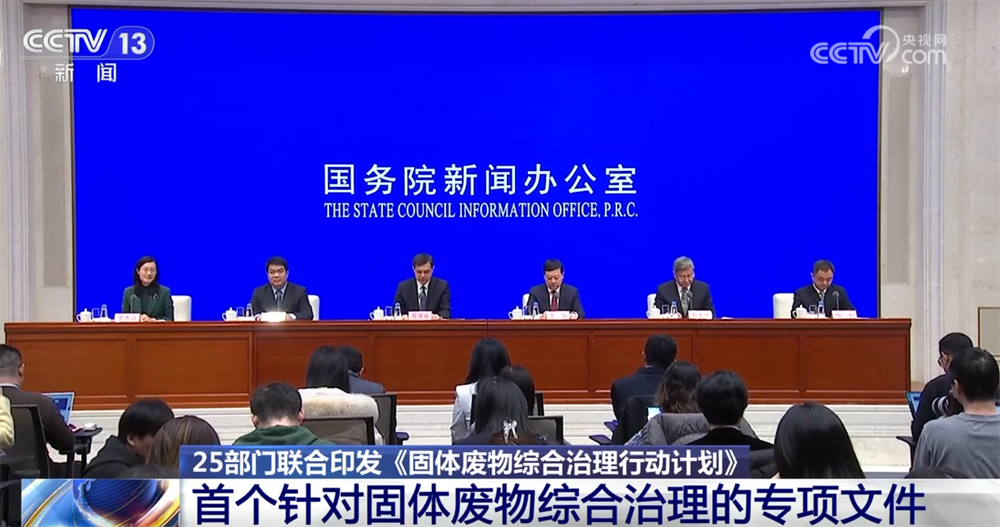
25部门联合印发、首个专项文件!固体废物综合治理打出“组合拳”
Yang Shi Wang· 2026-01-13 07:49
Core Viewpoint - The "Solid Waste Comprehensive Management Action Plan" is China's first systematic document for solid waste management, aiming for significant improvements in solid waste utilization and recycling by 2030 [1][5]. Group 1: Action Plan Overview - The action plan was jointly issued by 25 departments, outlining the overall strategy and work objectives for solid waste management in China [1]. - By 2030, the annual comprehensive utilization of major solid waste is expected to reach 4.5 billion tons, with the annual recycling of key renewable resources reaching 510 million tons [1]. Group 2: Focus Areas and Tasks - The action plan specifies management tasks across major waste-producing sectors, including industry, urban areas, and agriculture [3]. - Five special rectification tasks will be launched to address environmental risks related to illegal dumping and pollution from landfill sites [3]. Group 3: Agricultural Waste Management - In the agricultural sector, the plan promotes the use of thicker, high-strength plastic films and the scientific return of straw to enhance agricultural waste management [7]. - The Ministry of Agriculture and Rural Affairs emphasizes the need for better guidance on the scientific use of plastic films and the recycling of pesticide packaging waste [7]. Group 4: Current Utilization Rates - Recent data indicates that the comprehensive utilization rate of livestock manure has reached 80.1%, while straw utilization remains stable at over 88% [11]. - The disposal rate of agricultural films exceeds 85%, and the recycling rate of pesticide packaging waste is around 80% [11].
生态部“点名”山东探索工业固废规模化利用,助力全国实现固废“双降”目标
Feng Huang Wang Cai Jing· 2026-01-13 07:25
Core Viewpoint - The Chinese government is implementing the "Comprehensive Solid Waste Management Action Plan" to address the increasing challenges of industrial solid waste, focusing on both reducing new waste generation and managing existing waste stockpiles [1]. Group 1: Control of New Waste Generation - The revised "Pollution Control Standards for Storage and Landfilling of General Industrial Solid Waste" allows for the use of compliant industrial solid waste in activities such as backfilling and ecological restoration [2]. - In 2022, 128 large-scale utilization projects for coal gangue and fly ash were conducted across nine provinces in the Yellow River basin, with a total utilization exceeding 100 million tons [2]. - In the Yangtze River upper and middle reaches, 24 large-scale projects for phosphogypsum utilization were initiated, with over 2.9 million tons utilized [2]. Group 2: Management of Existing Waste Stockpiles - A survey identified approximately 33 billion tons of industrial solid waste stockpiled nationwide, occupying around 3,500 square kilometers [3]. - Over 5,000 tailings ponds have undergone safety inspections and remediation, with more than 2,200 completed in the Yangtze River Economic Belt and Yellow River basin [3]. - By 2030, the goal is to complete the remediation of over 60% of historical solid waste stockpiling sites, including the environmental risk management of red mud and tailings ponds [3].