
工匠精神

Search documents
榫卯:从“网红”热词回归技术本体
Xin Lang Cai Jing· 2026-01-29 21:59
Core Viewpoint - The article discusses the misconceptions surrounding the use of "mortise and tenon" (榫卯) in traditional Chinese architecture, emphasizing that the belief that ancient Chinese buildings did not use nails is largely inaccurate and rooted in misunderstandings of both historical practices and cultural contexts [4][6][9]. Group 1: Misconceptions about Nail Usage - The notion that ancient Chinese architecture did not use any nails is factually incorrect; nails were commonly used in smaller structural components and interior decorations, as documented in historical architectural guidelines [4]. - The idea of "nail-free construction" is not unique to China but is a shared characteristic among various wooden construction cultures, indicating a broader historical context [5][9]. Group 2: Cultural and Technical Perspectives - The rejection of nails in ancient Chinese craftsmanship stems from both technical and cultural reasons, primarily due to the susceptibility of iron to rust and decay, which could compromise the longevity of wooden structures [6]. - The cultural preference for wooden joints over nails reflects a deep-rooted tradition among East Asian carpenters, which has been shaped by historical material availability and craftsmanship values [6][7]. Group 3: Historical Context and Global Comparisons - The glorification of "nail-free construction" may have originated from 19th-century North America, where the mass production of wooden structures using cheap nails contrasted with the traditional methods of East Asia [5]. - The article highlights that Western architectural classifications often misinterpret Chinese wooden structures, categorizing them as "half-timbered" rather than recognizing their full wooden framework [7][8]. Group 4: Clarification of Architectural Concepts - The author aims to clarify two main misconceptions: first, that mortise and tenon joints are not a unique Chinese invention but a common solution across various wooden construction cultures; second, that the technical aspects of these joints involve complex interactions of material properties, tools, and cultural choices, rather than mere geometric assembly [9].


劳模工匠馆传承榜样的力量
Xin Lang Cai Jing· 2026-01-29 17:44
Core Viewpoint - The opening of the Jiangsu Changzhou Model Craftsman Museum marks a significant milestone, serving as a platform to honor and promote the spirit of labor and craftsmanship while showcasing the contributions of 125 national model workers and preserving 346 valuable exhibits that reflect the city's economic and social development [1][2]. Group 1 - The museum is designed to be a vital window for displaying and promoting the spirit of model workers and craftsmen, acting as a motivational platform for employees to learn from exemplary figures and enhance their work enthusiasm [2]. - It serves as a bridge for spiritual inheritance, paying tribute to past efforts while signaling future aspirations, thereby fostering a social ethos that values labor and skills [2]. - Each story within the museum encapsulates the spirit of perseverance and national pride, playing a unique and significant role in promoting the "three spirits" of labor [2]. Group 2 - The establishment of the museum reflects a deep respect for laborers and emphasizes the importance of passing down the spirit of model workers and craftsmanship [1]. - The museum aims to become a spiritual landmark in cities, encouraging more people to engage with its content and draw inspiration for practical efforts in their work [2].
全国总工会启动2026年全国五一劳动奖推荐评选工作
Zhong Guo Xin Wen Wang· 2026-01-29 04:17
Core Viewpoint - The All-China Federation of Trade Unions has initiated the recommendation and evaluation process for the 2026 National May Day Labor Award, aiming to recognize outstanding collectives and workers ahead of the May Day celebrations, thereby encouraging contributions to national goals during the 14th Five-Year Plan period [1][2] Group 1: Award Categories - The National May Day Labor Award includes three categories: the National May Day Labor Award Certificate, the National May Day Labor Medal, and the National Worker Pioneer title [1] - The National May Day Labor Award Certificate is awarded to legally registered enterprises, institutions, agencies, social organizations, and overseas institutions within China [1] - The National May Day Labor Medal is awarded to Chinese employees, while the National Worker Pioneer title is given to departments or units within the aforementioned organizations [1] Group 2: Evaluation Criteria and Process - The evaluation process is guided by Xi Jinping's Thought on Socialism with Chinese Characteristics for a New Era, emphasizing the promotion of model worker spirit, labor spirit, and craftsmanship [1] - The recommended candidates must meet the conditions outlined in the "Management Measures for the Evaluation and Recognition of the National May Day Labor Award" and have made significant contributions in various areas including economic, political, cultural, social, ecological, and party construction [1] - The evaluation process will follow a bottom-up approach with strict adherence to political standards and performance orientation, ensuring a democratic process and acceptance of supervision [2]
以“宣讲+”推进理论与青年深度连接
Xin Lang Cai Jing· 2026-01-28 04:17
Core Viewpoint - The article emphasizes the importance of adapting the dissemination of the Party's innovative theories to engage the youth effectively, addressing their unique characteristics and needs in the modern context [1][2][3]. Group 1: Theoretical Engagement with Youth - The youth are described as "digital natives" and "social forces," requiring a new approach to theoretical dissemination that resonates with their active thinking and diverse needs [1]. - The "宣讲+" approach aims to create a deeply integrated theoretical communication system that responds to youth concerns and embeds theory into their daily lives [1][2]. - The need to transform traditional theoretical discussions, which often feel disconnected from youth realities, into relatable themes that can serve as keys to resolving their confusions is highlighted [1][2]. Group 2: Utilizing Social Hotspots - Social hotspots are identified as critical entry points for youth to understand the world, providing a rich context for theoretical interpretation [2]. - Examples include using trending topics like "internet celebrity phenomena" to discuss mainstream value guidance and "cultural confidence" through the rise of domestic brands [2]. - This dual interaction between current events and theory aims to make theoretical concepts feel relevant and engaging for the youth [2]. Group 3: Addressing Real-World Challenges - The article discusses how real-life challenges faced by youth, such as career choices and existential anxieties, can serve as focal points for theoretical discussions [2]. - Theories that emerge from practical experiences and guide actions can create a closed loop of addressing difficulties, gaining recognition and enthusiasm from the youth [2]. Group 4: Overcoming Cognitive Barriers - The youth's cognitive confusion often stems from misconceptions about traditional values and the relationship between personal and societal interests [3]. - The article suggests that theoretical discussions should aim to clarify these misconceptions and promote consensus among youth [3]. - The use of relatable examples to address common dilemmas faced by youth is proposed as a method to enhance understanding and engagement [3]. Group 5: Creating Engaging Scenarios - The importance of embedding theoretical discussions into everyday scenarios that youth encounter is emphasized [4]. - Examples include integrating theory into classroom settings, research environments, and community discussions to make learning more natural and impactful [4]. - Immersive experiences, such as role-playing and simulations, are suggested to transform youth from passive listeners to active participants in theoretical learning [4]. Group 6: Digital Integration and Innovation - The article highlights the necessity of embracing technological advancements to enhance theoretical dissemination, particularly through digital platforms [5][6]. - Interactive and engaging formats, such as virtual reality and augmented reality, are proposed to make theoretical concepts more accessible and appealing to the youth [5][6]. - The use of AI and big data to personalize content delivery and create a more engaging theoretical experience is also discussed [6].
冯鸿昌:技术立身 匠心筑梦
Xin Lang Cai Jing· 2026-01-28 00:13
转自:全国人大 冯鸿昌 十四届全国人大代表、厦门集装箱码头集团有限公司工会主席 走进厦门港海天码头,可见澄澈的蓝天之下,白鹭轻盈掠过海岸,岸边红色桥吊巍然矗立,一排排集装箱整齐码放。全国人大代表、厦门集装箱码头集团 有限公司工会主席冯鸿昌告诉记者:"我在这里工作了二十多年,每当听见货轮鸣笛、看到吊臂起落,都感到很亲切,很有归属感。" 冯鸿昌在码头二十多年,从一名实习技工,成长为全国劳动模范,用"做事勤快、不怕吃苦,做一名合格的港口技术工人"的信念,书写了技术立身、匠心 筑梦的动人篇章。 1997年,18岁的冯鸿昌来到厦门港实习。刚被分配到龙门吊维修组时,他看着师傅们排除故障手到擒来,自己却连工具都不知如何下手。当时师傅的一席 话让他铭记至今:"学好技术就一定有立足之地。" 后来,公司引进了一批进口设备,这让工人们犯了难——满是专业术语的英文技术资料如同"天书"。当时,冯鸿昌咬牙拿出半个月工资买下电子学习机, 每天抽空自学英文,并对着技术资料一一标注。半年后,一份完整的中文技术资料摆在众人面前,精准的参数标注为设备检修扫清了障碍。 冯鸿昌代表在码头工作。(代表供图) 此后,冯鸿昌相继获得了电大大专文凭和高级钳工 ...

数智化赋能,助“工”成为“匠”
Xin Lang Cai Jing· 2026-01-27 16:55
NITED W t 9 @ 19 41 les 转自:劳动午报 (来源:劳动午报) 市人大代表孙妍说:"技术工人既是高端装备的操作者,更是人工智能与精密制造融合的实践者。高端 设备制造精度要求高,多年积累的手感和经验对工人提出更高的要求,由于调试周期长、精度把控难度 大也限制产能提升。现在通过嵌入AI视觉检测、智能调控算法,设备能自主校准参数、识别细微误 差。" 孙妍结合一线工作场景举例,以往研发模式靠不断试错,存在周期长、物料成本高的问题。现在借助数 字化手段,能够高效解决诸多难题,比如通过实验设计优化软件,就可以快速从海量参数中筛选出最优 组合。"所谓新时代的工匠精神,就是在数智工具的助力下,把精密制造的极致追求实现得更好。" 孙 妍说。 培育革新 北京市"十五五"规划纲要围绕数智化构建了全方位发展蓝图,核心是打造 "全球数智经济标杆城 市"与"数智北京",以科技创新驱动产业、城市、民生全面升级。数智化的落地实现,核心离不开产业 工人队伍的能力适配与价值升级。目前,北京正以数智技术为桥梁,打通"工"到"匠"的成长通道,让工 匠精神在数智时代焕发新的光彩。在北京市十六届人大四次会议上,多位市人大代表围绕"数 ...


江苏固特电气控制技术有限公司董事长、加拿大SSR电子技术有限公司董事长殷晨钟
Sou Hu Cai Jing· 2026-01-27 08:59
殷晨钟,江苏固特电气控制技术有限公司董事长、加拿大SSR电子技术有限公司董事长、美国高登电子 科技集团总经理。在他的引领下,江苏固特电气控制技术有限公司、加拿大SSR电子技术有限公司 以"择一事终一生"的执着、"破壁垒攀高峰"的勇毅,将工匠精神融入技术研发的每一个细节,在智能 化、绿色化、融合化的转型浪潮中逆势突围,既填补了国内高端电气控制领域的技术空白,又搭建起中 外技术交流的桥梁,在电气控制赛道上书写着跨国企业的匠心篇章。 匠心铸器强国梦 ,创新领航百国春 ——访江苏固特电气控制技术有限公司董事长、加拿大SSR电子技术有限公司董事长殷晨钟 启明于微 弱电照见强工志 当"十五五"规划为制造业划定"智能化、绿色化、融合化"的核心航向,当"双碳"目标与科技自立自强成 为产业发展的主旋律,工业电气控制行业正迎来前所未有的战略窗口期,也面临着高端技术"卡脖子"、 供需结构失衡的严峻挑战。数据显示,我国电控器市场规模已稳居全球首位,但高端产品交付能力仅能 满足67%的市场需求,核心元器件与底层算法的进口依存度居高不下。在这样的行业背景下,江苏固特 电气控制技术有限公司、加拿大SSR电子技术有限公司及其董事长殷晨钟的存 ...

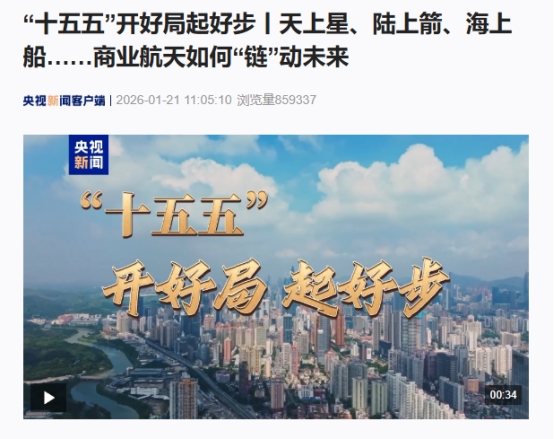
江苏新超合金受邀CCTV 1新闻栏目3分钟专访:可回收航天格栅舵产品为“十五五”开好局起好步 创新突围
Sou Hu Wang· 2026-01-26 09:18
Core Viewpoint - New Super Alloy Technology Co., Ltd. is highlighted for its commitment to precision manufacturing in the high-end special alloy materials sector, particularly in the context of the commercial aerospace industry [1][3]. Group 1: Strategic Focus - The company emphasizes a strategy of "small but refined," focusing on excelling in niche markets rather than pursuing blind expansion [3]. - Resources are concentrated on critical and challenging components, such as rocket grid fins, establishing a core competitive barrier through specialization [3]. Group 2: Craftsmanship and Quality - The company adheres to a philosophy of achieving 99.9% precision, believing that this level of quality is far more valuable than merely achieving variety in mediocre products [6]. - A commitment to "zero defects" is integrated into every aspect of the R&D, production, and service processes, reflecting a deep responsibility towards industry partners and national projects [8]. Group 3: Long-term Partnerships - The company aims to be an indispensable long-term partner for clients by providing not only products but also solutions and full-cycle services based on deep professional knowledge [10]. - This approach fosters a strong bond with clients, enabling mutual growth and value sharing [10]. Group 4: Future Development - The company is set to launch a new intelligent production base covering 35 acres, which will enhance capacity and upgrade manufacturing standards and digital capabilities [12]. - Efforts are underway to expand globally, with a regional hub established in Dubai, UAE, aimed at linking Chinese craftsmanship with broader international markets [12]. Group 5: Commitment to Excellence - The company positions itself as a global service provider specializing in the precision manufacturing, research, and production of tantalum, zirconium, titanium, and nickel-based alloys [14]. - A focus on continuous internal development and resilience against external changes is emphasized as a pathway to a stronger future [14].
【工作研究】办好劳模工匠大讲堂 助力培养高素质产业工人
Xin Lang Cai Jing· 2026-01-25 19:17
Core Viewpoint - The establishment of the Labor Model and Craftsman Lecture Hall should be coordinated comprehensively, utilizing various resources both online and offline, to address issues related to teaching venues, personnel, content, and formats [1][2]. Group 1: Importance of Labor Education - The spirits of labor models, labor, and craftsmanship provide profound value guidance for labor education in the new era, especially in the context of high-quality economic development [1]. - Promoting the improvement of labor quality and effectively connecting with employment market demands is crucial [1]. - Labor education encompasses a comprehensive educational function, fostering virtues, intelligence, physical fitness, and aesthetics among students [1]. Group 2: Implementation Strategies - The "1+N" venue model should be established, where "1" represents the main venue of various levels of craftsman colleges, and "N" includes enterprises, workshops, activity centers, and other locations for teaching [2]. - The traditional advantages of trade unions should be leveraged to enhance the recognition and trust of labor models and craftsmen among workers [2]. Group 3: Instructor Development - A "Labor Model + Craftsman" instructor system should be constructed, focusing on hiring national and local craftsmen and labor models as the main teaching force [3]. - It is essential to strengthen ideological guidance and political direction for labor models and craftsmen to enhance their sense of social responsibility and advanced nature [3]. Group 4: Curriculum Design - A "1+N" curriculum system should be developed, with "1" focusing on the core theme of promoting the "three spirits," and "N" allowing industries to determine course content and teaching methods based on their specific needs [4]. - The evaluation of the effectiveness of the lectures should include quantifiable assessment indicators related to ideological guidance, skill transmission, and actual benefits [4]. Group 5: Teaching Methods - An "online + offline" teaching model should be explored, utilizing various media to enhance classroom engagement and appeal [5]. - The establishment of labor model and craftsman associations can facilitate the organization of promotional activities and skill competitions, with a focus on voluntary participation and support for the craftsmen [5].
“日本制造”信誉神话已然不复存在
Xin Lang Cai Jing· 2026-01-25 19:17
Core Viewpoint - The recent scandal involving Kawasaki Heavy Industries highlights a long-standing issue of data falsification in Japan's manufacturing sector, particularly in defense, undermining the reputation of "Made in Japan" quality and trustworthiness [1][2][3]. Group 1: Scandal Details - Kawasaki Heavy Industries has been found to have falsified fuel efficiency data for submarine engines supplied to the Japan Maritime Self-Defense Force over a period exceeding 30 years, affecting 66 engines delivered from 1988 to 2021 [2]. - The Japan Ministry of Defense has imposed a two-and-a-half-month suspension on Kawasaki Heavy Industries from participating in general bidding, following the revelation of these violations [2]. - The company has faced previous scandals, including issues with Shinkansen train bodies and air conditioning equipment, indicating a pattern of quality management failures [2]. Group 2: Impact on Trust and Industry - The scandal is expected to damage not only Kawasaki Heavy Industries but also the broader Japanese defense industry, potentially eroding trust among international partners [3]. - A series of recent scandals across various sectors, including energy and automotive, has led to a significant decline in consumer trust in Japanese manufacturing, raising concerns about safety and quality management [3][4]. - The frequency of these scandals has prompted public outcry for stronger corporate governance and accountability within Japanese companies [3][4]. Group 3: Regulatory and Cultural Issues - Analysts suggest that the root causes of these scandals extend beyond individual moral failings to systemic issues within corporate governance and a lack of effective regulatory oversight [4][5]. - The Japanese government has begun to strengthen regulatory measures, but the effectiveness of these actions remains questionable, as the culture of cover-ups persists within companies [5]. - The perception of "Japanese craftsmanship" is at risk, as the ongoing issues reflect a deeper cultural and operational malaise within the manufacturing sector [4][5].