
数据跨境流动

Search documents
自贸试验区十年撬动哪些改革?
Sou Hu Cai Jing· 2025-12-03 10:56
Core Insights - The article highlights the significant role of China's Free Trade Zones (FTZs) in driving institutional innovation and expanding openness over the past decade, contributing to approximately 20% of the country's foreign investment and import-export volume despite occupying less than 0.4% of the national land area [4][3]. Group 1: Institutional Innovation and Economic Impact - Over the past ten years, 22 FTZs have been established, leading to the replication and promotion of 302 institutional innovations at the national level and over 2800 innovations at the provincial level [3][4]. - The implementation of the "direct release" regulatory model in the Yangshan Special Comprehensive Bonded Zone has significantly improved customs efficiency, reducing logistics costs by 12% and transportation time by 25% for vehicles [2][4]. Group 2: Sector-Specific Innovations - The Fujian FTZ has developed a safety standard for lithium battery exports, facilitating compliance and enhancing export efficiency, with exports exceeding 100 billion yuan for two consecutive years [5][6]. - The Tianjin FTZ has introduced a green channel for urgently needed imported drugs, allowing for expedited approval processes that can be completed in as little as three weeks, significantly benefiting patients [7][11]. Group 3: Financial Services and International Standards - The Guangdong FTZ has pioneered financial innovations, such as cross-border currency settlement services, attracting high-tech enterprises and enhancing the region's financial ecosystem [8][9]. - The Shanghai International Reinsurance Registration and Trading Center aims to establish a globally recognized standard for reinsurance transactions, enhancing operational efficiency through standardized documentation and blockchain technology [11][12]. Group 4: Future Directions and Challenges - The FTZs are expected to continue exploring higher levels of openness and deeper reforms, addressing challenges such as insufficient top-level design and the need for more systematic pilot experiences [16][17]. - The Chinese government plans to enhance the policy framework for FTZs, focusing on facilitating trade, investment, and data flow while integrating technological and industrial innovation [18][19].

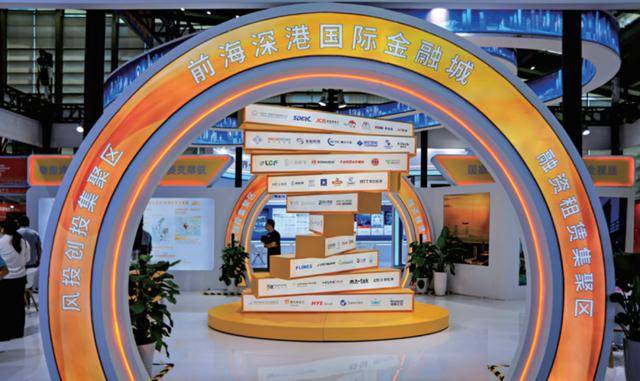
国家数据专家咨询委员会委员杨德斌: 深港联手共建“数据枢纽”
Shen Zhen Shang Bao· 2025-12-02 16:43
Group 1 - The digital economy is identified as a key driver of global economic growth and a significant opportunity for China to "overtake" in the fourth industrial revolution [1] - Hong Kong aims to establish itself as an international data hub, leveraging its traditional financial center status and collaborating with Shenzhen to gather data from mainland China [1] - The cross-border flow of data is becoming a core driver of economic growth and is essential for companies expanding into international markets [1] Group 2 - There is a growing demand for cross-border data due to the rebound in Chinese companies' overseas investments, which increased from $45 billion in 2020 to $163 billion by 2025 [2] - Hong Kong's strategy for building an international data hub includes a three-step approach: data circulation policy, industry data alliance, and international data trading [2] - A mechanism for data flow in the Greater Bay Area has been established, including a memorandum for cross-border data cooperation between Guangdong, Hong Kong, and Macau [2]
上海中心城区首个数据跨境服务中心揭牌 探索数据跨境流动合规、高效新模式
Zhong Guo Xin Wen Wang· 2025-11-30 00:21
Core Points - The establishment of the data cross-border service center in Jing'an District is a significant achievement in Shanghai's efforts to enhance data cross-border flow and compliance support for local enterprises [1][2] - The center aims to provide a "one-stop" service platform for businesses, focusing on policy interpretation, compliance consultation, application assistance, and technical empowerment [1][3] - Jing'an District is positioned to leverage its high internationalization and concentration of high-end resources to meet the growing demand for cross-border data services [2] Summary by Sections Establishment and Purpose - The data cross-border service center in Jing'an District fills a gap in providing localized services for data cross-border compliance, supporting the development of a robust digital economy [1][2] - It serves as an extension of the "central-city-district" cybersecurity system, aiming to enhance the service capabilities for enterprises [1] Services Offered - The center will provide specialized services tailored to key industries such as trade, finance, professional services, and biomedicine, ensuring compliance while facilitating data flow [2][3] - A "Jing'an District Data Cross-Border Service Package" has been launched, which includes practical resources like policy compilations and safety assessment guidelines [3] Future Plans - The center aims to innovate in data cross-border flow services, exploring new models and contributing to national data management practices [2] - Future services will include artificial intelligence service registration, algorithm registration, blockchain consultation, and enhancing the overall cybersecurity environment [3]
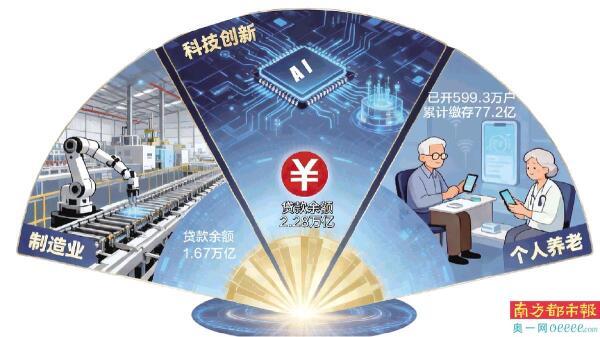
前10月深圳制造业贷款余额1.67万亿
Nan Fang Du Shi Bao· 2025-11-25 23:09
制图:李斌(即梦AI生成) 11月25日,深圳金融监管局召开新闻发布会,通报2025年1月至10月深圳银行业保险业的运行情况,系 统介绍深圳辖内银行业、保险业在稳外贸、促消费方面的政策落地情况与阶段性成果。南都湾财社记者 现场获悉,作为经济高质量发展的重要支撑,深圳金融的精准发力已显现实效:今年前10个月,深圳市 中资银行新发放外贸企业贷款7635.66亿元,同比增长9.83%;个人消费贷款余额8352.88亿元,同比增 长4.95%。 各项贷款余额9.91万亿 同比增长4.92% 深圳金融监管局统计数据显示,截至2025年10月末,深圳金融监管局监管的银行业资产总额达14.36万 亿元,同比增长4.37%;负债总额13.97万亿元,同比增长4.44%。各项贷款余额9.91万亿元,同比增长 4.92%;各项存款余额10.00万亿元,同比增长4.95%。资产、负债、存贷款规模均稳居全国大中城市第 三位。 保险业同样表现亮眼。前10个月,深圳保险业实现原保险保费收入1910.45亿元,规模位列全国大中城 市第三,同比增长12.20%,增速在一线城市中居首。其中,财产险公司原保险保费收入531.54亿元,同 比增长 ...
全岛封关在即 海南自贸港现代服务业保持增势
Zhong Guo Xin Wen Wang· 2025-11-22 11:27
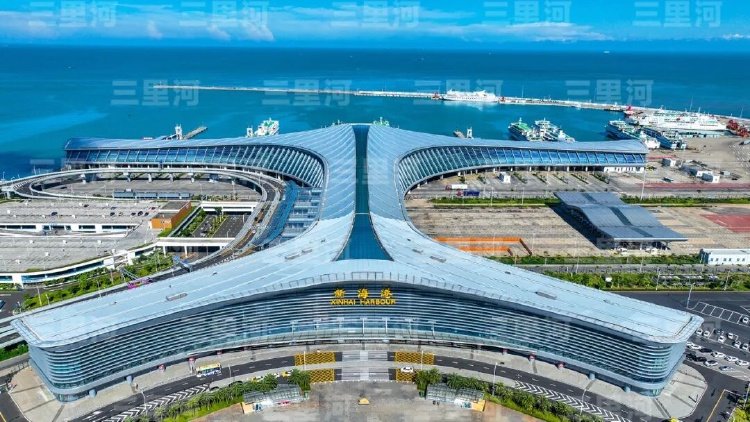
Core Insights - Hainan Free Trade Port's modern service industry is experiencing an average annual growth rate of 9% from 2018 to 2024, outpacing the GDP growth during the same period [1] - In the first three quarters of this year, the modern service industry achieved a value-added output of 351.59 billion yuan, continuing its growth trend [1] Group 1: Economic Development - The Hainan Free Trade Port is set to enhance its operations with the imminent closure of customs, leveraging comprehensive pilot programs to expand the modern service sector [1] - A financial policy system centered on cross-border trade and investment liberalization has been established, facilitating the free flow of global capital in Hainan [1] Group 2: Logistics and Transportation - The "China Yangpu Port" has registered 66 international vessels with a total capacity exceeding 6.2 million deadweight tons, maintaining a leading position nationally [1] - The expansion of maritime routes includes 74 international container shipping lines and a network of 82 international civil aviation routes, significantly reducing operational costs for shipping service companies [1] Group 3: Technology and Data - Hainan's information transmission, software, and IT sectors are thriving, supported by undersea cables connecting Hong Kong and Southeast Asia, enhancing data transmission speed and stability [2] - The introduction of a negative list for data outbound has provided clear regulatory guidance for industries like aerospace and tourism, lowering institutional costs for businesses [2] Group 4: Medical Tourism - The Boao Lecheng International Medical Tourism Pilot Zone has achieved synchronization with international standards in medical technology, equipment, and pharmaceuticals, attracting over 560,000 medical tourists in the first ten months of this year, marking an 80% year-on-year increase [2] Group 5: Education - Hainan has allowed high-level foreign universities and vocational schools to operate independently, attracting renowned institutions such as the University of Bielefeld and the Lausanne Hotel Management School to establish campuses in Hainan [2]
e法润京华|法治护航数字未来:北京探索“数智治理”新路径
Xin Hua She· 2025-11-22 09:08
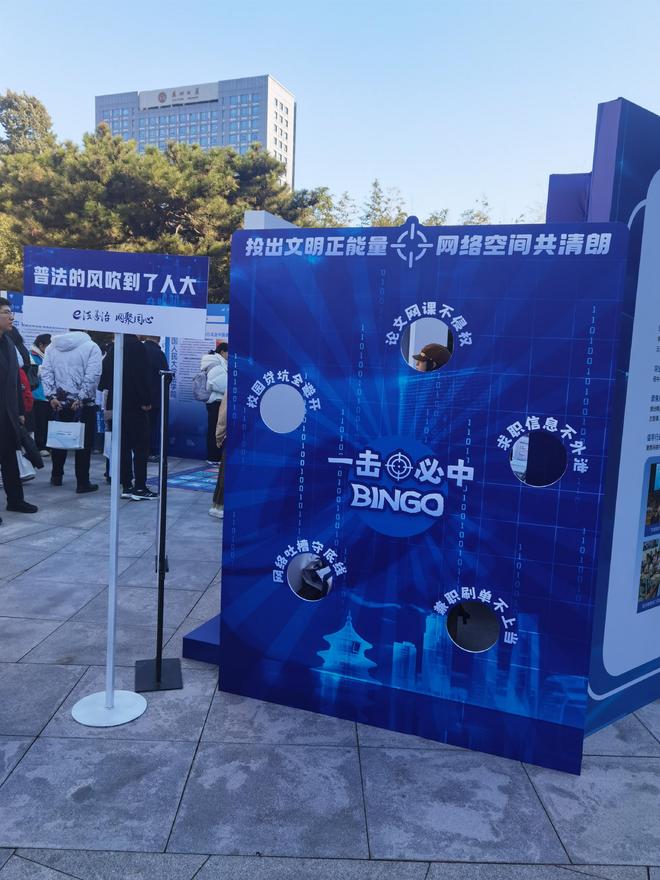
Group 1 - The event "National Network Legal Education Campaign - Beijing Station" was launched to promote legal awareness in the digital age, emphasizing the theme "e-law governance, gathering hearts together" [2] - Beijing has established a series of exemplary practices in network governance, data cross-border flow, corporate compliance services, and public legal education, contributing to the rule of law in the digital era [3] Group 2 - The AI Origin Community in Beijing's Haidian District has over 200 AI companies, achieving a 59% concentration in the AI industry, and has created a comprehensive legal protection system for businesses [5] - The community offers tailored legal courses focusing on hot topics such as AI labeling management and data security law, addressing the specific needs of the industry [5] Group 3 - The "AI Smart Mediator" in Haidian District enhances public participation in legal services, achieving a 93% success rate in mediation of disputes [7] - The AI system provides quick analysis and legal advice for common issues, facilitating conflict resolution in the community [7] Group 4 - Beijing has introduced the first comprehensive reform document for data cross-border flow, detailing management requirements for 23 business scenarios and 198 specific data fields [8] - The city is working on a second batch of negative lists focusing on key industries such as biomedicine and international financial services [8] Group 5 - The Beijing Internet Court has implemented specialized trials to address new types of online disputes, ensuring the stability of the digital economy [10] - The court has achieved a 100% online filing rate and has handled over 250,000 cases, leading in case resolution efficiency [12] Group 6 - The court has established the first internet juvenile court in China, focusing on protecting minors' rights through innovative educational methods [13] - The court's approach aims to create rules and order in the rapidly evolving digital landscape, aligning with national legal governance goals [13]
乌镇之约:十年携手,共筑网络空间命运共同体
Xin Hua She· 2025-11-08 11:32
Core Insights - The World Internet Conference in Wuzhen emphasizes the theme of building an open, cooperative, and secure digital future, marking the tenth anniversary of the concept of a community with a shared future in cyberspace [2][5] - The conference serves as a platform for international consensus and collaboration, recognized globally for its role in transforming ideas into actionable practices [2][3] Group 1: Conference Highlights - The conference features the release of 12 exemplary cases showcasing international cooperation in cyberspace, including Kaspersky's initiative that has benefited 700 million people in countries like Nigeria and Turkey [3] - The "Never Disappearing Heritage" competition highlights the use of digital technology by youth from 19 countries to revive cultural heritage, demonstrating the intersection of technology and culture [5] Group 2: Global Digital Challenges - Despite progress, challenges such as the digital divide and emerging vulnerable groups persist, necessitating global cooperation in areas like AI ethics and cross-border data flow [5][6] - Uganda's digital transformation, with over 10,000 kilometers of fiber optic network and an internet penetration rate exceeding 47%, exemplifies the practical application of the community concept [5] Group 3: Future Directions - The concept of a community with a shared future in cyberspace has evolved from a Chinese initiative to an international consensus, with ongoing efforts to create a fair, open, and secure global cyberspace [6]

海南,被委以重任
Zhong Guo Xin Wen Wang· 2025-11-08 04:26
Core Insights - The strategic goal of building the Hainan Free Trade Port is to establish it as a significant gateway for China's new era of opening up to the outside world [1][3] - Hainan Free Trade Port will officially start its full island closure operation on December 18, 2025, implementing a policy characterized by "one line open, one line controlled, and free movement within the island" [3][4] - Hainan's unique value lies in its position as a bridge connecting domestic and international markets, facilitating the flow of goods, capital, and talent [3][4] Economic Impact - Since the implementation of the free trade port policies, Hainan has attracted actual foreign investment of 102.5 billion yuan, with an annual growth rate of 14.6% [5] - The province has seen a significant increase in foreign direct investment, reaching 9.78 billion USD, with an annual growth rate of 97% [5] - The total value of Hainan's foreign trade is projected to reach 277.65 billion yuan in 2024, marking a year-on-year growth of 20% [5] Policy Framework - Hainan's free trade port policy framework is characterized by "zero tariffs, low tax rates, and simplified tax systems," along with "five freedoms and one safety" for the cross-border flow of factors [4] - The region is not merely a policy lowland but aims to establish a compliance mechanism that aligns with international rules [4] Industrial Development - The modern service industry in Hainan is expected to grow by 7% in 2024, significantly outpacing the GDP growth rate [5] - Key sectors such as modern logistics, modern trade, and modern finance are becoming critical engines for the economy of the free trade port [5] - Hainan is transitioning from a local participant in the industrial chain to becoming a "key player" in the global industrial chain [6]
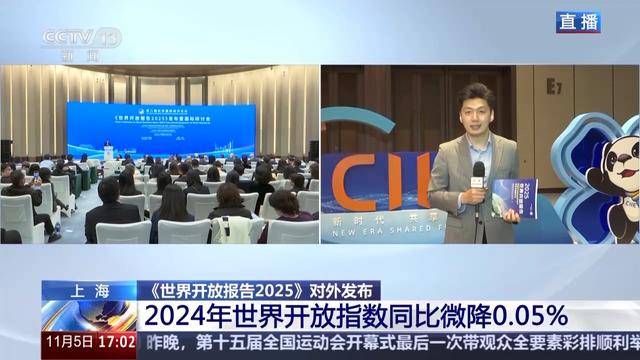
中国开放指数上升!重磅报告发布 要点速览
Sou Hu Cai Jing· 2025-11-06 08:39
Group 1 - The core viewpoint of the report indicates a global trend of "overall tightening, increasing differentiation, and momentum transformation" in world openness, with a slight decrease in the World Openness Index for 2024 compared to previous years [1][3] - The report highlights that traditional open regions like Europe and North America are experiencing significant reductions in openness, while emerging markets and developing economies show a year-on-year increase in their openness index [1][3] - China's openness index is projected to rise by 0.5% in 2024, reflecting the strong vitality of its unique path to openness, with a nearly 30% increase in the index from 1990 to 2024, ranking among the fastest globally [3][5] Group 2 - The report emphasizes China's various initiatives, such as the Belt and Road Initiative and Free Trade Zones, which demonstrate that increased openness leads to development, and vice versa [5][9] - As of July this year, over 1.27 million foreign-invested enterprises have been established in China, with total investment exceeding $3 trillion, and foreign direct investment returns in China averaging around 9% over the past five years, ranking among the highest globally [7][9] - A report from the China-Germany Chamber of Commerce indicates that 92% of surveyed companies plan to continue operations in China, with over half intending to increase investments in the next two years, showcasing the positive interaction between multinational companies and China [7][9]
截至8月北京在香港对外直接投资存量达556.12亿美元
Zhong Guo Xin Wen Wang· 2025-11-03 13:14
Core Insights - As of August, Beijing's direct investment stock in Hong Kong reached $55.612 billion, accounting for 49.04% of Beijing's total direct investment stock, making Hong Kong the preferred destination for Beijing's outbound investments [1][2] Group 1: Investment Statistics - The cumulative number of signed projects between Beijing and Hong Kong over 28 years has reached 650, with a total contract value exceeding $120 billion [1] Group 2: Future Collaboration Directions - The two regions will focus on three main areas for deepening cooperation: establishing joint rules and standards, creating outbound platforms, and building an innovative ecosystem [2] - The collaboration will leverage Hong Kong's international advantages and Beijing's practical scenarios in areas such as cross-border data flow, AI ethics, and digital trade facilitation [2] - The integration of Beijing's technological research capabilities with Hong Kong's global resource network aims to provide comprehensive support for enterprises from technology adaptation to market expansion [2]