
权钱交易

Search documents
以案明纪释法 | 准确识别以定向增发股份收益权为工具的利益输送
Zhong Yang Ji Wei Guo Jia Jian Wei Wang Zhan· 2025-08-13 00:04
Core Viewpoint - The article discusses the complexities surrounding the criminalization of state officials profiting from directed share placements, emphasizing the need for thorough investigations focusing on the nature of the transactions and the motivations behind them [1][5][11]. Summary by Sections Basic Case Facts - Wang, a former state-owned enterprise leader, and Li, the actual controller of a private investment company, developed a relationship that led to Wang facilitating Li's access to share placements [2][3]. - In 2014, Wang used his position to allocate shares from a state-owned company to Li's firm, which had previously been denied access [2]. Disputed Opinions - There are differing views on whether Wang's actions constitute bribery, with some arguing that the investment was a normal business opportunity, while others assert it was a clear case of bribery due to the nature of the transaction [5][6][11]. Analysis of Opinions - The article argues that the relationship between Wang and Li was not a legitimate market transaction but rather a form of power-for-money exchange, as Wang's actions were influenced by his official capacity [8][9][10]. - Wang's acquisition of shares was characterized by a lack of market risk, as Li guaranteed profits, which deviates from typical investment behavior [10][12]. Determining Bribery Amount - The article suggests that the total profit Wang received should be considered as the bribe amount, as it was a direct result of the power-for-money transaction [11][12]. - It emphasizes that the nature of the shares acquired by Wang was such that they were not typically accessible to ordinary investors, reinforcing the argument of an improper exchange [12][15][16].
中纪委一日处理三“虎”,均被指大搞权钱交易
Xin Lang Cai Jing· 2025-07-30 07:47
Group 1 - The central government has expelled three officials for serious violations of discipline and law, including Zhou Xi'an, Chen Shifei, and Wang Zhonghe [1][4][7] - Zhou Xi'an was found to have abused his power for personal gain, including accepting gifts and engaging in corrupt practices [3][6] - Chen Shifei was involved in significant corruption, using his position to facilitate illegal financial gains and engaging in "power-money" transactions [5][6] - Wang Zhonghe was accused of engaging in opportunistic behavior and forming connections with corrupt individuals, also involved in corrupt practices [8][9] Group 2 - Zhou Xi'an held various significant positions in the National Development and Reform Commission and was the Vice Chairman of the Anhui Provincial Political Consultative Conference before his expulsion [1][3] - Chen Shifei served as the Deputy Director of the National Medical Products Administration and was involved in the approval processes for drugs and vaccines during his tenure [4][5] - Wang Zhonghe had a long political career, including roles as the Mayor of Chifeng and the Secretary of the Chifeng Municipal Committee, before his retirement [8][9]


承诺斡旋并收钱但未实施斡旋是否为受贿既遂
Zhong Yang Ji Wei Guo Jia Jian Wei Wang Zhan· 2025-07-16 00:30
Core Viewpoint - The article discusses the legal classification of a case involving a public official, highlighting the distinction between bribery and fraud in the context of influence peddling [1][2][3]. Group 1: Case Overview - The case involves a public official (甲) who accepted 1 million yuan from a private entrepreneur (乙) in exchange for a promise to influence another official (丙) to assist乙 in avoiding criminal charges [1][2]. - There are three differing opinions on how to classify 甲's actions: as fraud, as attempted bribery, or as completed bribery [2][3]. Group 2: Legal Framework - According to Article 388 of the Criminal Law, public officials who use their position to obtain improper benefits for others and accept money can be charged with bribery, specifically influence peddling [2][5]. - Influence peddling is not a separate crime but a form of bribery that protects the integrity of public officials' duties [2][4]. Group 3: Analysis of Actions - 甲's actions meet the criteria for using his position to provide improper benefits, as he had the potential to influence丙 due to their relationship [3][5]. - The payment of 1 million yuan was based on 乙's trust in 甲's influence, indicating a direct relationship between the payment and 甲's position [6]. Group 4: Conclusion - The article concludes that 甲's acceptance of the payment, despite not having communicated with丙, constitutes completed influence peddling, as the act of accepting the money itself indicates a breach of duty [6].
以案明纪释法丨准确识别以“咨询服务费”为名行权钱交易之实
Zhong Yang Ji Wei Guo Jia Jian Wei Wang Zhan· 2025-07-16 00:30
Core Viewpoint - The article discusses the emergence of new forms of corruption, particularly focusing on the case of a public official who facilitated a consulting company to disguise illicit financial transactions under the guise of legitimate consulting services [1][5]. Summary by Sections Basic Case Facts - Li, a director at the A Province Market Supervision Administration, helped his associate Wang establish a consulting company to improve Wang's financial situation [2]. - Wang's company, B, was set up to provide consulting services related to standardization, but it lacked the necessary expertise and resources [3]. Nature of Services Provided - B Company did not deliver genuine consulting services as per the contracts signed with project applicants, leading to additional costs for those applicants to seek real consulting services elsewhere [3][11]. - The services provided were superficial and did not meet the standards of legitimate consulting practices, indicating that B Company was essentially a "shell company" [10][12]. Legal Opinions and Analysis - There are differing opinions on whether Li and Wang's actions constitute legitimate business operations or corruption. The second opinion, which is favored, argues that their actions were a coordinated effort to disguise bribery under the pretense of consulting services [5][6]. - The establishment of B Company was primarily for the purpose of facilitating bribery, as evidenced by the lack of genuine business operations and the nature of the services provided [9][10]. Criminal Implications - Li and Wang's actions are classified as joint bribery, as they conspired to use the consulting company as a front for receiving illicit payments [13][14]. - The total amount received by Wang, approximately 9 million yuan, is considered to be part of the bribery scheme, with Li having a general awareness of the financial transactions involved [15][16].
重庆多措并举纠治新型腐败和隐性腐败
Zhong Yang Ji Wei Guo Jia Jian Wei Wang Zhan· 2025-07-10 00:19
Core Viewpoint - The article discusses the efforts of Chongqing's disciplinary inspection and supervision agencies to combat new and hidden forms of corruption, emphasizing the need for innovative approaches and the use of big data for detection and investigation [2][3][6]. Group 1: New and Hidden Corruption Cases - Cases of new and hidden corruption in Chongqing include instances where individuals disguise corrupt activities, such as a hospital department head receiving bribes under the guise of borrowing and a local official using relatives as "money-laundering" proxies [2][3]. - The shift from direct bribery to more complex and deceptive forms of corruption complicates investigations, as offenders attempt to sever the connection between their official duties and the receipt of illicit benefits [3][4]. Group 2: Investigation Techniques - Chongqing's disciplinary agencies are employing big data analysis and collaborative efforts with various professional bodies to enhance the identification and investigation of corruption cases [3][4][5]. - For example, in a case involving the sports bureau, investigators identified discrepancies in electricity costs related to a sports event, which led to the uncovering of embezzlement [4]. Group 3: Challenges in Defining Corruption - The article highlights the challenges faced in defining and categorizing new forms of corruption, necessitating collaboration with auditing and legal professionals to ensure accurate assessments [5][6]. - A specific case illustrates how a retired official's actions were initially difficult to classify, but thorough evidence collection and legal interpretation ultimately led to a successful prosecution for bribery [5]. Group 4: Capacity Building - The article emphasizes the need for continuous improvement in the capabilities of disciplinary inspection agencies, including the establishment of expert databases and specialized training programs to enhance investigative skills [6]. - Efforts include targeted training sessions and practical exercises to strengthen the understanding of complex corruption cases among investigators [6].
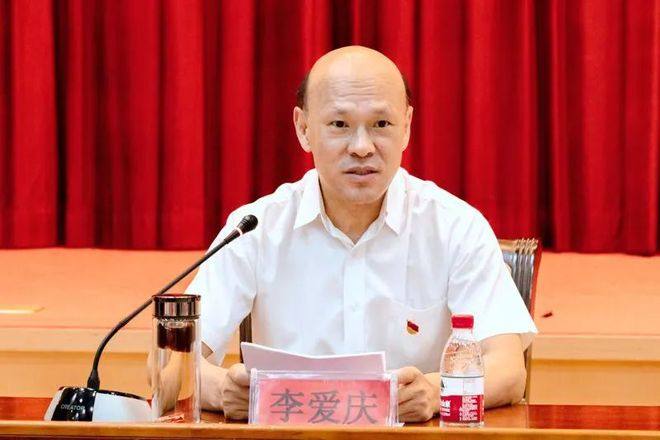
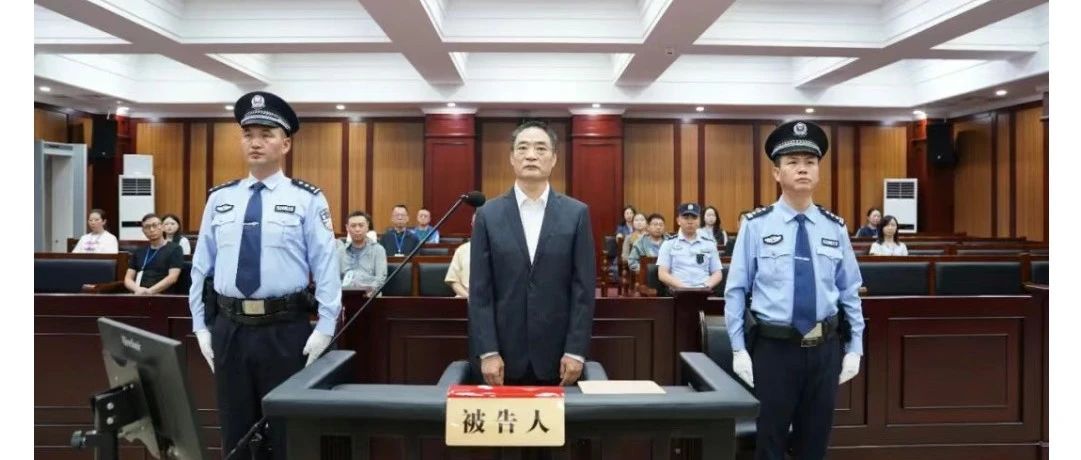
“京城国企第一贪”被判死缓,沦为“一霸手”大肆向民企索贿
Nan Fang Du Shi Bao· 2025-06-30 05:46
Group 1 - Li Aiqing, former chairman of Beijing Capital Group, was sentenced to death with a two-year reprieve for bribery and abuse of power, marking a significant case in the capital's corporate governance [1][6][7] - The total amount of bribes Li Aiqing received exceeded 200 million yuan, making it the largest bribery case uncovered by the Beijing Supervisory Commission since the reform of the supervisory system [7][8] - Li Aiqing held leadership positions in major state-owned enterprises in Beijing for 18 years, significantly impacting the local economy and governance [4][5][6] Group 2 - The Beijing State-owned Assets Management Company, where Li served as chairman, is a key player in managing and operating government assets, with a focus on capital operation and investment [5][6] - Beijing Capital Group, another major enterprise under Li's leadership, specializes in environmental protection, real estate, infrastructure, and financial services, boasting total assets exceeding 400 billion yuan by the end of 2020 [5][6] - Li's actions led to significant losses for state-owned assets, highlighting the risks associated with concentrated power in state-owned enterprises [6][7]
李志明案,一审开庭!
中国基金报· 2025-06-25 07:53
Core Viewpoint - The trial of Li Zhiming, former Party Secretary and Chairman of Guizhou Bank, for bribery and illegal loan issuance has commenced, highlighting significant governance issues within the bank [2][5]. Group 1: Legal Proceedings - Li Zhiming is accused of accepting bribes totaling over RMB 43.1 million and illegally facilitating loans amounting to over RMB 304.62 million from 2018 to 2020, despite knowing the companies did not meet loan conditions [5]. - The court proceedings included evidence presentation by the prosecution and statements from both the defense and the accused, with the court announcing a recess for a future verdict [5]. Group 2: Background of Li Zhiming - Li Zhiming has a long career in banking, having served in various roles including Assistant President and Vice President at Hubei Bank before joining Guizhou Bank in December 2017 [6]. - Under his leadership, Guizhou Bank went public on the Hong Kong Stock Exchange in 2019, but he resigned from his positions in January 2021 due to government work arrangements [6]. Group 3: Recent Developments in Guizhou Bank - The Central Commission for Discipline Inspection reported that Li Zhiming was expelled from the Party in September 2024, with his case being transferred to the judiciary for prosecution [6]. - Guizhou Bank has faced additional scrutiny with the recent dismissal of its former Deputy Party Secretary and President, Xu An, for similar misconduct involving the misuse of power for personal gain [6]. Group 4: Company Profile - Guizhou Bank, established on October 11, 2012, is a major state-owned enterprise in Guizhou Province, ranking 46th in the 2023 China Banking Association's list of the top 100 banks [7]. - Recent personnel changes at Guizhou Bank have raised market concerns, including the resignation of three proposed directors due to delays in regulatory approval [7]. Group 5: Market Performance - As of June 25, Guizhou Bank's stock price was reported at HKD 1.11 per share, with a total market capitalization of HKD 16.193 billion [8].
单位受贿与受贿交织如何准确认定
Zhong Yang Ji Wei Guo Jia Jian Wei Wang Zhan· 2025-06-18 00:16
Group 1 - The article discusses the legal distinctions and similarities between bribery and embezzlement in the context of a specific case involving a hospital department head and a drug dealer [1][3] - The case highlights the complexities of determining whether certain funds should be classified as unit bribery or personal embezzlement, particularly regarding the payment of 180,000 yuan for the head's daughter's salary and social insurance [2][4][6] - Different viewpoints exist on how to classify the 180,000 yuan payment, with one perspective arguing it should be considered as part of unit bribery, while another suggests it constitutes embezzlement due to the misappropriation of unit funds [3][5][7] Group 2 - The article emphasizes that for a crime to be classified as unit bribery, the funds must be controlled and owned by the unit, which was not the case in this instance [4][5] - It is argued that the 180,000 yuan payment does not qualify as embezzlement since the funds were never under the unit's control or ownership, thus not infringing on public property rights [6] - Ultimately, the article concludes that the 180,000 yuan should be classified as personal bribery for the department head, as the transaction was a result of a new agreement between him and the drug dealer [7]
以案明纪释法丨国家工作人员与请托人互送大额财物如何定性
Zhong Yang Ji Wei Guo Jia Jian Wei Wang Zhan· 2025-06-11 00:10
Core Viewpoint - The article discusses the complexities of defining the nature of gift exchanges between state officials and clients, emphasizing the need to accurately distinguish between legitimate gift-giving and bribery based on various factors such as the context, value, and intent behind the exchanges [1][7]. Summary by Sections Basic Case Facts - The case involves a communication management bureau head (甲) and his wife (乙), who accepted bribes from a private technology company manager (丙) over a period from 2007 to 2019, utilizing their official positions to benefit丙's company [2][3]. Disputed Opinions - Three opinions exist regarding the nature of the financial exchanges: 1. Some argue that the exchanges were merely traditional gift-giving, not constituting bribery [4]. 2. Others believe the exchanges exceeded normal social interactions and should be classified as bribery, with a potential deduction for gifts given to丙 [5]. 3. The third opinion asserts that all exchanges should be classified as bribery without deductions, as they reflect a clear pattern of corruption [6][5]. Analysis of Opinions - The article supports the third opinion, arguing that the exchanges between甲,乙, and丙 were not genuine gift-giving but rather indicative of a bribery scheme, as they involved significant financial transactions and were linked to specific requests for favors [6][9]. Nature of Financial Exchanges - The nature of the exchanges is analyzed through several lenses: - The lack of a genuine personal relationship between the parties involved [8]. - The disproportionate value of gifts exchanged, which far exceeded typical gift-giving norms [8]. - The timing and purpose of the exchanges, which were closely tied to requests for favors, indicating a clear intent to engage in bribery [9]. Legal Considerations - The article discusses legal interpretations regarding whether the gifts should be deducted from the total amount considered for bribery charges, concluding that the exchanges should be treated as separate bribery incidents [10][12]. Joint Bribery Charges - The article concludes that both甲 and乙 should be charged with joint bribery, with the total amount received from丙 being 630 million yuan, reflecting their collaborative efforts in the bribery scheme [16].
用请托人证券账户和资金炒股不承担亏损怎样定性
Zhong Yang Ji Wei Guo Jia Jian Wei Wang Zhan· 2025-06-04 01:19
Core Viewpoint - The case illustrates the complexities of identifying bribery in situations where public officials use third-party accounts for personal gain, highlighting the need for precise legal interpretation of such actions [1][3][5]. Group 1: Case Background - The case involves a public official (甲) and a private company owner (乙), where the official used the company's funds for stock trading under a pre-agreed arrangement that profits would go to the official while losses would be borne by the company [2][4]. - In 2019, the official provided assistance to the company in land transfer matters, leading to a financial arrangement where the company funded the official's stock trading activities [2][5]. Group 2: Legal Interpretations - There are differing opinions on whether the actions constitute bribery, with one view suggesting it was a legitimate private investment agreement, while the other argues it was a clear case of bribery due to the unequal risk-sharing arrangement [3][4]. - The second viewpoint posits that the official's acceptance of the arrangement, which exempted him from losses, constitutes receiving bribes, as the financial loss of 400,000 yuan effectively served as a kickback for the official's prior assistance [5][6]. Group 3: Legal Framework - The legal framework indicates that for a contract to be valid, it must reflect genuine intent, which is questioned in this case due to the nature of the agreement between the public official and the private entity [4][5]. - The actions of the official are seen as violating the integrity expected of public servants, as they exploited their position for personal financial gain, thus constituting a breach of duty [5][6].