碳交易

Search documents
中国宣布钢铁出口重大变革!一场迟到的能源红利保卫战打响
Sou Hu Cai Jing· 2025-12-15 03:12
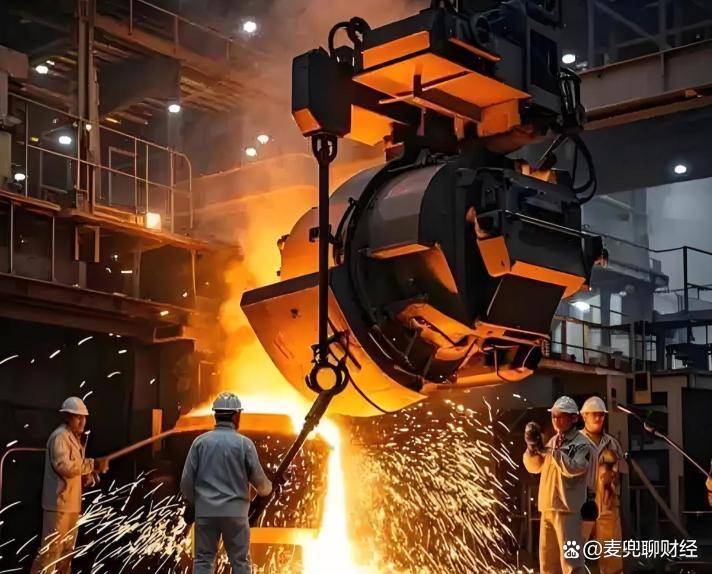
Core Viewpoint - The Chinese government will implement export license management for steel products starting January 1, 2026, marking the end of 16 years of free steel exports, reflecting a significant policy shift in response to environmental and economic pressures [1][3][12]. Group 1: Policy Changes - The announcement indicates a historical return to export management policies, with the last similar measure implemented in 2007 before being lifted in 2009 due to the financial crisis [12]. - The new export license management will cover 268 customs product codes, including key categories such as non-alloy pig iron, recycled steel raw materials, steel billets, hot-rolled coils, and cold-rolled sheets [10]. - The management approach will include a "one batch, one certificate" system, allowing companies to apply for export licenses starting December 15, 2025, for the year 2026 [10]. Group 2: Industry Impact - The steel industry has seen a significant increase in export volume, with 107.7 million tons exported in the first 11 months of 2025, a 6.7% year-on-year increase, and an expected annual total exceeding 115 million tons [3]. - However, the average export price has declined, leading to a "volume increase, price drop" cycle for low-value-added products, raising concerns about the sustainability of this export model [3][6]. - The steel sector is responsible for 15% of China's total carbon emissions, and the new policy aims to alleviate domestic emission pressures while transitioning to a more sustainable production model [6][20]. Group 3: Market Dynamics - The new export regulations are expected to reshape the export market, with traditional markets in Southeast Asia and the EU likely to see reduced export volumes due to dual restrictions of licenses and tariffs [17]. - Companies are anticipated to shift focus towards emerging markets in Africa and Latin America, with steel exports to Africa projected to increase by 317,000 tons in 2025, accounting for 43% of the growth [17]. - The policy is expected to redirect resources from low-end steel exports to high-end manufacturing sectors, such as new energy vehicles and aerospace, where demand for high-quality steel is strong [18][20].

新中港涨0.45%,成交额3085.76万元,近5日主力净流入-627.79万
Xin Lang Cai Jing· 2025-12-05 07:33
Core Viewpoint - The company aims to become a regional comprehensive energy supply center and carbon neutrality center, focusing on carbon reduction through efficiency improvements and coupling reduction strategies [2]. Group 1: Company Development Goals - The company is working towards becoming a regional public utility cogeneration enterprise with scale advantages, comparable environmental and carbon emission intensity to natural gas units [2]. - Specific measures for carbon reduction include efficiency improvements through new unit expansions and technological upgrades, as well as coupling reduction by increasing the proportion of solid waste and biomass fuel [2]. Group 2: Carbon Emission Management - In 2019 and 2020, the company had a total carbon emission quota of 2.6483 million tons, with actual emissions of 2.1483 million tons, resulting in a surplus of 500,100 tons, which is a surplus ratio of 18.88% [2]. - The company sold 500,000 tons of carbon emissions in December 2021 [2]. Group 3: Technological Innovations - The company plans to construct a "three-dimensional virtual power plant" system to enhance operational efficiency and reliability through real-time data collection and analysis [2]. - This system will facilitate the visualization, simulation, and analysis of power plant operations, laying the groundwork for future development of a dispatchable virtual power plant [2]. Group 4: Financial Performance - As of September 30, the company had 22,900 shareholders, an increase of 12.16% from the previous period, with an average of 17,497 circulating shares per person, a decrease of 10.83% [8]. - For the period from January to September 2025, the company reported revenue of 529 million yuan, a year-on-year decrease of 18.48%, while net profit attributable to shareholders increased by 2.51% to 91.8345 million yuan [8]. Group 5: Company Overview - Zhejiang Xinhong Port Thermal Power Co., Ltd. was established on October 17, 1997, and listed on July 7, 2021, primarily engaged in the production and supply of thermal and electric power through cogeneration [7]. - The company's revenue composition includes 95.17% from cogeneration, 4.73% from energy storage, and 0.10% from other sources [7].

新中港跌0.98%,成交额2983.32万元,后市是否有机会?
Xin Lang Cai Jing· 2025-12-03 07:24
Core Viewpoint - The company aims to become a regional comprehensive energy supply center and carbon neutrality center, focusing on carbon reduction through efficiency improvements and coupling reduction methods [2] Group 1: Company Strategy and Goals - The company is developing a regional public utility cogeneration enterprise with scale advantages and environmental performance comparable to natural gas units [2] - Specific measures for carbon reduction include efficiency improvements through new unit expansions and technological upgrades, as well as coupling reduction by increasing the proportion of solid waste and biomass fuel [2] - The company has a plan to construct a "three-dimensional virtual power plant" system to enhance operational efficiency and reliability [2][3] Group 2: Financial Performance - As of September 30, the company reported a revenue of 529 million yuan, a year-on-year decrease of 18.48%, while net profit attributable to shareholders was 91.83 million yuan, a year-on-year increase of 2.51% [8] - The company has distributed a total of 344 million yuan in dividends since its A-share listing, with 204 million yuan distributed over the past three years [8] Group 3: Market Activity - On December 3, the company's stock price fell by 0.98%, with a trading volume of 29.83 million yuan and a turnover rate of 0.82%, resulting in a total market capitalization of 3.645 billion yuan [1] - The stock has seen a net outflow of 1.0061 million yuan from major funds today, with a continuous reduction in major fund positions over the past three days [4][5]
天富能源:完成62.95万吨碳排放配额交易,预计增利3195.20万元
Xin Lang Cai Jing· 2025-12-01 09:44
Core Viewpoint - Tianfu Energy announced the completion of its plan to sell approximately 640,000 tons of carbon emission quotas, having sold 629,500 tons for a total transaction amount of 33.8691 million yuan (including tax) [1] Group 1 - The company has executed its sale plan without involving related transactions or major asset restructuring [1] - The revenue from the sale of quotas will be recorded as non-recurring gains, with an estimated impact of 31.952 million yuan on the net profit for the year 2025 after deducting expenses [1] - The funds obtained from this transaction will be used for the company's main business operations, and the company plans to actively participate in the carbon trading market in the future [1]

新中港涨2.30%,成交额6615.15万元,今日主力净流入-548.51万
Xin Lang Cai Jing· 2025-11-24 07:28
Core Viewpoint - The company aims to become a regional comprehensive energy supply center and carbon neutrality center, focusing on carbon reduction through efficiency improvements and coupling reduction methods [2] Group 1: Company Developments - The company has set a development goal to establish a regional public utility cogeneration enterprise with scale advantages and carbon emission intensity comparable to natural gas units [2] - Specific measures for carbon reduction include efficiency improvements through new unit expansions and technological upgrades, as well as coupling reduction through the production line of its subsidiary RDF [2] - The company plans to construct a "three-dimensional virtual power plant" system to enhance operational efficiency and reliability through real-time data analysis and modeling [2][3] Group 2: Financial Performance - As of September 30, the company reported a total revenue of 529 million yuan for the first nine months of 2025, a year-on-year decrease of 18.48%, while net profit attributable to shareholders was 91.83 million yuan, a year-on-year increase of 2.51% [8] - The company has distributed a total of 344 million yuan in dividends since its A-share listing, with 204 million yuan distributed over the past three years [8] Group 3: Market Activity - On November 24, the company's stock rose by 2.30%, with a trading volume of 66.15 million yuan and a turnover rate of 1.86%, bringing the total market capitalization to 3.565 billion yuan [1] - The main capital flow showed a net outflow of 5.4851 million yuan, indicating a reduction in main capital positions over the past two days [4][5]
周期半月谈 - 年末年初周期板块供需前景展望
2025-11-24 01:46
Summary of Industry and Company Insights Industry Overview Oil and Gas Chemical Industry - Capital expenditures in the oil and gas chemical industry are expected to decline by 20% in 2024 and by another 10% in the first three quarters of 2025, indicating a reduction in new capacity which will help improve supply-demand balance [1][2][3] - Seasonal demand is expected to remain weak due to the downturn in real estate and related downstream sectors, with no significant recovery anticipated before the next Spring Festival [2] - Industry self-discipline meetings have led to price increases for products like organic silicon and DMAC, with prices rising by 3.9% to 8,650 RMB/ton [3] Lithium and Related Materials - Demand for lithium-related solvents such as EC, DMC, and DEC is strong, with price increases of 47.8%, 10%, and 5.1% respectively, driven by supply-demand tightness rather than price coordination [1][3] - The price of lithium carbonate has surged to 92,000 RMB/ton, with futures exceeding 100,000 RMB/ton, driven by concentrated procurement in the electric vehicle sector and supply constraints from major producers [2][9] Coal Market - The coal market is expected to see stable but weak demand in 2024, influenced by economic growth rates and the substitution effect from renewable energy sources [4] - The average coal price is projected to stabilize around 750-800 RMB/ton, which is favorable for coal companies despite macroeconomic pressures [4] - In 2025, coal prices have seen significant declines, particularly due to price cuts by coal companies to ensure long-term contracts with power companies [5] Construction and Building Materials - The construction materials sector is negatively impacted by the downturn in real estate, with demand and prices under pressure [6] - New project starts are expected to continue declining in 2026, although the rate of decline may slow [6] - The demand for coatings is relatively strong due to renovation needs, while the demand for gypsum boards and pipes remains under pressure [6] Steel Industry - The steel industry faces challenges with insufficient reduction efforts, with a 50 million ton reduction target largely unmet [7] - The cement sector is also experiencing significant demand declines, with a 15% year-on-year drop in early November [7] Nonferrous Metals - The nonferrous metals sector is expected to benefit from global monetary easing and emerging industries, with demand accelerating [8] - Copper supply is tightening due to production cuts from major mines and increased demand from clean energy sectors [8] - The aluminum sector has reached capacity limits, with high operating rates and increasing demand from electric vehicles and photovoltaics [8] Tungsten Market - Tungsten prices have reached record highs, with a cumulative increase of 132% this year, driven by domestic supply constraints and increased demand [13] - The global tungsten supply growth is expected to remain under pressure for the next 3-5 years due to declining domestic ore grades and environmental regulations [13][14] Key Insights - The overall economic outlook remains cautious, with potential for further monetary policy easing as fiscal space is constrained [21] - The need for core economic stimulus measures, particularly in employment and income, is highlighted as essential for recovery [21] This summary encapsulates the key points from the conference call, providing a comprehensive overview of the current state and future outlook of various industries, particularly focusing on oil and gas, lithium, coal, construction materials, steel, nonferrous metals, and tungsten.
新中港涨1.04%,成交额7502.49万元,近3日主力净流入-544.01万
Xin Lang Cai Jing· 2025-11-14 07:50
Core Viewpoint - The company aims to become a regional comprehensive energy supply center and carbon neutrality center, focusing on carbon reduction through efficiency improvements and coupling carbon reduction measures [2] Group 1: Company Development Goals - The company is developing into a regional public utility cogeneration enterprise with scale advantages, aiming for carbon emissions intensity comparable to natural gas units [2] - Specific measures for carbon reduction include efficiency improvements through new unit expansions and technological upgrades, as well as coupling carbon reduction by increasing the proportion of solid waste and biomass fuel [2] Group 2: Carbon Emission Management - The company had a total carbon emission quota of 2.6483 million tons for 2019 and 2020, with actual emissions of 2.1483 million tons, resulting in a surplus of 500,100 tons, which is a surplus ratio of 18.88% [2] - In December 2021, the company sold 500,000 tons of carbon emissions [2] Group 3: Technological Innovations - The company plans to construct a "three-dimensional virtual power plant" system to enhance operational efficiency and reliability through real-time data collection and analysis [2][3] - The "three-dimensional virtual power plant" project will facilitate the future development of a dispatchable virtual power plant [2] Group 4: Financial Performance - As of September 30, the company reported a revenue of 529 million yuan for the first nine months of 2025, a year-on-year decrease of 18.48%, while net profit attributable to shareholders was 91.8345 million yuan, a year-on-year increase of 2.51% [8] - The company has distributed a total of 344 million yuan in dividends since its A-share listing, with 204 million yuan in the last three years [9] Group 5: Market Activity - The company's stock price increased by 1.04% on November 14, with a trading volume of 75.0249 million yuan and a turnover rate of 1.94%, bringing the total market capitalization to 3.894 billion yuan [1]
电价上涨怪“控碳”?美国滨州放弃区域碳交易市场
Hua Er Jie Jian Wen· 2025-11-14 01:04
Core Viewpoint - Pennsylvania has officially decided to exit the Regional Greenhouse Gas Initiative (RGGI) due to soaring electricity prices and increased demand from data centers, marking a significant shift in the state's energy policy [1][2]. Group 1: Policy Changes - Governor Josh Shapiro signed a bill on November 13, authorizing Pennsylvania's exit from RGGI, which reverses the previous administration's decision to join the initiative in 2019 [1]. - The exit is seen as a response to the worsening electricity price crisis in the region, where RGGI's carbon pricing structure has imposed penalties on the state's energy sector, particularly natural gas and coal plants [1]. Group 2: Economic Implications - The carbon pricing mechanism of RGGI has led to increased wholesale electricity prices, resulting in higher electricity bills for both businesses and households [1]. - The rapid expansion of high-energy-consuming industries, such as AI data centers, has further exacerbated the supply-demand imbalance and price pressures in the electricity market [1]. Group 3: Political Context - Republican senators in Pennsylvania have long opposed RGGI, arguing that it places an excessive burden on traditional power plants, which are vital to the state's grid and industrial economy [1]. - Concerns from independent grid operators and state regulators suggest that participation in RGGI could force coal and gas plants to close prematurely, weakening grid resilience and increasing the risk of power shortages [1]. Group 4: Future Outlook - Governor Shapiro expressed intentions to promote job creation in the energy sector, integrate more clean energy into the grid, and lower energy costs for all Pennsylvania residents following the exit from RGGI [2]. - The decision has raised market speculation about whether other neighboring states facing similar electricity price pressures will follow Pennsylvania's lead [2].
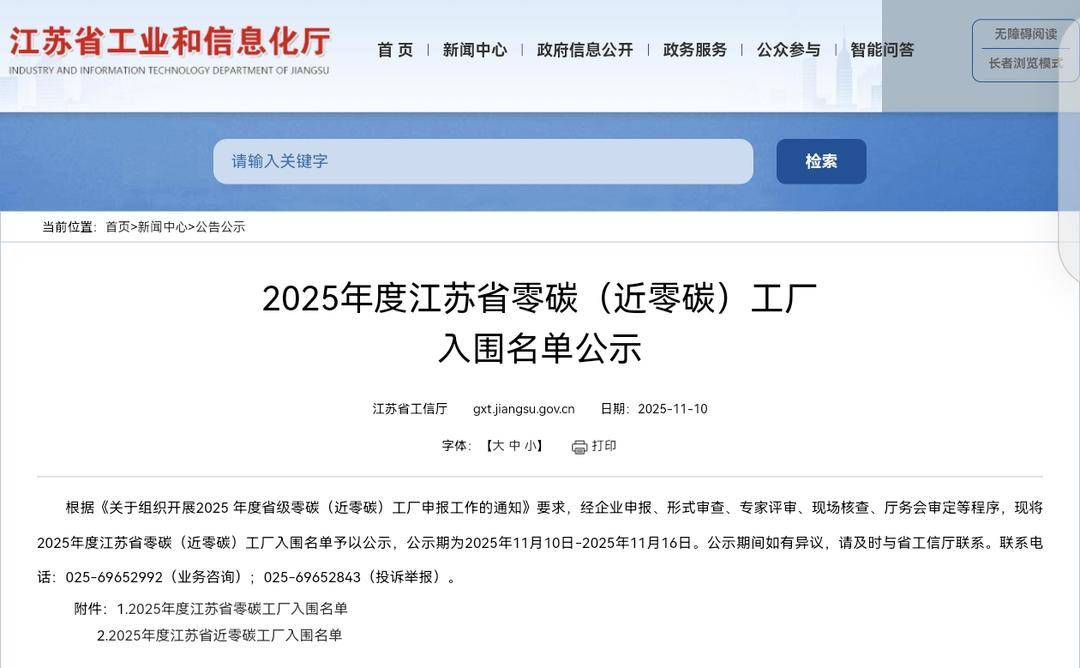
江苏公示最新零碳(近零碳)工厂入围名单,30 家榜上有名
Yang Zi Wan Bao Wang· 2025-11-12 15:01
Core Viewpoint - The Jiangsu Provincial Department of Industry and Information Technology has announced the list of companies selected for the 2025 Zero Carbon (Near Zero Carbon) Factory program, highlighting the commitment to reducing greenhouse gas emissions in industrial production [1][2][3] Group 1: Zero Carbon Factory Selection - A total of 12 companies have been selected for the 2025 Zero Carbon Factory list, including notable firms such as Zhongtian Electric Power Cable Co., Ltd. and Jiangsu Hengtong High Voltage Submarine Cable Co., Ltd. [2] - Additionally, 18 companies have been included in the Near Zero Carbon Factory list, featuring companies like Jiangsu Yijiatong New Energy Technology Co., Ltd. and Xuzhou Xugong Mining Machinery Co., Ltd. [2] Group 2: Definition and Importance of Zero Carbon Factories - Zero Carbon (Near Zero Carbon) factories aim to achieve net-zero greenhouse gas emissions through technological optimization and management innovation, focusing on both emission reduction and offsetting [3] - These factories prioritize the use of green electricity (such as solar and wind power) to replace traditional fossil fuels and incorporate energy storage systems to ensure stable energy supply [3] - By upgrading equipment and improving processes, these factories aim to lower energy consumption per unit of product and optimize carbon emissions across the entire supply chain [3] - Zero Carbon factories serve as benchmarks for regional green development, enhancing local ecological responsibility and attracting high-tech, environmentally friendly enterprises [3]
海螺水泥20251110
2025-11-11 01:01
Summary of Conference Call on Conch Cement and the Cement Industry Company and Industry Overview - The conference call focused on Conch Cement and the cement industry in China, highlighting the impact of macro policies and market dynamics on the sector [1][2][3]. Key Points and Arguments Industry Dynamics - The cement industry is experiencing a price decline since the second quarter of 2023, which has offset profit gains from lower coal costs [2][5]. - Conch Cement's gross profit dropped significantly to 50 CNY/ton in Q3 2025, with competitors like Tianshan and Jidong facing losses [2][6]. - The overall industry is in a low-price and low-profit state, with only a few leading companies maintaining slight profits [2][6]. Demand and Supply Outlook - Short-term demand remains weak, but further price declines are limited due to many companies already incurring losses, suggesting a potential price stabilization and slight recovery [7][8]. - China's cement demand is expected to continue declining, with a 5% drop in national cement production in the first nine months of the year, totaling approximately 1.7 billion tons for the year [9]. - The need for policy and market interventions to address supply-demand imbalances is emphasized, including stricter production controls and mergers to reduce excess capacity [10][12]. Competitive Advantages of Conch Cement - Conch Cement has competitive advantages in cost management and market positioning, including large-scale procurement, efficient production lines, and high capacity utilization [3][13][14]. - The company primarily operates in East and Central South China, leveraging a transportation network to reduce costs significantly [14]. Financial Performance and Future Projections - In the first three quarters of 2025, Conch Cement reported a profit of approximately 6.3 billion CNY, with Q3 profit at 1.9 billion CNY, reflecting a year-on-year increase of 3.4% [15]. - Future profit projections estimate around 9 billion CNY for 2025, 10 billion CNY for 2026, and potentially 11 billion CNY thereafter, indicating a low current valuation with good investment potential [15]. Additional Important Insights - The cement industry is characterized by cyclical trends, with historical correlations between cement prices and stock prices [3]. - The implementation of daily production controls and carbon trading policies is anticipated to significantly impact the industry by 2026, potentially leading to a more balanced supply-demand scenario [12]. - The ongoing price war in the industry is expected to continue until at least the first three quarters of 2024, with a potential price increase anticipated towards the end of 2024 and into 2025 [5][8].