碳捕集

Search documents
“诺奖材料”竟能帮助碳中和?MOFs在中国如何点“碳”成金
Xin Jing Bao· 2025-10-10 09:55
Group 1 - The Nobel Prize in Chemistry for 2025 was awarded to Japanese scientist Shin Kitagawa, Australian scientist Richard Robson, and American scientist Omar Yaghi for their contributions to the development of Metal-Organic Frameworks (MOFs) [1] - MOFs are recognized for their customizable properties and potential applications in addressing water crises, energy challenges, and pollution issues, marking a new era of "designed materials" [1] Group 2 - MOFs have made significant breakthroughs in carbon capture technology, providing a key pathway for achieving carbon neutrality [2] - The CALF-20 MOF material, detailed in a 2021 paper, is noted for its high capacity, selectivity, stability, and scalability, offering a low-energy, durable solution for carbon capture [2] - Since January 2021, CALF-20 has been undergoing industrial trials at a cement plant in Canada, capturing one ton of CO2 daily, making it the first industrial demonstration of a MOF material [2][3] Group 3 - Multiple countries, including Canada, the UK, Germany, and China, are advancing the industrial application of MOFs, targeting significant CO2 capture capabilities with lower energy consumption [4] - A factory named Redwood in Burnaby, Canada, aims to produce enough MOF-based filters to capture 10 million tons of CO2 annually, indicating a major commercial breakthrough for MOFs [4] - MOFs are also enhancing hydrogen storage efficiency, with specific MOFs achieving hydrogen storage capacities of 14.0wt% and 13.2wt% under certain conditions, surpassing traditional high-pressure gas cylinders [4] Group 4 - In China, MOF applications are advancing, with facilities utilizing MOFs for carbon capture and water collection in arid regions [6] - Carbon Yu New Materials Co., based in Zhuhai, has developed over 40 MOF products and aims to surpass BASF in the industry within 3-5 years [6] - Yueyang Xingchang is the only domestic company achieving large-scale production of MOF materials and has begun testing its MOF materials as solid-state battery electrolytes with CATL [6]

专家解读诺贝尔化学奖:金属有机框架材料用途广,可吸附二氧化碳
Xin Jing Bao· 2025-10-08 14:31
Core Viewpoint - The 2025 Nobel Prize in Chemistry has been awarded to Susumu Kitagawa, Richard Robson, and Omar M. Yaghi for their contributions to the development of Metal-Organic Frameworks (MOFs), which have significant implications in various fields including chemistry, energy, and environmental science [1][2]. Group 1: Metal-Organic Frameworks (MOFs) - MOFs are porous materials created by the self-assembly of inorganic metal centers and organic ligands, allowing for the construction of thousands of different frameworks with controllable pore sizes, surface areas, and chemical environments [1][2]. - The industrial application of MOFs is currently limited, but extensive research is being conducted in the chemical field, with potential uses in gas separation and storage, such as hydrogen and methane storage for hydrogen fuel vehicles [1][2]. Group 2: Applications and Advantages - MOFs can be utilized in carbon capture, utilization, and storage (CCUS), which is essential for achieving China's dual carbon goals, due to their high surface area that allows for significant CO2 adsorption capacity [2]. - In arid desert regions, MOFs can absorb water vapor at night and release it during the day, providing a source of clean drinking water [2]. - In the pharmaceutical sector, MOFs can serve as drug carriers, enabling targeted delivery to affected areas [2]. - The use of MOFs in membrane separation can reduce energy consumption by over 90% compared to conventional methods [2]. - The versatility of MOFs allows for customization in gas separation by adjusting pore sizes and modifying chemical properties to meet specific needs [2].
中国能建承建百万吨级CCUS研究及示范项目完成72小时试运行
Ke Ji Ri Bao· 2025-09-30 11:35
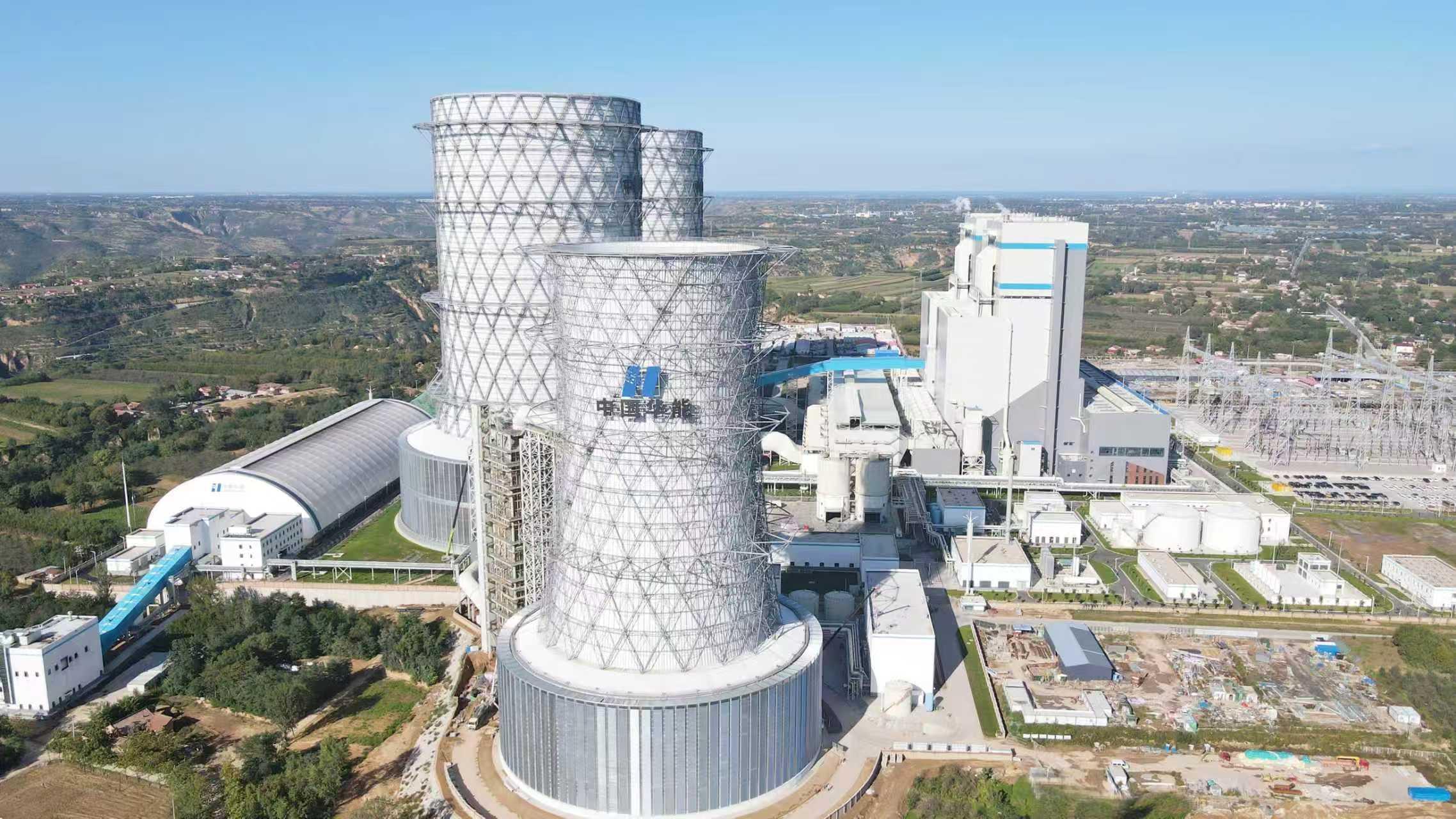
Core Insights - The project is the world's largest coal-fired carbon capture demonstration project, with a design capacity to capture 1.5 million tons of CO2 per year and a capture rate exceeding 90% [1][3] - The project has achieved significant technological breakthroughs, including the development of China's first eight-stage supercritical CO2 compressor and the largest deep saline aquifer multi-layer storage system [3] - The carbon reduction capability of the project is equivalent to planting approximately 130 million trees or reducing the carbon emissions of nearly 600,000 gasoline vehicles annually [3] Project Details - The project has completed a 72-hour trial run and is now officially operational [1] - It utilizes digital management platforms for precise control over project progress, quality, and safety, employing BIM and Tekla models for structural components [2][3] - The project team has established industry standards for CO2 capture engineering and summarized over ten key technologies and methods, filling a gap in domestic standards for million-ton-level CCUS projects [4]


“碳捕集”又迎新技术
Ren Min Ri Bao· 2025-09-29 19:48
Core Insights - The world's largest coal-fired carbon capture demonstration project has successfully completed a 72-hour trial run and is now operational, with an annual CO2 capture capacity of 1.5 million tons, equivalent to the annual emissions of 600,000 cars [1] - The project marks a significant advancement in China's carbon capture, utilization, and storage (CCUS) technology, achieving over 90% capture efficiency and over 99% purity of the captured CO2 [1] Group 1 - The project is a key component of the Huaneng Longdong Energy Base, China's first 10 million kilowatt multi-energy complementary comprehensive energy base [1] - Captured CO2 will be used for geological storage, enhanced oil recovery, green fuel synthesis, and mineralized building materials [1] - The project has achieved 100% domestic production of technology and equipment, overcoming several technical challenges [1] Group 2 - The project employs an innovative "two-tower integration" design to reduce energy consumption by integrating pre-washing and carbon capture processes [2] - A new type of absorption solvent developed by Huaneng significantly lowers carbon capture energy consumption and extends the solvent's lifespan [2] - The project features a new type of CO2 compressor that meets supercritical transport requirements, improving pipeline efficiency and reducing transport costs [3] Group 3 - The CO2 storage system is the deepest in the country, with a single well capable of storing 200,000 tons of CO2 annually [3] - An integrated monitoring system ensures the safety and efficiency of CO2 storage through various monitoring methods [3] - The carbon capture demonstration project also has a flexible operation mode to adjust the carbon capture load, ensuring stable power supply while achieving large-scale carbon capture [3]
新疆:培育壮大特色优势产业
Ren Min Wang· 2025-09-29 06:20
Economic Development - Xinjiang's GDP is projected to exceed 2 trillion yuan by 2024, up from 1.23 billion yuan in 1955, showcasing significant historical achievements and transformations [1] - The region has developed a modern industrial system with unique advantages, contributing to a new development pattern and strategic support for national needs [1] Low-altitude Economy - Xinjiang Tianyu Aviation Technology Co., Ltd. signed a 1 billion yuan order, marking the first overseas drone order for a military enterprise [2] - The HY100 large drone has completed over 6,300 flights, covering a total distance of 962,000 kilometers, and is expected to reach an annual production capacity of 150 units [2] Carbon Capture and Utilization - The application of CCUS technology in Xinjiang's oil fields has significantly increased oil recovery rates by approximately 10%, equivalent to creating a new 2 million-ton oil field [3][4] - Xinjiang Oilfield plans to inject 1 million tons of CO2 this year, with a daily injection rate of 3,800 tons [4] Renewable Energy - Xinjiang has become a leader in renewable energy, with installed capacity reaching 134 million kilowatts, accounting for about 60% of the region's power supply [7] - The region has sent over 79 billion kilowatt-hours of electricity to other parts of China, leveraging its solar and wind energy resources [7] Clean Coal Utilization - The development of a 40,000-ton polyoxymethylene project in Kuqa Economic and Technological Development Zone exemplifies Xinjiang's efforts in clean coal utilization [8][9] - Xinjiang has established 111 national-level green factories and 9 national-level green industrial parks, promoting energy and industrial transformation [9] Agricultural Innovation - The Hami melon breeding center has accelerated the introduction of new varieties, improving quality and increasing profits by 3,000 yuan per acre through optimized cultivation techniques [10][11] - The center aims to restructure the Hami melon industry, targeting a market expansion from a hundred billion to three hundred billion yuan [11] Natural Gas Infrastructure - Xinjiang's natural gas transportation capacity is the highest in the country, with the construction of the largest coal-to-natural gas production base underway [12] - The region is also a significant contributor to national energy resources, with substantial reserves of oil, gas, and coal [12] Strategic Positioning - Xinjiang is focusing on developing competitive industrial clusters based on its rich resources, including oil, gas, coal, and agricultural products, to enhance its role in the national economy [13]
全球最大煤电CCUS示范项目正式投运
Zhong Guo Hua Gong Bao· 2025-09-29 06:16
Core Insights - The world's largest coal-fired carbon capture demonstration project at Huaneng Gansu Zhengning Power Plant has completed a 72-hour trial run and is officially operational, marking a significant leap in China's carbon capture, utilization, and storage (CCUS) technology from "ten-thousand-ton demonstration" to "million-ton industrial application" [1][2] Group 1: Project Overview - The project is a major national technology demonstration initiative and one of the first green low-carbon demonstration projects approved by the National Development and Reform Commission [1] - It focuses on carbon capture from the flue gas of Unit 1 of Huaneng Gansu Zhengning Power Plant, achieving a carbon dioxide purity of over 99% [1] - The captured carbon dioxide can be compressed to a supercritical state for underground geological storage and utilized in oil field enhanced recovery, green fuel synthesis, and mineralized building materials, thus completing the entire "capture-utilization-storage" industrial chain [1] Group 2: Technological Innovations - The project has overcome multiple technical bottlenecks in key areas such as carbon capture, compression, and storage, achieving several "global firsts" and "domestic innovations" [1] - Core equipment has been fully domestically produced, enhancing the project's sustainability and reducing reliance on foreign technology [1] - An innovative "two-tower integration" design for the composite absorption tower has been adopted, integrating flue gas pre-washing and carbon capture, which addresses energy consumption issues associated with traditional processes [1] Group 3: Efficiency and Impact - The project has developed China's first eight-stage integrated gear-type carbon dioxide compressor, capable of meeting supercritical pipeline transportation requirements, significantly improving transportation efficiency while reducing energy consumption and costs [2] - The carbon capture rate of the project exceeds 90%, with an annual capture capacity of 1.5 million tons of carbon dioxide, equivalent to the annual emissions from 600,000 cars [2] - This initiative supports large-scale industrial deep emissions reduction for coal-fired power plants, promoting green and clean development in the coal power sector and aiding in achieving carbon neutrality goals [2]
《环球ESG观察》(第七期): 政策技术双轮驱动,ESG实践迈向新阶段
Huan Qiu Shi Bao· 2025-09-29 05:01
Group 1: Domestic Developments - The "Cultural Enrichment of Villages" work plan (2025-2027) has been jointly issued by seven departments, focusing on creating popular artistic works for farmers and supporting their cultural activities [2] - The first international standard in the carbon capture field, ISO 27927:2025, has been officially released, providing a unified technical guideline for CO2 capture materials and processes [3] - As of August 2025, the total number of electric vehicle charging facilities in China has reached 17.348 million, marking a year-on-year increase of 53.5% [4] Group 2: Corporate Practices and Innovations - Mengniu has shared its leading experience in the Taskforce on Nature-related Financial Disclosures (TNFD), becoming the first domestic company to publish a nature-related financial report [6] - Vipshop held its second ESG DAY event themed "Creating a Sustainable World," focusing on sustainability values and achieving zero plastic and waste during the event [7] - COSCO Shipping and China Classification Society showcased their latest technologies and practices in green and sustainable development during the London Shipping Week [9]

同兴科技:公司生产催化剂及TX-1碳捕集吸收剂所需的上游原材料,市场供应充足稳定
Mei Ri Jing Ji Xin Wen· 2025-09-29 04:08
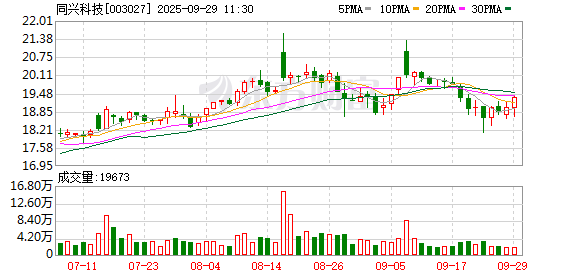
Core Viewpoint - The company confirms that the supply of upstream raw materials for its catalysts and TX-1 carbon capture absorbents is stable and sufficient to meet the rapidly growing market demand for carbon capture absorbents [2] Group 1 - The company received inquiries from investors regarding the supply of upstream raw materials for its products [2] - The company stated that the market supply of required raw materials is abundant and stable [2] - The company is well-positioned to accommodate the fast expansion needs of the carbon capture absorbent market [2]

同兴科技:公司研发生产的CCUS碳捕集吸收剂,可直接应用于相关电厂的碳捕集装置
Mei Ri Jing Ji Xin Wen· 2025-09-29 03:58
Core Viewpoint - The world's largest coal-fired carbon capture demonstration project has successfully completed a 72-hour trial run and has officially commenced commercial operations, indicating a significant advancement in carbon capture technology within the coal power sector [1] Company Summary - Tongxing Technology (003027.SZ) confirmed on an investor interaction platform that its developed CCUS carbon capture absorbent meets the technical compatibility requirements for application in coal power carbon capture projects, allowing direct use in relevant power plant carbon capture systems [1]
中国华能宣布!
中国能源报· 2025-09-25 03:34
Core Viewpoint - The world's largest coal-fired carbon capture demonstration project has officially commenced operations, marking a significant advancement in China's carbon capture, utilization, and storage (CCUS) technology, contributing to the achievement of carbon neutrality goals [1][2]. Group 1: Project Overview - The project, located at Huaneng Gansu Zhengning Power Plant, has completed a 72-hour trial run and is now operational, with an annual carbon dioxide capture capacity of 1.5 million tons [1]. - The carbon capture rate exceeds 90%, and the purity of captured carbon dioxide is over 99% [1]. - The captured carbon dioxide will be utilized for geological storage, enhanced oil recovery, green fuel synthesis, and mineralized building materials [1]. Group 2: Technological Achievements - The project has successfully overcome key technical challenges in carbon capture, compression, and storage, achieving several "global firsts" and "domestic innovations" [1]. - It has realized 100% domestic production of technology and equipment, facilitating the transition from technological breakthroughs to practical applications [1]. Group 3: Operational Capabilities - The carbon capture demonstration project features an auxiliary peak-shaving capability, allowing for dynamic adjustment of the carbon capture system load [2]. - This flexibility ensures that coal-fired power units can achieve large-scale carbon capture while maintaining stable and secure electricity supply, providing a viable path for the coordinated development of low-carbon coal power and energy security [2].