
利用与封存(CCUS)

Search documents
我国完成首个长输管道改输二氧化碳现场试验
Yang Shi Xin Wen· 2026-02-05 16:29
Core Insights - The successful completion of China's first long-distance pipeline trial for carbon dioxide transportation marks a significant advancement in the resource utilization of existing long-distance pipelines, transitioning from theoretical research to engineering practice [1] - This trial involved the adaptation and safety modification of a 21-kilometer idle pipeline and a 6-kilometer newly constructed high-pressure flexible composite pipe to transport carbon dioxide for enhanced oil recovery and sequestration operations [1] - The trial supports the scaling up of the carbon capture, utilization, and storage (CCUS) industry, facilitating the transition of CCUS from demonstration applications to large-scale development, thereby aiding in the achievement of China's carbon neutrality goals [1] Industry Developments - The trial is a critical step in addressing the challenge of constructing a long-distance, safe, and economical carbon dioxide transportation system, which is essential for the large-scale application of carbon capture, utilization, and storage [1] - China's carbon emissions remain high, exceeding hundreds of millions of tons annually, despite significant progress in carbon reduction efforts, highlighting the need for innovative solutions in the energy sector [1] - The successful trial opens new pathways for the green transformation of China's energy industry, reinforcing the importance of modifying existing infrastructure to meet future carbon management needs [1]
全球最大LCO2运输船首制船交付
Sou Hu Cai Jing· 2026-01-13 04:06
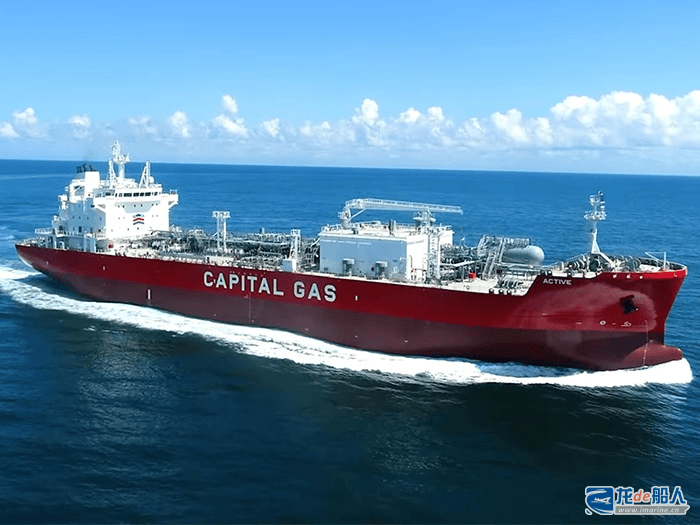
Core Viewpoint - Capital Clean Energy Carriers (CCEC), led by Greek shipping magnate Evangelos Marinakis, has received the world's first 22,000 cubic meter low-pressure liquefied carbon dioxide (LCO2) carrier, named "Active," built by HD Modern Shipyard [1][3]. Group 1: Company Overview - "Active" is the first of four LCO2 carriers ordered by CCEC from HD Modern Shipyard, designed for LCO2 transportation while remaining competitive in the traditional small semi-refrigerated gas carrier market [3]. - The vessel will commence operations immediately under a six-month time charter contract to transport liquefied petroleum gas for an energy trading company, with an option to extend the charter for an additional six months [3]. - CCEC has ordered a total of four LCO2 carriers, with two ordered in July 2023 and two in February 2024, at a total cost of approximately $300 million [3]. Group 2: Industry Insights - The "Active" vessel is 159.9 meters long, 27.4 meters wide, and 17.8 meters high, capable of transporting multiple cargo types, including LCO2, liquefied petroleum gas, ammonia, and specific petrochemical products, showcasing exceptional deployment flexibility in market cycles [3]. - CCEC emphasizes that the four new vessels will stand out due to their multifunctionality and optionality, designed to support the emerging carbon capture, utilization, and storage (CCUS) value chain [3]. - According to CCEC's analysis, global carbon capture capacity is expected to reach approximately 430 million tons per year by 2030, with storage capacity increasing to about 670 million tons per year, up from the current capacity of 50 million tons per year [4]. - As the scale of capture expands and storage points become increasingly interconnected with industrial hubs, logistics solutions, including maritime transport, will play a more critical role [4]. - Driven by supply scarcity, multi-cargo flexibility, and growing demand for LCO2 transportation, CCEC holds a significant first-mover advantage in this structurally transformative segment [4].

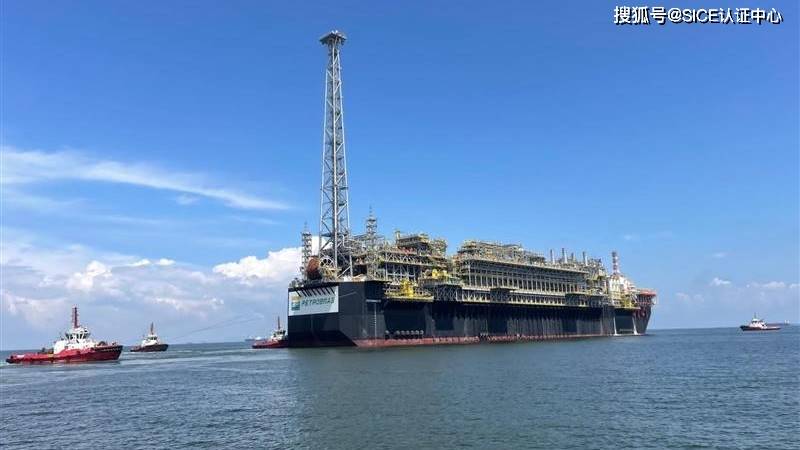
未来6年内,将有哪21座浮式生产储卸油装置(FPSO)在巴西投入运营?
Sou Hu Cai Jing· 2026-01-11 05:08
Core Insights - Petrobras has released its strategic plan for 2026-2030, focusing on updating the next FPSO in the offshore market [1] - The FPSO P-78 is a key project in the Búzios oil field, expected to start production in December 2025, contributing to Petrobras's goal of increasing daily oil production to 1.6 million barrels over the next decade [3][4] - The FPSO P-79, a sister project to P-78, is set to begin operations in early 2026, with similar production capacity and a different construction strategy [6][7] - FPSOs P-80, P-82, and P-83 are planned for 2027, each with a production capacity of 225,000 barrels per day and a focus on reducing carbon emissions [11] - The FPSO Raia project, expected to be operational by 2028, will include a gas export capacity of 16 million cubic meters per day [10][15] - FPSOs P-84 and P-85, scheduled for 2029 and 2030, will be the largest in Petrobras's history, with a daily processing capacity of 225,000 barrels of oil [17][19] - The SEAP FPSOs I and II contracts were officially approved in 2025, marking a significant step in the revitalization of the Sergipe state industrial sector [37][38] Summary by Category FPSO Projects - FPSO P-78 is the sixth project in the Búzios field, with a production capacity of 180,000 barrels per day and gas processing of 7.2 million cubic meters per day [4] - FPSO P-79, a direct sibling to P-78, will also have a capacity of 180,000 barrels per day and is set to sail from Korea in November 2025 [6][7] - FPSOs P-80, P-82, and P-83 are designed for high productivity, each with a capacity of 225,000 barrels per day and a focus on carbon emission reduction [11][12] - FPSO Raia will serve as a floating gas processing platform with a significant gas export capacity [15] - FPSOs P-84 and P-85 will be the largest FPSOs in Petrobras's history, with a focus on gas export capabilities [17][19] Strategic Developments - Petrobras's strategic plan emphasizes the need for innovation and sustainability in its FPSO projects, including the integration of carbon capture and utilization technologies [21][22] - The company is shifting to a BOT (Build-Operate-Transfer) model for new projects to enhance ownership and operational efficiency [26][37] - The SEAP FPSOs represent a significant investment in the Sergipe region, with a focus on local workforce reintegration and economic sustainability [38]

IEA国际能源署:煤炭2025-分析和预测至2030报告(英文版)
Sou Hu Cai Jing· 2025-12-20 08:28
Core Insights - The IEA report indicates that the global coal market is undergoing a critical transformation, with overall demand expected to stabilize before gradually declining, characterized by regional disparities and competition from alternative energy sources [1][25][28]. Demand - Global coal demand is projected to reach 884.5 million tonnes in 2025, remaining stable compared to 2024, with significant regional variations [1][53]. - India is experiencing a decline in coal power generation for the third time in fifty years due to increased hydropower output, while the US sees an 8% increase in coal consumption driven by higher natural gas prices and supportive policies [1][26]. - China's coal demand is expected to remain flat at 4,953 million tonnes, accounting for 56% of global consumption, while ASEAN countries are projected to see continued growth [1][54][55]. Supply - Global coal production is expected to maintain a high level of 911.1 million tonnes in 2025 before gradually declining to 864.1 million tonnes by 2030 [2][39]. - China and India remain the primary coal producers, with China's output expected to increase by 1% to 473 million tonnes in 2025, while India's production stabilizes at 108.9 million tonnes [2][41]. Trade - Global coal trade is anticipated to decrease by 5% to 146.8 million tonnes in 2025, driven by reduced imports from China and India due to sufficient domestic supply [2][43]. - The international coal trade is under pressure, particularly for thermal coal, while metallurgical coal exporters may have stronger prospects due to demand from India's steel industry [2][46]. Prices - After experiencing high volatility during the energy crisis, coal prices are expected to decline, with thermal coal prices in Europe and Asia projected to drop by 10% and 20% respectively in 2025 [2][47]. - Prices are approaching supply costs, leading to shrinking profits for coal mining companies [2][49]. Industry Dynamics - The role of coal is evolving, with a shift towards flexibility and industrial applications, while renewable energy expansion is gradually reducing coal's market share [3][57]. - The emergence of supportive policies for coal in the US has led to a temporary increase in demand, although a long-term decline is still expected [36][38].

海内外油商共商能源供应与低碳转型
Shang Hai Zheng Quan Bao· 2025-10-24 19:15
Core Insights - The global energy industry is at a historic crossroads, with oil and gas remaining essential for economic growth while facing pressure to reduce emissions and enhance efficiency [1][2] - The oil market is undergoing a deep transformation, with a shift in demand from traditional fuels to aviation fuels and chemical feedstocks [2] - The transition to green energy is creating new growth opportunities, particularly in emerging fields like green marine fuels, hydrogen, and carbon capture [2][3] Group 1: Oil and Gas Industry Trends - The global oil market is expected to remain oversupplied until 2030, with Brent crude prices consistently below $65 per barrel [2] - Continuous integration of refining capacity is anticipated to boost industry profits despite the oversupply [2] - The shipping industry's decarbonization is leading to the development of multiple pathways for marine fuel solutions, with natural gas and biofuels showing competitive advantages [2] Group 2: Chemical Industry Developments - The future of the petrochemical industry is focused on "greening, high-end, intelligent, and safe" production [4] - China's petrochemical sector faces both challenges and opportunities, with a need to enhance high-end product supply and reduce low-end capacity [4][5] - Southeast Asia and the Middle East are becoming preferred targets for Chinese companies' international expansion due to resource and policy advantages [4] Group 3: Marine Fuel Innovations - The International Maritime Organization (IMO) is working on a legally binding net-zero emissions framework, which will significantly impact marine fuel choices [6] - Companies are developing platforms to collect and analyze carbon emissions data to comply with emerging regulations [6] - The demand for green methanol is expected to surge if the IMO's net-zero framework is approved, with significant projects already underway in China [6][7] Group 4: Green Methanol Market Outlook - Approximately half of the global green methanol supply is located in China, with many projects in the research and pre-construction phases [7] - By 2028, China is projected to achieve an annual green methanol production capacity of 4 to 5 million tons [7] - The demand for green methanol as a marine fuel is expected to reach 6 to 7 million tons globally by 2030 [7]
把二氧化碳“锁”回深海(“十四五”,我们见证这些硬核突破②)
Ren Min Ri Bao Hai Wai Ban· 2025-10-20 22:53
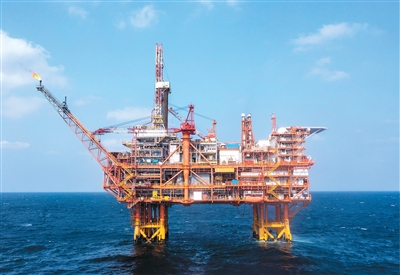
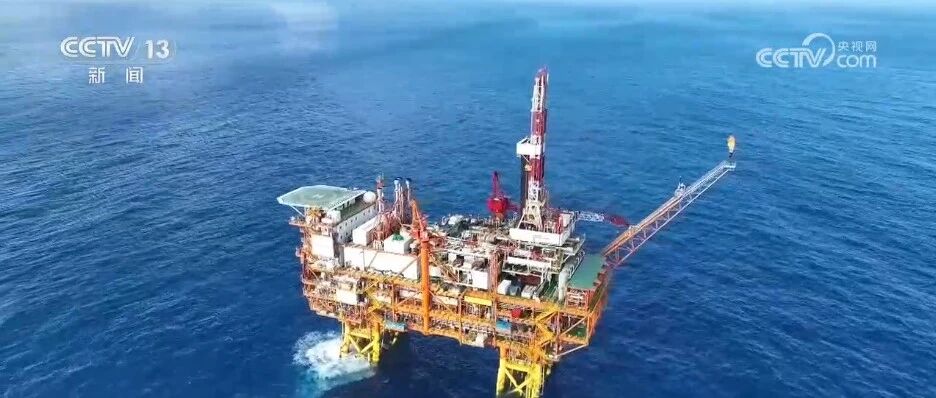
Core Viewpoint - China National Offshore Oil Corporation (CNOOC) has successfully implemented its first offshore carbon capture, utilization, and storage (CCUS) project at the Enping 15-1 oil field, achieving a milestone of over 100 million cubic meters of carbon dioxide (CO2) stored, equivalent to the carbon offset of planting 2.2 million trees, showcasing the maturity of China's offshore CO2 storage technology and capabilities [6][9][15] Group 1: Project Overview - The Enping 15-1 oil field is China's first high CO2 content oil field located in the South China Sea, where CO2 is typically released during oil extraction, contributing to environmental concerns [7][8] - The CCUS project at Enping 15-1 was launched in May 2023, marking a significant step in China's efforts to accelerate offshore CO2 storage and utilization [8][12] - The project aims to achieve dual objectives: CO2 storage and enhanced oil recovery, with a projected CO2 injection of over 1 million tons and an increase in oil production by 200,000 tons over the next decade [9][15] Group 2: Technical Details - The CCUS process involves capturing CO2 from oil and gas production, purifying, compressing, and injecting it into geological formations for long-term storage [8][10] - The project utilizes a complete set of domestically developed equipment with a 100% localization rate, ensuring efficient operation and monitoring of CO2 injection [12][14] - Advanced technologies, including real-time monitoring systems and intelligent gas injection techniques, have been implemented to optimize CO2 injection and enhance oil recovery [12][11] Group 3: Industry Implications - The successful implementation of the Enping 15-1 project is expected to serve as a replicable model for green and low-carbon development in offshore oil and gas fields across China [9][12] - China's offshore CCUS industry is poised for growth, with significant potential for CO2 geological storage estimated at 25.8 billion tons, providing a robust foundation for large-scale applications [14][15] - CNOOC is also developing a comprehensive offshore CCUS industrial chain, including a major carbon capture and storage project in Guangdong, aimed at enhancing oil recovery and contributing to national carbon neutrality goals [15]

专家解读诺贝尔化学奖:金属有机框架材料用途广,可吸附二氧化碳
Xin Jing Bao· 2025-10-08 14:31
Core Viewpoint - The 2025 Nobel Prize in Chemistry has been awarded to Susumu Kitagawa, Richard Robson, and Omar M. Yaghi for their contributions to the development of Metal-Organic Frameworks (MOFs), which have significant implications in various fields including chemistry, energy, and environmental science [1][2]. Group 1: Metal-Organic Frameworks (MOFs) - MOFs are porous materials created by the self-assembly of inorganic metal centers and organic ligands, allowing for the construction of thousands of different frameworks with controllable pore sizes, surface areas, and chemical environments [1][2]. - The industrial application of MOFs is currently limited, but extensive research is being conducted in the chemical field, with potential uses in gas separation and storage, such as hydrogen and methane storage for hydrogen fuel vehicles [1][2]. Group 2: Applications and Advantages - MOFs can be utilized in carbon capture, utilization, and storage (CCUS), which is essential for achieving China's dual carbon goals, due to their high surface area that allows for significant CO2 adsorption capacity [2]. - In arid desert regions, MOFs can absorb water vapor at night and release it during the day, providing a source of clean drinking water [2]. - In the pharmaceutical sector, MOFs can serve as drug carriers, enabling targeted delivery to affected areas [2]. - The use of MOFs in membrane separation can reduce energy consumption by over 90% compared to conventional methods [2]. - The versatility of MOFs allows for customization in gas separation by adjusting pore sizes and modifying chemical properties to meet specific needs [2].
中国能建承建百万吨级CCUS研究及示范项目完成72小时试运行
Ke Ji Ri Bao· 2025-09-30 11:35
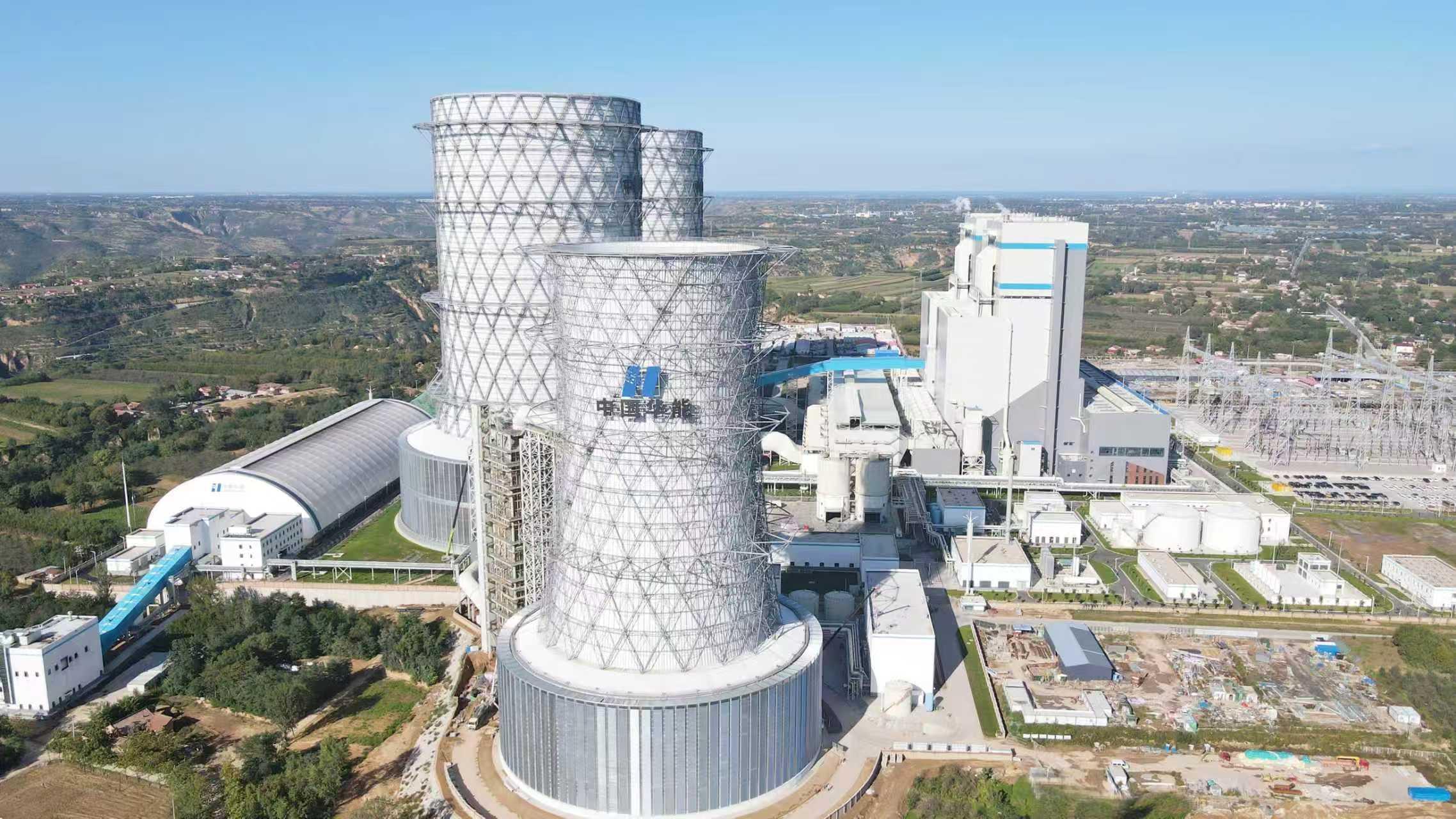
Core Insights - The project is the world's largest coal-fired carbon capture demonstration project, with a design capacity to capture 1.5 million tons of CO2 per year and a capture rate exceeding 90% [1][3] - The project has achieved significant technological breakthroughs, including the development of China's first eight-stage supercritical CO2 compressor and the largest deep saline aquifer multi-layer storage system [3] - The carbon reduction capability of the project is equivalent to planting approximately 130 million trees or reducing the carbon emissions of nearly 600,000 gasoline vehicles annually [3] Project Details - The project has completed a 72-hour trial run and is now officially operational [1] - It utilizes digital management platforms for precise control over project progress, quality, and safety, employing BIM and Tekla models for structural components [2][3] - The project team has established industry standards for CO2 capture engineering and summarized over ten key technologies and methods, filling a gap in domestic standards for million-ton-level CCUS projects [4]

央视新闻丨实现从“技术空白”向“自主可控”跨越,我国首个海上碳封存项目封存量破1亿立方米
国家能源局· 2025-09-11 08:03
Core Viewpoint - The first offshore carbon dioxide (CO2) storage demonstration project in China has successfully stored over 100 million cubic meters of CO2, indicating the maturity of China's offshore CO2 storage technology and its significance in achieving national carbon neutrality goals and promoting a green low-carbon transition in the economy [2][4]. Group 1: Project Overview - The Enping 15-1 oil field, located in the Pearl River Mouth Basin, is China's first high CO2 content oil field, where the offshore CO2 capture and storage project was initiated in June 2023, achieving an annual CO2 storage volume exceeding 40 million cubic meters [4][8]. - The project has introduced a new model of "carbon-driven oil, oil solidifying carbon" by utilizing CO2 to enhance oil recovery, resulting in an increase of 200,000 tons of crude oil production [6][8]. Group 2: Technological Advancements - The project has transitioned from a "technical blank" to "independent and controllable" capabilities, establishing a complete set of standardized operating procedures that provide important practical experience and data support for the large-scale application of offshore carbon storage technology [9][10]. - The Enping 15-1 platform has developed and added CO2 compressors and gas treatment systems to ensure precise control of gas quality during the injection process, addressing potential corrosion and emissions issues associated with traditional oil extraction methods [12]. Group 3: Future Developments - Over the next decade, the Enping 15-1 oil field is expected to inject over 550 million cubic meters of CO2, further driving crude oil production [8]. - China is promoting the cluster development of CO2 capture, storage, and utilization projects, with plans to establish a competitive offshore carbon capture and storage industry chain, including a 10 million-ton-level carbon capture and storage cluster project in Huizhou, Guangdong [14].
倒计7个工作日!议程+项目参观!2025中国国际气体分离产业大会
DT新材料· 2025-04-25 16:00
MOF、COF等新型分离材料量产突破 《巴黎协定》6.4条款 全球碳市场即将启动 前沿材料突破、新兴应用场景层出不穷 面对全球性的能源与环境挑战 政策与局势的不断变化 如何发掘下一个材料、应用爆点? 实现政产学研用金协同合作? 2025(第四届)中国国际气体分离产业大会 全体论坛 阐述产业发展趋势及最新进展 应用专题 解读产业化现状及应用难题 10日签到当天 "青年科学家论坛" 集聚全球青年力量 江苏油田CO 2 驱油现场 、 华电句容电厂万吨级CCUS示范工程项目参观 了解工艺现状及生产难题 墙报展示、需求对接、学术成果交流······ 顶层设计者、大咖科学家、产业化先驱 EPC及业主单位、业界龙头企业汇聚 5月11-12日 江苏扬州 邀您共襄盛举! GSIC 2025 排名不分先后,更新至 4 月 25 日 | 14:20-14:45 | 化氮技术的突破 | 张佳瑶 | 金宏气体股份有限公司研发工程师 | | --- | --- | --- | --- | | 14:45-15:10 | 面向溶剂纯化与资源化的分子选择 | 杨昊 | 南京大学副教授 | | | 型有机框架膜 | | | | 10日 | | ...