脑机接口技术

Search documents
新华视点|植入人脑之后,脑机接口技术将如何改变我们的生活?
Xin Hua She· 2026-01-27 12:45
Core Insights - Brain-computer interface (BCI) technology in China has made significant advancements, particularly in clinical applications for patients with severe disabilities, allowing them to control devices using their thoughts [1][2][3] Group 1: Technological Advancements - A recent clinical trial demonstrated that a patient with quadriplegia could control an electric wheelchair and a robotic dog using only their thoughts, marking a significant milestone in BCI technology [1] - The first prospective clinical trial in June 2025 showed a patient with limb amputations controlling a computer cursor through BCI, indicating the technology's potential for various applications [2] - The development of semi-invasive BCI systems has progressed rapidly, with a recent trial involving 32 patients successfully controlling pneumatic gloves for fine motor tasks [2] Group 2: Product Development and Market Readiness - The invasive BCI systems are classified as Class III medical devices in China, requiring clinical trials to prove safety and efficacy before market approval [3] - Current BCI systems are transitioning from laboratory exploration to clinical application, but no products have yet received approval for commercial use [3] - To achieve scalable applications, BCI technology must focus on minimizing surgical trauma and ensuring effective data collection and transmission [4] Group 3: Future Prospects and Industry Growth - The BCI field is expected to become a significant growth area within brain science, with foundational research enhancing application effectiveness [5] - Establishing industry standards is crucial for the development of BCI technology, as the current regulatory framework is still in its infancy [5] - The Chinese government is actively promoting the BCI industry through collaborative initiatives aimed at fostering innovation and creating a supportive ecosystem for technology transfer [5] Group 4: Application and Accessibility - The future of BCI technology includes the need for diverse software and application scenarios, similar to the smartphone ecosystem, to enhance its accessibility to the general public [6] - The goal is to develop "killer applications" that can provide significant cognitive enhancements with minimal invasive procedures, paving the way for widespread adoption of BCI technology [6]
2026企业管理年会暨北大国发院商学共创日在京举行
Zhong Guo Jin Rong Xin Xi Wang· 2026-01-27 12:14
Group 1 - The conference titled "2026 Enterprise Management Annual Conference and Peking University National Development Institute Business Co-Creation Day" focused on the theme of "Entering the 14th Five-Year Plan" and attracted over 300 participants including entrepreneurs, industry experts, scholars, and media representatives [1] - Liang Yan emphasized the importance of high-quality development in the first year of the 14th Five-Year Plan, urging entrepreneurs to lead in technological innovation and industrial upgrading [2] - Liu Mingzhong highlighted the intersection of the 14th Five-Year Plan with technological revolution and industrial transformation, calling for enterprises to embrace the mission of "serving the country, strengthening enterprises, and benefiting the people" [2] Group 2 - Wang Shibin announced the list of "Special Contribution Entrepreneurs" and "2025 Entrepreneurs" from the magazine, focusing on their outstanding performance in innovation, long-termism, and social responsibility [3] - Notable recipients of the "Special Contribution Entrepreneur" award included former Kweichow Moutai Group Chairman Ji Keliang and Haier Group founder Zhang Ruimin, while Tencent's Ma Huateng was among the "2025 Entrepreneurs" [3] - Ji Keliang shared insights from his 62 years with Moutai, emphasizing the importance of product quality and consumer focus in achieving market success [3] Group 3 - The fluorine-based new materials sector is critical for national energy security and high-end manufacturing, with challenges in high-end fluorine materials and resource utilization [4] - Li Sejiang discussed the mission of the National Innovation Center for Fluorine-based New Materials in addressing technological bottlenecks and fostering collaborative innovation across industries and research institutions [4] - Chen Yan from Fanruan Software shared the company's unique approach of prioritizing long-term strategies over rapid growth, illustrating the value of a deliberate pace in business development [4] Group 4 - Yang Chengjun from Zhejiang Qiangnao Technology highlighted the potential of brain-computer interface technology as a transformative force for human development [5] - The conference featured a presentation by Professor Gong Yuzhen on navigating uncertainties in the current economic environment, emphasizing the need for adaptability among entrepreneurs [6] - The twelfth "Excellent Enterprise Management Cases" were announced, showcasing 13 outstanding cases from companies like Kingdee Software and China FAW Group [6]
商务部优化实施消费品以旧换新,北证50下跌1.45%
Soochow Securities· 2026-01-26 13:20
Market Overview - On January 26, 2026, the North Exchange 50 index fell by 1.45%[1] - The average market capitalization of the North Exchange component stocks is 3.274 billion, with a trading volume of 32.814 billion, a decrease of 0.321 billion from the previous trading day[13] Capital Market News - The State Administration for Market Regulation reported that the Chinese corporate credit index for Q4 2025 was 162.18, reflecting a slight increase of 0.52 points from Q3 2025, indicating a stable and improving credit environment[6] - The People's Bank of China conducted a 150.5 billion reverse repurchase operation, resulting in a net withdrawal of 207.8 billion from the open market[8] Industry News - The Ministry of Commerce announced plans to optimize the implementation of the old-for-new policy for consumer goods, aiming to boost consumption of durable goods such as home appliances and automobiles in 2026[9] - Tianjin aims to establish a national brain-computer interface technology innovation center, focusing on key technological breakthroughs and enhancing local innovation capabilities[11] Company Announcements - Dayu Biological expects a net loss of 26 to 30 million for 2025, a decline of 25.3% to 8.59% compared to the previous year due to industry challenges[26] - Shibi Bai forecasts a net profit of 50 to 60 million for 2025, a significant turnaround from a loss of 3.675 million the previous year, driven by increased demand for metal composite materials[27] - Oufu Egg Industry anticipates a net profit of 80 to 92 million for 2025, a year-on-year increase of 75.44% to 101.75% due to expanded production capacity and improved market conditions[28]
20cm速递|科创创新药ETF国泰(589720)盘中涨近2%,连续10日净流入近4亿元,中国创新出海迎来开门红
Mei Ri Jing Ji Xin Wen· 2026-01-23 08:08
Group 1 - The core viewpoint of the news highlights the significant growth and potential of China's innovative pharmaceuticals, particularly in the context of international expansion and investment confidence [1] - The year 2025 is marked as a pivotal year for China's innovative pharmaceuticals, with total outbound licensing transaction amounts reaching $135.655 billion and a record 157 transactions [1] - The continuous successful BD transactions validate the global competitiveness of Chinese innovative drugs, supporting long-term investment confidence [1] Group 2 - The small nucleic acid drug sector is making notable progress, with leading companies accelerating their development in new target discovery and treatment convenience, attracting increased attention [1] - The GLP-1 sector is expected to have long-term market potential following the establishment of a new pricing system [1] - Domestic companies are actively pursuing relevant targets in the oral autoimmune drug space, indicating significant value [1] Group 3 - The brain-computer interface technology is at a critical juncture for industrialization, with substantial advancements in policy support, device approval, insurance coverage, and clinical applications [1] - Developments in radiation therapy equipment technology are creating new market opportunities worth billions [1] Group 4 - The ETF Guotai (589720) tracks the innovative drug index (950161), which includes listed companies engaged in innovative drug research and development, covering various fields such as biopharmaceuticals, chemical drugs, and traditional Chinese medicine [2] - The index reflects the overall performance of listed companies in China's pharmaceutical innovation sector [2]
爱尔眼科(300015) - 2026年01月21日投资者关系活动记录表
2026-01-22 08:42
Group 1: Industry Overview and Challenges - The domestic ophthalmology medical service industry is gradually emerging from an adjustment period, with increasing demand driven by national policies and a large population base [1][2] - The low penetration rate of various sub-specialties in ophthalmology, coupled with high myopia rates among youth and aging-related eye diseases, presents significant growth opportunities [1][2] Group 2: Business Strategy and Development Plans - The company has initiated a "three-year攻坚" plan focusing on solidifying its foundation, enhancing operational efficiency, and promoting sustainable high-quality development [3][4] - Key strategies include deepening internal growth, advancing technological innovation and digital transformation, consolidating talent and research advantages, and adapting to market and policy changes [3][4][5] Group 3: International Expansion - The company has established a presence in Europe, Southeast Asia, and the United States, with overseas business contributing approximately 13% to total revenue [6] - The international strategy emphasizes adapting to local market conditions and regulatory environments while leveraging domestic expertise in ophthalmology [6] Group 4: Technological Innovation and Research - The company is exploring the application of cutting-edge technologies in visual reconstruction and eye care through strategic partnerships, although these initiatives are still in early stages and unlikely to impact short-term performance [7]

传媒互联网行业周报:推荐游戏板块,《心动小镇》国际服表现出色-20260122
CMS· 2026-01-22 04:35
Investment Rating - The report maintains a strong recommendation for the gaming sector, particularly highlighting the performance of "Heart Town" in international markets [1][2]. Core Insights - The media industry has seen a 3.34% increase over the past week, ranking third among all sectors, and a 16.92% increase year-to-date, leading all sectors [1]. - The report emphasizes the potential of key companies in the gaming sector, with several titles showing significant performance improvements in international markets [1]. - The report identifies opportunities in the overseas and female-oriented gaming markets, projecting a 14.08% year-on-year increase in sales revenue for the Chinese market in the first half of 2025, reaching 168 billion yuan [1]. - AI applications are expected to continue influencing the gaming industry positively, enhancing production efficiency and creativity [1]. Summary by Sections Market Performance - The media sector's overall performance shows a 3.34% increase from January 12 to January 18, with the media index outperforming the Shanghai Composite Index [10][1]. - Key companies in the media sector have shown varied performance, with notable increases in stocks like Liou Co. and People's Daily [13]. Gaming Sector Highlights - "Heart Town" has topped the free charts in over 50 regions globally since its international launch on January 8, 2026, indicating strong overseas marketing capabilities [2]. - The gaming market in China is projected to reach 168 billion yuan in sales revenue in the first half of 2025, with a user base of 679 million [1]. - The report highlights the significant growth potential in the female gaming market, with a projected market size of 8 billion yuan in 2024, growing at a rate of 124.1% [1]. Company Performance - Key companies such as Century Huatong and Giant Network are expected to see significant revenue growth from new game launches and international expansions [1]. - The report notes that AI technology is enhancing game production and marketing efficiency, with companies like 37 Interactive Entertainment and Century Huatong investing in related technologies [1].
技术创新中心揭牌
Xin Lang Cai Jing· 2026-01-21 17:29
Core Viewpoint - The establishment of the Hainan Provincial Brain Space Informatics and Brain-Machine Interface Technology Innovation Center is a significant step in advancing brain-machine interface technology, which has been prioritized as a key development industry by the national government [1] Group 1: Innovation Center Establishment - The innovation center is led by Hainan University and aims to focus on innovation-driven and demand-driven principles, as well as autonomous control and open cooperation [1] - The center will develop four core platforms: foundational theory breakthrough platform, clinical application platform, industrial innovation platform, and management and transformation platform [1] Group 2: Collaborative Development - The center will collaborate with multiple professional teams in brain space informatics, brain-machine interface chips, and neuroengineering to tackle key technological challenges [1] - Partnerships will include specialized brain hospitals and relevant technology enterprises to provide comprehensive support for the development of the brain-machine interface field [1]
6G、未来产业......工业和信息化部释放重要信号
Xin Lang Cai Jing· 2026-01-21 02:59
Core Insights - The Ministry of Industry and Information Technology (MIIT) aims to promote deep integration of technological and industrial innovation by 2025, focusing on key core technology breakthroughs and major equipment development [1][6] - Significant advancements in various sectors include a 26.7% increase in the value added of integrated circuits and a 28% rise in industrial robot production, with new energy vehicle sales reaching 16.49 million units, up 28.2% year-on-year [1][10] - The 6G technology research has completed its first phase, resulting in over 300 key technology reserves, with the second phase of testing recently initiated [3][8] Industry Growth - Emerging sectors such as aerospace and equipment manufacturing are experiencing double-digit investment growth, indicating a robust investment trend in new industries [1][10] - High-quality innovative results are emerging, with advancements in perovskite materials, permanent magnet materials, and power batteries reaching international standards [5][10] Future Initiatives - The MIIT plans to implement actions to develop and strengthen emerging industries, create national demonstration bases for new industries, and support local governments in establishing future industry pilot zones [6][10] - The government will increase investment in strategic technology projects and promote large-scale applications of new technologies and products in manufacturing [6][10]


20cm速递|科创创新药ETF国泰(589720)连续5日资金净流入超1.3亿元,医药行业迎来多项利好
Mei Ri Jing Ji Xin Wen· 2026-01-20 06:51
Group 1 - The core viewpoint of the article highlights the positive developments in the pharmaceutical industry, particularly in the innovative drug sector, driven by multiple favorable factors such as increased funding, industry conferences, and performance forecasts [1] - The Cathay Innovation Drug ETF (589720) has seen a net inflow of over 130 million yuan for five consecutive days, indicating strong investor interest in the sector [1] - The industry is benefiting from positive clinical data for small nucleic acid drugs and increased collaborations, which are expected to enhance the outlook for innovative drugs [1] Group 2 - Neuralink plans to start mass production in 2026, aiming for safer surgical operations in the brain-computer interface technology sector [1] - The AI and pharmaceutical fields are evolving, with OpenAI launching ChatGPTHealth and several domestic AI drug companies exploring new business models [1] - The domestic CRO (Contract Research Organization) sector is experiencing a significant increase in demand, with new orders accelerating on a month-over-month basis [1] Group 3 - The Cathay Innovation Drug ETF focuses on innovative drug companies listed on the Sci-Tech Innovation Board, tracking a representative index of 30 high-quality companies [1] - During the market rebound period from September 24, 2024, to October 31, 2025, the Sci-Tech Innovation Drug Index and the Hang Seng Hong Kong Stock Connect Innovation Drug Index are expected to rise by 143.70% and 135.34%, respectively [1] - The Sci-Tech Innovation Drug Index may provide better exposure to the resilience of the Sci-Tech Innovation Board when market risk appetite increases [1]
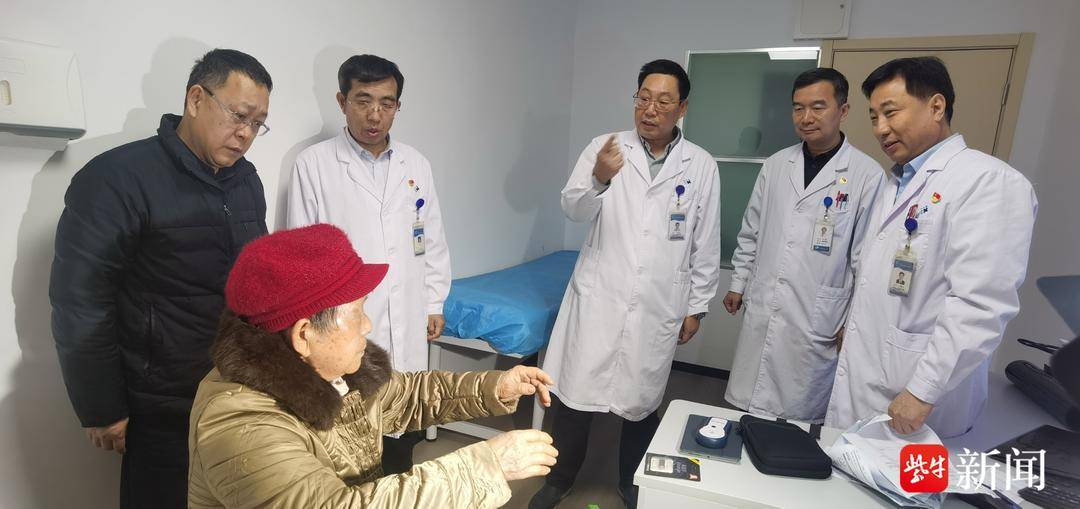
无锡有了脑机接口门诊和病房
Yang Zi Wan Bao Wang· 2026-01-19 07:14
Core Insights - The article discusses the establishment of a brain-computer interface (BCI) outpatient clinic at Wuxi People's Hospital, aimed at treating refractory neurological and psychiatric disorders, with a focus on multidisciplinary collaboration for patient care [1][10]. Group 1: Outpatient Services - The BCI outpatient clinic offers a multidisciplinary team (MDT) approach, where specialists from various departments collaborate to diagnose and propose treatment plans for patients, as demonstrated by a case of a patient suspected of early Parkinson's disease [1][3]. - The clinic utilizes advanced diagnostic techniques, including imaging studies and expert consultations, to assess patients' conditions and recommend treatment options [3]. Group 2: Rehabilitation Facilities - A dedicated clinical research ward for BCI has been established, where patients with conditions like stroke-related paralysis can engage in rehabilitation exercises using BCI technology, which allows for passive movement through visual cues [5][10]. - The rehabilitation process involves capturing brain signals through electrodes and translating them into actions, enabling patients to perform movements or swallowing exercises with the aid of technology [5][10]. Group 3: Comprehensive Treatment Approach - The BCI system encompasses a full treatment chain, including assessment, diagnosis, treatment, and rehabilitation, integrating BCI and neuro-regulation technologies to provide a one-stop precision treatment platform for patients with conditions such as stroke, spinal cord injury, Parkinson's disease, and Alzheimer's disease [10][12]. - The hospital aims to lead in the development of BCI technologies, focusing on both invasive and non-invasive methods, and plans to establish academic organizations and regional alliances to foster collaborative innovation in the field [12]. Group 4: Future Developments - The hospital's neurology department has been conducting deep brain stimulation (DBS) surgeries since 2017 and is advancing in open-loop BCI technology, accumulating significant data and experience in neural signal collection and response regulation [12]. - The BCI technology is expected to revolutionize the fields of neuro-regulation and rehabilitation, with potential future applications in cognitive function restoration and speech communication rehabilitation [12].