自主研发

Search documents
ASML再下重手,1000台光刻机变成“废铁”,外媒:真实水平暴露了
Xin Lang Cai Jing· 2025-12-23 17:11
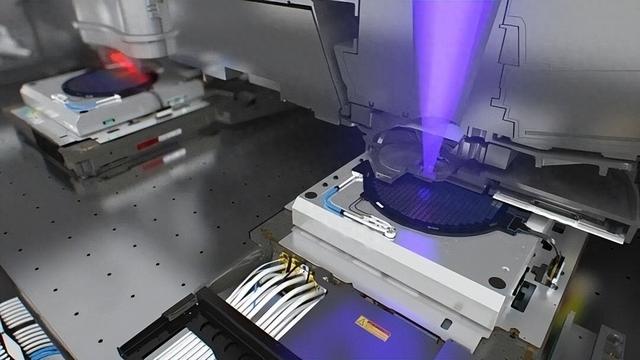
Group 1 - The U.S. is pressuring the Netherlands to expand semiconductor equipment export controls, aiming to prohibit ASML from providing installation and after-sales services for existing lithography machines in mainland China, which could paralyze thousands of precision lithography machines in Chinese factories [1][3] - ASML's CEO has publicly opposed U.S. pressure, stating that pushing China to become fully self-reliant could lead to stronger competition, suggesting that maintaining some dependency might be more beneficial [1][3] - ASML's financial report reveals that orders from China amount to approximately €10.2 billion, accounting for nearly 40% of its total revenue, highlighting the significance of the Chinese market [3] Group 2 - Despite increasing U.S. restrictions since 2019 targeting advanced lithography machines, ASML's sales to China have not decreased, indicating the immense value of the Chinese market for global companies [3][5] - ASML has indicated that if the Dutch government cannot ensure its commercial autonomy, it may consider relocating its core business to another country, prompting the Netherlands to initiate a substantial subsidy plan to retain ASML [5] - The ongoing "lithography machine game" underscores the importance of self-reliance in technology, as China has developed a robust industrial system and is making strides in producing its own EUV lithography machines, expected to achieve mass production by 2026 [5][9] Group 3 - China's technological advancements are rapidly progressing across various fields, including breakthroughs in precision steel and autonomous technologies, indicating a shift from following to leading in high-tech sectors [7][9] - The liver care market, previously dominated by Western brands, is now being disrupted by Chinese innovations, exemplified by the launch of a new liver care product that significantly undercuts the prices of similar imported products [7] - The perception of China's competitiveness in technology has shifted, with Western commentators recognizing that the global competitive landscape is undergoing fundamental changes due to China's advancements [9]


纳百川:自主开发多项核心工艺设备,液冷板防泄漏标准提升新高度
Quan Jing Wang· 2025-12-22 23:00
Core Viewpoint - The company successfully held an online roadshow for its initial public offering (IPO) on the ChiNext board, showcasing advancements in production technology and quality control measures [1] Group 1: Production Technology - The company has independently developed 5-micron level solder powder line equipment and methods, insulation powder spraying technology, and NOCOLOK brazing equipment and methods [1] - Improvements in soldering processes allow the company to recycle solder while enhancing the efficiency and uniformity of product coating, which increases the final product welding rate and reduces energy consumption and processing time [1] - Customized NOCOLOK brazing furnaces and developed brazing process parameters significantly increase the processing quantity per shift, further lowering unit processing costs [1] Group 2: Quality Control - The company is a pioneer in the industry by introducing advanced vacuum box helium automatic detection technology, improving detection precision to 2*10^-8 Pa.M3/s [1] - This technology enhances the overall yield of product sealing effectiveness, ensuring zero leakage of coolant during the warranty period [1] - The leakage evaluation threshold for liquid cooling plate products has been raised to a new standard, reflecting the company's commitment to quality [1]
125岁,中国人第一家科学仪器公司
仪器信息网· 2025-12-19 09:28
Core Viewpoint - The article highlights the establishment and evolution of China's first scientific instrument company, the Scientific Instrument Pavilion, founded in 1901, emphasizing its role in advancing scientific education and technology in China [4][12]. Group 1: Historical Context - In 1901, the Scientific Instrument Pavilion was founded in Shanghai by four patriotic scholars who pooled 5,000 taels of silver to create a company that would produce scientific tools for China, addressing the lack of quality instruments compared to Japan [4][6]. - The initial phase involved importing instruments from Japan, Germany, and the UK, which enriched domestic educational resources and highlighted the need for self-research and development to break the technology monopoly [6][7]. Group 2: Development and Innovation - In 1905, the company established a manufacturing division to create its own instruments, successfully producing over a hundred types of equipment by 1915, including microscopes capable of magnifying to one millionth of a hair's width [7][9]. - The company expanded its offerings beyond education, developing gas masks during wartime and agricultural instruments to assist farmers, demonstrating its commitment to practical applications of science [9][11]. Group 3: Quality and Accessibility - The Scientific Instrument Pavilion maintained a strict quality control policy, ensuring that no substandard products were released, which helped it gain a reputation for high-quality instruments comparable to imported ones [9][11]. - By leveraging large-scale procurement, the company reduced the price of chemical reagents to one-fourth of the import cost, making scientific tools more accessible to schools across China, including remote areas [11][12]. Group 4: Legacy and Impact - The legacy of the Scientific Instrument Pavilion continues, with descendants of its founders contributing to modern scientific advancements, reflecting the enduring influence of the company's commitment to education and technology [12][14]. - The story of the Scientific Instrument Pavilion illustrates the intertwined history of educational equipment development and technological progress in China, aiming to empower education and cultivate talent [14].

破冰突围、深耕自研 我国冰雪产业跑出“加速度”
Yang Shi Xin Wen· 2025-12-18 03:24
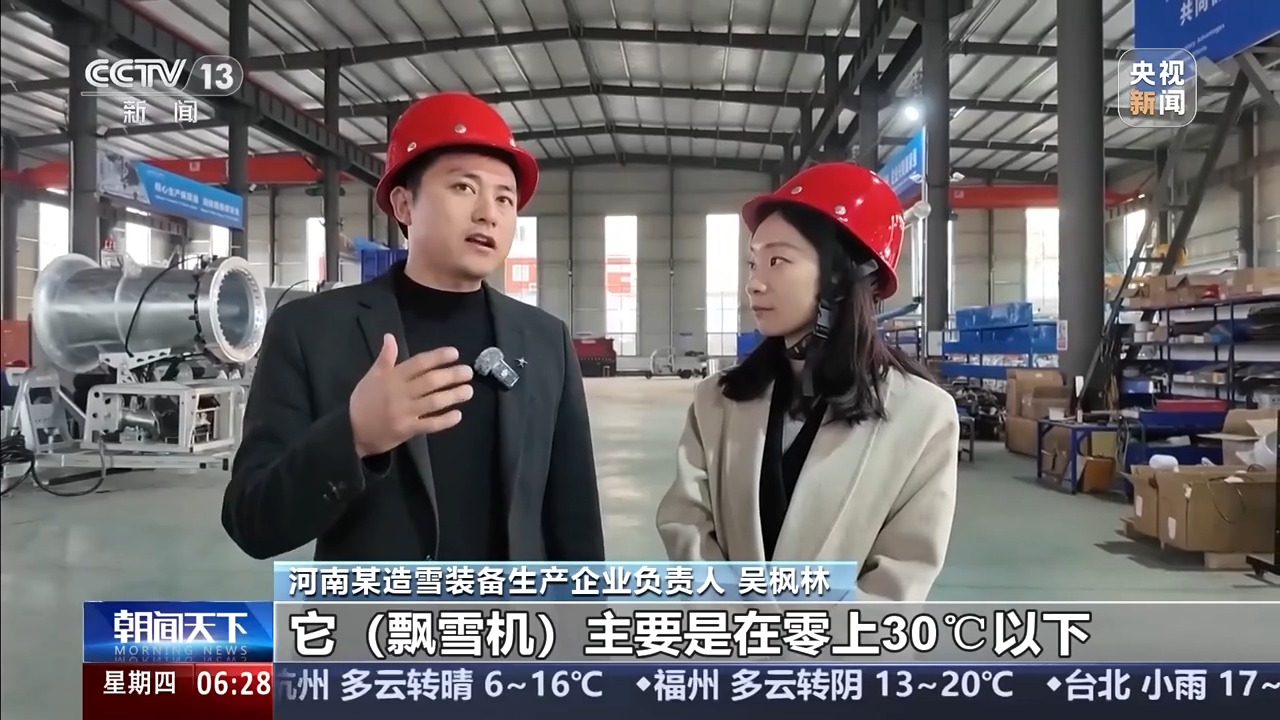
Core Viewpoint - The article discusses the rapid growth of China's ice and snow sports industry, driven by government policies and technological innovations, particularly in the snow-making equipment sector, which is transitioning from reliance on foreign brands to domestic production and innovation [1][12][27]. Group 1: Industry Growth and Opportunities - The "14th Five-Year Plan" emphasizes the development of a modern industrial system centered on advanced manufacturing, with a specific focus on ice and snow sports [1]. - The indoor skiing market in China is experiencing explosive growth, addressing the lack of natural snow resources in many cities [5][12]. - The domestic snow-making equipment market has seen significant advancements, with one company capturing nearly 50% of the market share through continuous innovation and product upgrades [11][27]. Group 2: Technological Innovations - A new type of snow-making machine developed by a company can operate in temperatures above freezing, producing 12 cubic meters of snow daily, addressing the limitations of traditional machines [3][5]. - The company has implemented smart control features in its equipment, allowing for automated operation and improved efficiency [11][12]. - The integration of domestic materials and technologies has led to a significant increase in the localization rate of snow-making equipment, with some products achieving up to 90% domestic content [18][16]. Group 3: Market Dynamics and Consumer Acceptance - The shift towards domestic brands is crucial for the industry's future, as consumer acceptance of local products remains a challenge [19]. - Companies are focusing on brand development and marketing strategies, including targeting specific demographics such as women and youth [25]. - The sales revenue of ice and snow equipment in China has grown from 15.3 billion yuan in 2019 to 22.2 billion yuan in 2023, reflecting a compound annual growth rate of 9.5% [27]. Group 4: Policy Support and Infrastructure Development - National policies and funding are accelerating the establishment of ice and snow equipment industrial parks across various regions, enhancing the overall ecosystem [12][16]. - The Hebei Zhangjiakou Xuanhua Ice and Snow Equipment Industrial Park is highlighted as a model for integrating research, production, and service in the ice and snow industry [14][16]. - The expected total output value of ice and snow equipment in Hebei province is projected to reach 90 billion yuan by the end of the "14th Five-Year Plan" [16].
长裕集团主板IPO将上会 氧氯化锆工艺技术国际领先
Zheng Quan Ri Bao Wang· 2025-12-17 10:48
Core Viewpoint - Changyu Group is preparing for its initial public offering (IPO) review on December 19, 2025, as a leading supplier of zirconium and specialty nylon products, with the largest global production capacity of oxychloride zirconium and a strong domestic presence in specialty nylon [1] Group 1: Company Overview - Changyu Group specializes in the research, production, and sales of zirconium products, specialty nylon products, and fine chemical products, with a diverse product range including oxychloride zirconium, zirconium carbonate, zirconium oxide, and specialty nylon [1] - The company has established strong partnerships with numerous well-known enterprises across various regions including China, Europe, the United States, Japan, South Korea, India, and Southeast Asia [1] Group 2: Zirconium Products - Changyu Group has an annual production capacity of 75,000 tons of oxychloride zirconium, making it the largest producer globally [2] - The company has received recognition as a manufacturing champion enterprise from the Ministry of Industry and Information Technology of China, highlighting its prominent industry position [2] - Changyu Group holds 76 patents, including 66 invention patents, and has achieved significant advancements in production technology, recognized as internationally leading [2] Group 3: Specialty Nylon Products - The company has an annual production capacity of 15,000 tons of specialty nylon, leading in domestic capacity and product variety [3] - Changyu Group has undertaken several major national research projects and received a first-class award for technological progress from the China Petroleum and Chemical Industry Federation [3] - The company's revenue figures from 2022 to the first half of 2025 show stability, with revenues of 1.669 billion yuan, 1.608 billion yuan, 1.638 billion yuan, and 896 million yuan respectively, indicating a strong operational scale [3]
湾财专访巨星科技李锋:一把锤子缘何撬开百亿营收?
Nan Fang Du Shi Bao· 2025-12-17 00:57
Core Insights - The global hand tools market is experiencing steady growth, with cross-border e-commerce becoming a significant engine for China's foreign trade transformation. The total revenue of the global DIY and hardware store market reached $285.7 billion in 2023, with the core tools category estimated at $85 billion, projected to grow at a CAGR of 2.48% in the coming years [2][3]. Company Overview - Juxing Technology, founded in 1993, has become the largest hand tools company in Asia and ranks among the top three globally. The company, headquartered in Hangzhou, offers a wide range of products including hand tools, power tools, and laser measuring tools, with sales in over 180 countries and regions. In 2024, the company achieved a revenue of 14.795 billion yuan, a year-on-year increase of 35.37%, and a net profit of 2.304 billion yuan, up 36.18%, both hitting historical highs [2][3]. Strategic Transformation - The transition from OEM to self-owned brands was driven by the need to overcome the limitations of the OEM model, which lacked pricing power. Juxing Technology recognized that to achieve sustainable growth and maximize profits, expanding into overseas markets and building its own brands was essential [5][6][14][16]. Market Insights - Juxing Technology's deep understanding of international market demands, product categories, and pricing strategies, gained from its experience as an OEM, laid a solid foundation for its subsequent research and innovation efforts. The company has made strategic acquisitions to enhance its capabilities, including acquiring stakes in laser measurement tool companies and American brands [6][10][16]. Brand Development - Since entering Amazon in 2015, Juxing Technology has accelerated its brand globalization. The company relies heavily on Amazon's logistics services, with over 90% of its goods shipped through Amazon's Global Logistics (AGL), which enhances delivery speed and reduces costs [7][9][22][23]. Product Innovation - Juxing Technology emphasizes product innovation and regional customization as core strategies. The company has over 600 engineers in China and local engineers in various countries to tailor products to local consumer preferences. Approximately 80% of its products are designed in-house, allowing for greater pricing autonomy and improved profit margins [10][11][19][20]. Future Outlook - The company plans to continue its collaboration with Amazon to leverage market data and develop products that meet consumer needs in emerging markets such as Latin America, the Middle East, and Australia. Juxing Technology believes that economic downturns can present opportunities for growth and innovation [20][21].


阿斯麦CEO出主意:中国可忍不了,西方不如…
Xin Lang Cai Jing· 2025-12-12 13:12
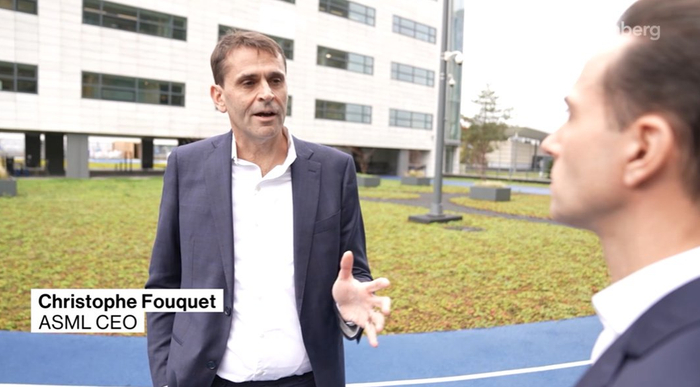
Core Viewpoint - ASML, the sole manufacturer of EUV lithography machines, faces challenges from geopolitical tensions and U.S. export restrictions to China, despite benefiting from the semiconductor industry's growth driven by AI [1][4]. Group 1: Company Overview - ASML's EUV lithography machines are critical for advanced chip manufacturing, with each machine costing several hundred million dollars [1]. - The company has seen continuous growth in performance due to the AI boom in the semiconductor sector [1]. Group 2: Geopolitical Challenges - The U.S. has pressured the Netherlands to restrict ASML from selling advanced chip manufacturing equipment to China, which has become ASML's largest market [1]. - ASML is currently prohibited from exporting all EUV and the most advanced DUV lithography equipment to China due to U.S. sanctions [1]. Group 3: Technology Export Debate - ASML's CEO, Christophe Fouquet, advocates for a balanced approach to technology exports to China, suggesting that limiting the latest technologies could slow China's self-reliance in tech [4]. - The technology exported to China is reportedly eight generations behind the latest high numerical aperture lithography technology, equating to products sold to Western clients around 2013-2014 [4]. Group 4: Future Market Dynamics - Fouquet expresses concern that excessive restrictions could push China to fully develop its own technologies, potentially leading to a loss of the Chinese market for Western companies [4]. - Despite ASML's current monopoly in lithography, competition is emerging, with companies like Shanghai Micro Electronics Equipment and startups like Substrate working to catch up [5]. Group 5: China's Response and Strategy - China is determined to achieve technological self-sufficiency, with a goal to control nearly one-third of global wafer foundry capacity by 2030 [6]. - The Chinese response to U.S. technology restrictions has been to accelerate domestic technological advancements, with a consensus forming around the need for self-reliance [6].
出生安徽,台湾旺宏电子吴敏求之“铁汉”传奇
Xin Lang Cai Jing· 2025-12-11 06:12
Core Insights - The article highlights the recognition of Wu Minqiu, chairman of Winbond Electronics, as the recipient of the 19th Pan Wen-yuan Award, a prestigious honor in Taiwan's technology industry, emphasizing his significant contributions to the semiconductor sector [1][13]. Group 1: Background and Early Life - Wu Minqiu was born in 1948 in Anhui and moved to Taiwan as an infant, where he developed resilience in a challenging environment [3][16]. - His education at Cheng Kung University and Stanford University shaped his character, where he learned to survive in scarcity [3][16]. Group 2: Career Beginnings - In 1989, Wu made a bold decision to leave his high-paying job at Intel to establish Winbond Electronics with over 40 semiconductor experts, despite the nascent state of Taiwan's semiconductor industry [5][18]. - Initial funding challenges were overcome with the help of venture capitalist Hu Dinghua, who provided NT$800 million and connections to other financial institutions [5][18]. Group 3: Business Strategy and Challenges - Wu's strategy focused on independent research and development in the non-volatile memory sector, which was initially overlooked but later proved to be a wise decision as demand surged in the consumer electronics era [7][20]. - Winbond faced significant losses from 2012 to 2017, totaling NT$23 billion, yet Wu maintained his commitment to R&D and avoided layoffs during this period [9][20]. Group 4: Recovery and Growth - The company's turnaround was marked by a focus on technology, leading to partnerships with major clients like Nintendo and Apple, and establishing Winbond as a leader in NOR Flash technology [9][22]. - Wu's leadership resulted in a remarkable recovery from annual losses to stable profitability within five years, showcasing the importance of core technology independence [9][22]. Group 5: Recognition and Legacy - Wu's receipt of the Pan Wen-yuan Award is seen as a recognition of both his personal achievements and Winbond's innovative business model, reflecting a shift in Taiwan's semiconductor industry from technology importation to self-innovation [11][24]. - His story serves as an inspiration, illustrating the journey of Taiwan's semiconductor industry and the value of perseverance and innovation in overcoming adversity [12][25].

造就超大规模电力系统“超级大脑”
Ke Ji Ri Bao· 2025-12-10 00:11
Core Insights - China's monthly electricity consumption has surpassed 1 trillion kilowatt-hours for the first time, showcasing the strength of the southern regional electricity market in ensuring optimal supply during peak demand [1] - The "Tianquan" solver, developed independently, has significantly improved computational efficiency, outperforming imported solvers by 14% [1][9] Group 1: Development of "Tianquan" - The southern regional electricity market was among the first to undergo market-oriented reforms, transitioning from government pricing to a model based on electricity costs and environmental expenditures [2] - Initially, domestic solvers lagged significantly behind international counterparts, requiring 30 to 40 times longer to solve the same problems [2] - The development team recognized the risks of relying on foreign solvers, as they did not disclose operational formulas or models, leading to potential safety hazards [2] Group 2: Research and Optimization - The team conducted extensive research and discussions with experts to create optimized underlying code, which was identified as a key factor in improving performance [3][6] - The initial testing of "Tianquan" revealed a significant performance gap, taking 20,000 seconds for a case compared to 11 times faster for imported solvers [4] - The team faced challenges in accessing the operational processes of imported solvers, which were treated as "black boxes," complicating efforts to enhance "Tianquan" [4][6] Group 3: Testing and Implementation - After numerous simulations and optimizations, "Tianquan" achieved a breakthrough, matching and then exceeding the speed of imported solvers by 14% [7] - The reliability of "Tianquan" is critical for grid safety, leading to extensive testing with real data from power plants and substations [8] - Following two years of dual operation with imported solvers, "Tianquan" transitioned to independent operation, expanding its support from two-day trading to continuous monthly settlements [9] Group 4: Future Prospects - The successful development and application of "Tianquan" are seen as a significant contribution to energy security, aligning with national goals to maintain control over energy resources [9] - The southern regional electricity market aims to provide robust support for the national unified electricity market and extend solutions to other key industries such as oil and gas, aviation, and manufacturing [9]
儒竞科技:公司对行业动态保持密切关注
Zheng Quan Ri Bao Wang· 2025-12-09 13:40
Core Viewpoint - Rujing Technology (301525) emphasizes its commitment to closely monitor industry dynamics and leverage its technological advantages to strengthen its competitive foundation [1] Group 1 - The company will focus on self-research and development to solidify its competitive edge [1] - Rujing Technology is actively looking for targets and fields that are closely related to its existing industrial chain layout and business or technology [1] - The company aims to enhance its core competitiveness in its main business through these efforts [1] Group 2 - The company will comply with relevant laws and regulations regarding information disclosure if there are any related plans [1]