
极紫外(EUV)光刻机

Search documents
ASML-极紫外(EUV)光刻机平均售价有望上涨 60%,维持 “跑赢大盘” 评级
2026-03-01 17:23
Summary of ASML Holding NV Conference Call Company Overview - **Company**: ASML Holding NV - **Industry**: Semiconductor Equipment - **Rating**: Outperform - **Price Target**: €1,600.00 (EUR), $1,911.00 (USD) [3][44] Key Points and Arguments EUV Source Power Development - ASML has developed a method to increase EUV source power to 1,000 W from approximately 600 W, representing a more than 50% increase in light-source output [1][8] - This advancement was previously framed as a long-term ambition but is now seen as a concrete technical solution [1][8] Implications of Increased Power 1. **Higher Throughput**: The increase in power allows for a throughput of 330 WpH, a 50% improvement from the current generation [2][9] 2. **Pricing Strategy**: ASML's pricing is linked to throughput, with the new LNA EUV expected to be priced at €350 million, a 60% increase from the €220 million ASP in 2025 [2][10] 3. **Margin Improvement**: Higher ASP is expected to improve margins as costs do not increase proportionately [2][11] 4. **HNA Throughput**: Higher throughput is also anticipated for HNA systems, which share the same light source as LNA [2][12] 5. **Market Position**: EUV is more likely to replace DUV double patterning due to intrinsic physical constraints of ArFi technology, widening the competitive gap [2][13][14] Competitive Landscape - ASML's advancements may widen the gap for competitors, including potential Chinese EUV developments and US rivals [2][14] - If China achieves breakthroughs in EUV lithography, ASML could benefit from a loosening of restrictions, allowing for increased market share [2][14] Financial Projections - **Revenue Growth**: Projected revenues are expected to grow from €32.67 billion in 2025 to €45.22 billion in 2027, reflecting a CAGR of 17.6% [7][37] - **Earnings Per Share (EPS)**: Expected EPS growth from €24.72 in 2025 to €40.56 in 2027 [7][37] - **Market Capitalization**: Estimated at €490.39 billion [4] Risks - Potential risks include margin pressures from commercialization costs, overstocking in China, and tighter export controls affecting sales to Chinese customers [45] Additional Important Information - ASML's gross margin is expected to return to an expansion trajectory following the introduction of the 1,000 W source power [11] - The company has a strong historical correlation between throughput and ASP, which is expected to continue with the new developments [10][20] This summary encapsulates the critical insights from the ASML conference call, highlighting the company's advancements, market implications, financial outlook, and associated risks.

“关键里程碑”,阿斯麦:新一代EUV光刻机已准备好量产芯片
Xin Lang Cai Jing· 2026-02-27 06:24
Core Insights - ASML has developed a new generation of chip manufacturing equipment, the High-NA EUV lithography machine, which is ready for mass production and represents a significant advancement for the chip industry [1][2] - The new equipment can reduce multiple costly and complex steps in chip manufacturing, enabling companies like TSMC and Intel to produce more powerful and energy-efficient chips, marking a critical shift in AI chip production [1][2] - The new High-NA EUV machine has a price tag of approximately $400 million, nearly double that of the first-generation EUV equipment [2] Equipment Performance - The new equipment has achieved a significant reduction in downtime and has produced 500,000 silicon wafers, demonstrating its readiness for mass production [2][5] - The current operational rate of the equipment is about 80%, with plans to increase it to 90% by the end of the year [5] Market Demand and Orders - Global demand for chip manufacturing equipment is increasing, with ASML's new orders reaching a record €13.2 billion in Q4 2025, over half of which are for EUV lithography machines [5] - China remains ASML's largest single market, accounting for 33% of the company's sales in 2025, although this is expected to drop to 20% by 2026 due to U.S. export restrictions [5] Industry Challenges - Despite the readiness of the new technology, companies will require two to three years for thorough testing and integration into production lines [4] - Chinese companies are working to develop their own DUV and EUV lithography machines to ensure self-sufficiency in the semiconductor supply chain amid U.S. restrictions [5]

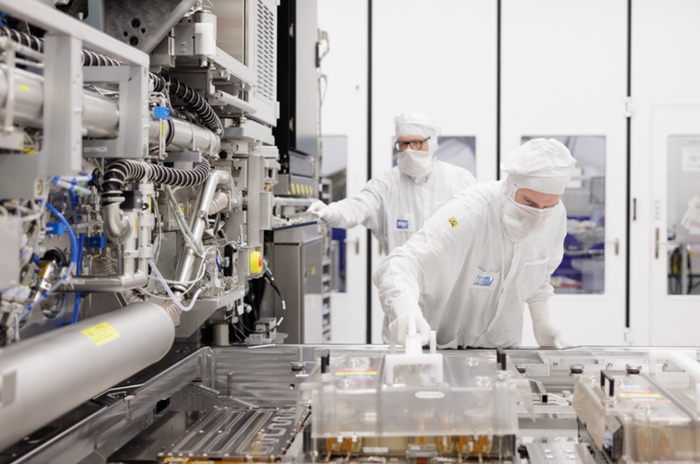
光刻机巨头阿斯麦宣布重大进展
Guan Cha Zhe Wang· 2026-02-27 03:56
Core Insights - ASML has developed a new generation of chip manufacturing equipment, the High-NA EUV lithography machine, which is ready for mass production and represents a significant advancement for the chip industry [1][2] - The new equipment can reduce multiple costly and complex steps in chip manufacturing, enabling companies like TSMC and Intel to produce more powerful and energy-efficient chips, marking a critical shift in AI chip production [1][2] - The new High-NA EUV machine has a price tag of approximately $400 million, nearly double that of the first-generation EUV equipment, and is expected to significantly improve production efficiency [3][5] Equipment Specifications - The High-NA EUV uses a 0.55 numerical aperture optical system, achieving 8nm resolution and supporting processes at 3nm and below, with technology reserves for 1nm nodes [3] - The machine has already processed 500,000 silicon wafers and has reduced downtime significantly, indicating readiness for mass production [3][5] Market Demand and Orders - ASML's order numbers have exceeded expectations, with new orders reaching a record €13.2 billion in Q4 2025, over half of which are for EUV lithography machines [5] - China remains ASML's largest single market, accounting for 33% of the company's sales in 2025, although this is expected to drop to 20% by 2026 due to U.S. export restrictions [5] Industry Challenges - Despite the readiness of the technology, companies will require two to three years for thorough testing and integration into production lines [4] - Chinese companies are working to develop their own DUV and EUV lithography machines to ensure self-sufficiency in the semiconductor supply chain amid U.S. restrictions [5]
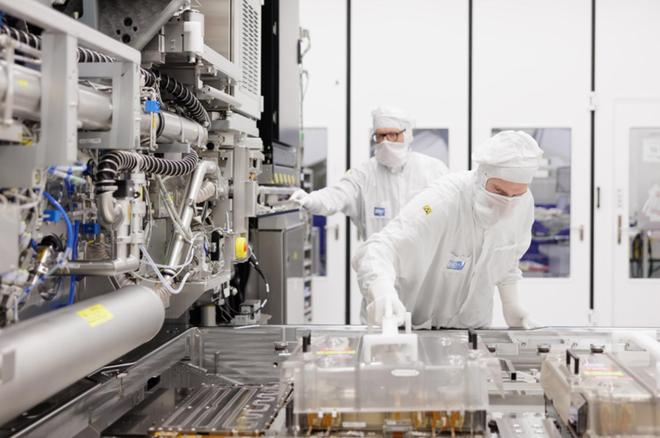
中国份额预估腰斩至20%:阿斯麦断臂求生,1700人成为霸权牺牲品
Xin Lang Cai Jing· 2026-01-31 22:32
Core Viewpoint - ASML, a leading player in the semiconductor equipment industry, is initiating a significant downsizing plan, cutting approximately 1,700 jobs, primarily in its core R&D and IT departments, which raises concerns about its long-term viability and strategic direction [1][4]. Group 1: Company Challenges - ASML's previous success was heavily reliant on the Chinese market, which contributed nearly half of its orders, highlighting its vulnerability to geopolitical tensions [3][4]. - The U.S. government's restrictions have severely impacted ASML's market share in China, with projections indicating a decline to around 20% by 2026 [4]. - The company's decision to comply with U.S. demands has led to a loss of market trust and a significant reduction in its growth potential, forcing it into a strategic contraction [4][6]. Group 2: Impact of Geopolitical Factors - The geopolitical landscape has forced ASML to make concessions that have ultimately harmed its core interests, as it has become a pawn in a larger power struggle [6][7]. - The U.S. has utilized ASML to cut off competitors' access to critical technology while simultaneously attempting to bolster its domestic semiconductor industry through subsidies [7][8]. - ASML's management has been criticized for its lack of independence and failure to resist external pressures, leading to detrimental outcomes for the company [7][8]. Group 3: Industry Dynamics - The restrictions imposed on ASML have inadvertently accelerated the development of China's semiconductor industry, which is now making significant strides in both mature and advanced technology sectors [9][10]. - By 2026, domestic Chinese lithography machines are expected to become viable alternatives, diminishing ASML's previously unassailable market position [10][11]. - The shift in supply dynamics indicates a potential reversal of market power, where ASML may struggle to regain its foothold even if it attempts to lower prices in the future [12][13]. Group 4: Future Outlook - ASML's current layoffs are indicative of a broader crisis stemming from its strategic missteps, with the company facing intense competition from both U.S. restrictions and rising Chinese capabilities [13][14]. - The semiconductor industry is witnessing a transformation, with China's advancements suggesting a new era of competition that could undermine ASML's historical dominance [14][15]. - The ongoing geopolitical tensions and ASML's reliance on U.S. policies may lead to further challenges, as the company navigates a landscape where trust and technological leadership are increasingly contested [15][16].
1→3!“美国出口限制下,更多中企跻身全球芯片设备制造商20强”
Guan Cha Zhe Wang· 2026-01-31 08:23
Core Viewpoint - By 2025, three Chinese companies are expected to be among the top 20 global semiconductor equipment manufacturers, a significant increase from one company before the U.S. export restrictions in 2022, indicating rapid growth in China's semiconductor industry [1]. Group 1: Company Rankings and Growth - North Huachuang Technology Group has risen from 8th place in 2022 to 5th place in 2025, following major global players like ASML, Applied Materials, and Lam Research [1]. - New entrant, Zhongwei Semiconductor Equipment (Shanghai) Co., Ltd., ranked 13th, with its core etching equipment reportedly used in 5nm chip production, indicating proximity to global advanced levels [1]. - Shanghai Micro Electronics Equipment (Group) Co., Ltd. (SMEE) ranks 20th, primarily producing photolithography equipment, which is crucial for chip performance [3]. Group 2: Industry Trends and Investments - China is increasing its investment in semiconductor self-sufficiency through national funds and local government support, leading to a rapid rise in the number of equipment manufacturers [3]. - Currently, 20% to 30% of semiconductor equipment is manufactured domestically in China, a significant increase from about 10% three years ago [3]. - The advanced semiconductor manufacturing process involves over 1,000 steps, with Chinese companies now capable of covering all process stages, including deposition, etching, and cleaning [3]. Group 3: Market Dynamics and Future Projections - The Chinese semiconductor equipment market is projected to grow by 35% year-on-year in 2024, reaching $49.5 billion, making it the largest market globally [4]. - ASML's revenue from China is expected to decrease from 33% in 2025 to 20% in 2026 due to U.S. export restrictions, indicating a shift in market dynamics [5]. - Chinese companies are striving to overcome challenges in photolithography technology, with efforts focused on developing extreme ultraviolet (EUV) lithography and utilizing deep ultraviolet (DUV) technology to bypass restrictions [5].


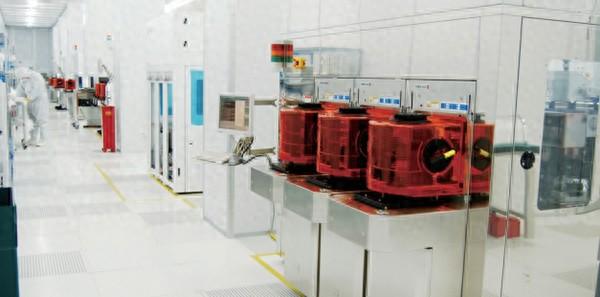
涉最大的买家中国,阿斯麦调整预期
Guan Cha Zhe Wang· 2026-01-29 11:29
Core Viewpoint - ASML, the Dutch lithography giant, reported a net sales of €32.7 billion for 2025, a 15.5% year-on-year increase, and adjusted its expectations for 2026, anticipating a decline in sales proportion from China due to U.S. export restrictions [1][4]. Group 1: Financial Performance - In 2025, ASML's net profit rose to €9.6 billion, marking a 26.3% increase [1]. - The company received record new orders of €13.2 billion in Q4 2025, with over half being EUV lithography machines [1]. - ASML expects 2026 sales to reach between €34 billion and €39 billion, driven by strong demand for EUV lithography machines [5]. Group 2: Market Dynamics - China accounted for 33% of ASML's sales in 2025, but this is projected to drop to 20% in 2026 due to U.S. export restrictions [1][4]. - The demand for DUV lithography machines in China is expected to decline by 6% to €12 billion in 2025, attributed to reduced market demand [4]. - ASML's CFO noted that demand from markets outside China for DUV machines is increasing, which may offset the decline in orders from Chinese customers [5]. Group 3: Strategic Adjustments - ASML announced a layoff of approximately 1,700 employees, mainly in technical and IT departments, representing about 4% of its total workforce [1]. - The CEO emphasized the need to enhance engineering capabilities and innovation, citing organizational complexity as a barrier [2]. - ASML's technology for exports to China is significantly outdated, with a gap of over eight generations compared to the latest high numerical aperture lithography technology [6]. Group 4: Competitive Landscape - Chinese companies are actively working on developing their own DUV and EUV lithography machines to ensure self-sufficiency in the semiconductor supply chain [6]. - Analysts suggest that ASML's forecasts for the Chinese market may be overly conservative, with some predicting stable sales in 2026 [5].
环球网:中国科技进步,路透社本不必焦虑
Xin Lang Cai Jing· 2025-12-18 23:13
Core Viewpoint - The article discusses a report by Reuters claiming that Chinese scientists have developed a prototype of an extreme ultraviolet (EUV) lithography machine, which the U.S. has been trying to prevent. This reflects a growing anxiety in the West regarding China's technological advancements and highlights an unhealthy mindset often seen in Western perspectives [1] Group 1 - The report suggests that the development of the EUV lithography machine is a significant technological breakthrough for China, which the U.S. has historically sought to hinder [1] - The article emphasizes that China's commitment to technological self-reliance aims for independence and strength, and that advancements in cutting-edge technology do not preclude international cooperation [1] - The commentary points out that this anxiety over China's technological progress is indicative of a broader trend in Western attitudes towards China's innovations [1]
阿斯麦CEO出主意:中国可忍不了,西方不如…
Xin Lang Cai Jing· 2025-12-12 13:12
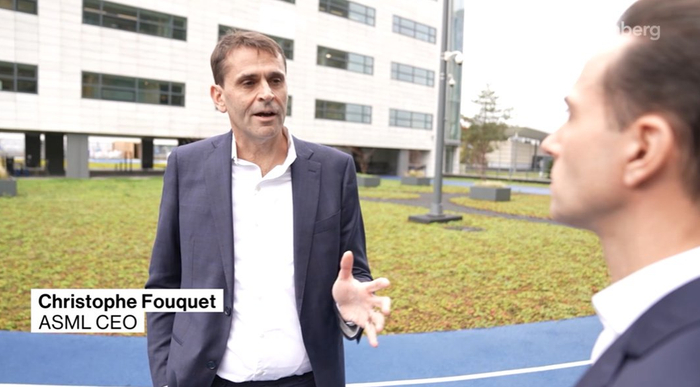
Core Viewpoint - ASML, the sole manufacturer of EUV lithography machines, faces challenges from geopolitical tensions and U.S. export restrictions to China, despite benefiting from the semiconductor industry's growth driven by AI [1][4]. Group 1: Company Overview - ASML's EUV lithography machines are critical for advanced chip manufacturing, with each machine costing several hundred million dollars [1]. - The company has seen continuous growth in performance due to the AI boom in the semiconductor sector [1]. Group 2: Geopolitical Challenges - The U.S. has pressured the Netherlands to restrict ASML from selling advanced chip manufacturing equipment to China, which has become ASML's largest market [1]. - ASML is currently prohibited from exporting all EUV and the most advanced DUV lithography equipment to China due to U.S. sanctions [1]. Group 3: Technology Export Debate - ASML's CEO, Christophe Fouquet, advocates for a balanced approach to technology exports to China, suggesting that limiting the latest technologies could slow China's self-reliance in tech [4]. - The technology exported to China is reportedly eight generations behind the latest high numerical aperture lithography technology, equating to products sold to Western clients around 2013-2014 [4]. Group 4: Future Market Dynamics - Fouquet expresses concern that excessive restrictions could push China to fully develop its own technologies, potentially leading to a loss of the Chinese market for Western companies [4]. - Despite ASML's current monopoly in lithography, competition is emerging, with companies like Shanghai Micro Electronics Equipment and startups like Substrate working to catch up [5]. Group 5: China's Response and Strategy - China is determined to achieve technological self-sufficiency, with a goal to control nearly one-third of global wafer foundry capacity by 2030 [6]. - The Chinese response to U.S. technology restrictions has been to accelerate domestic technological advancements, with a consensus forming around the need for self-reliance [6].
ASML CEO:危机大部分已过去
半导体行业观察· 2025-11-17 01:26
Core Viewpoint - The recent tensions between the Netherlands and China, highlighted by the Nexperia incident, underscore the fragility of the semiconductor supply chain and the importance of dialogue to prevent escalation [2][3]. Group 1: Nexperia Incident - The Nexperia situation illustrates the critical nature of the semiconductor industry and the ecosystem's vulnerability, emphasizing the need for responsible actions and dialogue among stakeholders [2]. - Nexperia, owned by China's Wingtech Technology, primarily supplies power control chips to automotive manufacturers like BMW and Volkswagen. The Dutch government's sudden takeover of the company's key decision-making authority led to retaliatory actions from Beijing, disrupting the supply of critical automotive components [2]. - Recent developments indicate a thawing of relations, with China resuming some exports of Nexperia chips and the Dutch government planning to send a delegation to seek a mutually acceptable solution [2]. Group 2: ASML's Position - ASML, as the sole producer of advanced extreme ultraviolet (EUV) lithography machines, plays a pivotal role in the semiconductor industry, providing equipment to major companies like TSMC and Intel [3][5]. - The company reported a net sales figure of €28.3 billion (approximately $33.1 billion) for 2024, with a market capitalization exceeding €350 billion (around $406 billion), making it the most valuable company in Europe [5]. - ASML's success is attributed to significant investments in EUV technology, which required breakthroughs in physics, optics, and materials science, supported by direct investments from major industry players like Intel, TSMC, and Samsung [6]. Group 3: Leadership and Culture - ASML's CEO, Christophe Fouquet, emphasizes the company's strong sense of responsibility within the industry and the importance of long-term vision and restraint in leadership [6][8]. - The company fosters a culture of openness and collaboration, which is seen as a cornerstone of its innovation, allowing employees to communicate freely across all levels [8]. - The leadership style at ASML is characterized by humility and a focus on creating value for customers, recognizing the broader impact of their work on the world [8][9]. Group 4: Geopolitical Context - Geopolitical factors increasingly influence ASML's future, with export controls, subsidies, and strategic alliances playing a critical role alongside technological advancements [8]. - The company recognizes the necessity of adapting to macroeconomic and geopolitical uncertainties while maintaining strong relationships with customers and entering vital markets [9].
科技叙事不停歇,半导体设备端催化不断,高“设备”含量半导体设备ETF(561980)逆市上扬
2 1 Shi Ji Jing Ji Bao Dao· 2025-09-26 03:20
Group 1 - The semiconductor sector has shown significant strength, with a nearly 50% increase since the second half of the year, and a nearly 10% rise this week alone [1][2] - The demand for advanced semiconductor manufacturing equipment, particularly EUV lithography machines, is expanding due to the growth of AI technology and the need for chips below 7nm [1][2] - The semiconductor equipment market is projected to reach a record $117 billion in 2024, with strong performance expected in the first half of 2025, exceeding $65 billion [2][3] Group 2 - The semiconductor equipment sector is experiencing a robust recovery, with Q2 revenue growth of 21.28% and net profit growth of 8.65% according to Wind data [3] - Longchuan Technology, a leader in semiconductor testing equipment, anticipates a net profit increase of 131.39% to 145.38% for the first three quarters due to strong market demand [3] - The domestic semiconductor equipment market's localization rate reached 21% in the first half of 2025, a 5 percentage point increase year-on-year, driven by policy support and technological breakthroughs [4] Group 3 - The semiconductor equipment ETF (561980) focuses on key sectors such as semiconductor equipment, materials, and design, with top holdings including industry leaders like Cambricon and SMIC [4] - The structural opportunities in AI-related demand and advanced logic expansion in China are expected to continue, with a projected 6% increase in domestic equipment market share by 2026 [2][4]