通用人工智能AGI

Search documents
阿里吴泳铭:实现AGI已是确定性事件,超级人工智能ASI才是终极目标
IPO早知道· 2025-09-24 05:37
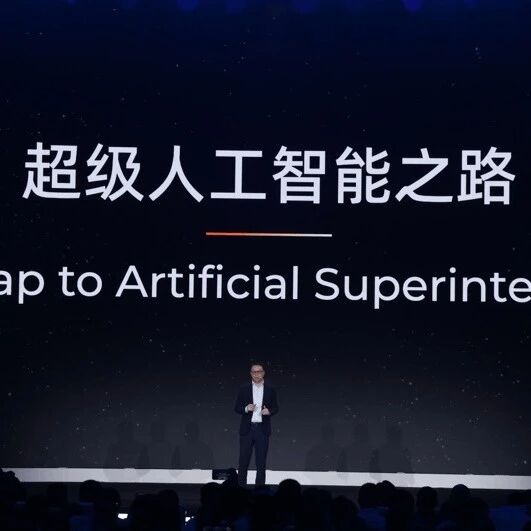
Core Viewpoint - The ultimate goal is to develop Artificial Superintelligence (ASI) that can self-iterate and surpass human intelligence, with the journey towards achieving General Artificial Intelligence (AGI) being a certain event and merely the starting point [2][8]. Summary by Sections Stages of Development - The path to ASI consists of three stages: 1. "Intelligent Emergence," where AI learns vast amounts of human knowledge to develop generalized intelligence [3][11]. 2. "Autonomous Action," where AI acquires tool usage and programming capabilities to assist humans, which is the current stage of the industry [4][12]. 3. "Self-Iteration," where AI connects with the physical world and achieves self-learning, ultimately surpassing human capabilities [5][14]. Strategic Path of Alibaba Cloud - Alibaba Cloud aims to be a "full-stack AI service provider" through two core strategies: 1. Committing to an open-source approach with Tongyi Qianwen, aspiring to create the "Android of the AI era" [5][22]. 2. Building a super AI cloud as the "next-generation computer" to provide global intelligent computing power [5][24]. Investment in AI Infrastructure - Alibaba is actively pursuing a three-year plan to invest 380 billion yuan in AI infrastructure, with plans for even greater investments in the future. By 2032, the energy consumption of Alibaba Cloud's global data centers is expected to increase tenfold compared to 2022 [6][28]. AI's Impact on Society - The emergence of ASI is anticipated to revolutionize technology and society, enabling AI to solve complex scientific and engineering problems at an unprecedented speed, thus ushering in a new intelligent era [9][30]. Future of AI and Human Collaboration - The relationship between humans and AI is expected to evolve into a new collaborative model, where AI significantly enhances human productivity and capabilities, potentially leading to a future where every individual utilizes multiple AI agents [30][31].


阿里吴泳铭::资本开支会在3800亿基础上,增加更多的投入(附2025云栖大会演讲全文)
美股IPO· 2025-09-24 04:35
Core Viewpoint - The realization of Artificial General Intelligence (AGI) is seen as a certainty, marking the beginning of a journey towards Super Artificial Intelligence (ASI), which aims to surpass human capabilities and achieve self-iteration [1][7]. Summary by Sections Stages of AI Evolution - The evolution towards ASI consists of three stages: 1. "Intelligent Emergence," where AI learns from vast human knowledge to develop generalized intelligence [3][9]. 2. "Autonomous Action," where AI gains the ability to use tools and programming to assist humans, representing the current stage of the industry [4][10]. 3. "Self-Iteration," where AI connects with the physical world for self-learning, ultimately achieving superiority over human intelligence [5][12]. Strategic Path of Alibaba Cloud - Alibaba Cloud aims to be a "full-stack AI service provider" through two core strategies: 1. Committing to an open-source approach with Tongyi Qianwen, aspiring to create "the Android of the AI era" [5][18]. 2. Building a super AI cloud as the "next-generation computer" to provide a global intelligent computing network [20][22]. Investment in AI Infrastructure - Alibaba is actively pursuing a three-year plan with an investment of 380 billion yuan in AI infrastructure, with expectations that energy consumption in global data centers will increase tenfold by 2032 compared to 2022 [5][23]. AI's Role in Future Society - The future will see AI as a core driver of productivity, with the potential to create "super scientists" and "full-stack super engineers" who can solve complex problems at unprecedented speeds [7][25]. - AI will transform the relationship between humans and machines, enabling a collaborative environment where AI significantly amplifies human productivity [25][26].
阿里吴泳铭:超级AI 云是下一代计算机,未来全球可能只有5-6家平台
Guan Cha Zhe Wang· 2025-09-24 04:27
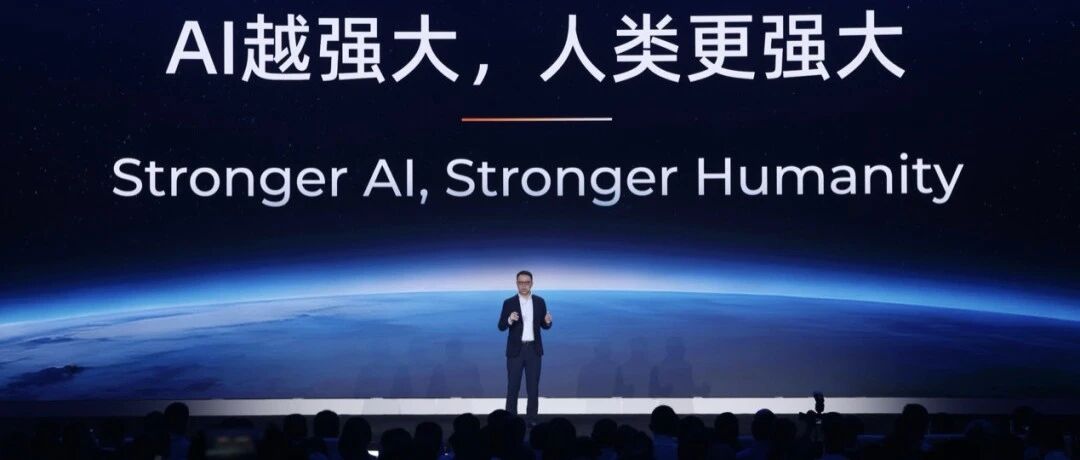
Core Insights - The CEO of Alibaba Group, Wu Yongming, stated that achieving Artificial General Intelligence (AGI) is a certainty, marking the beginning of a journey towards Super Artificial Intelligence (ASI) that can self-iterate and surpass human intelligence [1][5][24] Summary by Sections AGI and ASI Development - The transition to ASI will occur in three stages: "Intelligent Emergence," "Autonomous Action," and "Self-Iteration" [3][7] - AGI aims to free humans from 80% of routine tasks, allowing focus on creativity and exploration, while ASI could solve complex scientific and engineering problems at unprecedented speeds [5][23] Current AI Landscape - The AI industry has seen over $400 billion in investments in the past year, with projections of over $4 trillion in cumulative investments over the next five years, indicating a rapid acceleration in AI capabilities [4][20] - AI's intelligence has advanced from a high school level to that of a PhD in a few years, demonstrating the technology's rapid evolution [4][5] Alibaba's AI Strategy - Alibaba Cloud aims to be a "full-stack AI service provider," focusing on two main paths: an open-source approach with Tongyi Qianwen and the development of a super AI cloud as the next-generation computing platform [3][20] - The company is investing 380 billion yuan over three years to build AI infrastructure, with plans for significant future investments [20][21] Future Projections - By 2032, the energy consumption of Alibaba Cloud's global data centers is expected to increase tenfold compared to 2022, reflecting the anticipated growth in AI demand [21] - The company envisions a future where AI will replace energy as the most critical commodity, driving daily operations across various industries [20][24] Technological Evolution - Large models are expected to become the next operating system, facilitating interactions between users and AI tools, with natural language serving as the programming language of the AI era [14][18] - The deployment of AI models will diversify, running on all devices and enabling persistent memory and real-time updates [15][18] Collaboration Between Humans and AI - The emergence of ASI will foster a new collaborative relationship between humans and AI, enhancing productivity and creating new demands in society [23][24]

阿里抛出了个更庞大的AI故事
Hua Er Jie Jian Wen· 2025-09-24 04:18
Core Insights - The core viewpoint of the article emphasizes the transformative potential of artificial intelligence (AI), particularly the development of Artificial Superintelligence (ASI) that could surpass human capabilities and revolutionize various industries [2][3][4]. AI Development Stages - The journey towards ASI is divided into three stages: "Intelligent Emergence," where AI develops generalized intelligence through vast human knowledge; "Autonomous Action," where AI can perform tasks in the real world; and finally, "Self-Iteration," where AI achieves self-learning and surpasses human intelligence [4][5][7]. Investment and Infrastructure - The global investment in AI has exceeded $400 billion in the past year, with projections indicating that total investment will surpass $4 trillion over the next five years. Alibaba plans to invest 380 billion yuan in AI infrastructure over three years, reflecting a commitment to becoming a leader in this space [3][17]. Market Reaction - Following the announcement of Alibaba's AI infrastructure plans, the company's stock price surged over 7%, indicating strong market optimism regarding its future prospects in the AI sector [3]. AI's Impact on Industries - AI is expected to penetrate various sectors, including logistics, manufacturing, software, business, biomedical, finance, and research, significantly enhancing productivity and transforming operational paradigms [6][10]. Future of AI and Computing - The article posits that large models will become the next generation of operating systems, allowing users to create applications using natural language. This shift will lead to a dramatic increase in the number of potential developers and applications [11][12]. Strategic Positioning of Alibaba - Alibaba aims to position itself as a full-stack AI service provider, with plans to develop a new AI supercomputer and a global AI cloud computing network. This strategy is designed to meet the anticipated massive demand for AI capabilities [16][17]. Energy and Resource Needs - The future of AI will require substantial computational resources, with predictions that the energy consumption of Alibaba's global data centers will increase tenfold by 2032. This highlights the need for advanced infrastructure to support AI's growth [17].
三诺生物(300298) - 2025年9月19日投资者关系活动记录表
2025-09-19 11:08
Group 1: Company Overview and Market Position - Sinocare focuses on diabetes and chronic disease detection products rather than treatment drugs, with its main products being blood glucose monitoring systems and related aids [2][3]. - The company reported a revenue of RMB 226,366.76 million in the first half of 2025, with the U.S. market contributing RMB 74,377.59 million, accounting for 32.86% of total revenue [7][8]. Group 2: Stock Performance and Market Management - Despite a strong overall market, the company's stock price has declined over 20% this year, which is contrary to the market trend [9][10]. - As of August 31, 2025, the company has repurchased 4,824,900 shares, representing 0.86% of the total share capital, with a total expenditure of RMB 99,919,238.54 [15]. Group 3: Investor Relations and Communication - The company emphasizes the importance of investor relations, conducting regular meetings and maintaining transparency in communication regarding business performance and strategic planning [10][11]. - The company has implemented a "Quality and Return Improvement" action plan since 2024 to enhance company quality and market value [11][12]. Group 4: Future Strategies and Innovations - Sinocare is committed to advancing its digital transformation in healthcare, focusing on AI applications in chronic disease management and enhancing user experience through smart technology [6][4]. - The company aims to establish a global operation system integrated with AI, enhancing customer service and operational efficiency [6][5]. Group 5: Regulatory and Market Challenges - The impact of U.S. tariffs on the company's operations is considered manageable, as most U.S. revenue is generated by local subsidiaries, minimizing exposure to tariff policies [7][8]. - The company is actively monitoring international trade conditions and adapting its supply chain strategies to mitigate potential risks from changing tariffs [8].

酷特智能2025半年报:境外收入连续三年增长,稳健布局行业通用AGI
Jin Tou Wang· 2025-08-27 07:14
Core Viewpoint - Despite significant external changes and uncertainties, the Chinese textile industry has maintained a stable and positive trend in 2025, with textile and apparel exports showing mixed results [1] Group 1: Industry Performance - In the first half of 2025, China's total textile and apparel export value reached 143.978 billion USD, a year-on-year increase of 0.76%, with textile exports at 70.519 billion USD (up 1.77%) and apparel exports at 73.459 billion USD (down 0.2%) [1] - The industry faces ongoing pressures primarily from costs and inventory, but companies leveraging digitalization and smart manufacturing can optimize profitability through efficiency improvements and cost transfers [1] Group 2: Company Performance - Kute Intelligent achieved overseas revenue of 160.5905 million CNY in the first half of 2025, a year-on-year increase of 4.93%, outperforming the overall textile and apparel export market [3][6] - Kute Intelligent has been recognized in the "2024 Industry Top 100" list by the China National Garment Association, ranking first in the "Operating Revenue Profit Margin" category, reflecting its comprehensive competitive strength [3] Group 3: Research and Development - Kute Intelligent has increased its R&D investment to 25.7791 million CNY in the first half of 2025, an 11.56% increase year-on-year, representing 7.55% of its operating revenue, marking three consecutive years of growth [2][6] - The focus of R&D is on enhancing the Kute AI Agent digital enterprise-level operating system, which aims to facilitate the application of general artificial intelligence (AGI) in the industry [6][9] Group 4: Strategic Initiatives - Kute Intelligent has established a C2M large-scale personalized customization model, achieving rapid delivery and addressing traditional inventory and cost challenges in the apparel sector [9] - The company has partnered with the Korean apM Group to launch a flagship store in Shanghai, utilizing data analysis systems to optimize supply chain management and support global brand strategies [9]


被小扎“偷家”后,OpenAI强势反击:连挖4名大将,马斯克也被“误伤”?
3 6 Ke· 2025-07-10 00:20
Core Insights - The recent competition between OpenAI and Meta has escalated into a talent acquisition battle, with OpenAI responding to Meta's aggressive hiring by bringing in top engineers from Tesla, xAI, and Meta itself [1][2]. Group 1: Talent Acquisition - OpenAI has successfully recruited four key engineers for its Scaling team, including Uday Ruddarraju and Mike Dalton, who previously led the development of a powerful AI infrastructure at xAI [2][4]. - David Lau, a former Tesla software engineering vice president, and Angela Fan, a former Meta AI researcher, have also joined OpenAI, enhancing its capabilities in software engineering and model training [2][4]. Group 2: Importance of Scaling - The Scaling team at OpenAI is crucial for building and maintaining the underlying infrastructure that supports AI advancements, including data centers and training platforms [3]. - OpenAI's Stargate project, which aims to invest $500 billion in AI infrastructure, highlights the significance of foundational systems in achieving breakthroughs in artificial general intelligence (AGI) [3]. Group 3: Competitive Landscape - Meta recently established the Meta Superintelligence Labs, hiring 11 core technical personnel from various AI labs, including OpenAI, which prompted OpenAI's swift counteraction [5]. - The ongoing rivalry between OpenAI and Meta reflects the rapid pace of technological advancements and talent movements within the AI sector [5][6].
Z Product|10人以下团队+DePIN模式,DeepAI决定让AI“民主化”到每一个人
Z Potentials· 2025-06-02 04:18
Core Insights - The article discusses the emergence of generative AI and the need for a one-stop service platform in the AI industry, highlighting DeepAI's approach to democratizing AI tools for users [2][4][7]. Group 1: Company Overview - DeepAI was founded in 2016 by Kevin Baragona in San Francisco, aiming to create a multi-modal generative AI tool platform that allows users to transform their ideas into high-quality creative works [3]. - The platform offers various functionalities, including image generation, video creation, music composition, AI chat, and developer APIs, focusing on breaking down barriers between different media types [3][5]. Group 2: Innovations and Features - DeepAI addresses the limitations of existing AI tools by providing a more inclusive subscription model, allowing free users to access basic AI functionalities without restrictive limits [4]. - The platform employs a DePIN model to encourage individual AI creators to contribute to infrastructure development, allowing for a decentralized approach to AI tool creation [4][5]. Group 3: Technical Approach - DeepAI emphasizes enhancing efficiency rather than relying solely on large datasets, proposing that future AI competition will focus on optimizing model architecture and inference efficiency [41][42]. - The company aims to overcome data scarcity challenges in generative AI by improving model training methods that do not depend heavily on vast amounts of data [42][44]. Group 4: Competitive Landscape - The generative AI market is projected to create trillions of dollars in value, with DeepAI's platform positioning it to leverage network effects as more quality agents are deployed [51]. - Compared to competitors like OpenAI, DeepAI offers a more flexible and developer-friendly environment, attracting users dissatisfied with existing solutions [54]. Group 5: Future Opportunities - DeepAI plans to focus on technological innovation, deepening industry applications, and maintaining a distributed AI ecosystem while reducing data dependency [63].
AI时代下的数智链主:趋势与展望
Sou Hu Cai Jing· 2025-05-06 08:28
Core Insights - The competition among digital chain leaders is inherently global, driven by the rapid advancement of AI and smart technologies, which are disrupting traditional chain leaders [2][3] - Digital and intelligent transformation is becoming a new trend in global production networks, with the potential to revolutionize human production and lifestyle [2][3] - The emergence of digital chain leaders, or "smart chain leaders," is crucial as they integrate material and data through AI, enhancing production capabilities and decision-making intelligence [3][5] Group 1: Impact of AI on Traditional Chain Leaders - The acceleration of intelligent transformation is leading to the replacement of traditional chain leaders, with smart chain leaders striving to be the first to achieve large-scale AI practical application [5][6] - The historical context shows that once AI surpasses certain thresholds, it can lead to disruptive changes across industries, as seen in examples like the evolution of Go and the automation of parking systems [6][7] - The urgency for businesses to embrace AI is palpable, with a growing anxiety among entrepreneurs to understand and leverage AI technologies [7][8] Group 2: Differentiation Between Digitalization and Intelligentization - Digitalization is recognized for its potential to enhance efficiency, but its benefits are often indirect and limited, while intelligentization can dramatically improve production efficiency [8][9] - The competition among smart chain leaders is global, as breakthroughs in intelligentization can lead to significant productivity gains, posing existential threats to traditional chain leaders [8][9] Group 3: Technical Routes and Responsibilities of Smart Chain Leaders - The debate over AI's development routes—AI hegemony versus AI equality—highlights the importance of smart chain leaders in driving industry-specific AI applications [9][10] - Smart chain leaders must undertake deep digitalization to align with intelligentization needs, moving beyond superficial digital efforts to detailed process digitization [12][13] - They also need to adapt to rapid AI iterations, engaging in a continuous learning process to remain competitive [13][14] Group 4: Long-term Process of Societal Digitalization - The journey towards societal digitalization is expected to be lengthy, with significant industry reshuffling akin to the impact of the internet on various sectors [15] - The development of general artificial intelligence (AGI) and industry-specific AI applications are critical areas for future focus, requiring collaboration among industry players to establish smart chain leaders [15]

2030年AGI到来?谷歌DeepMind写了份“人类自保指南”
虎嗅APP· 2025-04-07 23:59
Core Viewpoint - The article discusses the dual concerns surrounding Artificial General Intelligence (AGI), highlighting the potential risks and the need for safety measures as outlined in a report by Google's DeepMind, which predicts AGI could emerge by 2030 [5][21]. Group 1: AGI Predictions and Concerns - DeepMind's report predicts the emergence of "Exceptional AGI" by 2030, which would surpass 99% of human adult capabilities in non-physical tasks [5][6]. - The report emphasizes the potential for "severe harm" from AI, including manipulation of political discourse, automated cyberattacks, and biological safety risks [7][8][9]. Group 2: Types of Risks Identified - DeepMind categorizes risks into four main types: malicious use, model misalignment, unintentional harm, and systemic risks [18]. - The report highlights concerns about "malicious use" where AI could be exploited for harmful purposes, and "misalignment" where AI's actions diverge from human intentions [11][18]. Group 3: Proposed Safety Measures - DeepMind suggests two defensive strategies: ensuring AI is compliant during training and implementing strict controls during deployment to prevent harmful actions [12][13]. - The focus is on creating a system that minimizes the risk of "severe harm" even if the AI makes mistakes [14]. Group 4: Industry Perspectives on AI Safety - Various AI companies have differing approaches to safety, with OpenAI focusing on automated alignment and Anthropic advocating for a safety grading system [16][20]. - DeepMind's approach is more engineering-oriented, emphasizing immediate deployable systems rather than theoretical frameworks [20]. Group 5: Broader Implications and Concerns - There is skepticism within the academic community regarding the feasibility of AGI and the clarity of its definition [22]. - Concerns are raised about a self-reinforcing cycle of data pollution, where AI models learn from flawed outputs, potentially leading to widespread misinformation [23][24].