超级人工智能ASI

Search documents
揭开千问App急切面纱:全面接入阿里生态,能否跑赢AI竞赛?
3 6 Ke· 2026-01-16 00:22
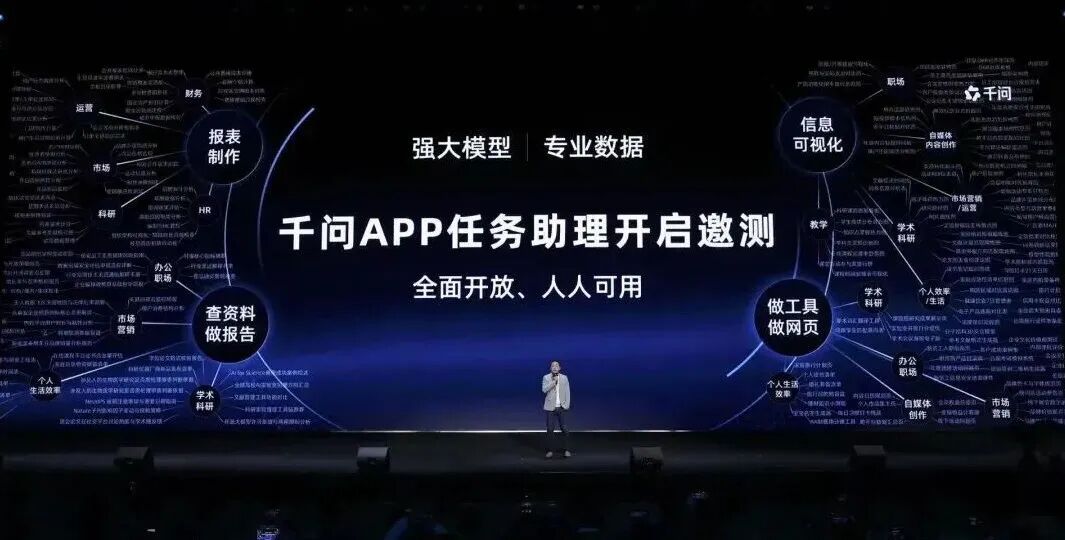
Core Insights - The article discusses the launch of the Qianwen App, which integrates with Alibaba's ecosystem to provide over 400 AI service functions, marking a shift from conversational AI to practical task execution [1][3][12] - The integration allows users to perform complex tasks such as ordering food, booking flights, and accessing government services through natural language commands, showcasing the potential of AI in everyday life [5][6][12] Group 1: AI and E-commerce Integration - The integration of e-commerce and AI agents is becoming increasingly clear, with Qianwen leveraging Alibaba's vast data resources to enhance its AI capabilities [1][7] - Qianwen's AI can provide personalized shopping recommendations based on user needs, utilizing Alibaba's extensive product database and review system [5][12] - The app's ability to execute tasks seamlessly within Alibaba's ecosystem creates a competitive edge, although it currently lacks cross-platform capabilities [1][12] Group 2: Technical Advancements and User Experience - Qianwen's system-level integration with services like Taobao and Alipay allows for a streamlined user experience, enabling users to complete transactions without switching apps [5][12] - The app's underlying technology has improved significantly, allowing for real-time task execution and enhanced understanding of complex user requests [6][12] - The app's "task assistant" feature is being tested, which can handle multi-step planning and various tasks, further enhancing its utility [6][12] Group 3: Market Position and Future Outlook - Analysts suggest that Alibaba's ecosystem will further enhance user retention and advertising conversion rates, positioning Qianwen favorably in the AI e-commerce landscape [14] - The competitive landscape is evolving, with other companies like Amazon and Walmart also investing in AI shopping experiences, indicating a broader trend in the industry [7][9] - Alibaba's ambition to develop advanced AI capabilities is evident, with the Qianwen App serving as a key component in its strategy to dominate the AI market [14][15]


陶哲轩惊叹,数学奇点初现,AI首次给出人类无法企及的原创证明
3 6 Ke· 2026-01-16 00:13
Core Insights - The emergence of AI in mathematics is leading to significant breakthroughs, with Google's DeepMind team using Gemini to prove a new theorem in algebraic geometry, which has garnered praise from renowned mathematicians like Ravi Vakil [3][12][5] - AI tools are increasingly demonstrating original capabilities in mathematics, suggesting a future where AI could independently tackle complex mathematical problems [4][41] - The collaboration between human mathematicians and AI is yielding substantial advancements, indicating a shift in the paradigm of mathematical research [14][41] Group 1: Breakthroughs in Mathematics - Gemini has proven a new theorem in algebraic geometry, marking a significant achievement in the field [5][12] - Terence Tao predicts that AI could tackle 15-20% of the Erdős problems, showcasing the potential of AI in solving complex mathematical challenges [4][34] - Grok 4.20 has demonstrated the ability to solve the Bellman function problem in just five minutes, indicating rapid advancements in AI's mathematical capabilities [4][19][23] Group 2: AI's Role in Mathematical Research - AI is being recognized as a valuable collaborator in mathematical research, with significant contributions to problem-solving and theorem proving [14][41] - The collaboration between AI and human mathematicians is leading to new insights and methods, as seen in the work of Ravi Vakil and others [12][14] - The landscape of mathematical exploration is changing, with AI tools becoming integral to the research process, challenging traditional notions of mathematical discovery [41][34]

Meta版“甄嬛传”,28岁天才上位,掌管6千亿命脉,AI教父愤然出走
3 6 Ke· 2025-12-12 00:44
Core Insights - Meta is experiencing internal conflicts as it navigates its AI strategy, with tensions between new and old leadership, particularly around the direction of AI development and its integration into existing products [1][4][12] Group 1: Internal Dynamics - A power struggle is unfolding within Meta, with significant disagreements between Mark Zuckerberg's new AI leadership and long-standing executives [1][12] - The departure of Turing Award winner Yann LeCun is indicative of the internal strife, suggesting that the conflict may be affecting key talent retention [1][6] - Alexandr Wang, a 28-year-old talent, is seen as a potential savior for Meta's AI ambitions, leading a newly formed team called TBD Lab [7][9] Group 2: AI Strategy and Development - Meta's initial strength in AI was its open-source approach with the Llama series, but recent challenges have led to a reconsideration of this strategy [4][6] - The upcoming AI model "Avocado" may shift away from open-source principles, with plans to keep its parameters and code confidential [6][28] - Internal debates are ongoing regarding the focus on artificial general intelligence (AGI) versus product optimization, with some executives prioritizing immediate business needs over long-term AI goals [12][16] Group 3: Resource Allocation and Organizational Changes - Meta is reallocating resources from virtual reality and the metaverse to AI projects, with a commitment to invest $600 billion in infrastructure, primarily for AI [7][17] - There is a significant budget cut of $2 billion for the Reality Labs department to support Wang's team, indicating a strategic pivot towards AI [17] - The company is facing challenges in balancing computational resources between social media algorithms and AI model training, leading to internal disputes [18][19] Group 4: Cultural Shifts and Work Environment - The traditional development processes at Meta are being challenged by the new AI leadership, which favors a faster, more agile approach [19][23] - The pressure to deliver results has led to a high-stress environment, with reports of long working hours and recent layoffs affecting the AI research department [26][28] - The launch of the AI short video content flow "Vibes" has been criticized for its lack of features compared to competitors, reflecting the urgency and pressure within the organization [24][26]


任正非称中美人工智能方向有所不同;奈飞收购华纳兄弟影视流媒体业务;长江存储销量份额首次超过全球10%
Sou Hu Cai Jing· 2025-12-08 05:28
Group 1: Artificial Intelligence Insights - Ren Zhengfei stated that the direction of artificial intelligence (AI) development differs between China and the United States, with the US focusing on general AI (AGI) and super AI (ASI), while China aims to create more value and solve development issues [3] - Huawei is looking at the application of large models, big data, and computing power in agriculture, industry, and technology over the next 3 to 5 years [3] Group 2: Semiconductor Market Developments - Yangtze Memory Technologies Co. (YMTC) has achieved a global NAND market share of over 10% for the first time, reaching 10% in Q1 2025 and increasing to 13% by Q3 2025, closing in on Micron Technology [4] - The growth in market share is attributed to the increasing adoption of YMTC products in Chinese laptops and smartphones [4] Group 3: Price Adjustments in PC Market - Dell and Lenovo announced significant retail price increases of 15% to 20% due to rising storage component costs, reflecting the severe supply shortages impacting end product costs [5] Group 4: Mergers and Acquisitions - Netflix agreed to acquire Warner Bros. Discovery's television and film production and streaming division for an enterprise value of $82.7 billion, gaining access to valuable IPs like "Game of Thrones" and "Harry Potter" [10] - The acquisition is expected to be completed after the planned split of Warner Bros. Discovery's global network division into a new public company [10] - Meta announced the acquisition of AI wearable startup Limitless, which produces a small AI pendant for conversation recording and summarization [16] Group 5: Corporate Restructuring and Leadership Changes - Apple is experiencing a wave of executive departures, with several high-profile executives announcing retirements, indicating a period of transition for the company [13] - Tony Fadell, known as the "father of the iPod," expressed interest in succeeding Tim Cook as Apple's CEO, although the likelihood of this happening is considered low [12] Group 6: Regulatory Actions - The European Commission fined X (formerly Twitter) €120 million for non-compliance with the Digital Services Act, citing misleading design and lack of transparency in advertising [14] - The European Commission has initiated an antitrust investigation into Meta Platforms regarding its policies affecting AI developers' access to WhatsApp [15]


任正非:未来时代的希望在青年
Guan Cha Zhe Wang· 2025-12-05 02:58
Group 1 - The core viewpoint of the discussion emphasizes the importance of youth in driving societal progress and the role of advanced networks in enhancing education in remote areas [1] - The discussion highlights the differing approaches to artificial intelligence between the US and China, with the US focusing on general and super AI, while China aims to create value and solve development issues [1] - The concept of "unmanned production" is introduced, envisioning a future where coal and cement industries operate without human labor, leading to a significant transformation in the workforce [2] Group 2 - The need for re-education programs for workers displaced by automation is stressed, suggesting that surplus employees should be retrained for roles that meet national needs, as AI increases overall wealth [3] - The importance of nurturing diverse talents is discussed, with a call for higher education to prepare students for various career paths, including those that push the boundaries of human knowledge [5] - The competitive landscape for talent is acknowledged, with a recognition of the benefits of global talent migration, particularly to the US, and the need for China to remain open to learning from other civilizations [6][7]

阿里巴巴,为何此时大做“千问APP”?
Tai Mei Ti A P P· 2025-11-18 05:48
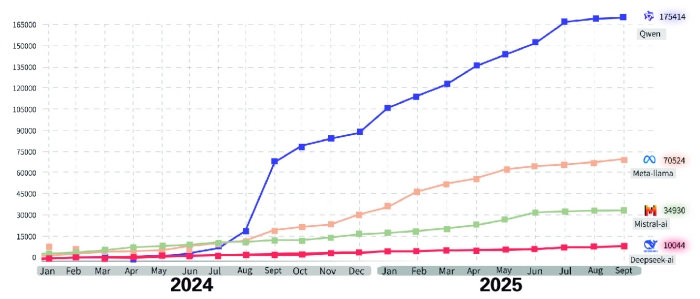
Core Insights - Alibaba has officially launched the "Qianwen" project to enter the AI to C market, competing directly with ChatGPT using the Qwen3 open-source model and a free app [2][3] - The company aims to leverage its extensive consumer data and business touchpoints to enhance AI applications, marking a logical evolution of its business model [2] - Alibaba's strategy focuses on building a robust AI cloud infrastructure and foundational models to reduce costs and improve efficiency for consumer applications [3][4] Group 1 - The Qianwen project is positioned as a response to the competitive landscape of AI applications, with Alibaba prioritizing foundational models and cloud capabilities to ensure low operational costs [3][4] - The company has achieved significant advancements in its self-developed models, with Qwen3-Max outperforming leading international models like GPT-4, establishing itself among the top three globally [4][6] - Alibaba's approach contrasts with ChatGPT's closed-source model by adopting an open-source strategy, allowing global developers to utilize its capabilities, thus accelerating innovation [6][7] Group 2 - The Qianwen app aims to serve as a comprehensive AI life interface, integrating with Alibaba's existing ecosystems like Taobao and Gaode, enhancing user experience across various applications [10] - The competitive narrative is shifting, with Alibaba's open-source and free model challenging the traditional closed-source, subscription-based models prevalent in the U.S. [8][9] - The launch of Qianwen has sparked concern among U.S. tech giants, indicating a significant shift in the global AI landscape, where China's open-source models are gaining traction [9][10]

阿里千问出击“AI未来之战” 全面对标ChatGPT
Shang Hai Zheng Quan Bao· 2025-11-17 19:14
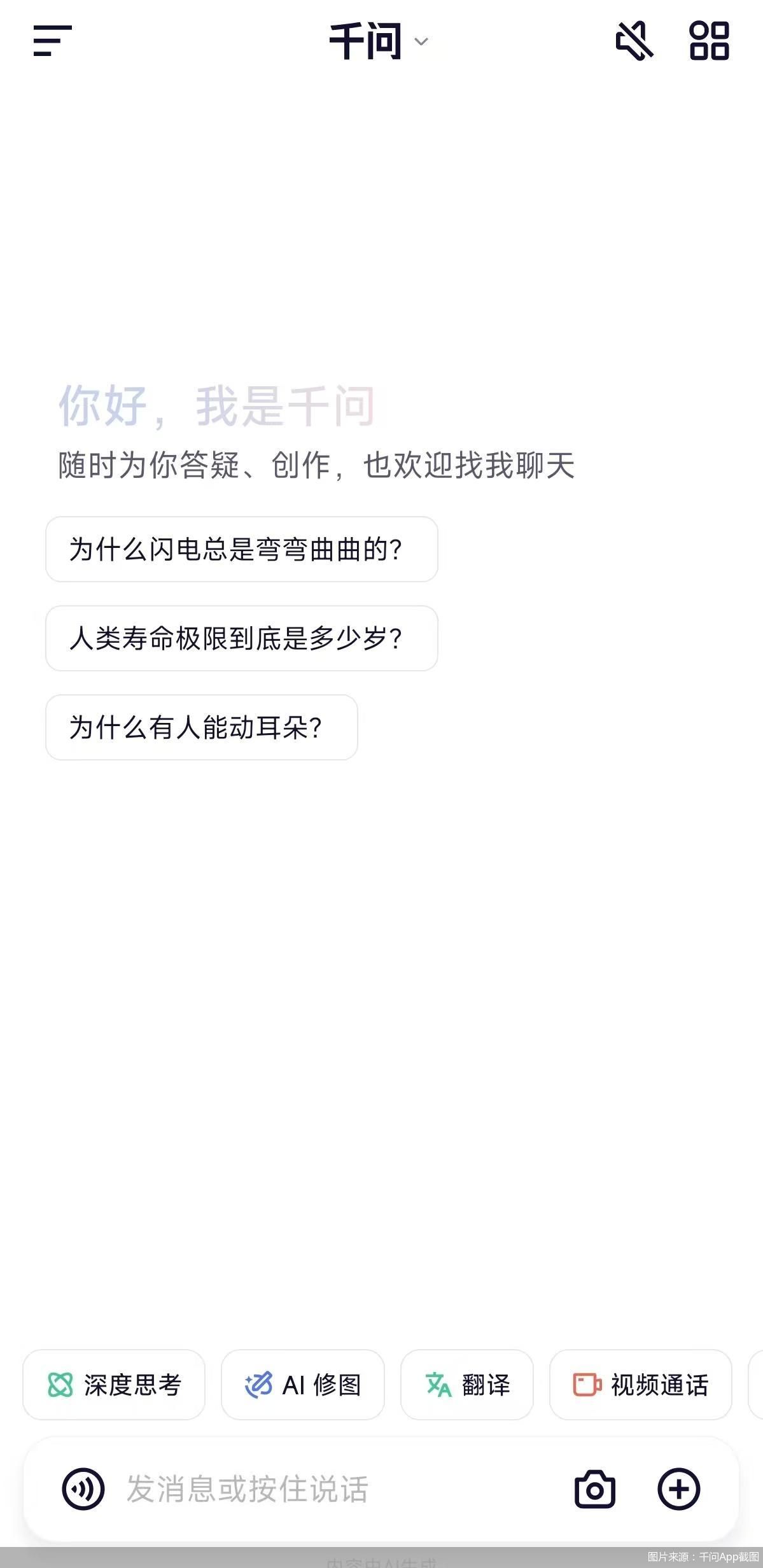
Core Insights - Alibaba's Qianwen App has officially entered the AI to C market, launching a public beta that aims to compete directly with leading AI products like ChatGPT [2][7] - The app is based on the Qwen3 open-source model, which is touted as the world's top-performing open-source model, and is designed to be a personal AI assistant capable of both conversation and task execution [2][4] - Alibaba's strategy includes significant investment in AI infrastructure, with a focus on creating a comprehensive AI ecosystem that integrates various life scenarios into the Qianwen App [4][6] Group 1: Product Features and Capabilities - Qianwen App is completely free, contrasting with ChatGPT's subscription model, and aims to provide a rich user experience by actively searching and citing authoritative sources [3][4] - The app has demonstrated task execution capabilities, such as generating research reports and creating presentations quickly [4] - Future plans include integrating services like maps, food delivery, ticket booking, and shopping to enhance the app's functionality [4][8] Group 2: Strategic Importance and Market Position - Alibaba views the Qianwen project as a critical component in the "future battle" of AI, emphasizing the importance of AI as a key technological frontier in global competition [5][6] - The company aims to establish Qwen as a leading open-source model, having already surpassed competitors in download numbers and industry reputation [7][8] - The app is positioned to become a vital tool in everyday life, potentially integrating with Alibaba's e-commerce platforms to provide personalized recommendations and services [8]
阿里千问App上线 AI终端赛道变局
Bei Jing Shang Bao· 2025-11-17 16:40
Core Insights - Alibaba has officially launched the public beta of its AI application "Qianwen" on November 17, transitioning from its previous version "Tongyi" as part of a strategic adjustment within the company [1][3][5] - The AI application market in China is evolving from a "technology frenzy" to a focus on practical applications, with user bases starting to stratify [1][6] - Qianwen aims to integrate various life scenarios such as maps, food delivery, ticket booking, and shopping, enhancing its functionality as a personal AI assistant [4][6] Company Strategy - The transition of "Tongyi" to "Qianwen" reflects Alibaba's internal restructuring, separating its AI application development from its cloud services to better target the consumer market [5][6] - Alibaba's leadership has emphasized a "user-first, AI-driven" strategy, with a focus on developing AI capabilities that can evolve towards superintelligent AI [6][7] - The Qwen series models have achieved significant global download numbers, with the latest flagship model Qwen3-Max outperforming competitors like GPT-5 and Claude Opus 4 [8][9] Market Position - As of September, the user base for mobile AI applications in China reached 729 million, with Qianwen's category of native apps having 287 million users [9] - Competitors in the native AI app space include Doubao and DeepSeek, with their monthly active users at 172 million and 145 million respectively, indicating a competitive landscape for Qianwen [9] - Analysts suggest that Qianwen needs to catch up to the leading products in the market to establish itself as a top-tier AI application [9]
阿里千问App出道:AI to C赛道变局
Bei Jing Shang Bao· 2025-11-17 13:58
Core Insights - Alibaba has officially launched the AI to C project "Qianwen" on November 17, transitioning from its previous version "Tongyi," indicating a strategic shift in its AI business focus [1][4][7] - The Chinese large model industry is evolving from a "technology frenzy" to "scene cultivation," with user scales of native AI apps beginning to stratify [1][10] - The Qianwen app aims to leverage Alibaba's ecosystem to compete in the AI market, raising questions about its potential success against established competitors [1][11] Group 1: Product Launch and Features - The Qianwen app is now in public beta, available on both web and PC platforms, with an international version expected soon [4] - The app's ranking on the Apple App Store has improved significantly, moving to third place in the free efficiency category and ninth overall since its launch [4][5] - Qianwen's download estimates rose from approximately 12,700 on November 12 to about 34,800 by November 16, indicating strong initial interest [5] Group 2: Strategic Adjustments - The transition from "Tongyi" to "Qianwen" reflects internal adjustments within Alibaba, with the AI application being split from Alibaba Cloud and integrated into the Alibaba Intelligent Information Business Group [7][8] - The management's focus on AI business segmentation is evident, aligning with the broader strategy of prioritizing user experience and AI-driven solutions [8][9] Group 3: Market Position and Competition - According to Frost & Sullivan, Alibaba's Tongyi accounted for 17.7% of the enterprise-level large model market in China, leading the sector [10] - The Qwen series models have achieved over 600 million downloads globally, with the latest flagship model Qwen3-Max outperforming competitors like GPT-5 and Claude Opus 4 [10] - The current user base for native AI apps in China is 729 million, with Qianwen's user scale at 28.7 million, indicating a competitive landscape where it must catch up to leading apps like Doubao and DeepSeek [10][11]
史上最惨一代?AI延长人类寿命,下一代活到200岁不是梦
3 6 Ke· 2025-10-29 07:09
Core Insights - The article discusses the tension between the rapid advancement of AI technologies and the potential risks associated with them, highlighting the contrasting approaches of major tech companies like Google, Microsoft, and Meta towards AI development and commercialization [1][10][14]. Group 1: AI Development and Corporate Strategies - Major tech companies are racing to develop AGI (Artificial General Intelligence), with significant investments and talent acquisition, but they differ in their approach to speed and safety [8][10]. - Google tends to be more cautious in its AI rollout, ensuring technologies are ready before launch, while Microsoft is perceived as more aggressive [8][10]. - OpenAI occupies a middle ground, balancing between caution and the urgency to capture market share [8][10]. Group 2: Energy and Resource Constraints - The article emphasizes that energy may become a critical bottleneck for AI development, despite the U.S. having advantages in chip technology and AI training [10][14]. - The competition for AI supremacy is not solely about capital and talent but increasingly about energy resources [10]. Group 3: The Future of AI and Human Longevity - There are indications that AI may soon exhibit recursive self-improvement, leading to rapid advancements that could result in an "intelligence explosion" [14][17]. - Breakthroughs in biomedical AI could significantly extend human lifespans, with predictions that children today may have a 50% chance of living to 200 years old [26][32]. Group 4: Societal Implications of AI and Robotics - The potential for robots to take over household tasks could lead to a society where humans have more leisure time, but it also raises concerns about societal engagement and productivity [33][37]. - The future may see a divergence in societal outcomes, with one scenario leading to creativity and prosperity, while another could result in widespread complacency and entertainment addiction [39][40].